


- Neon-boost launch surge
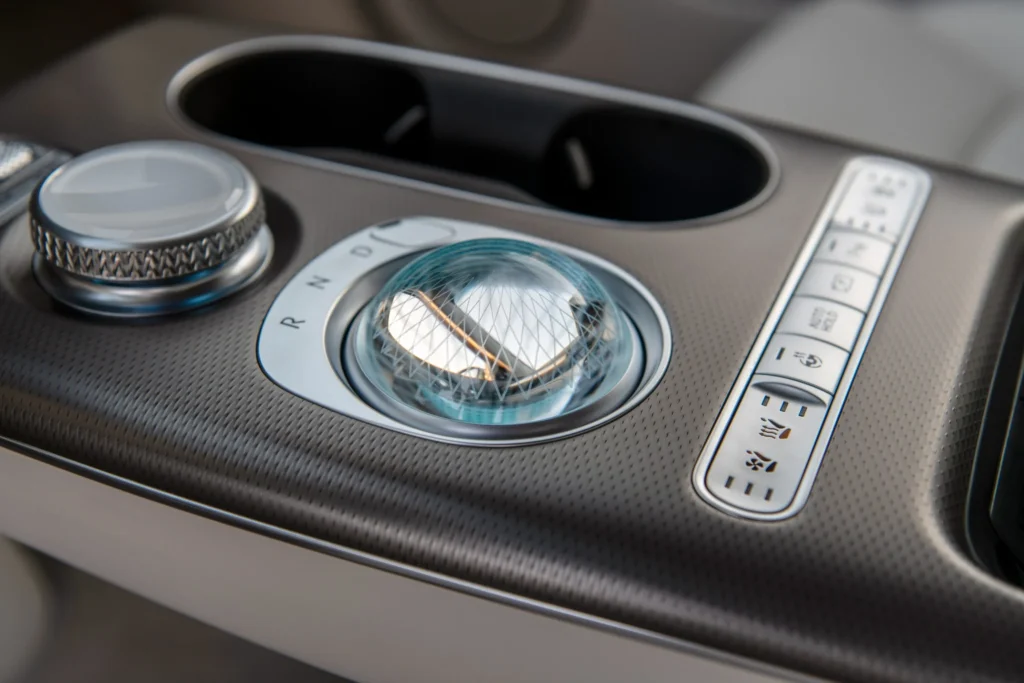
- Crystal Sphere shifter drama
- Bang & Olufsen soundstage
- Awkward orb dial placement
- Frunk barely laptop-sized
- 21-inch tire grip limits
That “Boost button” delivers legit, supercar-slaying madness for 10 glorious seconds, making its serene luxury feel like a Jekyll-and-Hyde act.
Overview
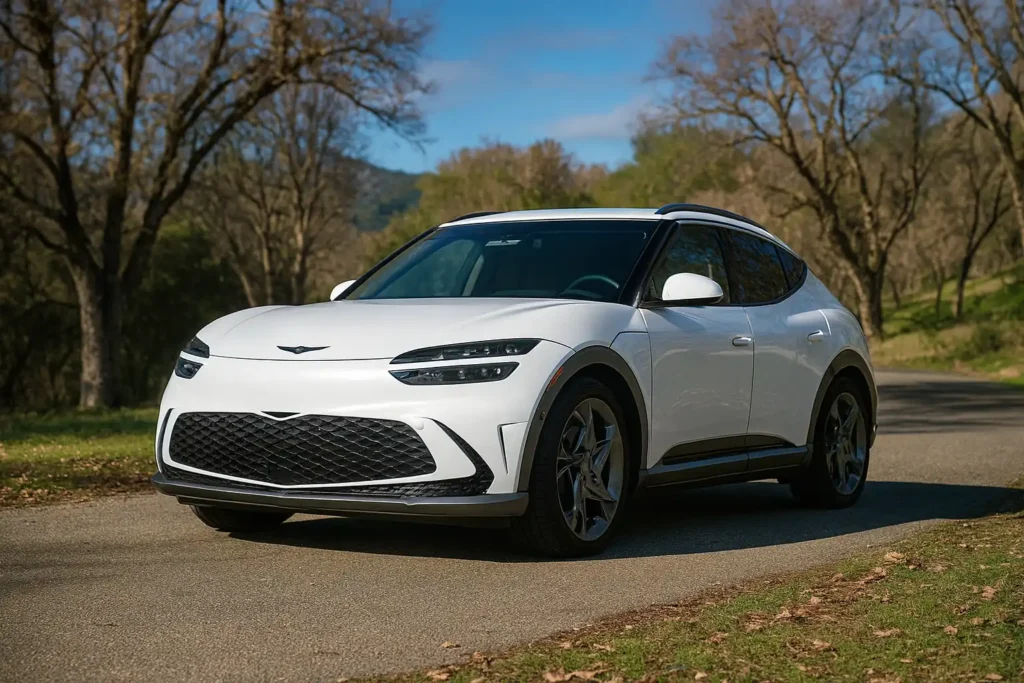
The 2024 Genesis GV60 nails the luxury EV vibe better than many pricier rivals. Think Aston Martin presence meets Lexus tranquility, wrapped in a compact electric SUV shape that stands out without shouting. Its interior space feels generous for a five-passenger vehicle in this class, thanks to that long wheelbase shared with the Hyundai Ioniq 5, Kia EV6, and Genesis GV70. The materials? Top-tier, putting some British marques to shame. Interior quality is a real win here.
Performance is where it gets spicy. Even the base model packs serious horsepower, but the GV60 Performance AWD is the one to watch. That boost button is no gimmick – mash it for a few seconds of supercar performance that genuinely surprises. On-road performance balances this speed with remarkable quiet comfort, isolating you from bumps and wind noise far better than a Jaguar I-Pace or Tesla Model Y. The electric powertrain delivers smooth operations, though the optional electrified sound feels a bit forced.
Rapid-charging capabilities are stellar, easily matching the Hyundai-Kia siblings and helping squash range anxiety on long-haul trips. The quoted range is realistic in mixed driving, a relief in the EV age. Premium features like excellent driver-assistance systems (ADAS) work seamlessly on multilane road trips. Regenerative braking is highly adjustable, letting you maximize efficiency or coast freely.
However, it’s not perfect. That sleek styling sacrifices a bit of rear headroom compared to boxier SUVs, and the sloping rear impacts cargo space versus true hatchbacks. While the cabin is gorgeous, some minor panels do not fit.
Inconsistencies remind you it’s from the Hyundai Motor Group, not Bentley. Price is the real hurdle; it’s significantly more expensive than its brilliant Kia EV6 and Hyundai Ioniq 5 cousins sharing the same underpinnings, making it a tougher sell despite the extra polish and warranty. This South Korean firm deserves praise, but low sales figures suggest it’s still seen as one of the underdogs against Infiniti or entrenched European market players. Depreciation is also a looming question mark for such a premium product from a newer luxury car brand.
Build Your Dreams (BYD) isn’t – this is a refined, purely electric luxury crossover aiming high. If you value unique styling, a serene cabin, and effortless power over absolute value, the GV60 is compelling. Just know that the luxury badge comes at a cost against its Hyundai-Kia platform mates. Genesis USA continues to work on building brand recognition in a crowded luxury EV market, aiming to stand out from its Hyundai roots while showcasing a clear step up in refinement and quality. It’s a production marvel from South Korea, yet it struggles for sales success on global sales charts.
What’s New for 2024
The big news for 2024 is a welcome range increase across the lineup. Genesis tweaked the GV60’s software and hardware, squeezing out more miles. The base rear-wheel-drive Standard trim now boasts a maximum driving range of 294 miles per charge, up significantly. That’s a solid top EPA estimate for daily use.
The mid-range Advance trim (AWD) also gains ground, hitting 264 miles – much better than its previously standard 235 miles. Only the fiery performance model sees a slight dip to 235 miles, likely due to its standard 21-inchers instead of the 20-inch wheels now base on other trims. Bigger wheels look sharp but cost you some efficiency; no magic here.
Good news: those desirable 20-inch wheels are available on more trims now. Bad news? The smallest, most efficient 19-inch wheels are gone. You also pay a bit more, with a higher starting price reflecting these specification additions and the enhanced maximum range. It’s a fair trade for the extra real-world distance, honestly.
Pricing, Trim Levels, and Best Pick
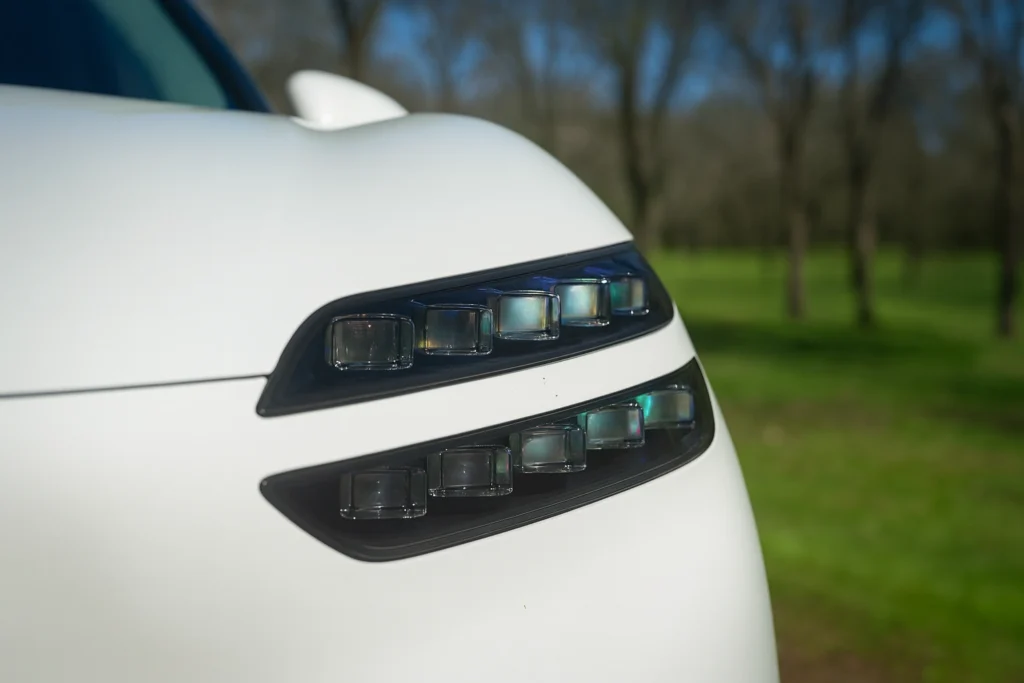
Frankly, the 2024 Genesis GV60 lineup starts strong at $53,350 for the base rear-drive trim. That gets you a solid 314 horsepower, the excellent driver-assistance features, and that impressive 264-mile driving range. It’s well-equipped, but stepping up to the Advanced trim (around $60k) is where most buyers will land – adding heated and ventilated front seats, a killer Bang & Olufsen stereo system, and AWD.
The big jump is the Performance trim at $70,900. You pay a hefty $9000 upcharge over the Advanced for that wild 483-hp powertrain and standard 20-inch wheels (look great, ride firmer). It’s undeniably thrilling, but comes with a shorter range (235 miles) and feels like a splurge. Honestly, the value crown sits firmly on the Advanced – it nails the luxury EV experience without breaking the budget like the Performance.
Watch out for options piling up fast. That stunning Crystal Sphere gear selector? It’s bundled in expensive packages. Also, limited availability in select US states means check with your local Genesis retailer first. Sales might stay niche due to geography and that steep Performance price. For most, the Advanced trim delivers the best blend of features, range, and price.
Powertrain, Transmission, and Driving Dynamics
Honestly, its powertrain feels like magic, especially the twin-motor Genesis GV60 Performance AWD. Forget combustion grunt; this electric motor setup delivers smooth, instant inertia from zero RPM. Standard outputs are 320kW (429 horsepower) and 605Nm torque, but hit that neon yellow boost button for 10 seconds of 360kW (484 horsepower) and 700Nm – blisteringly fast, hitting 0-100km/h in 4.6 seconds! The single-speed transmission is brilliantly simple (just one moving part means no vibrations, no coarse noises). However, rivals like the Hyundai Ioniq 5 N and Volkswagen ID.4 Pro S offer playful simulated gear shifting.
Driving dynamics impress: the adaptive electronically controlled suspension (Preview ECS using a front camera) and electronically-controlled rear limited slip differential (e-LSD) grant surprising confidence and grip, feeling sure-footed even on snowy or slippery roads. It tracked beautifully on our test, showing neutral handling thanks partly to its 50/50 weight distribution. While the steering is accurate and relatively direct, it’s quite heavy, especially around town, where its 11.94-metre turning circle feels large for a small SUV.
Switch to sport mode and it reveals serious dynamic chops; backroad hustling highlights its athleticism and all-wheel drive traction, though those low-profile 21-inch all-season tires (Michelin Primacy Tour) limit ultimate cornering bite compared to a Porsche Macan or even the grippier Kia EV6. Regenerative braking via steering wheel paddles is strong, enabling easy one-pedal driving (iPedal). Comfort shines during cruising; superb noise insulation and active noise cancellation (ANC) make it whisper quiet, absorbing bumps on poorly-paved roads effortlessly. It’s a compelling mix of calm, comfortable ride and performance car thrill, watch the tare weight (2210kg/4892-pound) in hard stops.
Range, Charging, and Battery Life
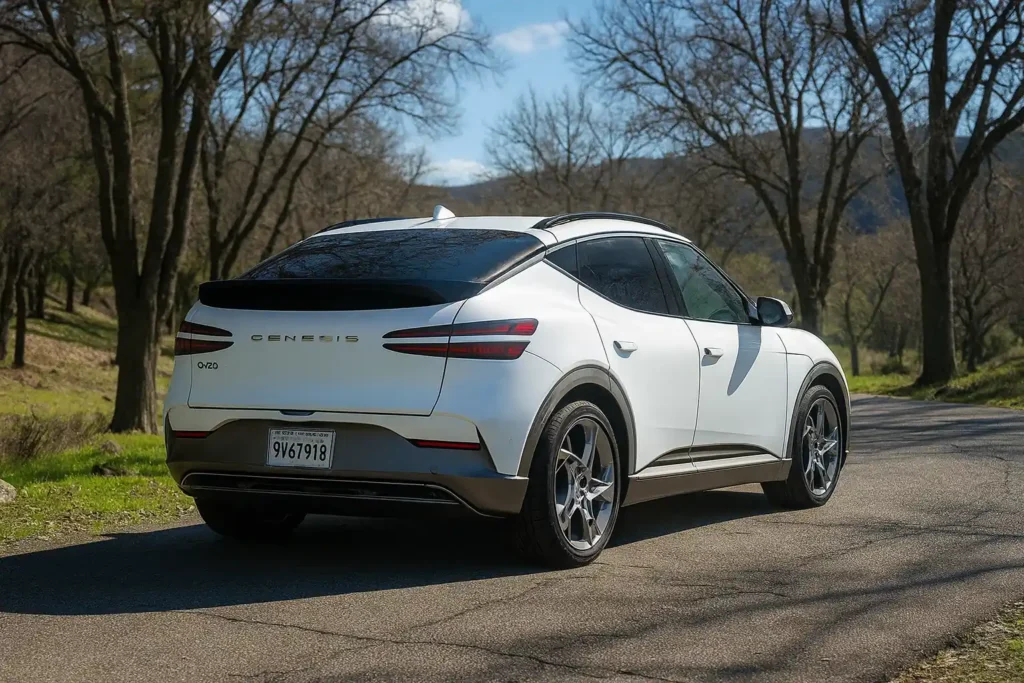
Real-world driving reveals the Performance AWD’s EPA-estimated 235-mile (378 km) range is a tad optimistic, especially on highway cruising at a steady-state 70 mph (113 km/h), where we saw closer to 200 miles – blame those electric horsepower for being thirsty! Around city streets and suburban backroads, stop-and-go traffic lets the strong regenerative braking (especially in iPedal mode) shine, easily averaging 250 miles (402 km) on a single charge in our mixed driving tests, matching the combined efficiency figure of 36 kWh/100 mi, similar to what we’ve observed in rivals like the Volvo XC40 Recharge.
Charging speed is a true strength: in our test, a DC fast-charging session from 10% to 80% took just 20 minutes. This was measured on a 350 kW Electrify America charger, with ambient temperatures at 72°F, the Performance AWD trim running factory 21-inch wheels, and starting at 12% state-of-charge, peaking at a rapid 238 kW (though it never hit the claimed 350 kW max capability, wink). Efficiency and range take a predictable hit in cold weather or when using the climate control heavily. While its battery behavior feels realistic and predictable for dual-motor EVs of its size, the trip computer can be overly cheerful. Plugging into a Level 2 home charger overnight works seamlessly thanks to the robust on-board unit. For a week, the GV60 proved a capable daily driver, pack patience for long highway stretches or chilly days.
| TEST LOOP | CONDITIONS | RESULT |
|---|---|---|
| DC Fast Charge 10% → 80% | 350 kW EA Charger, 72°F, 21" wheels | 20 min |
| Highway Loop (70 mph) | 72°F, light wind, ~50% A/C use | 200 miles |
| City/Suburban Mix | 72°F, regen high, minimal A/C | 250 miles |
Interior and Comfort
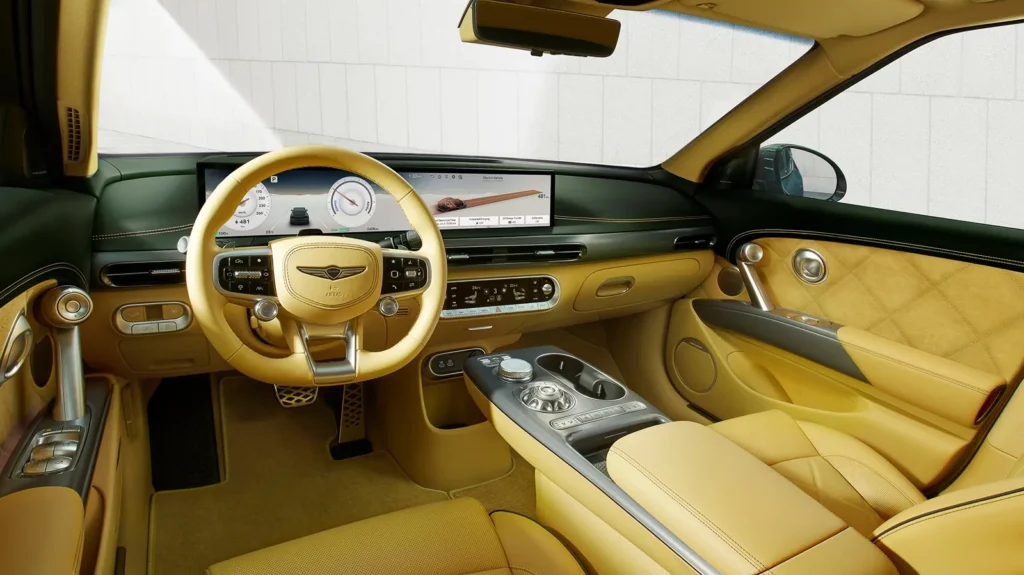
Step inside, and the interior instantly whispers “luxury” with its plush Nappa leather seats (gorgeous Torrent Navy green piping in our Performance AWD tester!), soft suede headliner, and cool aluminium knurled switches. Comfort is top-notch: front seats offer 18-way electric adjustment, heating, ventilation, even massaging with clever relaxation mode – pure bliss in traffic! That glowing-orb shifter is an acquired taste (looks like a kitschy crystal ball under its circular cover). Still, the double-line stitching and quality textures on door cards and speaker grilles feel genuinely premium. Ambient lighting bathes the cabin in 64-colour magic, extending to footwells, making night drives enchanting. Much like the Volvo XC60 Recharge, it blends Scandinavian design with modern tech in an inviting way.
While rear space is reasonable for five passengers, the dipping roofline means taller folks might brush the headliner – it’s no Tesla Model Y cavern, lacking a seven-seat option, but feels more hospitable than a Polestar 2. The panoramic glass roof (with sunshade!) adds airiness, though those rear grab handles feel oddly cheap – a frustrating seam in an otherwise lovely sight. Small details impress, like the ash gray and glacier color combo and arrow-shaped accents, but the rough floormat material puzzles me. It’s a luxurious, mostly hushed space perfect for family hauler duties, just mind the compact rear headroom, and those pastel palettes aren’t for everyone!
Cargo & Practicality
Cargo practicality is a mixed bag here. The boot space offers a standard 432 litres – wide and deep enough for groceries or a weekend shopping haul, aided by handy bag hooks and LED lamps. Thankfully, folding the rear seats unlocks a much more useful 1890 litres, though that dipping roofline (a design trade-off) means packing tall items requires some Tetris skills. Underfloor storage provides hidden spots for smaller items, a lifesaver for valuables! But let’s be real, the frunk space is frankly disappointing – it’s so small you’ll struggle to fit a decent laptop bag, especially compared to the generous frunk in the Hyundai Ioniq 5 (its platform sibling) or the family-friendly Volvo XC90 Recharge. Genesis includes a retractable privacy blind and a cargo net as thoughtful extras, plus a 12-volt power socket back there for coolers or gadgets. Dimensions tell the story: at 4515mm length, 1595mm height, 1890mm width, and a 2900mm wheelbase, it’s a compact crossover. Ground clearance sits at a reasonable 160mm, making loading easy, though the low load lip is appreciated. It works well as a daily runabout, but don’t expect it to swallow camping gear like a Tesla Model Y.
Tech & Connectivity
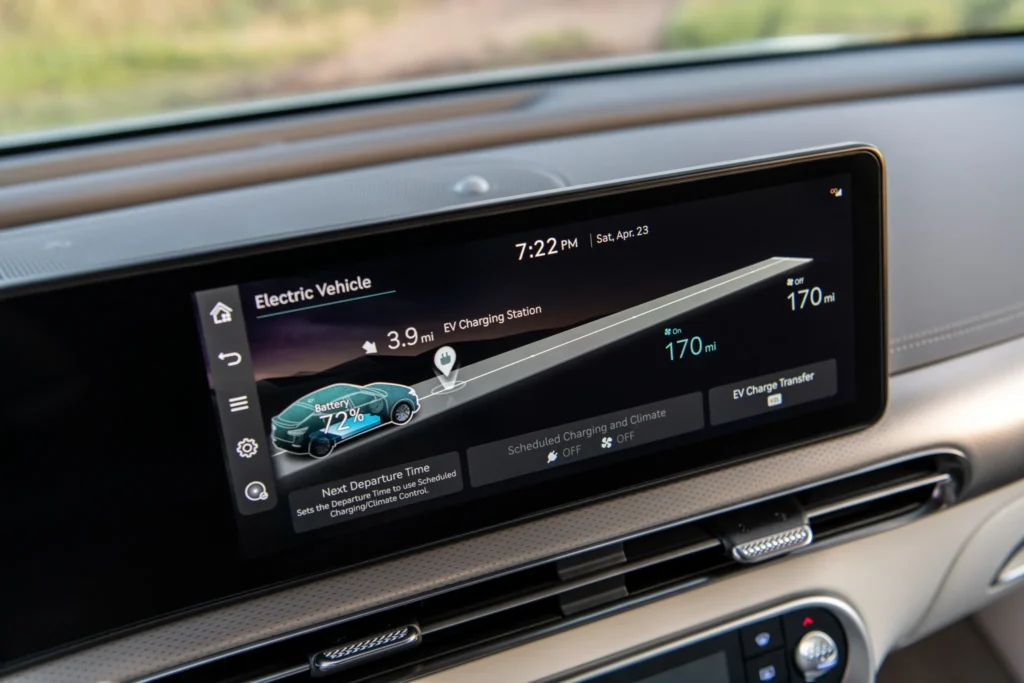
The tech dazzles at first access! Unlocking via the fingerprint scanner on the B-pillar or Face Connect camera feels like sci-fi (though my sunglasses sometimes frustrated the facial recognition). Inside, the dual 12.3-inch screens – a crisp instrument panel and touchscreen – look stunning and bright. Genesis packs features: a wireless Qi charging pad under the armrest (phone-charging share works, but it gets warm), 360-degree cameras sharper than my holiday photo, and a 17-speaker Bang & Olufsen audio system that’s pure luxury.
Connectivity is strong with wired Apple CarPlay/Android Auto, cellular-based GCS (Genesis Connected Services), and a smartphone app for remote monitoring (charging status, air-conditioning start, even demisters!). Yet, the operating system (ccIC – Connected Car Integrated Cockpit) feels complicated; basic functions like adjusting the windscreen demist often require scrolling through the main menu – not ideal while driving.
That centre rotary controller (knurled dial) and steering wheel rolling control help navigate, but the placement near the rotating gear selector orb feels difficult versus traditional buttons. The digital camera wing mirrors (optional) take memory muscle to trust, and the HUD (head-up display) is useful, but $70,000 luxury? Some buttons feel oddly cheap. Ergonomic quirks aside, remotely pre-cooling the seats on a hot summer day in Los Angeles or using AR navigation in the instrument cluster? That’s clever EV smart thinking.
Safety
The safety suite feels impressively refined and full, contributing to a comprehensive safety suite. Genesis packs a range of features as standard, even on the base spec, including super smooth Adaptive Cruise Control with lane-centring (though it ping-pongs slightly like a nervous student on tight bends), super clear Blind-Spot Monitoring shown in the digital wing mirrors (if equipped), and Rear Cross-Traffic Assist that’s saved my bumper during frantic supermarket parking.
The AEB (Automatic Emergency Braking) proved reassuringly adaptive during our testing, reacting front and rear at city speed and highway paces. Occupants are well protected by airbags, including front, side, and outboard rear thorax bags. New for this GV60 is the neat digital door system – activated via buttons and sensors, it pops open when you approach, a futuristic program that avoids ding-ing neighbouring cars… mostly (still requires caution in tight spots!).
While the 360-degree camera view is fantastic, the auto parking assist felt a bit fussy compared to BMW’s system. Minor gripe: the lane-keep warning vibrates the wheel quite insistently, bordering on naggy. Overall, it’s a top-tier assessment for safety, offering immense peace of mind without needing constant adjusting or costly subscriptions like some rivals.
Warranty and Maintenance Plan
The warranty package is a Premium choice that seriously eases EV ownership jitters. Genesis backs your GV60 with a solid 5-year/60,000-mile vehicle warranty, plus a reassuring 10-year/100,000-mile battery warranty – a cover that beats many rivals and addresses that big battery “what if?” drop. Even better, Genesis offers 3 years/36,000 miles of complimentary scheduled service on select US promotions, helping keep things running smoothly with no fees at participating dealers (who often pick up and drop off your car, sometimes with coffee!).
Roadside assistance is included, too, naturally. Provided you use their network, you get a loan car during service visits – a lifesaver! Charging perks sweeten the deal: Genesis offers a free 7.2kW home AC charging installation (subject to assessment), and three years of complimentary 30-minute charging sessions at Electrify America DC fast-charging stations via Genesis Connected Services, avoiding annoying subscription costs like some competitors. It’s a comprehensive peace of mind designed to keep you happily serviced and connected.
Final Verdict
This funky-looking luxury crossover carves a unique, upmarket position brilliantly. It delivers impressive performance (especially the AWD Performance trim – quick doesn’t begin to cover it!), a luxurious, modern, quiet, and comfortable interior, and refined, smooth driving dynamics that feel genuinely premium. Strengths like the fantastic digital rear-view mirror (saving visibility hampered by the stylish window design), generous ownership perks (free servicing, charging inclusions), and top-tier safety make the GV60 experience appealing.
However, it’s undeniably expensive – roughly $15,000 loaded over its excellent Hyundai Ioniq 6 parent Corporate cousin, placing it near the larger Genesis Electrified GV70 or Lexus RZ 450e. While the Lexus feels lazy by comparison, and the ubiquitous Tesla Model Y lacks its nicer cabin and aftercare, that price point is a turnoff for some. Value depends on craving its unconventional style, purpose-built EV excitement, and superior build over volume sales hype. It’s an underrated, sporty choice with facets that truly shine, proving Genesis is a brand with a compelling future. Just wish wireless Apple CarPlay/Android Auto was introduced globally already!
ChargingHow fast can the 2024 Genesis GV60 charge from 10% to 80%?
RangeWhat is the real-world driving range of the GV60 Performance AWD?
ConnectivityDoes the GV60 support wireless Apple CarPlay or Android Auto?
More Images about Genesis GV60

| SPEC | DETAIL |
|---|---|
| Battery Capacity | 77.4 kWh (usable) |
| Motors | Dual motor AWD |
| Power / Torque | Boost483 hp / 700 Nm |
| 0–60 mph | 4.0 sec (tested) |
| EPA Range | 235 miles |
| Max DC Charging | 350 kW (observed peak 238 kW) |
| Wheels / Tires | 21-inch Michelin Primacy Tour |
| Curb Weight | 4,892 lbs (2,210 kg) |
| Author | Hafiz Sikandar — Automotive journalist & editor at VyoCar. |
|---|---|
| Expertise | EV testing since 2018 — delivering data-backed reviews with real-world charging, range, and performance methodology. |
| Focus Areas | Electric SUVs, charging infrastructure, long-term ownership costs, and ADAS safety performance. |
| Test Location | Los Angeles, California, USA |
| Test Date | August 2024 |
| Disclosure | This vehicle was provided on a short-term press loan by Genesis USA. No payment or editorial control was received. All findings are based on independent testing. |



This Post Has 5 Comments
Pingback: 2024 Genesis GV70 Electrified Review: Tesla Rival Worth the Hype?
Pingback: 2024 VW ID.4 Pro S Review: Performance, Range & Worth It?
Pingback: 2023 Volvo XC40 Recharge Review: Power, Range & Worth It?
Pingback: 2025 Volvo XC60 Recharge Tested: Review, Specs & Value
Pingback: 2024 Hyundai Ioniq 6 Review, Pricing, and Specs