

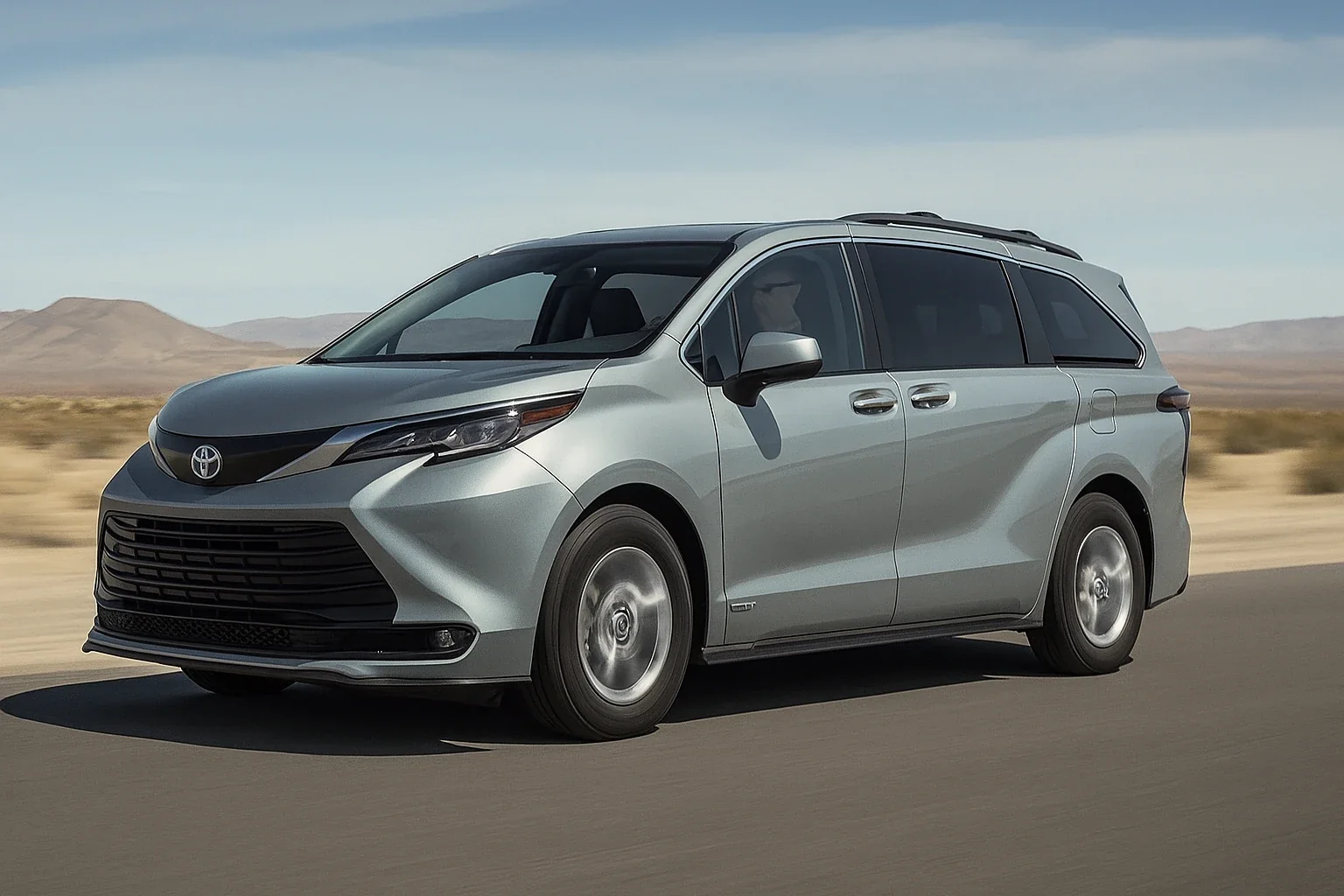
As-Tested: $50,990
8 /10
Rating
Pros
- Excellent Fuel Economy Efficiency
- Comfortable Family-Oriented Interior
- Strong Safety Feature Suite
Cons
- Limited Driving Engagement Factor
- Second-Row Seat Limitation
- High Trim Pricing Surprise
2023 Toyota Sienna Woodland Edition review with Vyocar
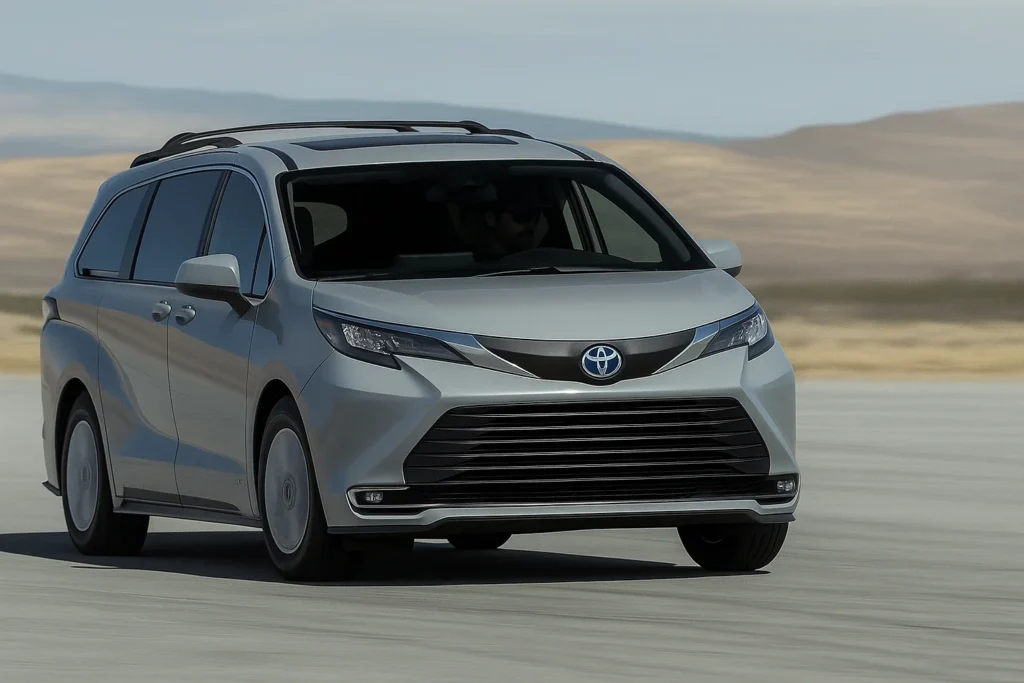
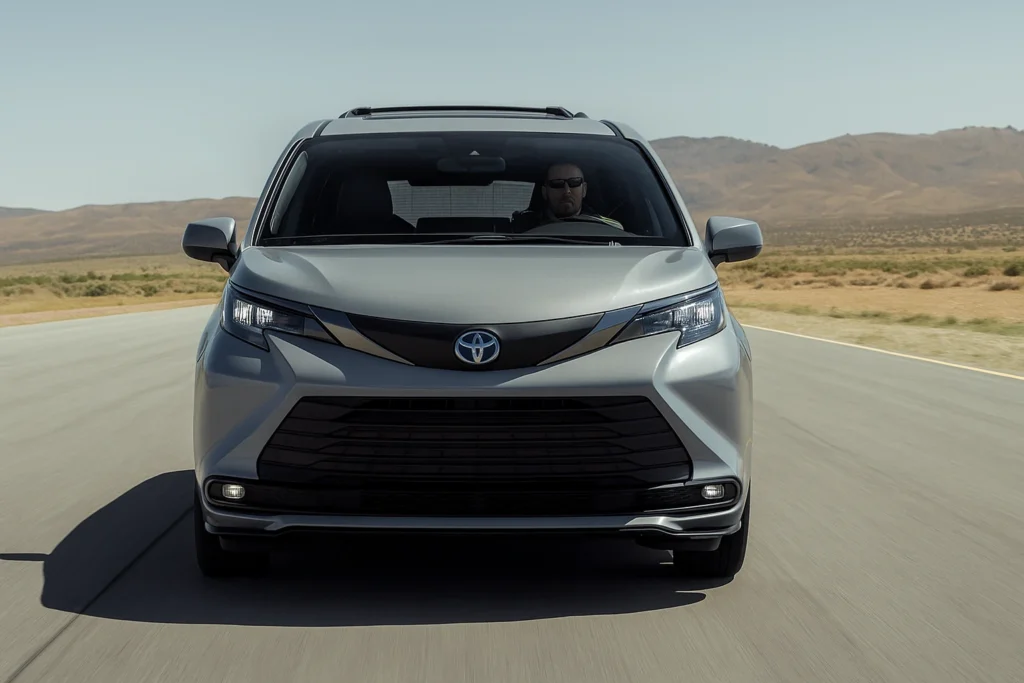
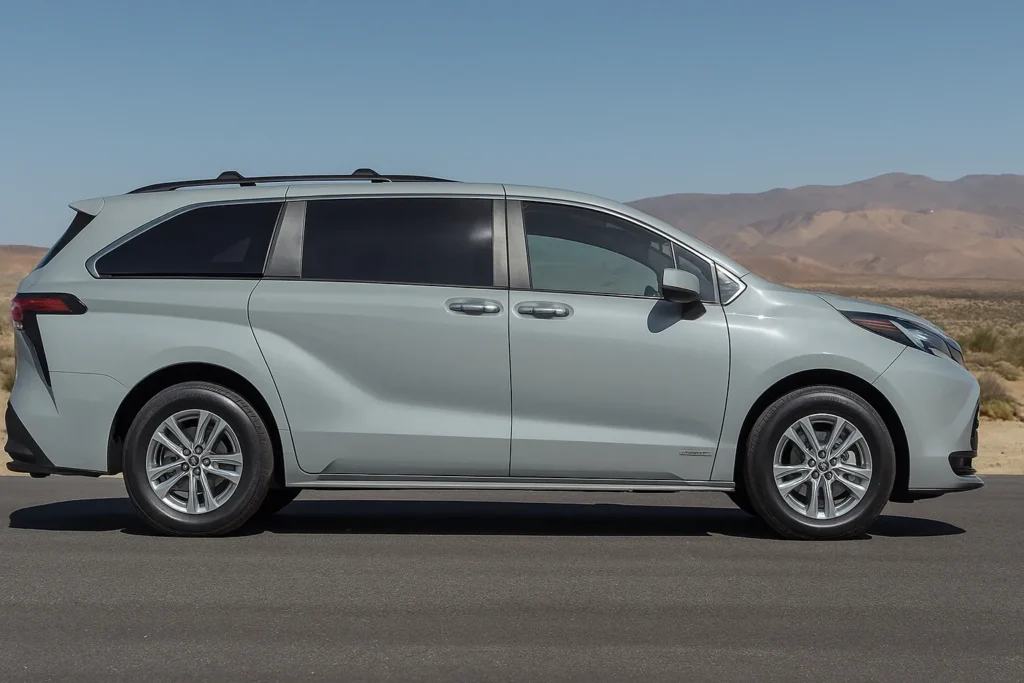
The 2023 Sienna Woodland Edition is a stealthy shape-shifter—masquerading as a rugged SUV, but underneath, it’s the most cleverly disguised minivan on the market with hybrid torque, absurd practicality, and just enough swagger to confuse a crossover bro.
Overview
At a casual glance, it looks like the kind of SUV cosplay your young cousin might flex in front of a Whole Foods, not realizing it’s actually a minivan in deep denial. The exterior tries to pull off a sportier, more brawny vibe with paint options that scream “I’m not a regular van, I’m a cool van.” And yet, under that stylish hood lies a 245-hp hybrid powertrain that prioritizes fuel efficiency over… well, fun. The EPA-estimated 36 mpg combined rating is impressive, especially considering its roomy interior and how many passengers it can haul without breaking a sweat. It’s nicely equipped for the segment, especially if you’re tired of pretending your Volkswagen Atlas Cross Sport can survive a real road trip with friends and cargo. Sure, the seating layout is more usable and practical than the plug-in hybrid fantasy your coworker bought and immediately regretted, but that’s the tradeoff—you get comfort, space, and actual benefits for families, but you also inherit some deeply uncool floor mats. It’s a Limited-trim version in a lineup that tries very hard not to be mistaken for vans, yet it still can’t fully escape its core identity. The removable seats are more stowable in theory than in execution, but hey, it still beats the Honda Odyssey on styling, if not on raw economy. And while the Kia Carnival may be a rival in practicality, the Woodland leans into its crossover cosplay with a little more direction—think Toyota Crown trying to win over owners of vehicles that pretend they’re in the SUV club. It’s not an all-electric marvel, but it isn’t trying to be. It’s for families who prefer value and ride comfort over chasing status, and for those of us who still believe black holes should stay in space—not in our wallets.
What’s New for 2023
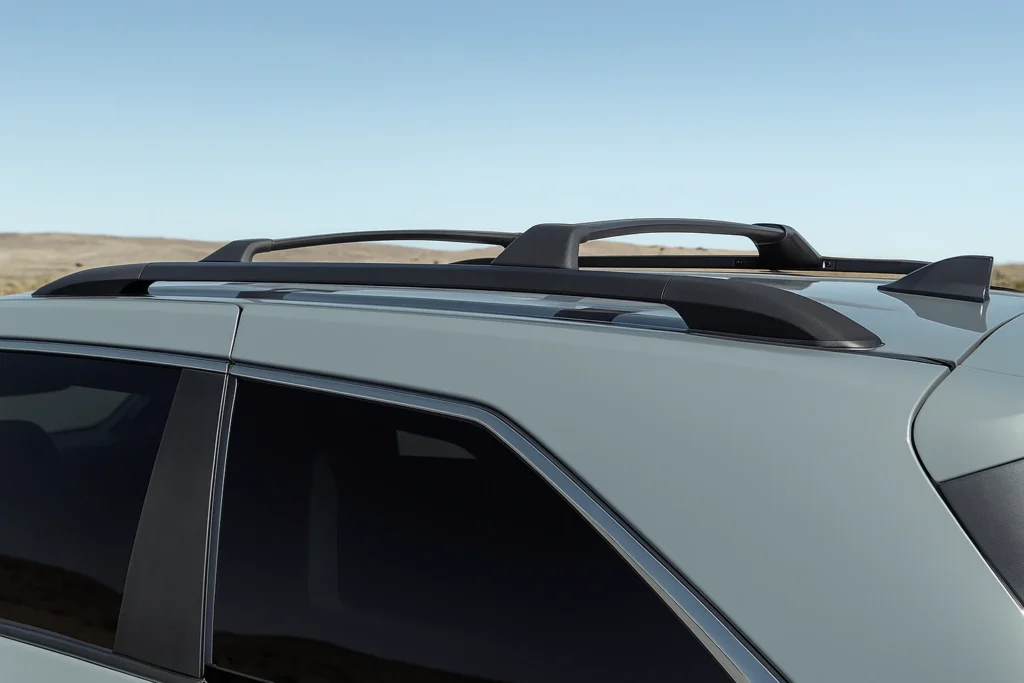
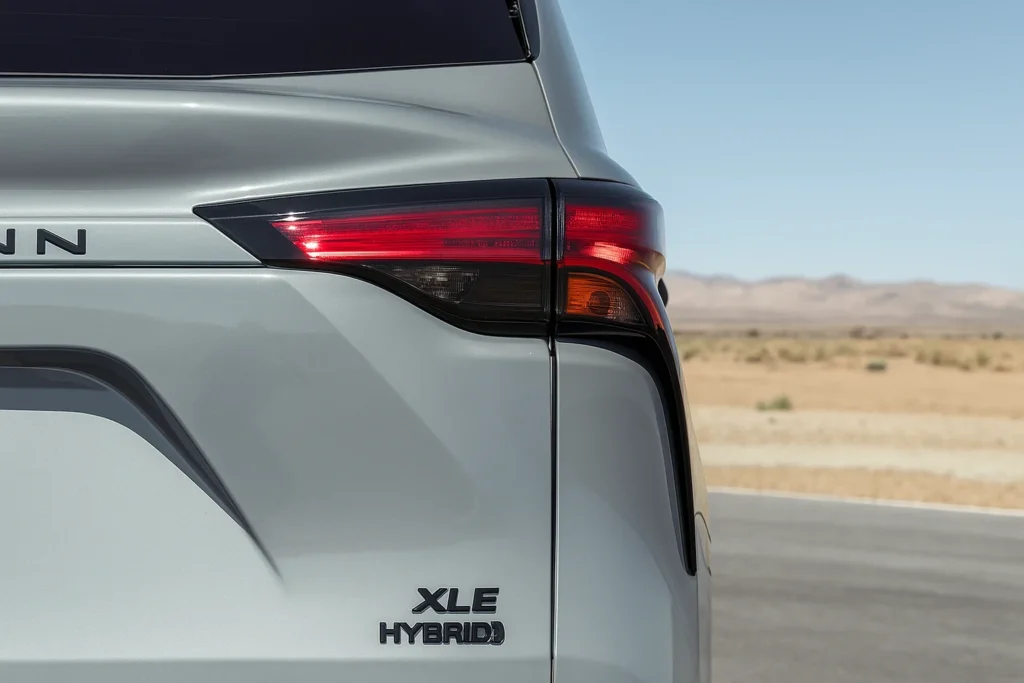
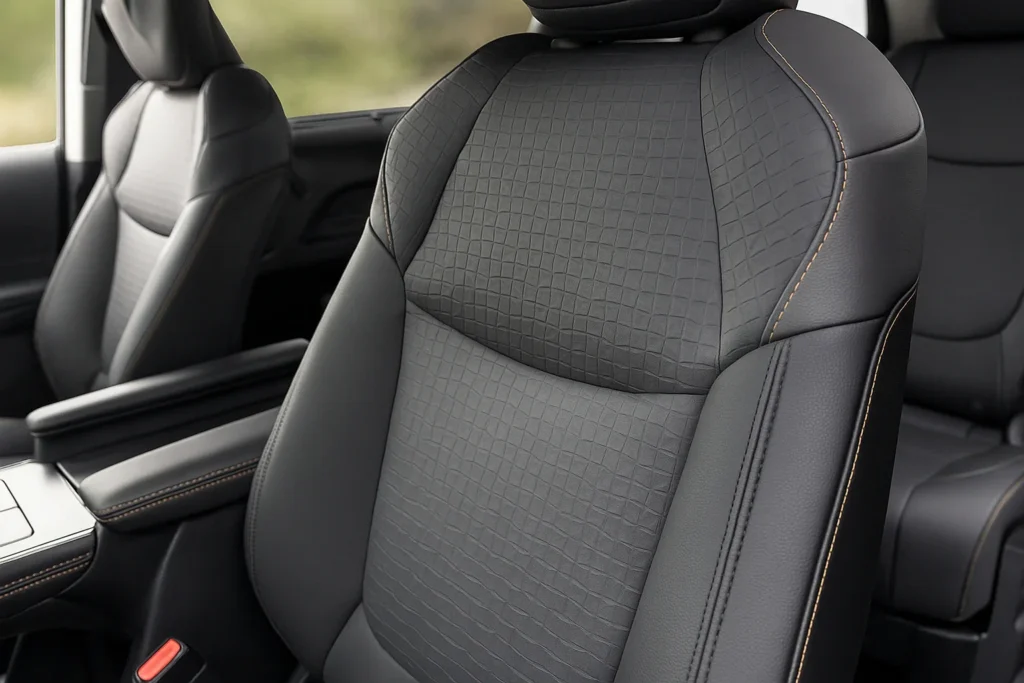
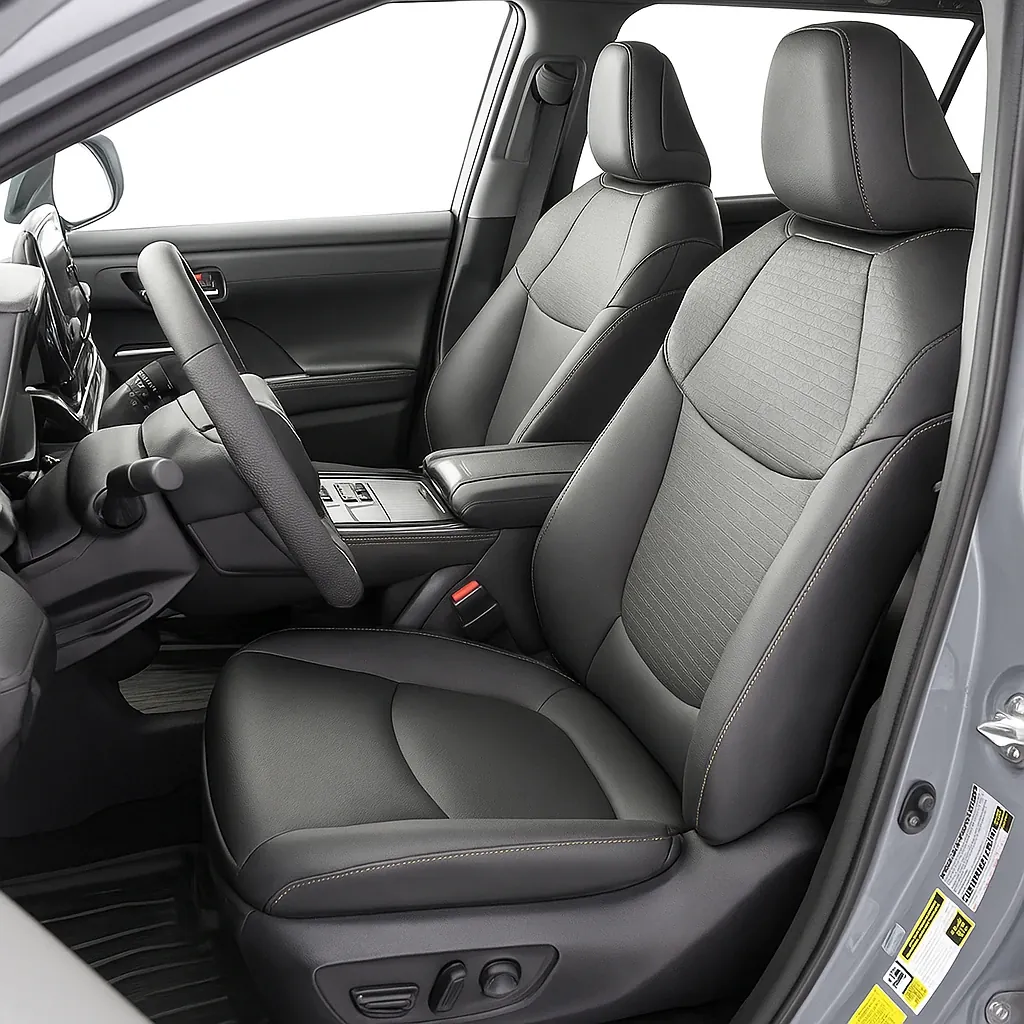
Honestly, when you hear it’s the third year of a hybrid-only minivan trying to flex as a trail-storming van, your expectations hover somewhere between a wireless smartphone charging pad and a package option that costs more than your AWD ever will earn back. But this limited-edition refresh manages a surprising save with black exterior badging, a subtle suspension raise, and extra .6″ of ground clearance—yes, that’s apparently enough to market it like it just came back from hiking in Utah. You’ll spot visual clues like roof rails, 20-inch wheels, and exterior mirrors with integrated puddle lights, which sounds excessive until you drop your keys in a dark urban city lot. Inside, black leather upholstery stitched with silver stitching—because obviously—wraps around heated front seats, ventilated front seats, and a JBL stereo system loud enough to drown out your regrets. Even the rubber floor mats and carpeted floormats are getting attention this round, maybe to distract you from the model’s identity crisis it shares with the Toyota Venza. For those into collectables that aren’t NFTs, there’s also the 25th Anniversary Edition Siennas in Celestial Silver, Cement, or Wind Chill Pearl, complete with a 25th Anniversary logo and all the XSE trim moodiness you didn’t know the XLE trim-level needed. It’s still very much the generation that says “function first,” but the nameplate is clearly trying to whisper “sporty-looking” under its breath. And yes, the Toyota crew crammed all of this into a tidy 2,525 units—because nothing says exclusivity like very specific mass production.
Pricing, Trim Levels, and Best Pick
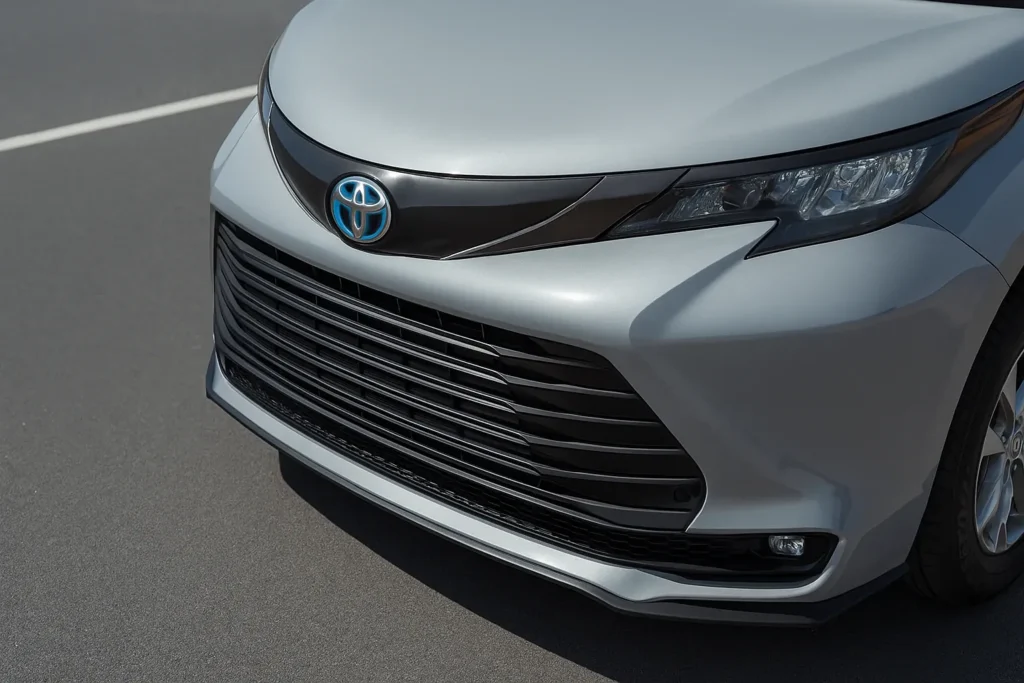
The $50,990 as-tested price hit me like a bad Wi-Fi bill—unexpected and quietly insulting—but digging into the trim levels, it starts to make… a reluctant kind of sense. The XSE model, with its sport front seats, second-row captain’s chairs, and aggressive front bumpers, is definitely the show-off in the group, while all Sienna trims now come with standard in-dash navigation, which feels like Toyota throwing us a bone. If you’re debating between front-wheel drive or all-wheel drive, the latter makes more sense in theory, though not always in traffic. The $38,280 entry price might lure you in, but once you start checking boxes for 20-inch wheels or even pretend to want a Hyundai Tucson, you’re creeping toward $53,740 before you can say “worthy upgrade.” It tries to play in the same lane as a Toyota Highlander, but without the SUV swagger—despite those aggressive rear bumpers trying way too hard to be sporty. And don’t worry, the options will make sure your wallet knows exactly what year it is: 2023.
Powertrain, Transmission, and Driving Experience
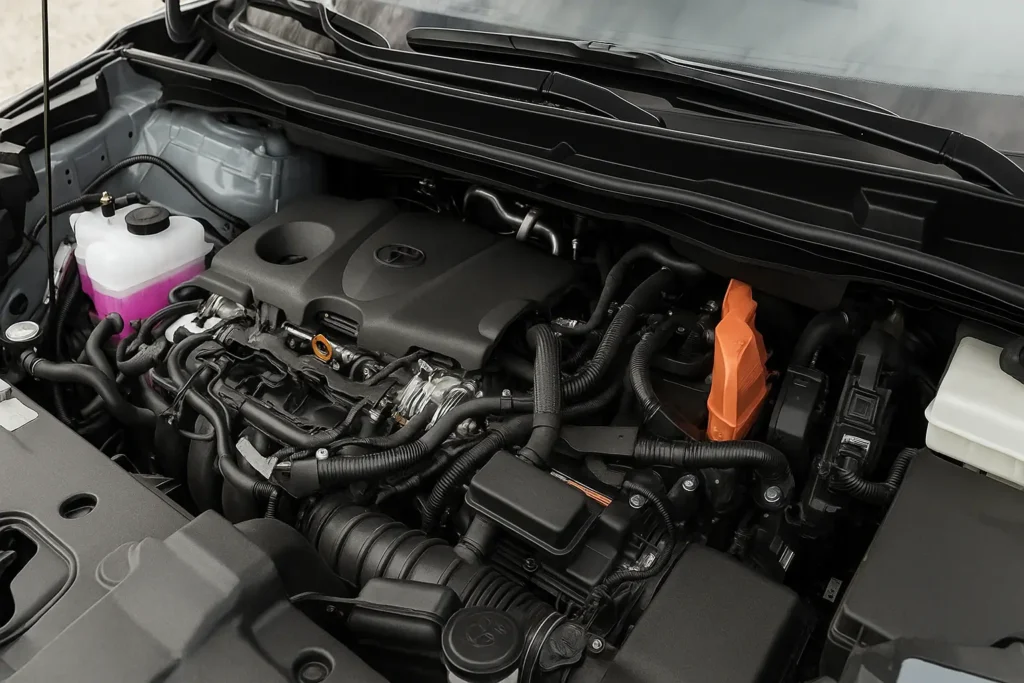
I went in hoping for a boost of excitement, maybe even something fun in the driving dynamics, but the 4,625-pound people mover quickly reminded me that “refined” is code for “don’t expect feedback from the steering wheel.” The 2.5-liter, naturally aspirated, gasoline-powered four-cylinder engine is paired with electric motors to deliver a total of 245 horsepower, but the way it puts power to the front wheels through the ECVT is more “slow clap” than “thrill ride.” It takes 7.5 seconds to 60 mph, and 15.8 seconds to the quarter-mile at 88 mph, which puts it behind the Kia Carnival, Honda Odyssey, and even the Chrysler Pacifica Hybrid, though it still maintains traction in snowy climates better—thanks to the AWD and that mysterious third motor sending torque to the rear wheels. Slippage isn’t a huge concern, but on-throttle moments at freeway speeds can lead to wriggling, twitching, and occasional floor-it-and-pray scenarios. The suspension keeps the cabin mostly free of shuttering, but creaking on rough grades or at the interchange still breaks the spell. Corner stability is helped by weighted steering during low-speed maneuvers, but the pedal feel during emergency braking is awkward and grabby, like a rookie driver who just learned what ABS is. If you’ve driven a Toyota Camry or Corolla XSE Hybrid, the driving character feels familiar—blunted, dull, but easy to steer, which might be enough for a minivan in this class. Compared to the Toyota Tundra or Mazda CX-70, this is more glare than guts. At least the technology like lane departure prevention, safety features, and booster system give it a standard level of control. Still, no matter how much composure it shows while cruising, you’re not getting the performance of a CX-90 or the cleverness of a Volkswagen ID.4—just a spacious, well-meaning car pretending to be an SUV while echoing its 2021 model roots. The Sienna Platinum and XLE Woodland Edition offer different trim levels, but unless you spring for the $1600 option and some 20-inch rims, you’ll likely be staring at 18-inch rims wondering if that was the real tradeoff all along.
MPG & Real-World Fuel Economy
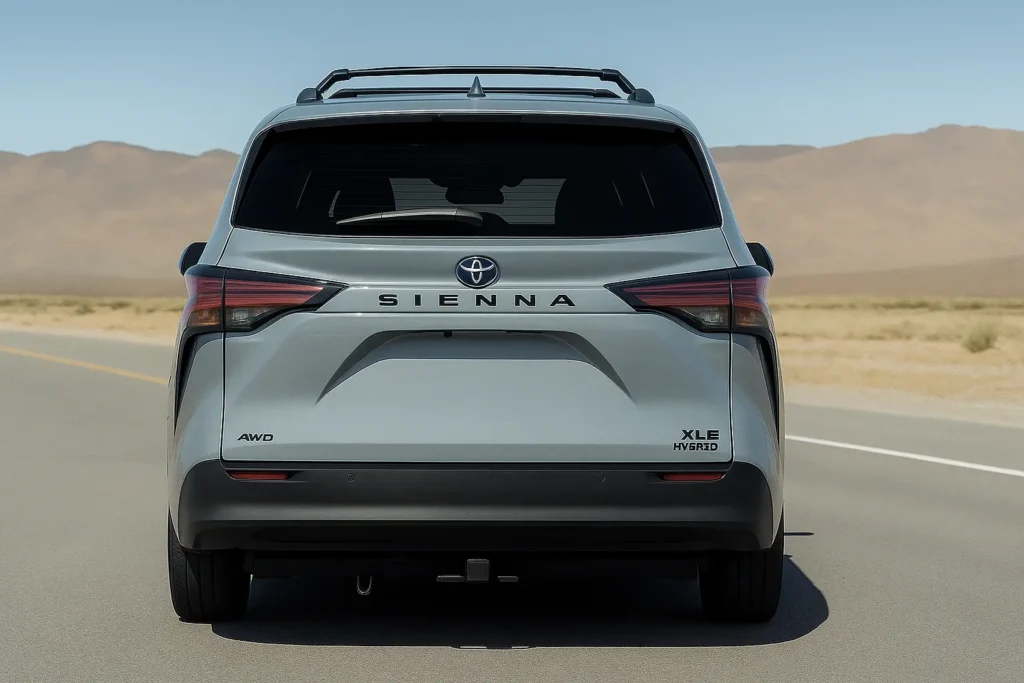
Initially, I assumed the fuel efficiency talk was just another brochure-level fantasy, but after I tested it on mixed routes, the Sienna Hybrid actually averaged around 35 mpg, just a 1 mpg lower than the EPA estimates. That’s borderline superlative for a 203″ long vehicle with all-wheel drive, especially when its V6-powered arch nemesis, the Toyota Grand Highlander, drinks gasoline like it’s still $2.19 a gallon. In reality, potential buyers looking to save during a $5.00/gallon summer will find this thing quietly undercuts a Volvo XC90, and even the Highlander Hybrid SUV, in both space and running costs. On front-wheel drive, it gets 36 mpg city, 36 mpg highway, and a headlining feature of being nearly 50% better than what some still call “AWD upgrades.” No, this isn’t a flex on its skillset, but it’s shockingly usable for its ratings, and it might just convince the spreadsheet-loving suburban crowd that driving a minivan doesn’t mean surrendering your soul—or your wallet.
Interior and Comfort
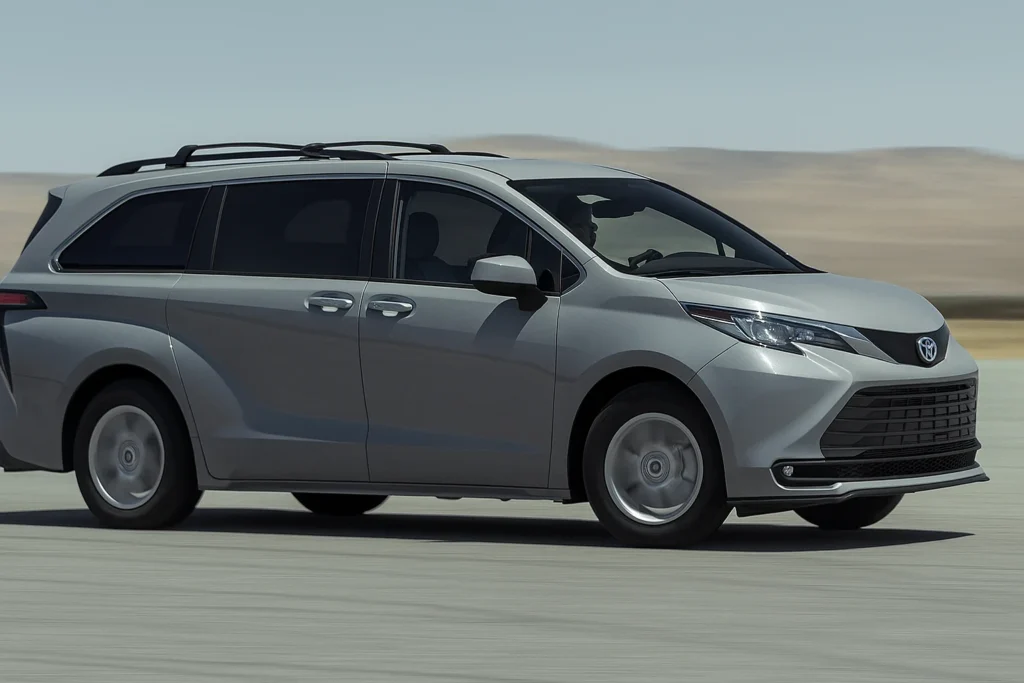
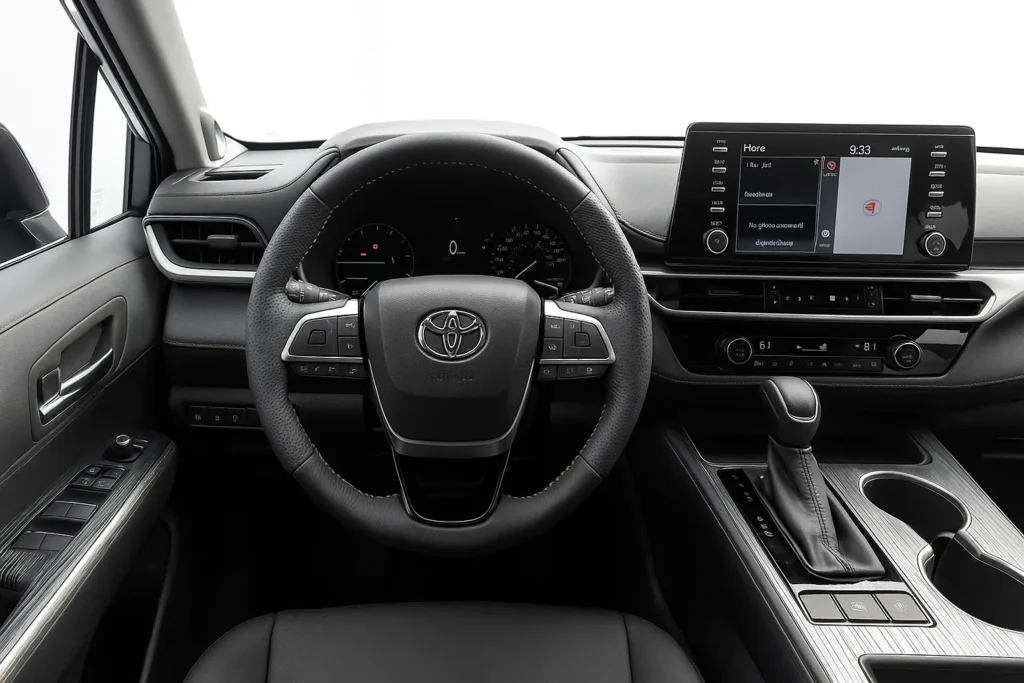
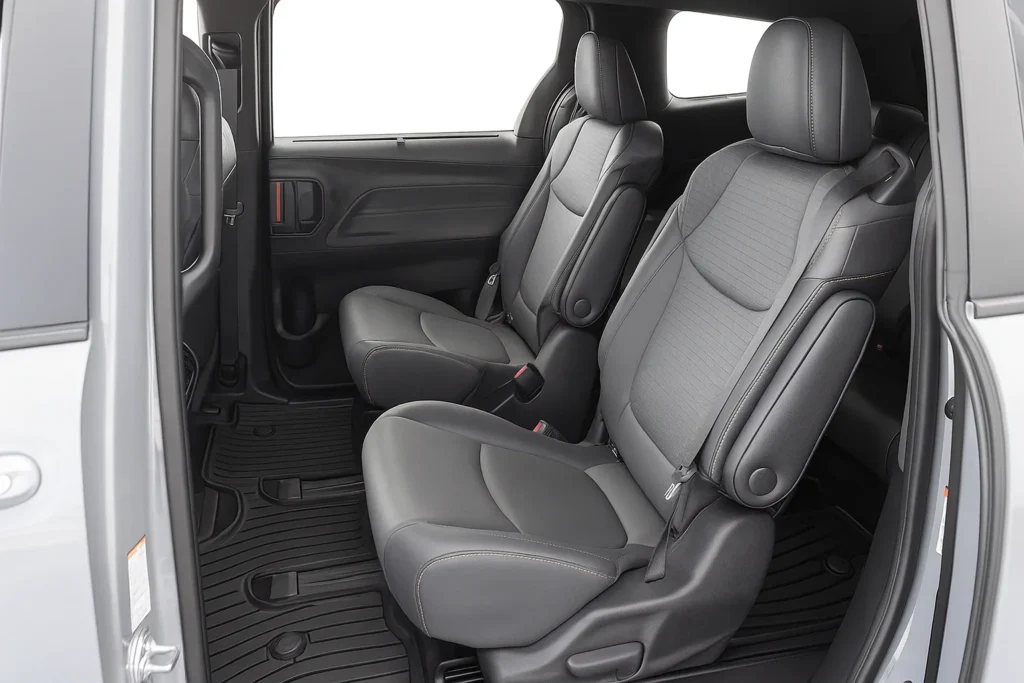
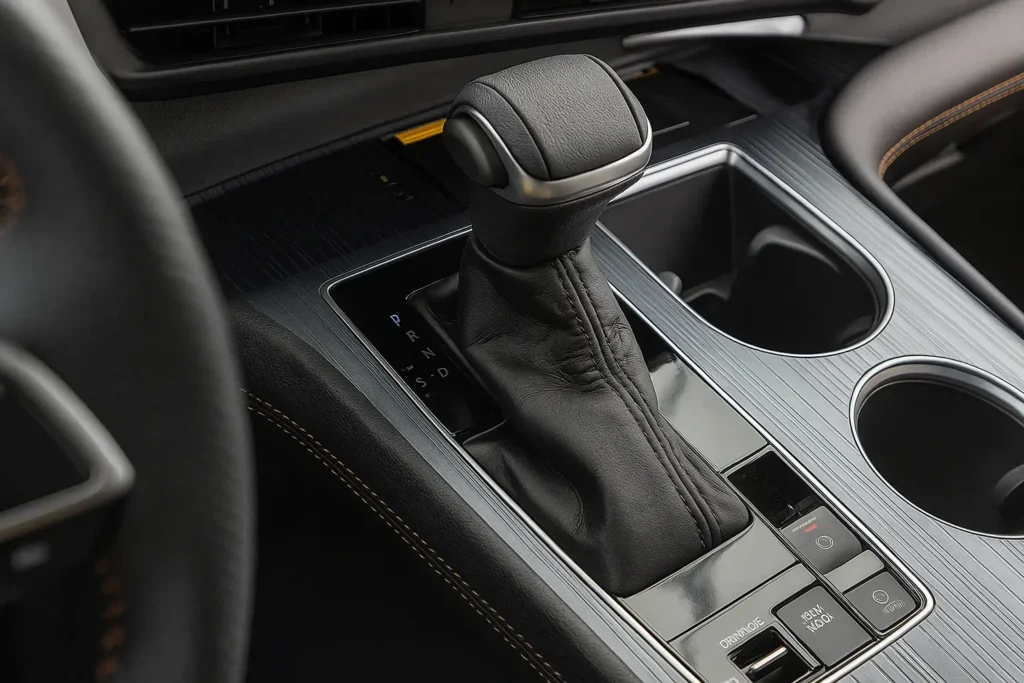
I braced for the usual hard plastics, but the interior hits a strange middle ground—some padded materials, some rubbery bits, and just enough cheap plastics to remind you it’s still a $50,000 vehicle pretending not to be a minivan. The comfort really shows in the second row with ottoman-style footrests, fore-aft sliding, and adjustability that almost feels business-class-like, especially on that unfortunate rental trip to Joshua Tree with your bros and not enough snacks. The driving position is surprisingly excellent, with a wide range of height settings and visibility helped by the surround-view camera system, digital rearview mirror, and see-through view that make backing out of soccer lots less of a gamble. The central touchscreen does catch glare under midday sun, and some buttons require awkward reach, but most primary controls are logically placed and actually function like they were tested by humans. The third-row seats are adult-tolerable, the rear hatch opens with a no-touch swipe of your foot, and the sliding doors actually respond without needing an angry second press. Between four-zone climate control, in-car voice projection (so front passenger voices don’t have to shout into the rear speakers), and an engine so quiet it’s borderline serene, this thing makes the Hyundai Palisade and Mazda CX-9 Signature feel like loud competitors in a not-so-quiet room. Even with the CVT drone, the noise levels stay cozy—hot or cold—and its attributes finally lean into what this Lexus RX 450h+ adjacent transport does best: move humans, family, and occasionally bros, in a space that’s just functional enough to earn your reluctant respect. Something even the Toyota Tundra Platinum aims to capture in its own rugged way.
Cargo & Practicality
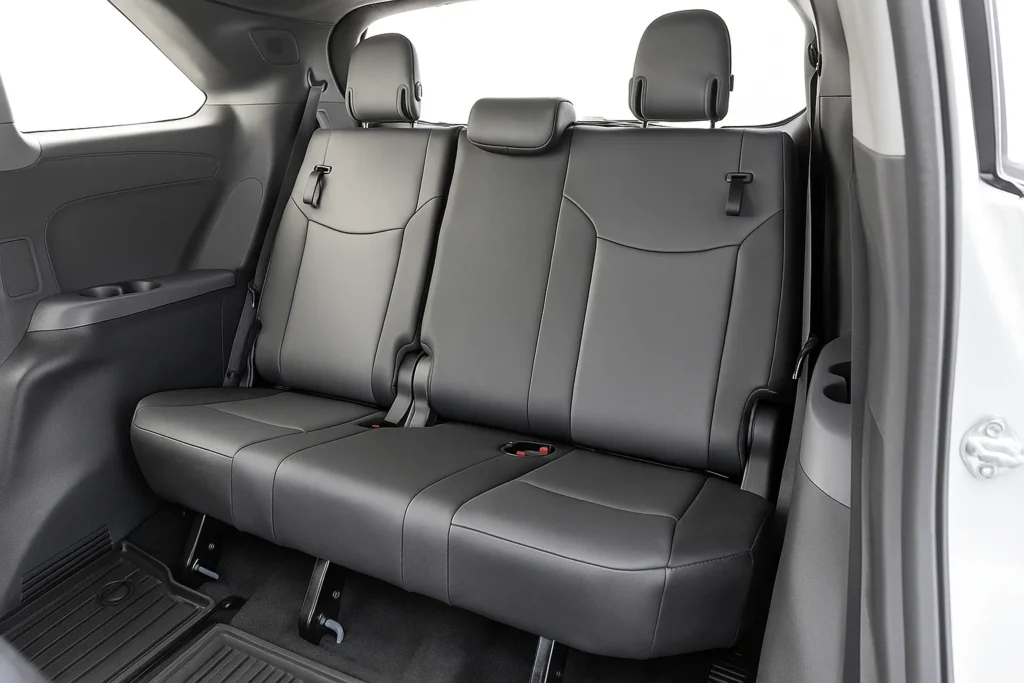
The lack of removable second-row seats felt like a drawback—especially after realizing they’re not easily removable like in the Chrysler Pacifica or even the Toyota Sequoia. But then the deep well behind the third row, the smart cargo solution with hooks, and the multi-level door pockets for personal items made me stop whining. Sure, it won’t win awards for flat-folding tricks, but the seats slide forward, stow away cleanly, and offer access to attachment points for car seats, booster-age kids, or your guilt-packed handbag. The floor stays mostly flat, and the seatback design plus cargo storage feature makes it easier to stash and forget things in a matter of seconds. With up to eight-passenger configurations (including seven-passenger Sienna and five or four-seat setups), it manages to be a utility minivan with surprising flexibility. There’s even a large shelf, 16 cupholders, and enough access for front passengers to grab snacks or frustration with equal ease—because sometimes the real selling point is surviving a trip with fewer arguments. This may not be the exception, but for minivans, it absolutely gets the job done.
Infotainment & Connectivity Features
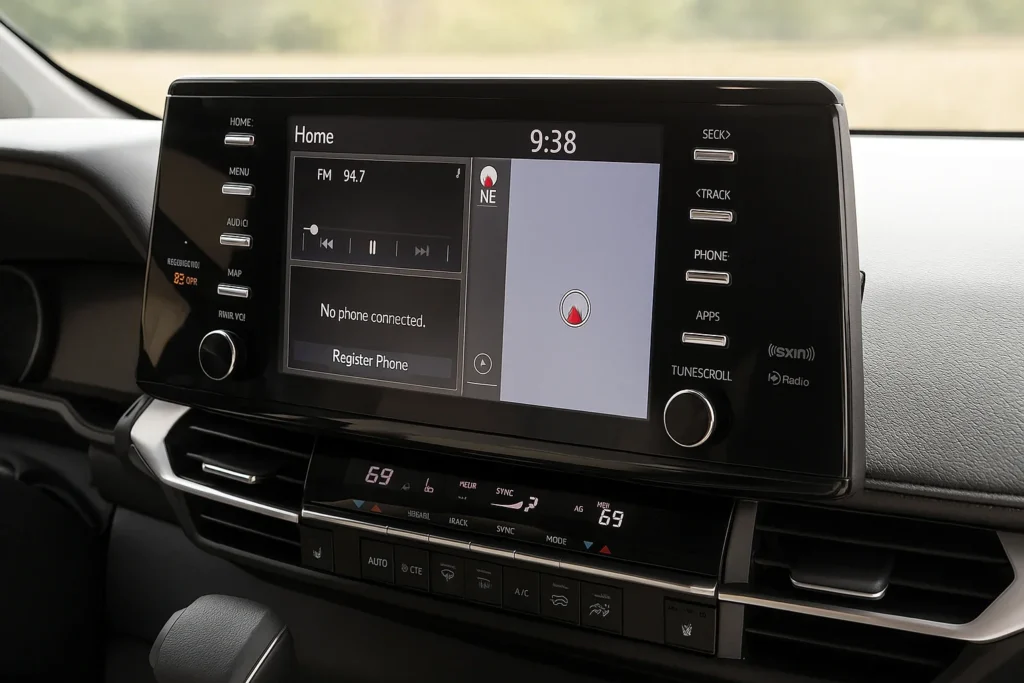
The base stereo on the LE model made the 6-speaker setup feel like an afterthought, but things improve fast once you get into XSE, XLE models, or the Platinum trim where the 12-speaker JBL sound system finally justifies the multimedia system’s hype. The 9-inch multimedia screen sits flush in the dashboard, and while physical buttons still exist for climate controls (thankfully), the infotainment interface can be laggy depending on the pairing process or just plain user error—which I won’t confirm or deny happened to me. You do get Apple CarPlay, Android Auto, Amazon Alexa, and Wi-Fi connectivity as standard, and Driver Easy Speak makes shouting to the third row obsolete, assuming your rear-seat entertainment system isn’t doing the parenting for you. The touchscreen supports native navigation, though its backup camera resolution in harsh shade or reflective surfaces reminds you this isn’t a Genesis GV70. Features like voice command, natural language, the overly enthusiastic “Hey Toyota” wake word, and the multi-info driver display (plus a tiny 4.6-inch digital display) round out a smartphone integration suite that’s solid but not exactly pushing Lexus UX 250h levels. Still, USB ports, storage compartments, and good old cup holders hit their information marks better than some advanced driving aids in the Honda Prologue or Woodland Edition’s 2023 model cousins. It’s not all seamless, but it’s accurate, responsive, and delivers enough redundancy to avoid a brake application just because your playlist glitched.
Safety and Driver Assistance Tech
Initially, the list of driver-assistance features felt overwhelming, like a nervous co-pilot reading warnings from a manual I didn’t ask for—but once you realize Safety Sense 2.0 is standard, it starts to feel less like surveillance and more like a quiet favor. It comes with Pre-Collision with Pedestrian Detection, Lane Departure Alert with Steering Assist, Lane Tracing Assist, Automatic High Beams, and Road Sign Assist, plus adaptive cruise control that actually handles stop & go traffic like it’s trained in mindfulness. The rear parking assist, front parking assist, and auto brake systems work well with the optional 360-degree exterior camera system, especially when navigating tight garages or escaping judgmental neighbors. There’s Rear Cross Traffic Alert, blind-spot monitoring, a Rear Seat Reminder, and plenty of convenience items that try hard to turn a drive into a stress-free oasis—a stretch, but still appreciated. Backed by strong crash-test results from both the NHTSA and the IIHS, this isn’t the barebones Toyota 4Runner approach. No, this is the overly cautious, “just in case” TSS 2.0 vibe wrapped in modern expectations like AppleCar Play, Android Auto, and all the autonomous driving software you can throw at a minivan trying to out-safe a Honda Pilot.
Warranty and Maintenance Plan
The basic warranty package feels standard, but the three years or 36,000 miles of bumper-to-bumper warranty is actually in line with what Mazda CX-30 and Kia Carnival offer—so no bragging rights there. The powertrain warranty steps up a bit with five years or 60,000 miles, and there’s a two-year complimentary maintenance plan that covers up to 25,000 miles, which sounds helpful until you realize oil changes aren’t that expensive. Still, Toyota throws in coverage for hybrid components up to 150,000 miles or ten years, which gives the Sienna some longer coverage that most people won’t appreciate until year eight, when everything else starts falling apart.
Final Verdict: Should You Buy the 2023 Sienna Woodland Edition?
I started out hesitant, fully expecting the usual stigma that clings to minivans like leftover fries in the flat-folding seats, but the 2023 Woodland Edition turned out to be one of the ultimate sleepers in the car world. It won’t give you a V6 engine growl or erase torquesteer, but it nails overall comfortability, fuel economy, and the kind of family-friendly features that make long-haul road trip transportation less of a test of patience. It doesn’t try to out-perform a Honda Passport or pretend to be a Toyota RAV4; instead, it leans into its practical utility, with room to move actual people and the multimedia ease that makes a van feel like less of a compromise. Compared to a Chrysler Pacifica Hybrid, it’s a viable alternative with a better safety update track record and fewer questions about future recalls. The presence is still quiet, and yes, minivan culture hasn’t exactly died off, but in a market saturated with fake-tough crossovers, this is a solid choice for families who just want their life to run smoothly. If you can commit to the practicality, this might secretly become your favorite Toyota. And if you’re still unsure, read the previous article—you’ll be pleasantly surprised how many in the 2024 Sienna model crowd now wish they’d picked this one.
More images of the 2023 Toyota Sienna Woodland Edition


This Post Has 17 Comments
Pingback: 2023 Toyota 4Runner TRD Pro Review: Built to Conquer
Pingback: 2024 Toyota Corolla Hybrid SE Nightshade review
Pingback: 2024 Toyota bZ4X Review: Better Than the Ioniq 5?
Pingback: 2023 Camry Hybrid Review: Discover 51 MPG & Reliability!
Pingback: 2023 GR Supra Manual Review: Faster, Rawer, Better?
Pingback: 2021 Toyota Camry TRD Review: Sporty Power or Daily Driver?
Pingback: 2024 Toyota Corolla Cross Hybrid Review: Price, Specs & Performance
Pingback: 2024 Toyota Grand Highlander Hybrid Review: Best Family SUV?
Pingback: 2023 Toyota GR86 Review: Manual Thrills vs Automatic Pitfalls
Pingback: 2023 Toyota Sequoia Platinum Review: Shocking Features
Pingback: 2021 Toyota Avalon Review, Pricing, and Photos
Pingback: 2024 Toyota RAV4 Hybrid Woodland: Rugged & Efficient SUV?
Pingback: 2023 Toyota Prius Review: Why It’s Finally Worth the Hype!
Pingback: 2024 Toyota Land Cruiser Review: Off-Road Legacy Meets New Tech
Pingback: 2024 Toyota Tacoma TRD Off-Road Review: Is It Really Improved?
Pingback: 2024 Toyota Crown Hybrid Max Review: Reign of Luxury!
Pingback: 2025 Kia Carnival Hybrid Review and Road Test