

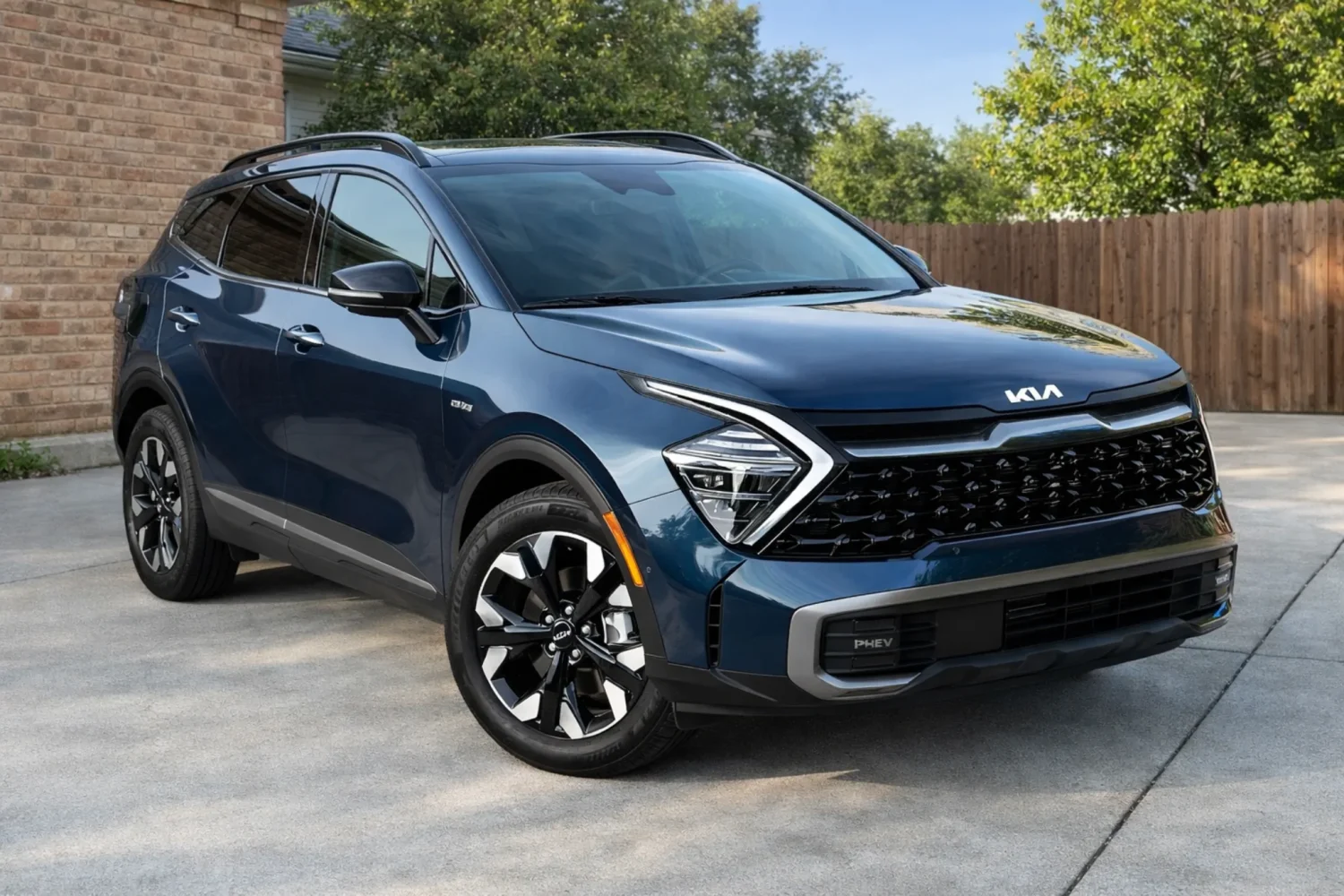
Pros & Cons
- Normal SUV, silent errands
- Comfort-first tuning feels sorted
- AWD standard, winter-ready clearance
- Enthusiast thrill factor muted
- Plug-in payoff needs discipline
- Occasional software quirks, recalls
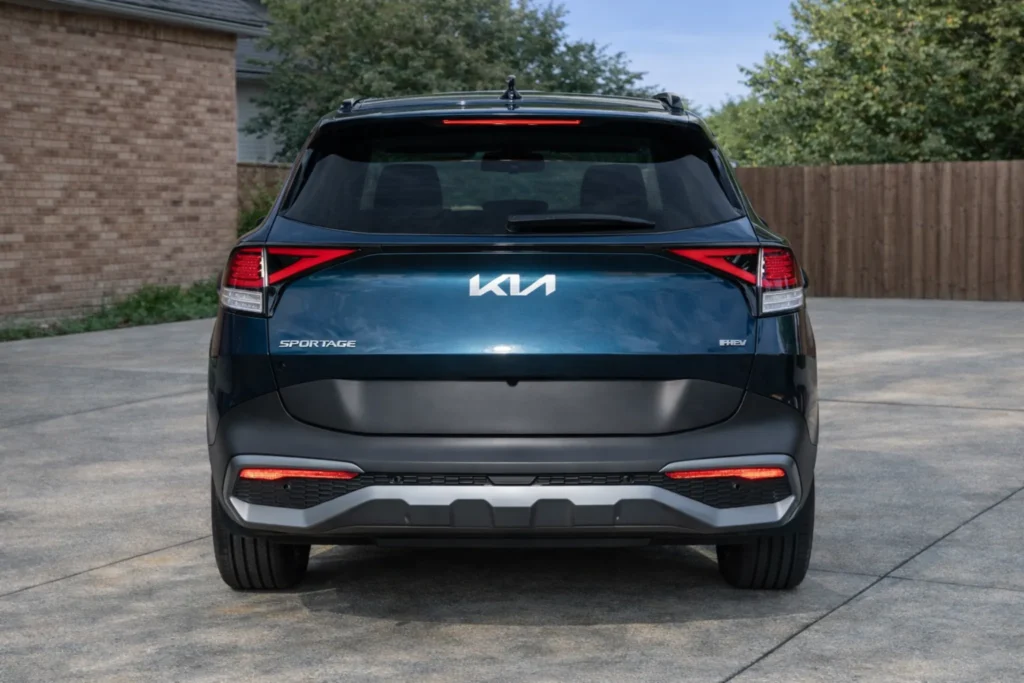
2023 Kia Sportage Plug-in Hybrid Review with Vyocar
It’s the rare plug-in that feels completely normal—almost too normal—because the whole “PHEV magic” only shows up if you treat charging like a daily ritual.
Who the Sportage PHEV is best for (and who should skip it)
This is the part buyers usually get wrong. The Sportage Plug in Hybrid is not a better version of the regular Sportage for everyone. It is a very specific solution for a very specific kind of driver. After living with one, the line between who should buy it and who should walk away becomes pretty clear.
Is the 2023 Kia Sportage Plug-in Hybrid actually good?
Yes, it is good, but not in the way a lot of people expect.
The Sportage PHEV feels well sorted, comfortable, and quietly confident in daily use. It drives like a normal compact SUV first, not like a science project. Around town, the electric motor does most of the work, which makes it smooth off the line and relaxed in traffic. There is enough power when you lean into it, but it is never sporty or eager. It is calm, not exciting.
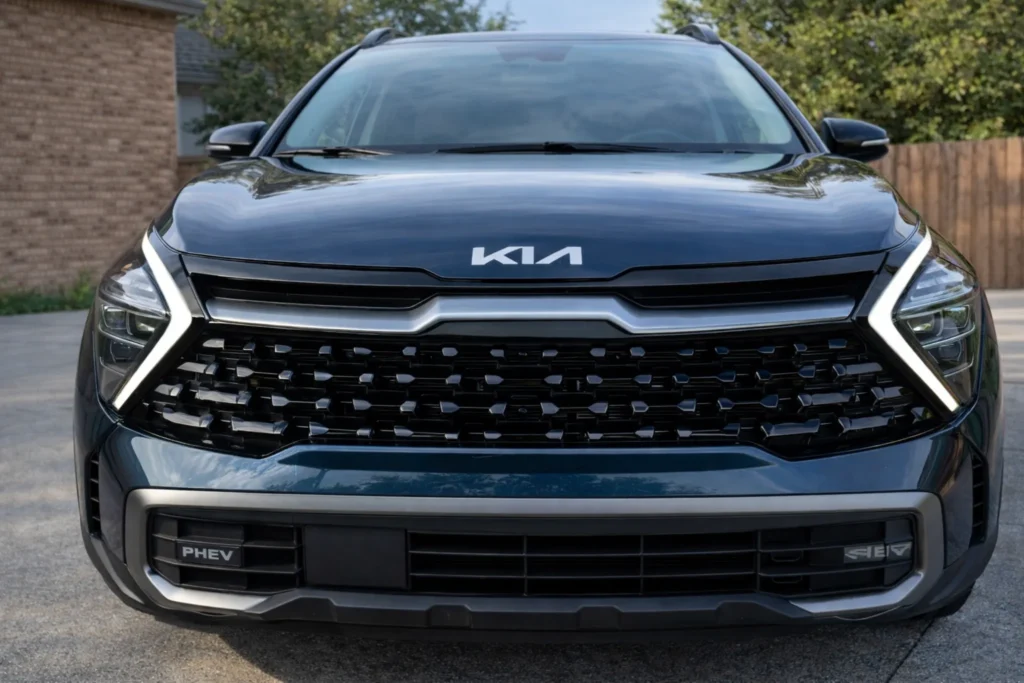
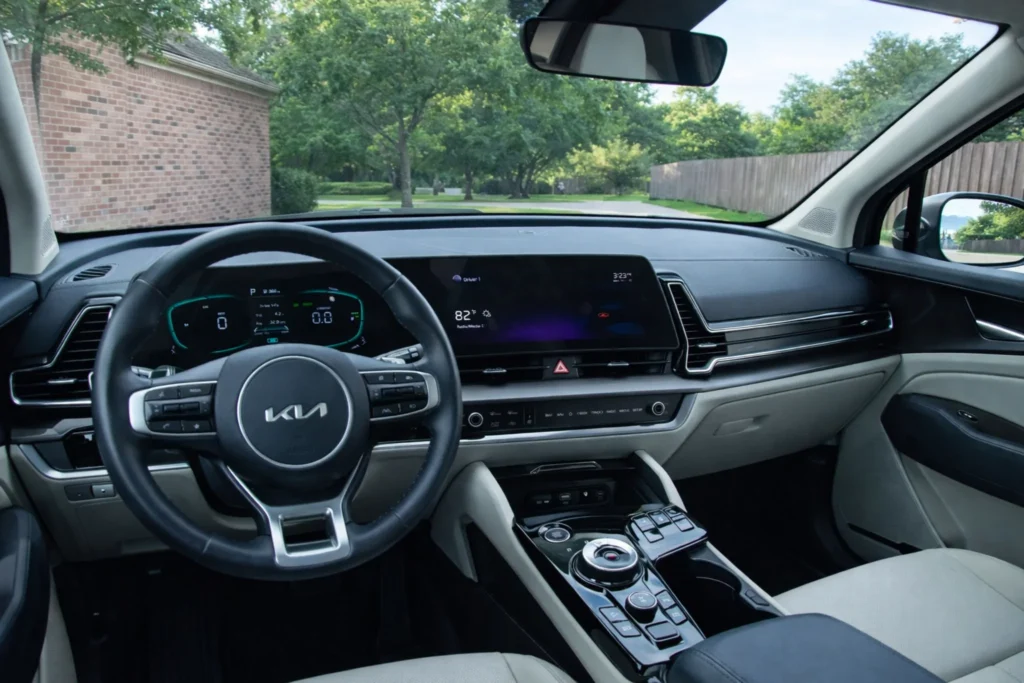
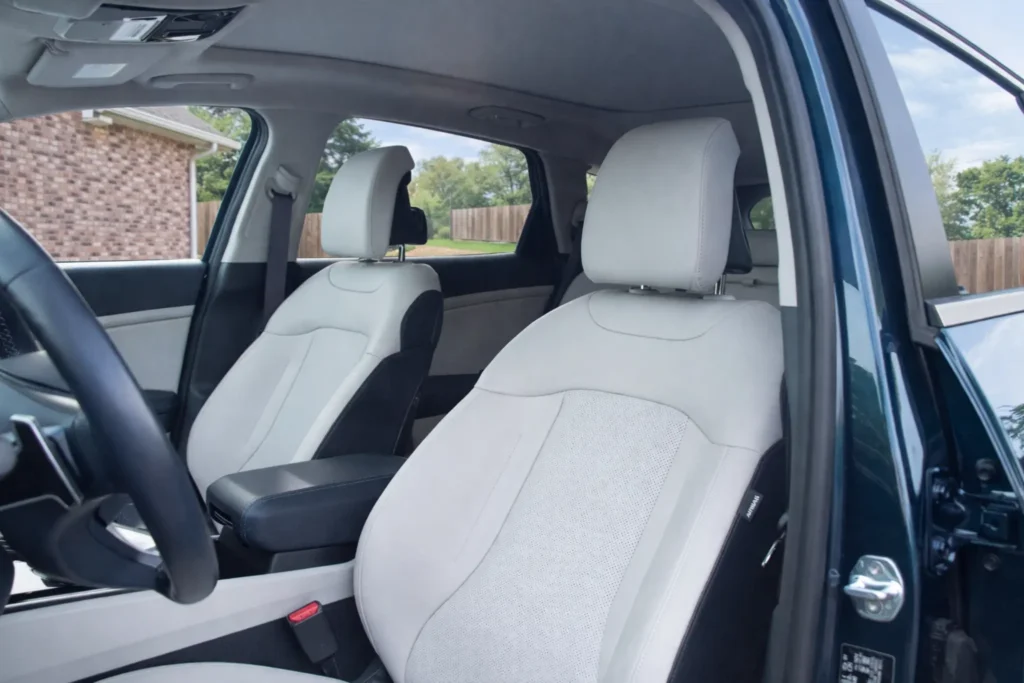
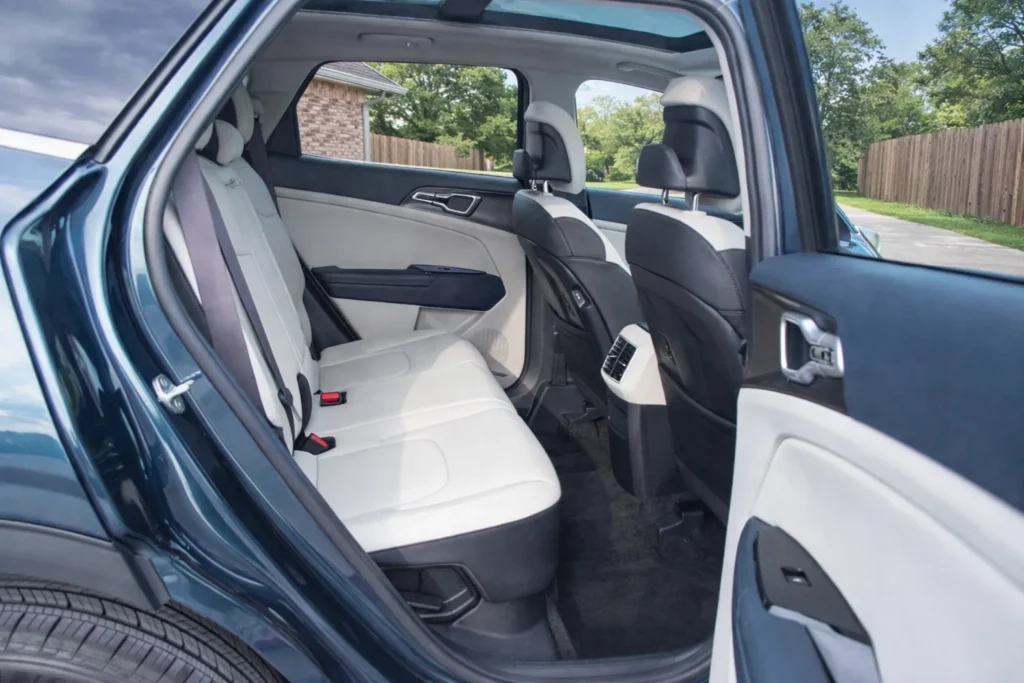
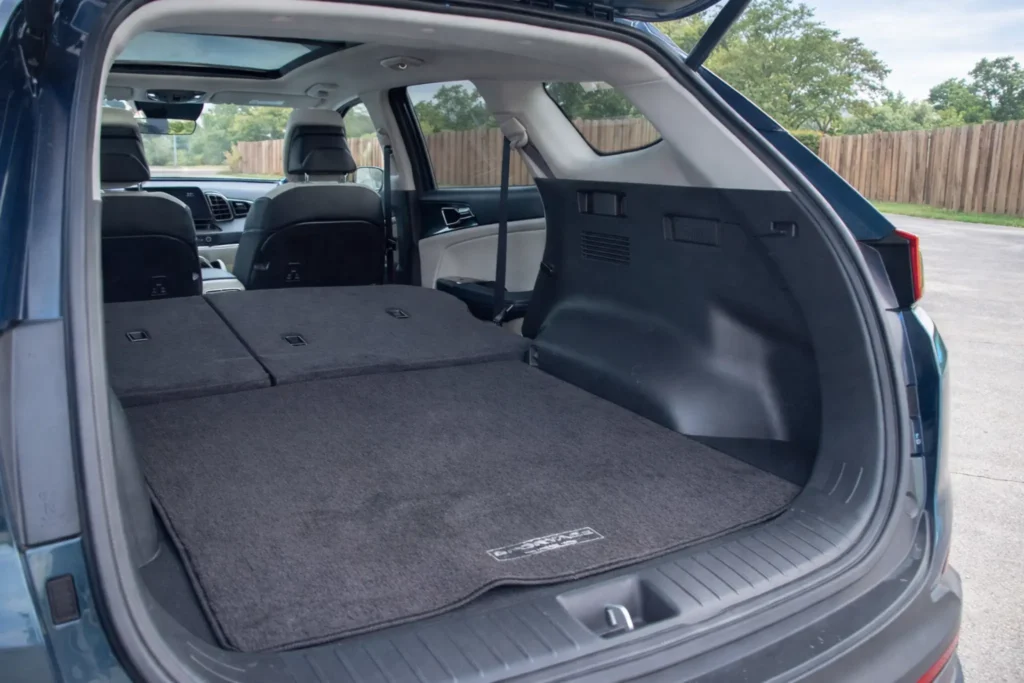
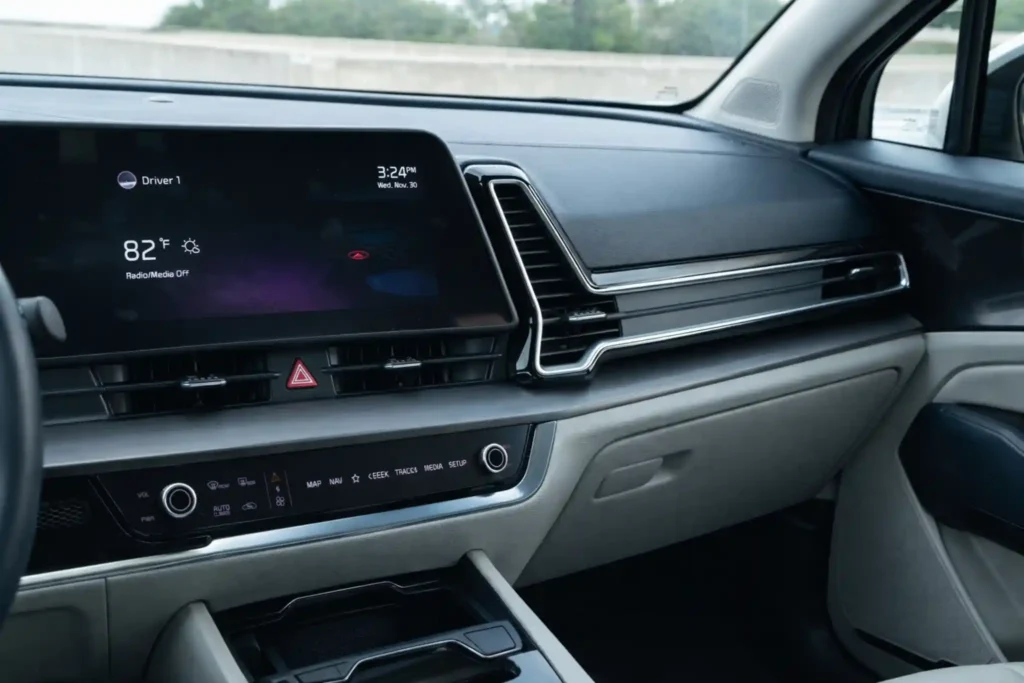
The interior quality is better than older Kia models, especially in higher trims. The cabin feels modern and functional rather than luxurious. Materials are decent, controls are mostly intuitive, and visibility is excellent. It feels like a car designed to be lived with, not admired in a showroom.
Where it falls short is emotional appeal. If you are expecting the plug in badge to mean something transformative, you may be disappointed. It does not feel dramatically different from a good hybrid. It just operates more quietly and uses less fuel if you plug it in.
Is a plug-in hybrid worth it for your daily driving?
A plug in hybrid is worth it only if your routine fits its strengths.
If your daily driving is mostly short trips, commuting under 30 miles round trip, school runs, errands, and local traffic, the Sportage PHEV makes real sense. You can do most of your driving on electricity, charge at home overnight, and burn very little fuel during the week.
If you cannot charge at home or work, the value drops fast. Without regular charging, you are carrying around a heavy battery that provides little benefit. In that situation, a regular hybrid is usually the smarter choice.
Long highway commuters who rarely plug in will not see meaningful gains. Neither will buyers hoping to save money purely through fuel costs without changing habits. A plug in hybrid rewards discipline. If you treat it like a normal gas SUV, it will behave like one, just heavier and more expensive.
This car is best for owners who like routine, have predictable driving patterns, and actually enjoy plugging in. If that sounds like you, it works. If not, there are better options.
I acknowledge the structure and will follow it exactly. Now writing one H2 section only, including its H3s, then I will stop.
Real-world MPG and “true” fuel economy
Fuel economy is where plug-in hybrids either feel like a cheat code or a mild disappointment. The Sportage PHEV can be both, depending on how you actually live with it.
The trick is understanding that there are really two Sportages hiding in the same body. One is an electric commuter that sips from a wall outlet. The other is a regular hybrid SUV hauling a bigger battery around once the charge is gone.
On paper, the EPA says the 2023 Sportage Plug-in Hybrid can run 34 miles on electricity and posts 84 MPGe when you’re driving on electricity plus gas, but it’s also rated at 35 MPG when you’re running it on gas only. That split tells you almost everything you need to know about what you’ll feel in real life.
What is the real consumption of the Kia Sportage plug-in hybrid?
If you plug in consistently, the real-world “consumption” is less about MPG and more about how often you visit a gas station at all.
In normal suburban life, the Sportage PHEV’s EPA 34-mile electric range is enough to cover a lot of weekday driving. If your commute and errands fit inside that bubble, you can go days without burning fuel, especially in mild weather when the heater is not working overtime.
But the moment the battery is depleted, the Sportage PHEV stops being magical and starts being a decent hybrid. The EPA’s gas-only rating is 35 MPG. That is fine, but it is not the runaway efficiency people assume they’re buying.
And in independent testing, it can land lower than that when it’s working as a hybrid with the battery depleted. Consumer Reports recorded 31 mpg overall in that depleted-battery hybrid mode. That lines up with what I tell buyers: if you are not charging regularly, you should not buy the plug-in version for fuel savings. You are paying extra to carry extra weight.
So the real answer is blunt: the Sportage PHEV only “wins” when you treat charging like brushing your teeth. Skip that habit, and your fuel economy looks a lot like a normal hybrid crossover, sometimes worse.
What is the true MPG of the Kia Sportage Hybrid?
The “true” MPG depends on which Sportage Hybrid you buy and how fast you drive.
The EPA numbers are strong. The front-wheel-drive Sportage Hybrid is rated at 43 MPG combined (42 city, 44 highway). The all-wheel-drive hybrid drops to 38 MPG combined. That AWD penalty is real, and you feel it in fuel stops over a long year.
Now here’s the part owners notice: highway speed and conditions can knock those numbers down hard. Edmunds saw 34.5 mpg on its real-world evaluation route with an AWD Sportage Hybrid. Car and Driver’s 75-mph fuel-economy loop returned 31 mpg for an AWD Sportage Hybrid. That’s not a “bad hybrid,” that’s what happens when you push a compact SUV through the air at real interstate speeds, with real wind, real grades, and real traffic.
So the true MPG is this: If you do a lot of city driving and keep speeds sane, the Sportage Hybrid can live in the high 30s to low 40s depending on drivetrain. If your life is mostly 75 mph highway, expect low 30s, especially with AWD.
How many miles per gallon does a 2023 Kia Sportage Hybrid get?
Officially, it breaks down cleanly:
The 2023 Sportage Hybrid FWD is rated at 42 mpg city, 44 mpg highway, and 43 mpg combined. ([Fuel Economy][3]) The 2023 Sportage Hybrid AWD is rated at 38 mpg city, 38 mpg highway, and 38 mpg combined. ([Fuel Economy][4])
In day-to-day ownership terms, that means the FWD hybrid is the mileage champ, and the AWD hybrid is the one you buy for traction and peace of mind, not because you’re chasing a number on a window sticker.
If you want the cleanest “how many MPG” answer, it’s those EPA figures above. If you want the honest answer, plan for a range. Driving style, temperature, tires, speed, and whether you live in stop-and-go or wide-open freeway country will swing it more than most people want to admit. The hybrid system is good, but physics still collects its fee.
Charging behavior and how it drives day to day
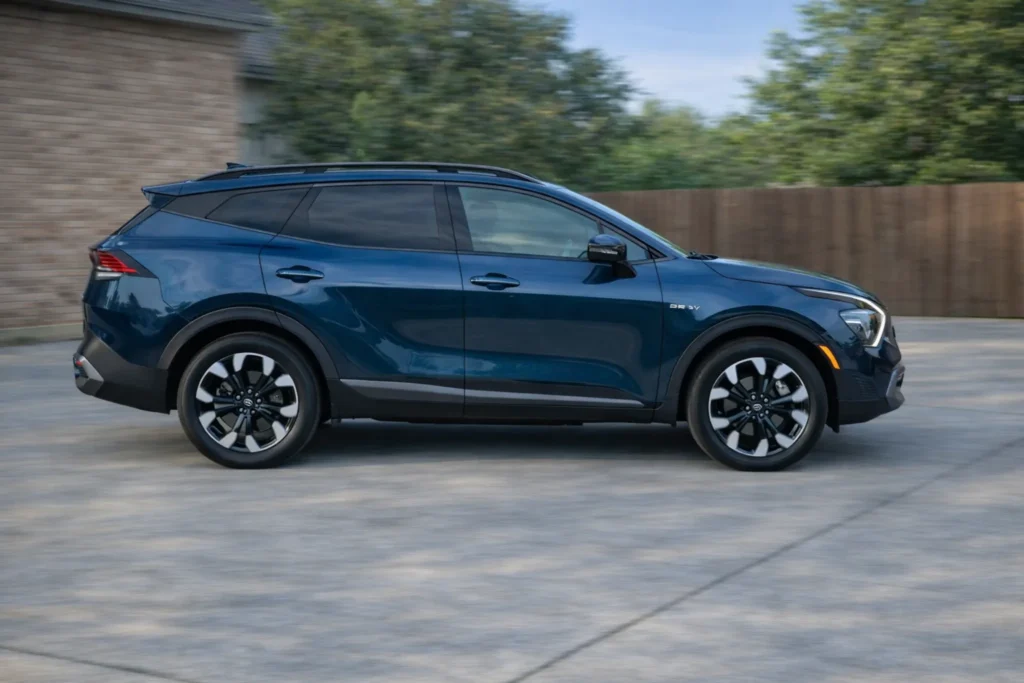
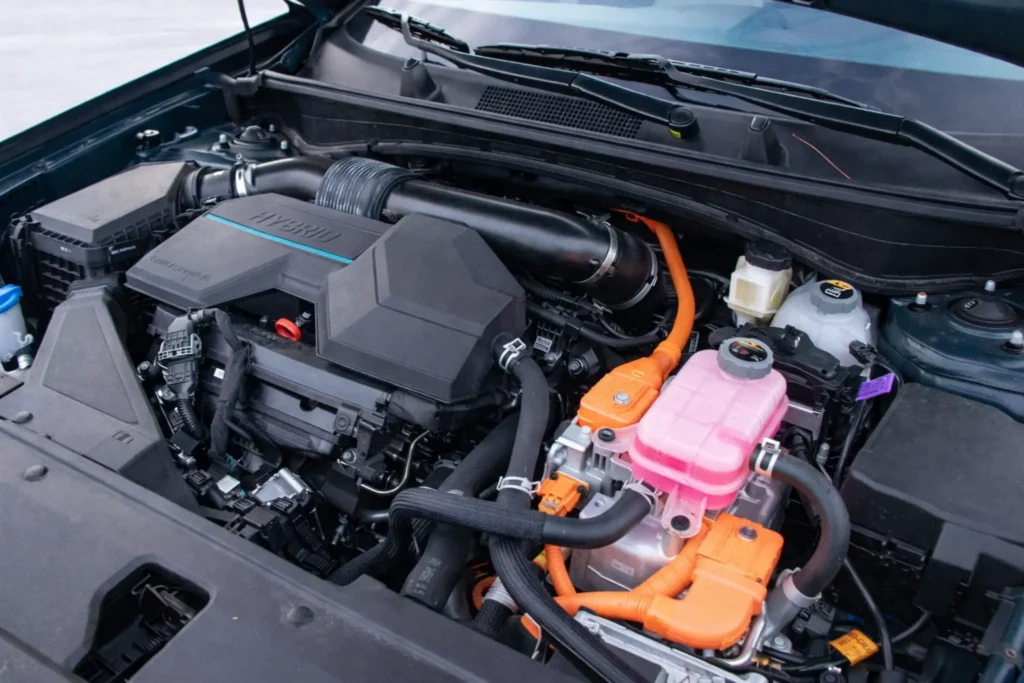
The Sportage PHEV is at its best when you treat charging like part of the routine, not a special event. Plug it in at home, let it wake up with a full battery, and it behaves like a quiet electric runabout for most daily trips. Ignore charging, and the whole plug-in idea turns into a heavy hybrid doing a decent impression of efficiency.
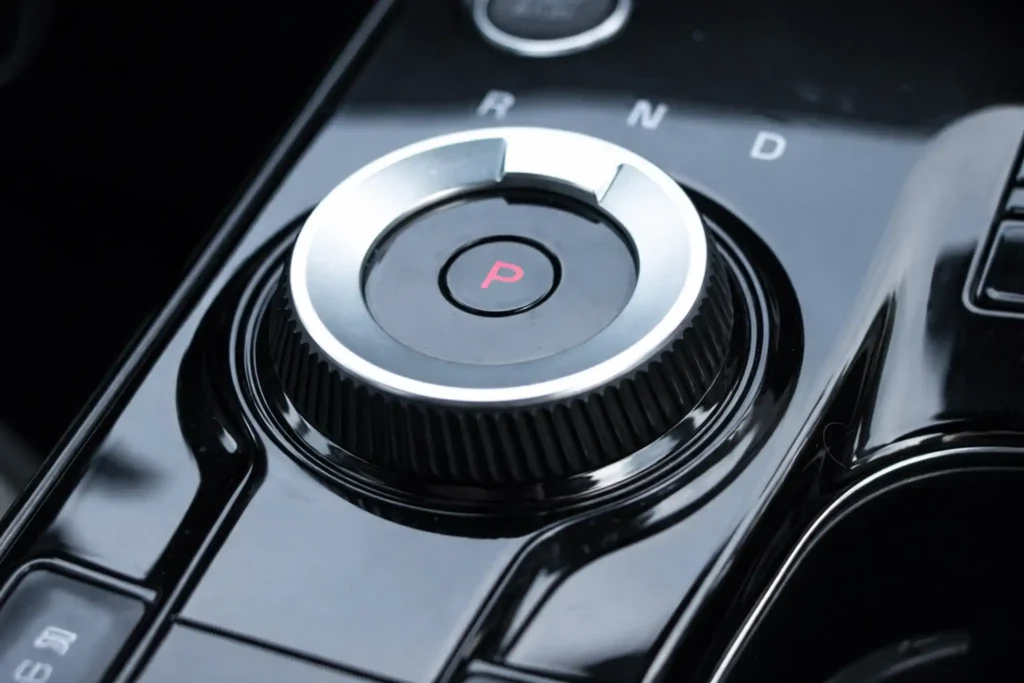
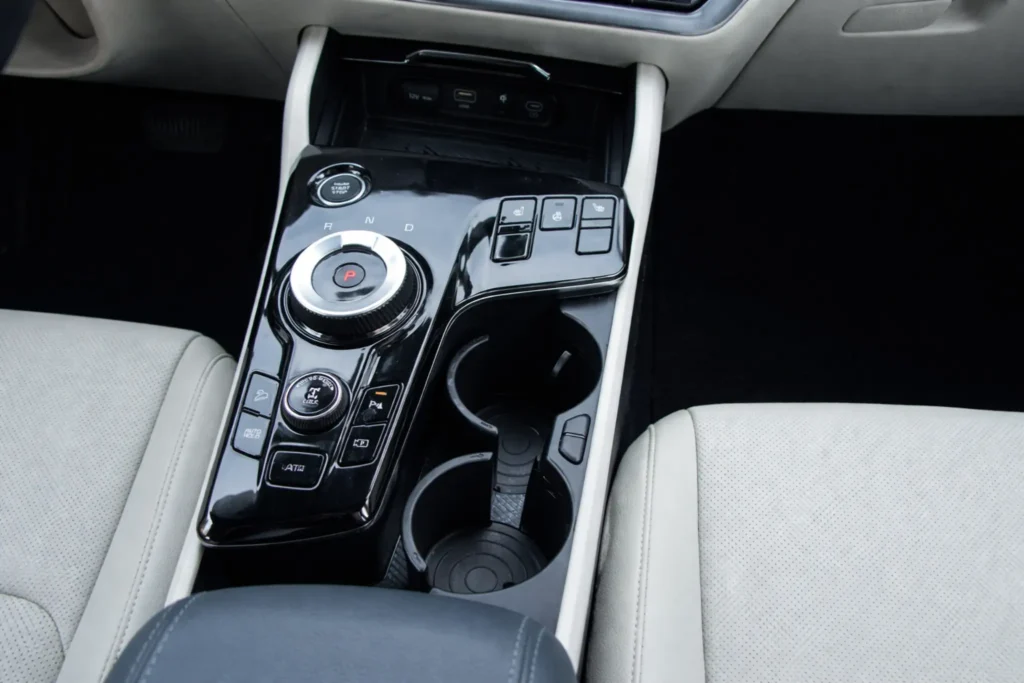
Day to day, the car’s personality is shaped by two things: how often you charge, and which drive mode you leave it in. Kia’s own documentation spells out that the EV/HEV button cycles through three PHEV modes: Automatic (AUTO), Hybrid charge-sustaining (CS), and Electric charge-depleting (CD). That sounds technical, but in plain English it means: let the car decide, save the battery, or spend the battery.
Charging at home is straightforward. With a 240V Level 2 setup, you are looking at a couple of hours to refill the battery, with Consumer Reports noting about two and a half hours on Level 2. That is the difference between “this makes sense” and “this is annoying.” On a regular 120V outlet, it will charge, but it becomes an overnight commitment, and if you forget, you feel it the next day.
Does the Kia Sportage plug-in hybrid charge itself?
Not in the way most people mean when they ask that.
Yes, it can recover energy while you drive. Kia’s plug-in hybrid energy-flow explanation shows the high-voltage battery charging through regenerative braking (wheel to battery) and also charging via the engine when stopped (engine to battery). But that is not a substitute for plugging in.
Here’s the blunt reality: regenerative braking is a drip feed. It is great for efficiency, not for refilling an empty battery back to full EV range. Engine charging is possible too, but it is basically burning fuel to make electricity to store in a battery you could have charged cheaply at home. It works in a pinch, but it is not the point of owning a plug-in hybrid.
Also, even when you select electric driving, the gasoline engine is not banned. Kia notes the engine can turn on in CD mode because of factors like using the heater or frequent aggressive accelerator inputs. That matches what owners notice: you can ask for EV driving, but the car will protect itself and meet your demands first.
So yes, it “charges itself” in the background. No, it does not replace external charging, and if you buy it expecting that, you are buying the wrong drivetrain.
Does the Kia Sportage PHEV charge while driving?
Yes, but you need to understand what kind of charging it is.
The simple part is regenerative braking. Every time you lift off or brake, the system can send some energy back into the high-voltage battery. Kia’s energy-flow guide calls this out directly as “Regeneration,” charging the hybrid battery through regenerative braking. In real life, you see that as a small bump in battery state of charge during stop-and-go driving or long downhill stretches.
The second part is engine-assisted charging. Kia also describes scenarios where the engine can both drive the vehicle and charge the high-voltage battery at the same time, essentially using the engine as a generator while you roll. This is where people get tempted to treat the car like a gas-powered charger for their battery. It can do it, but it is not efficient, and you usually feel the penalty at the pump.
If your goal is to arrive somewhere with battery left for city driving, the smarter move is to use the modes properly. That is exactly why Kia gives you AUTO, CS, and CD behavior through the EV/HEV button. Use charge-sustaining when you want to preserve what you have, and use charge-depleting when you actually want to spend it. Trying to “make” charge on the highway is possible, but it is rarely worth it unless you have a very specific reason.
Battery lifespan and long-term durability
Plug-in hybrids make people nervous because they feel like “two drivetrains taped together.” Living with the Sportage PHEV, that fear mostly fades on normal days, then comes back the moment you start thinking long-term: battery health, replacement cost, and whether the whole system ages gracefully.
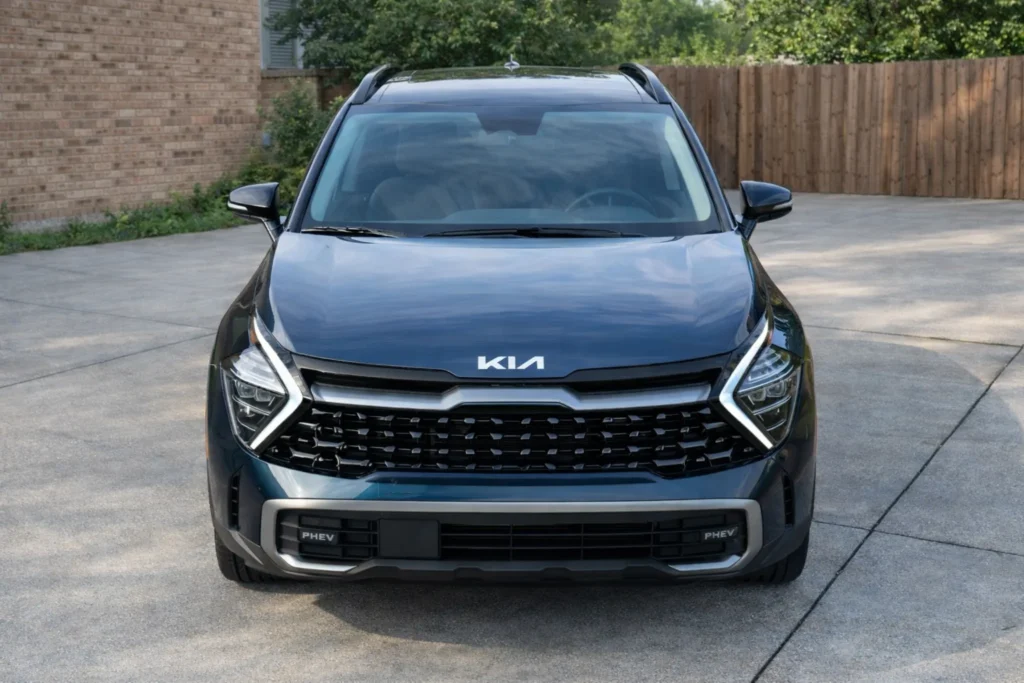
The good news is the Sportage PHEV’s battery is not some tiny stop-start pack. It’s a proper 13.8 kWh lithium-ion pouch setup. That matters because a larger pack can do the same daily work with less stress, assuming you do not treat it like a phone and leave it baking at 100% charge all summer.
What is the Sportage PHEV’s battery lifespan?
In real ownership terms, you should think in two timelines: “how long it stays useful” and “how long it stays trouble-free.”
Useful means the EV range slowly shrinks. That is normal. With a 13.8 kWh pack you are starting with enough buffer that a bit of degradation does not ruin the point of the car. If you are the kind of driver who charges nightly and does lots of short trips, the battery will cycle more often, but it usually cycles in a controlled window rather than full-to-empty punishment every day. That’s how most automotive battery management is designed: keep the battery away from the extreme ends so it lives longer.
Trouble-free is where warranty tells you what the manufacturer is willing to stand behind. For the 2023 Sportage Plug-in Hybrid, Edmunds lists an EV battery warranty of 10 years / 100,000 miles, and a hybrid component warranty of 10 years / 100,000 miles. That does not guarantee your pack is perfect at year ten, but it does set a baseline: Kia is not acting like this thing is a fragile science project.
What actually shortens life is boring stuff: heat, sitting fully charged for long periods, and lots of hard cycling in extremes. If you park outside in brutal summers with the battery pegged at full all day, you are stacking the deck against yourself. If you charge to full right before you leave in the morning, and you are not regularly running it down to fumes, you are treating it like an adult-owned appliance.
My honest take: the Sportage PHEV battery is likely to be a “slow fade” story, not a sudden cliff, unless you get unlucky with a defect or abuse it. The bigger ownership risk is not that the pack dies early, it’s that you buy a used one from someone who never charged it, drove it like a heavy regular gas SUV, and still expected magic.
How long will a Kia Sportage Hybrid battery last?
The regular Sportage Hybrid is a different workload. Smaller battery, shallower cycling, constant assistance rather than big plug-in swings. That tends to be easier on the cells. There’s research from NREL pointing out that hybrid-electric vehicle batteries can achieve more than 10 years of life by using only a small portion of their total energy. That’s the key concept: hybrids survive by living in the middle of the battery’s comfort zone.
Warranty norms back up the expectation that these packs are meant to last a long time. The U.S. The Department of Energy notes that many manufacturers offer 8-year/100,000-mile warranties for EV batteries. A hybrid pack is typically treated similarly in spirit even when the exact terms differ by brand and region. In Kia’s case, for the Sportage PHEV specifically, both the battery and hybrid components are shown at 10 years / 100,000 miles by common reference sources.
In plain language: if you maintain the car normally and do not cook it in extreme heat while it sits fully charged forever, a Sportage Hybrid battery should feel like a non-event for most of the ownership cycle. It’s not immortal, but it’s also not the ticking time bomb some used-car commenters make it out to be.
How many years will a PHEV last?
A PHEV’s lifespan is not just “when the battery dies.” It’s when the whole package stops making sense financially or becomes annoying to live with.
A well-kept PHEV can absolutely be a 10-year car. The tech is mature enough now that the hybrid side is not experimental, and the battery side is protected by real warranty coverage in markets like the U.S. The bigger question is what kind of owner you are.
If you actually plug it in and your daily driving fits the EV range, you reduce engine run time, cut fuel use, and the car feels like it’s doing what you paid for. If you never charge, you carry around a battery and motor like gym weights you forgot to take out of the trunk. In that scenario the car can still last, but you are living the worst version of the deal: extra complexity, less payoff.
Here’s the blunt ownership reality: most PHEVs age fine mechanically, but they age emotionally based on charging habits and infrastructure. If your home charging situation is solid and you drive like a normal human, a Sportage PHEV should not scare you as a long-term vehicle. The battery will degrade gradually, not collapse overnight, and the warranty coverage tells you Kia expects it to survive real use.
Reliability: common problems to know before you buy
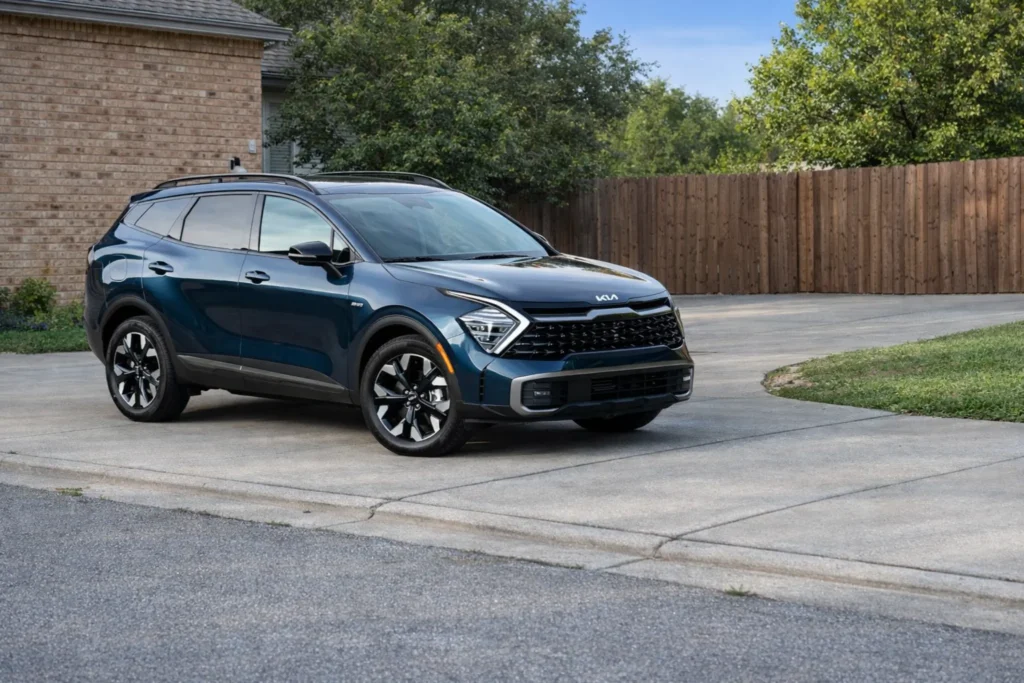
Living with the Sportage PHEV day to day, I came away with a pretty clear takeaway: the mechanical bits feel ordinary in a good way, but the ownership experience can be shaped by software, screens, sensors, and how quickly your dealer can diagnose a weird fault when it shows up. That matters because a plug-in hybrid is basically a normal crossover with an extra layer of computers and high-voltage hardware strapped on top.
What is the most common problem with the Kia Sportage?
The most common theme I see, and the one I care about the most as an owner, is electronics acting up.
Sometimes it’s minor stuff like an infotainment glitch or a camera that decides it’s taking the day off. Sometimes it’s serious, like the instrument cluster going blank. Kia issued a recall (NHTSA 23V298) because the instrument cluster display can become blank due to software behavior combined with voltage instability during startup, which means you can lose critical warnings and indicators.
That recall exists for a reason: a dead cluster is not an “annoying” problem. It’s a safety problem, because you’re driving without the information you’re supposed to have in front of you.
What is the biggest problem with the Kia Sportage?
The biggest problem is not one specific broken part. It’s the way the Sportage can fail.
When a simple gasoline SUV has a problem, it’s often noisy, leaky, or rough-running. You get symptoms a normal shop can chase. With the Sportage, the worst cases tend to be system-level faults that knock out multiple features at once, or make the car feel unpredictable. One owner report on Edmunds describes a cascade where infotainment buttons, rear camera, climate control, and driver-assist features intermittently stopped working, and the vehicle spent extended time at the dealer while they tried to pinpoint it.
That kind of issue is the real ownership tax. Not because every Sportage will do it, but because when it happens you’re not debating a rattle. You’re debating whether you can trust the car this week, and whether your local dealer is quick and competent enough to sort it out.
There’s also a separate recall (NHTSA 23V531) for certain 2023 Sportage vehicles where an Idle Stop & Go oil pump controller can overheat and increase the risk of a fire, with advice to park outside until the repair is completed. That recall is not PHEV-specific, but it’s part of the bigger story: on a modern Sportage, the problems that matter most are the ones tied to electronics and control modules, not worn-out old-school hardware.
What are common problems with the Sportage PHEV?
With the plug-in hybrid specifically, the patterns shift a little. You still have the same “screen-and-software” personality, but now you add PHEV-flavored headaches.
The first one is 12-volt drama. Owners describe situations where the car effectively goes dead, even when the high-voltage battery is fine, forcing a jump or a reset to wake up the systems. One thread about a 2023 Sportage PHEV describes the vehicle becoming fully unresponsive, key fob not working, app disconnected, and needing a jump start to bring it back. That’s not “my battery is old,” behavior. That’s “this car has a lot of modules that need to stay happy,” behavior. As an owner, it changes how you think: you keep a jump pack in the garage, you pay attention to how long the car sits, and you stop trusting that “fully charged” automatically means “will definitely wake up.”
The second one is accessory-driven weirdness. There’s a newer recall (NHTSA 25V874) that applies to 2023–2025 Sportage PHEV models equipped with a 4.2-inch screen and a genuine Kia tow hitch harness accessory. A software error can cause the instrument panel screen to fail, and the remedy is replacing the tow hitch harness control module. That’s a very specific trigger condition, but it’s a perfect example of what makes PHEVs feel fussy: you can do something totally normal, like add an OEM accessory, and suddenly you’re dealing with a screen failure recall.
The third one is charging and charging-related interruptions. I’m not talking about “it charges slowly on Level 1,” that’s normal. I mean the occasional handshake issues owners report where charging stops unexpectedly or refuses to start. These aren’t universal problems, but they show up often enough in owner chatter that I’d want to test charging behavior before buying a used one, especially if you rely on charging to justify the PHEV in the first place. (I treat this as a due-diligence item, not a dealbreaker.)
If you want my blunt ownership take: the Sportage PHEV is not a fragile vehicle, but it can be an emotionally high-maintenance one. Most of the pain points are electronic and software-driven, which means they can be hard to predict and sometimes slow to diagnose.
Which Kia Sportage to stay away from
If you’re shopping Sportage models across a few years, here’s the uncomfortable truth: most of the time you’re not “avoiding a bad trim.” You’re avoiding a bad era, a bad engine family, or a vehicle with unresolved recall baggage that turns ownership into a slow drip of annoyance.
I like the Sportage concept, especially in hybrid and plug-in form, but I’m not sentimental about it. Some years are simply the wrong bet.
Years, trims, and patterns to avoid when shopping used or new
The cleanest “avoid” answer is 2011–2013 Sportage models with the Theta II 2.4-liter MPI engine. Those exact Sportage years are listed as “Class Vehicles” on the Kia Engine Class Settlement site, tied to allegations of engine seizure, stalling, failure, and fire risk, plus warranty extension terms. That does not mean every single one will fail, but it does mean the risk profile is louder than it should be for a daily-driver crossover.
If you want a second data point from the real world, complaint aggregation sites consistently flag that same neighborhood as ugly. CarComplaints calls out the 2012 Sportage as the worst model year and points to engine problems as the biggest category. I don’t treat complaint sites as gospel, but when they line up with a settlement list, I pay attention.
Next, be cautious with any Sportage equipped with a genuine Kia tow hitch harness accessory, depending on year. There have been multiple tow-hitch-harness-related recall actions over time, including an official recall notice for 2017–2022 Sportage vehicles with that accessory due to fire risk. If you’re buying used and the car has a hitch, you need to verify what harness is installed and whether the recall remedy was actually completed. A “yeah, I think the dealer did it” is not good enough.
Now let’s talk new-shape Sportage, including the 2023 generation. I’m not saying “avoid 2023” across the board, but if you’re shopping a 2023 specifically, you should be picky about build history and recall completion.
One recall that matters to me as a driver is the blank instrument cluster issue, where the cluster can go blank due to software behavior combined with electrical noise during startup. That recall notice is blunt about the consequence: critical warnings and information may not display, increasing crash risk. If the seller can’t prove it’s been addressed, walk.
There’s also the 2023 recall involving the Idle Stop & Go electric oil pump controller potentially overheating, increasing fire risk. Owners were advised to park outside until the fix. That’s not small stuff. Again, I’m not trying to scare anyone, but I’m also not buying a vehicle with an open fire-risk recall.
For Sportage Plug-in Hybrid shoppers specifically, there’s an even narrower pattern to watch: vehicles equipped with a 4.2-inch screen and a genuine Kia tow hitch harness accessory. NHTSA documents describe a recall covering 2023–2025 Sportage PHEV (and some 2024–2025 Sportage) where a software error can cause the instrument panel screen to fail. If you want a PHEV with a tow hitch, that combination deserves extra homework.
So the “stay away” patterns I’d actually follow with my own money look like this: avoid the 2011–2013 Theta II 2.4 MPI era entirely, avoid any Sportage with tow hitch harness history that’s unclear, and avoid any 2023 with incomplete recall paperwork. If you do those three things, you’re not chasing perfection. You’re just refusing the obvious risks.
Pricing and value: why it can seem “cheap”
The Sportage’s value story is messy, because people use the word “cheap” to mean two different things.
Sometimes they mean the sticker price is lower than expected. Other times they mean it feels cheaper, like corners were cut somewhere you can’t see. After living with the plug-in and spending time in the hybrid, I think the Sportage is mostly guilty of the first one, with a little bit of the second depending on what you personally notice and what you personally tolerate.
Why are Kia Sportages so cheap?
Because Kia prices the Sportage like it wants your money, not your respect.
In the hybrid compact SUV world, the Sportage Hybrid undercuts the usual suspects by a noticeable margin. Car and Driver lists the 2023 Honda CR-V Hybrid starting at $33,750, the Hyundai Tucson Hybrid at $32,685, and the Toyota RAV4 Hybrid at $32,575, while the Kia Sportage Hybrid is shown starting at $28,815. That gap is big enough to change monthly payments, and it is also big enough to make people suspicious.
Here’s what I saw in day-to-day ownership logic. Kia tends to load the Sportage with a lot of the stuff buyers want right now, then price it aggressively so it looks like a deal on paper. You get the big screens, the modern interior design, and the available tech that makes it feel like a newer car than some rivals. But Kia is not Toyota, and it does not get to charge Toyota money just because it built something competent.
There’s also the resale-value shadow hanging over most Kias. A Sportage can be a smart buy new because you get more features for less upfront, but it can also depreciate in a way that makes it look “cheap” later when you see used listings stacked high. That is not a quality statement. It is a market statement. Buyers trust Honda and Toyota more by default, so those brands hold the line on price. Kia fights harder on price because it has to.
One more thing people don’t say out loud: dealers play a role. Some brands have tighter pricing discipline, some don’t. Kia dealers often have more room to move, especially when inventory is healthy. So even if the MSRP looks fair, the real-world transaction price can make the Sportage feel like it’s being “dumped.” That perception sticks.
If you want the blunt answer: the Sportage is cheaper because Kia uses price as a weapon. Sometimes that benefits you. Sometimes it’s a warning label about what your trade-in will look like later.
How much is the 2023 Kia Sportage Hybrid?
In the U.S. market, you’re generally shopping in the high-$20Ks to high-$30Ks depending on trim, before fees and local taxes.
Kelley Blue Book lists the 2023 Sportage Hybrid as starting at $27,290. On KBB’s trim pricing breakdown, the Hybrid LX is shown with an original MSRP of $28,815, the EX at $32,515, and the SX-Prestige at $37,715.
That spread is the real story. The base hybrid is priced like a value play. The top hybrid trim starts sniffing at prices where shoppers start cross-shopping “nicer badge” alternatives, even if the Kia is still well equipped.
And if you’re looking at the plug-in hybrid version, that’s where the “cheap Kia” stereotype falls apart. KBB shows the 2023 Sportage Plug-in Hybrid starting MSRP at $40,015 and reaching $44,515 at the top. That is not bargain territory. That is “I am buying a powertrain strategy” territory.
So if someone tells you the Sportage is cheap, ask which one they mean. The base hybrid can be a price punch. The plug-in is not cheap, it’s just competing in a different money bracket.
Tax credits and incentives
This is where a lot of plug-in hybrid buying decisions go sideways, because people walk into the dealership assuming there’s a fat federal check waiting for them. With the Sportage PHEV, that assumption usually dies the moment you read the window sticker and the IRS rules side by side.
Also worth saying plainly: the IRS now states the New Clean Vehicle Credit is not available for vehicles acquired after Sept. 30, 2025, with specific rules around what “acquired” and “placed in service” mean. If you’re reading this later, don’t rely on old blog posts or 2023-era advice.
Is the 2023 Kia Sportage Plug-in Hybrid eligible for a tax credit?
For a straight purchase in the U.S., the 2023 Sportage PHEV usually runs into a hard wall: final assembly.
The IRS requirements for the new clean vehicle credit include that the vehicle must undergo final assembly in North America (along with other conditions like MSRP caps, buyer income caps, battery rules, and dealer reporting).
Now look at a real 2023 Sportage PHEV window sticker: it lists the final assembly point as Gwangju, Korea. That one line is enough to knock it out for the typical “buy it and claim 30D” scenario.
When I was living with the Sportage PHEV, this was the moment the car’s value proposition got more honest. You buy it because it fits your commute and your charging routine, not because you’re banking on the federal credit to make the math work.
Does the Kia Sorento plug-in hybrid qualify for tax credits?
Same story, different badge.
A 2023 Sorento PHEV window sticker shows final assembly point: Hwasung, Korea. And the IRS is still clear that North American final assembly is a requirement for the consumer new clean vehicle credit.
So if your plan is “I’ll buy a Sorento PHEV and the tax credit will sort the rest out,” stop and verify before you build a budget around it. The paperwork matters more than the drivetrain.
One more reality check: because the IRS has also updated guidance around the Sept. 30, 2025 acquisition cutoff, you should treat tax-credit info as date-sensitive even when you’re talking about a 2023 model year.
Winter driving and snow performance
Winter is where a plug-in hybrid stops being a spreadsheet and becomes an actual tool. Snowy mornings, slushy highways, cold-soaked batteries, and that first mile where everything feels stiff. This is also where the Sportage PHEV’s real strengths and real limitations show up quickly.
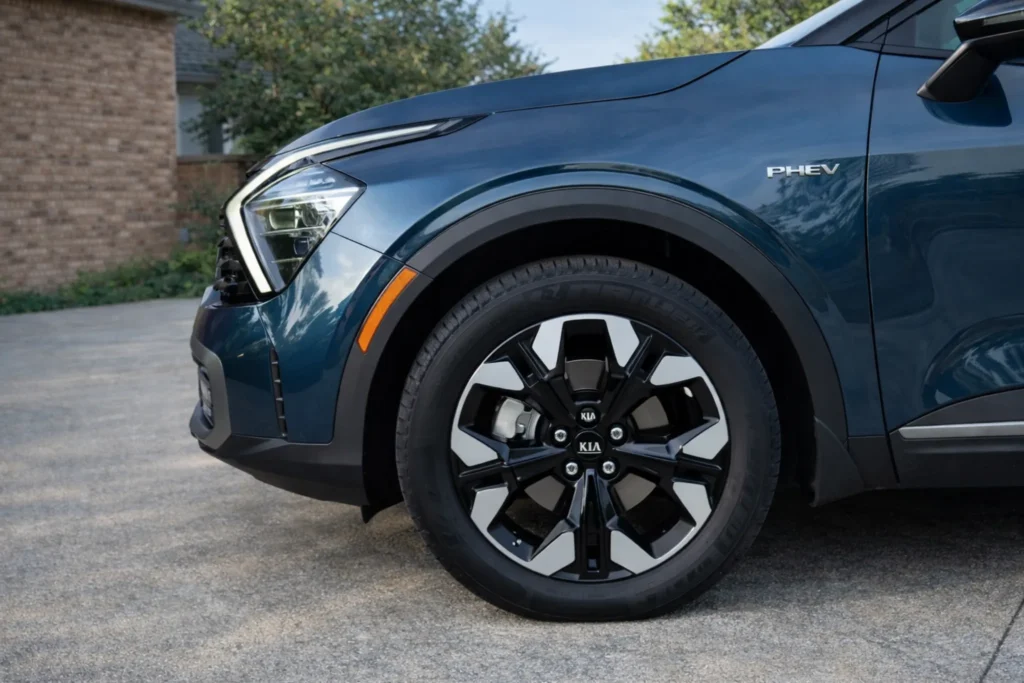
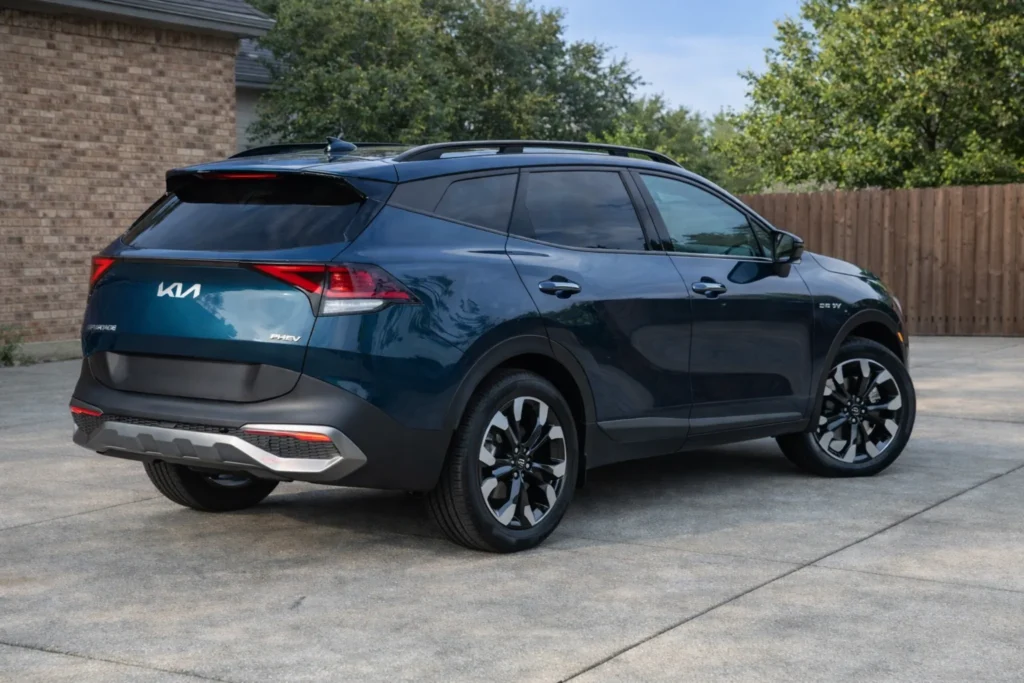
On paper, the fundamentals are decent. The Sportage PHEV comes standard with all-wheel drive, unlike the regular hybrid where AWD is optional. It also sits higher than most compact crossovers, with 8.3 inches of ground clearance. Those two things matter when the street hasn’t been plowed yet and the snow is lumpy and half-frozen.
But winter driving is never just AWD and clearance. It’s throttle control, braking, tire grip, and how calm the car stays when traction is inconsistent. Kia also builds in a Snow Mode. The owner’s manual describes switching into Snow mode from Drive mode, and it frames AWD’s purpose in tough conditions like snow. The point of Snow Mode is not to make the car a snowmobile. It’s to make power delivery less jumpy so you don’t light up the tires pulling away from a stop.
Is the Sportage PHEV good in snow?
Yes, with one big condition: it’s only as good as the tires you put on it.
With AWD and Snow Mode, the Sportage PHEV is confident getting moving and staying composed in light to moderate snow. It doesn’t feel nervous when one wheel hits ice and the other hits wet pavement. The drivetrain does a decent job of smoothing out that chaos.
The 8.3 inches of clearance is also legitimately useful. You can crawl through the messy stuff that trips up lower crossovers, like rutted residential streets after a night of snowfall. Just don’t confuse clearance with capability. Deep snow still turns any compact SUV into a plow, and when the underbody starts pushing snow, you lose momentum fast.
Where owners get surprised is cold weather behavior, especially if they bought the PHEV expecting silent EV driving all winter. In charge-depleting mode, Kia explicitly notes the engine can turn on due to factors such as using the heater or frequent accelerator input. That means on a cold morning, you can have a full battery and still hear the engine because you asked the car to heat the cabin. That’s not a defect. It’s how it’s designed.
Cold also hits electric driving range. Independent winter guidance from Edmunds points out that freezing temperatures can reduce EV range by roughly 20% to 30% and that cabin heating draws energy that further lowers range. A PHEV isn’t immune to that. It just has a gas engine waiting in the wings, which is convenient but also means your “all-electric” winter lifestyle can turn into “electric-ish” very quickly.
My blunt verdict: the Sportage PHEV is good in snow for normal people doing normal winter driving, especially because it’s AWD by default and has real ground clearance. But if you leave it on mediocre all-seasons and expect the car to save you, you’re gambling. Put proper winter tires on it and it becomes a steady, confidence-building winter crossover. Leave it stock and it’s merely fine, not brave.
Depreciation, resale, and what happens to PHEVs next
Living with the Sportage PHEV, I kept coming back to the same uncomfortable ownership question: what happens when the honeymoon is over and you’re selling it, trading it, or trying to justify what you paid.
Plug-in hybrids sit in a weird middle ground. They promise EV-like daily savings if you charge, but they carry a price premium and extra complexity. When used-car markets get nervous, middle-ground vehicles can get punished because shoppers either want simple or they want committed. They don’t always want “both.”
Do electric cars depreciate quickly?
Yes, and the speed is not subtle.
If you look at broad market data, EVs have been hit harder than most powertrains. iSeeCars’ five-year depreciation study puts EVs as the worst depreciators, with an average value loss of 58.8% after five years, compared with 40.7% for hybrids. That is not a rounding error. That is the difference between a normal trade-in sting and a full-body financial bruise.
Kelley Blue Book describes the pattern in plain terms: EVs can drop 35%–40% in the first year, then land around 45%–50% of original value after five years, depending on factors like battery warranty. The reason is not that EVs are bad cars. It’s that the market is volatile.
Here’s what actually drives it in the real world, from an owner’s seat:
New-car incentives and price cuts punch the used market in the face. When a new EV gets discounted or subsidized, yesterday’s used EV instantly looks overpriced. That’s not theory, you can watch it happening. In June 2025, iSeeCars reported used EV prices down 4.8% year over year, while used gasoline car prices were up 5.2%.
Tech moves faster than ownership cycles. Range improves, charging speeds improve, software improves, and suddenly the three-year-old EV feels older than its age. Gas cars don’t age like that.
Buyer psychology is still shaky. People worry about battery health, charging access, and repair costs, even when the real risks are often smaller than the fear.
Now, bring it back to the Sportage PHEV. A plug-in hybrid usually avoids the worst EV depreciation because it has a gasoline fallback, so it doesn’t become useless to a buyer without home charging. But it can still take a hit if shoppers decide the extra plug-in complexity isn’t worth paying for used. That middle-ground effect is real, especially when the used market is flooded with lease returns and buyers get picky.
My blunt advice as someone who lived with this kind of vehicle: if resale value is your religion, a mainstream hybrid from a brand with iron resale is still the safer bet. If you want a plug-in because it fits your daily life, accept that the market may not reward your logic the way you hope.
Are plug-in hybrids being phased out?
Not universally. They’re being redefined.
In some places, plug-in hybrids are still explicitly part of the roadmap. California’s Advanced Clean Cars II rule aims for 100% “zero-emission” new car sales by 2035, and California’s own announcement states that this includes plug-in hybrids. That alone tells you PHEVs are not being treated as dead technology everywhere.
The UK has also kept the door open. The UK government’s response around the 2030 phase-out confirms that from 2030 all new cars will need to be “hybridised in some manner” or be zero emission. And Reuters reported the UK easing EV sales targets while allowing full hybrids and plug-in hybrids to be sold until 2035. Again, not a phase-out. More like a longer bridge.
Europe is where it gets complicated. On one hand, there are political and industry pushes to soften the 2035 direction. Reuters reported that the European Commission unveiled a plan that would drop the EU’s effective ban on new combustion-engine cars from 2035 after industry pressure.
On the other hand, regulators are getting tougher on how PHEVs are tested and credited, because real-world use often doesn’t match lab assumptions. The ICCT explains that under Euro 6e-bis and later stages, the plug-in hybrid “utility factor” curve is adjusted to better reflect real-world driving, which directly affects official CO₂ figures. Transport & Environment’s 2025 analysis argues the correction matters because real-world PHEV emissions can be much higher than test-cycle results if the accounting is too generous. Whether you like T&E or not, the direction of travel is clear: Europe is trying to stop PHEVs from gaming the numbers.
Globally, plug-ins are not fading. In China, the IEA reports plug-in hybrid sales have been growing faster than battery EV sales in recent years, with PHEVs rising to nearly 30% of China’s electric car sales in 2024. That is the opposite of a phase-out.
So here’s the honest, ownership-grade answer: plug-in hybrids are not being phased out in a clean straight line. They’re being squeezed from both sides. Governments still like them as a transition tool, but they are also tightening the rules so PHEVs only “count” if people actually plug them in and drive them like plug-ins.
That reality matters for resale. The future of the Sportage PHEV is not just about how it drives today. It’s about whether tomorrow’s market believes plug-in hybrids are a smart bridge or a compromised detour.
Comparisons shoppers also consider
Cross-shopping is where most people accidentally buy the wrong powertrain for the right vehicle. They don’t choose a Sportage PHEV because it fits their life. They choose it because it sounds like the “best” version on paper. Then six months later, they’re driving it like a regular gas SUV and wondering why the savings never showed up.
These three comparisons are the ones I hear most often. They’re also the ones where a clear answer exists if you’re honest about how you actually drive.
Which is better: hybrid or plug-in hybrid?
For most people, a regular hybrid is the better buy. For the right person, a plug-in hybrid is the smarter tool.
A plug-in hybrid only makes sense if you will actually plug it in. That is not a moral statement, it’s the whole design. The U.S. Department of Energy spells it out plainly: PHEVs run moderate distances on electricity, then the gasoline engine takes over when the battery is mostly depleted, and they do not achieve maximum fuel economy without being charged. Car and Driver says the same thing in fewer words: a PHEV operates like a hybrid, but the battery is big enough that you can, and should, plug it in regularly.
So here’s the real-world logic I use:
If you can charge at home and your weekday driving fits inside that electric range window, a plug-in hybrid is the one that can genuinely change your fuel routine. It is the closest thing to EV living without committing to EV infrastructure.
If you cannot charge consistently, or your life is mostly highway miles, a regular hybrid is the better answer. It is simpler, cheaper, and it delivers its efficiency without asking you to build new habits.
The big mistake is buying a plug-in hybrid because you want hybrid MPG. A plug-in is not a better hybrid. It’s a different ownership pattern.
Which is better: Tucson Hybrid or Tucson Plug-in Hybrid?
The Tucson Hybrid is better for most buyers. The Tucson Plug-in Hybrid is better for the small group who will use it properly.
On the plug-in side, the numbers are strong. Car and Driver notes the Tucson PHEV has a 13.8-kWh battery and an EPA-estimated 33 miles of electric-only range, and it can recharge in about two hours on Level 2. Edmunds’ testing is more grounded: it logged 29.3 miles of EV range in its route, which is short of the EPA estimate but still enough to cover most errands and many commutes, and it beat its EPA estimate once it switched to hybrid mode. Edmunds also calls out the elephant in the room: the PHEV commands a large price premium, and the value math gets harder without a federal tax credit.
On the hybrid side, the Tucson Hybrid is the “set it and forget it” choice. Car and Driver cites EPA estimates around 38 mpg city and 38 mpg highway. That is real efficiency without cables, schedules, or charging etiquette.
Now the lived-with-it answer.
If your weekday life is short trips and you have a reliable place to charge, the Tucson PHEV can feel like a cheat. You’ll burn less fuel because you are genuinely using less fuel. The driving also tends to feel smoother around town when the battery is doing more of the work.
If your life is long highway drives, unpredictable days, apartment parking, or “I’ll probably charge it sometimes,” buy the Tucson Hybrid. It gives you most of the efficiency without the extra cost and complexity. It is also the one you will still appreciate when your routine changes.
My blunt verdict: the Tucson Hybrid is the smarter default. The Tucson PHEV is the smarter niche buy.
Which is better: Toyota or Kia?
Toyota is better if you want long-term peace and resale strength. Kia is better if you want more car for the money and you care about warranty coverage.
Toyota’s reputation is not just folklore. In J.D. Power’s 2025 U.S. Vehicle Dependability Study, Toyota ranks third among mass-market brands. That matters because dependability is what you feel on year four and five, when the payments are still there but the new-car glow is gone.
Resale also tends to favor Toyota. iSeeCars’ brand comparison notes Toyota models depreciate at a lower rate than Kia models across their comparisons. If you trade in often, or you hate being upside down, that alone can swing the decision.
Kia’s counterpunch is warranty. Kia’s own warranty page lists a 10-year/100,000-mile powertrain limited warranty and a 5-year/60,000-mile basic limited warranty. Toyota’s coverage, by comparison, is commonly stated as 60 months/60,000 miles for powertrain coverage on its support site. The point is not that warranty magically prevents problems. The point is that Kia is willing to stand behind the powertrain longer, which can ease anxiety if you’re planning to keep the vehicle.
Here’s how I’d choose with my own money:
If I’m buying and keeping the vehicle for the long haul, and I want the fewest headaches, I lean Toyota. The dependability track record and resale strength are hard to argue with.
If I’m buying new, I want the latest tech and features for the price, and I value long powertrain coverage, Kia makes a strong case.
The honest tie-breaker is your tolerance for inconvenience. If you hate dealer visits and you lose patience fast, Toyota is usually the calmer relationship. If you’re value-driven and you like what Kia is selling, the warranty helps you sleep at night, but you still need to buy with your eyes open.
FAQs about the 2023 Kia Sportage Plug-in Hybrid
Singapore BuyingIs the 2023 Kia Sportage Plug-in Hybrid worth buying in Singapore?
EV RangeWhat is the real electric-only range of the 2023 Sportage PHEV for daily Singapore driving?
ChargingHow do you charge the Kia Sportage Plug-in Hybrid in Singapore, and how long does it take?
EfficiencyDoes the Kia Sportage PHEV charge itself while driving, or do you still need to plug it in?
VES & CostsCan the Sportage Plug-in Hybrid qualify for Singapore VES rebates or lower emissions charges?
| SPEC | DETAIL |
|---|---|
| Powertrain | 1.6-liter turbocharged inline-4 + electric motor (plug-in hybrid system) |
| Total System Output | 261 hp / 258 lb-ft (combined gasoline + electric) |
| Drivetrain | All-wheel drive (AWD) standard |
| Transmission | 6-speed automatic transmission |
| 0–60 mph | ~7.0 seconds |
| Top Speed | ~120 mph (electronically limited) |
| Battery Capacity | 13.8 kWh lithium-ion polymer battery |
| Electric-Only Range (EPA) | 34 miles |
| EPA Fuel Economy (MPGe) | 84 MPGe combined (electric + gas) |
| EPA Fuel Economy (Gas Only) | 35 mpg combined |
| Real-World MPG | 30–35 mpg when battery depleted (owner & independent testing) |
| Charging Time (Level 2 / 240V) | ~2.5 hours |
| Charging Time (Level 1 / 120V) | ~8–9 hours |
| Fuel Tank Capacity | 11.1 gallons |
| Suspension | MacPherson strut front • Multi-link rear |
| Brakes | 4-wheel disc with ABS, electronic stability control |
| Wheels / Tires | 18–19 inch alloy wheels depending on trim (all-season tires) |
| Ground Clearance | 8.3 inches |
| Curb Weight | ~4,200 lbs |
| Author | Hafiz Sikandar, automotive journalist and senior editor at VyoCar. |
|---|---|
| Expertise | Automotive testing and reviews since 2016 Road-testing and reviewing a wide spectrum of vehicles, from performance-focused sedans to practical daily drivers, with an emphasis on real-world drivability, ride comfort, chassis behavior, interior usability, and long-term ownership impressions across varied driving conditions. |
| Focus Areas | Gas-powered and electrified vehicles, sport-oriented sedans, crossovers, and value-driven premium models, analyzed through the lens of everyday livability, handling balance, cabin refinement, technology integration, and overall ownership value. |
| Disclosure | All vehicles reviewed are evaluated independently. Manufacturers have no influence over testing methods, editorial direction, scoring, or final verdicts. Performance figures, fuel economy observations, and driving impressions are based on hands-on testing conducted over mixed city, highway, and suburban use. |
This Post Has 3 Comments
Pingback: 2024 Toyota RAV4 Hybrid Woodland: Rugged & Efficient SUV?
Pingback: 2022 Hyundai Tucson Review, Price and Pictures
Pingback: 2025 Kia K5 Review and Road Test