

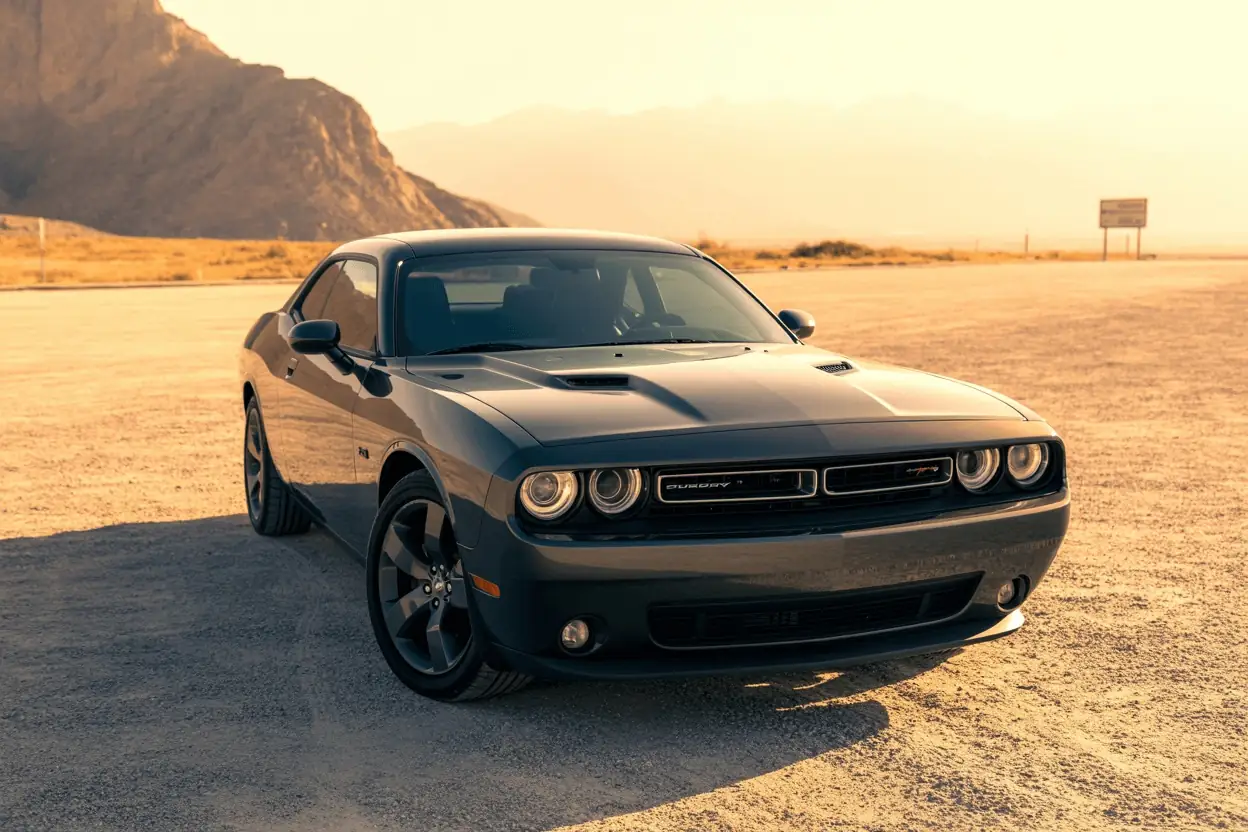
Pros & Cons
- Unmistakable retro muscle presence.
- Abundant low-range Hemi torque.
- Surprisingly spacious practical interior.
- Vague steering and handling.
- Persistently poor fuel economy.
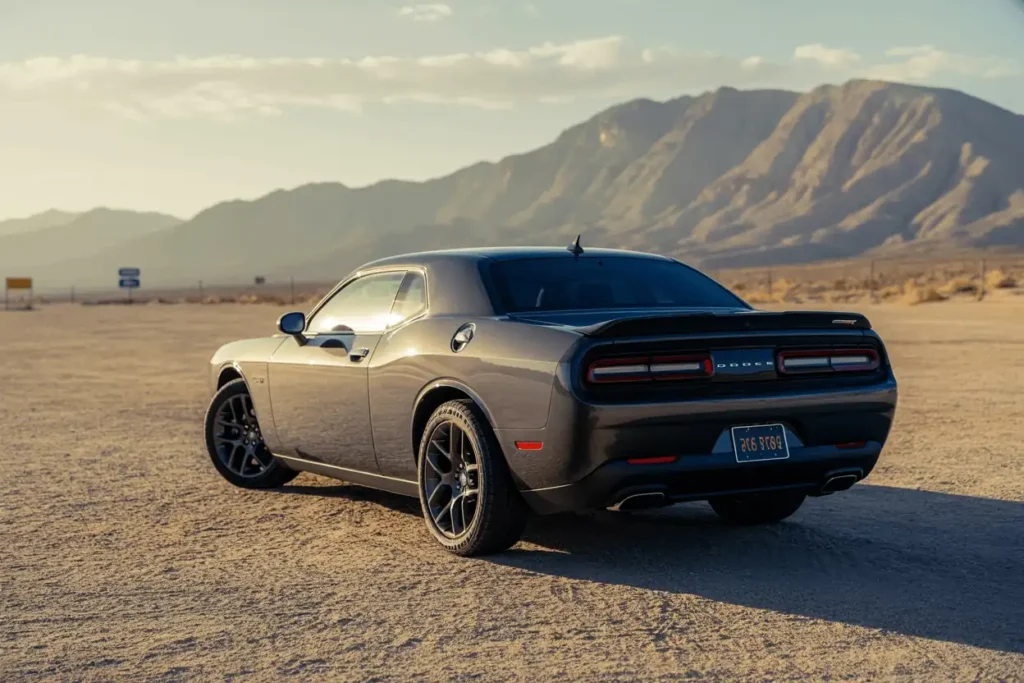
- Severe rear visibility limitations.
It’s a muscle car that prioritizes being a comfortable, spacious cruiser over delivering any semblance of handling agility.
2013 Dodge Challenger R/T Plus Review with Vyocar
Overview
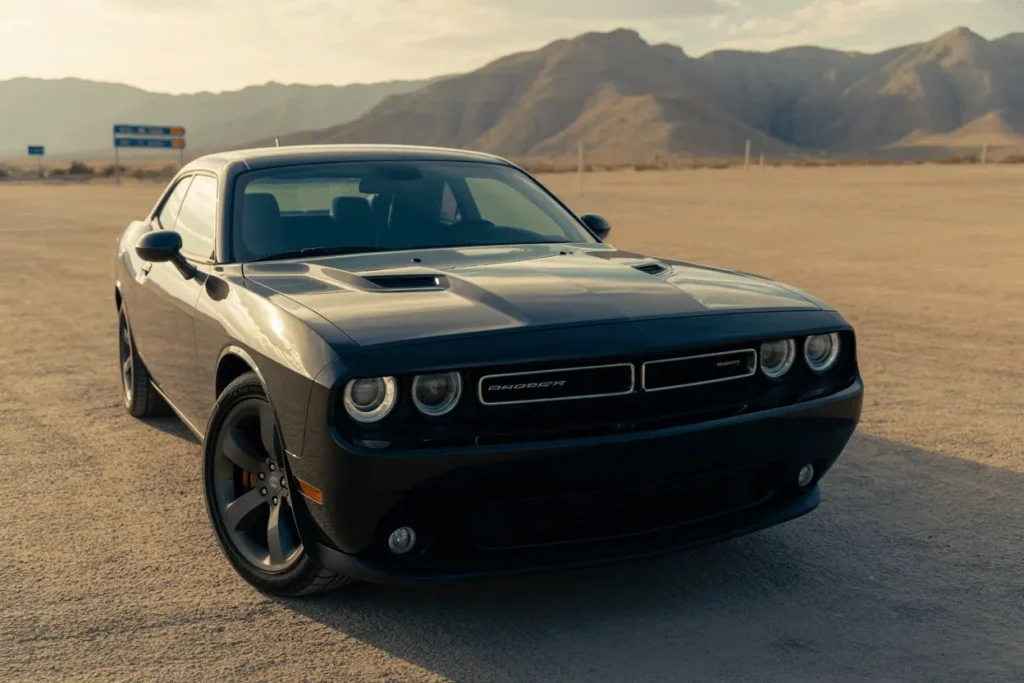
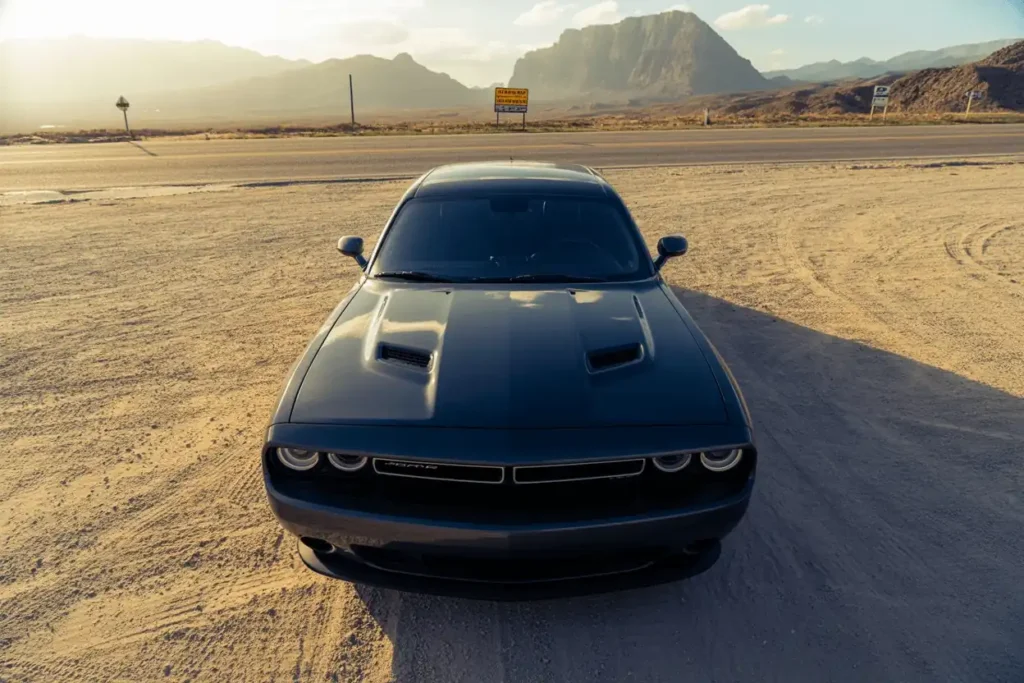
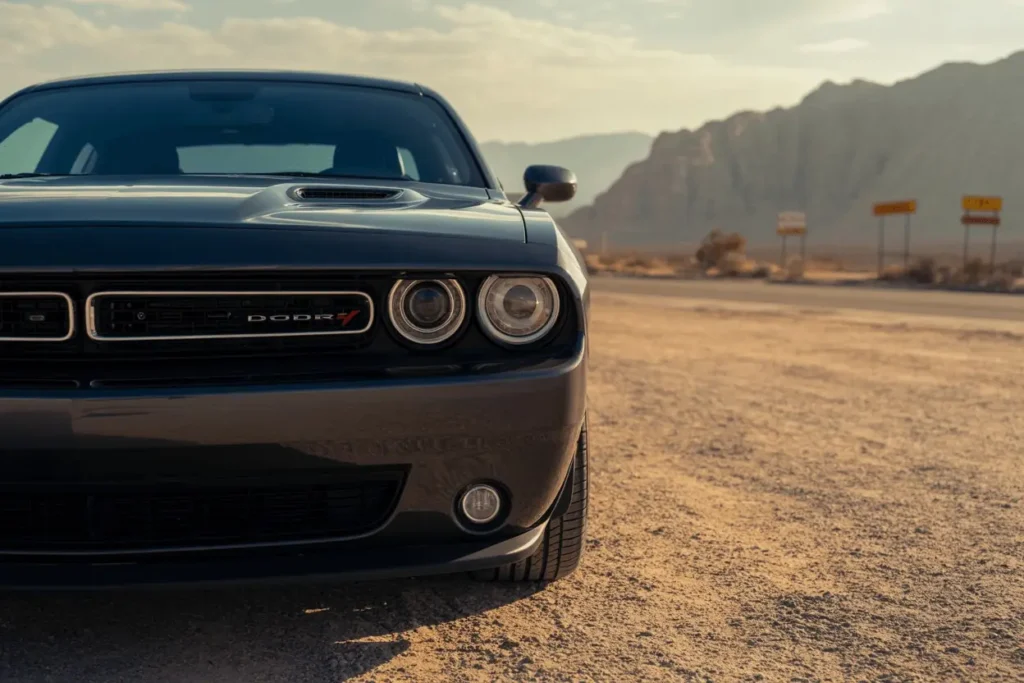
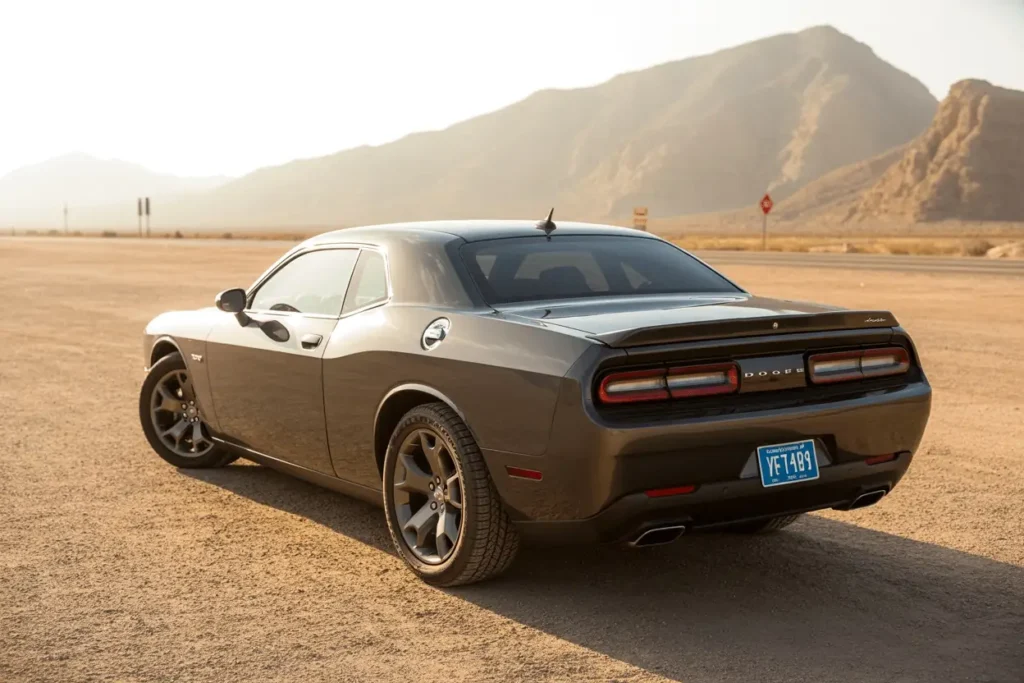
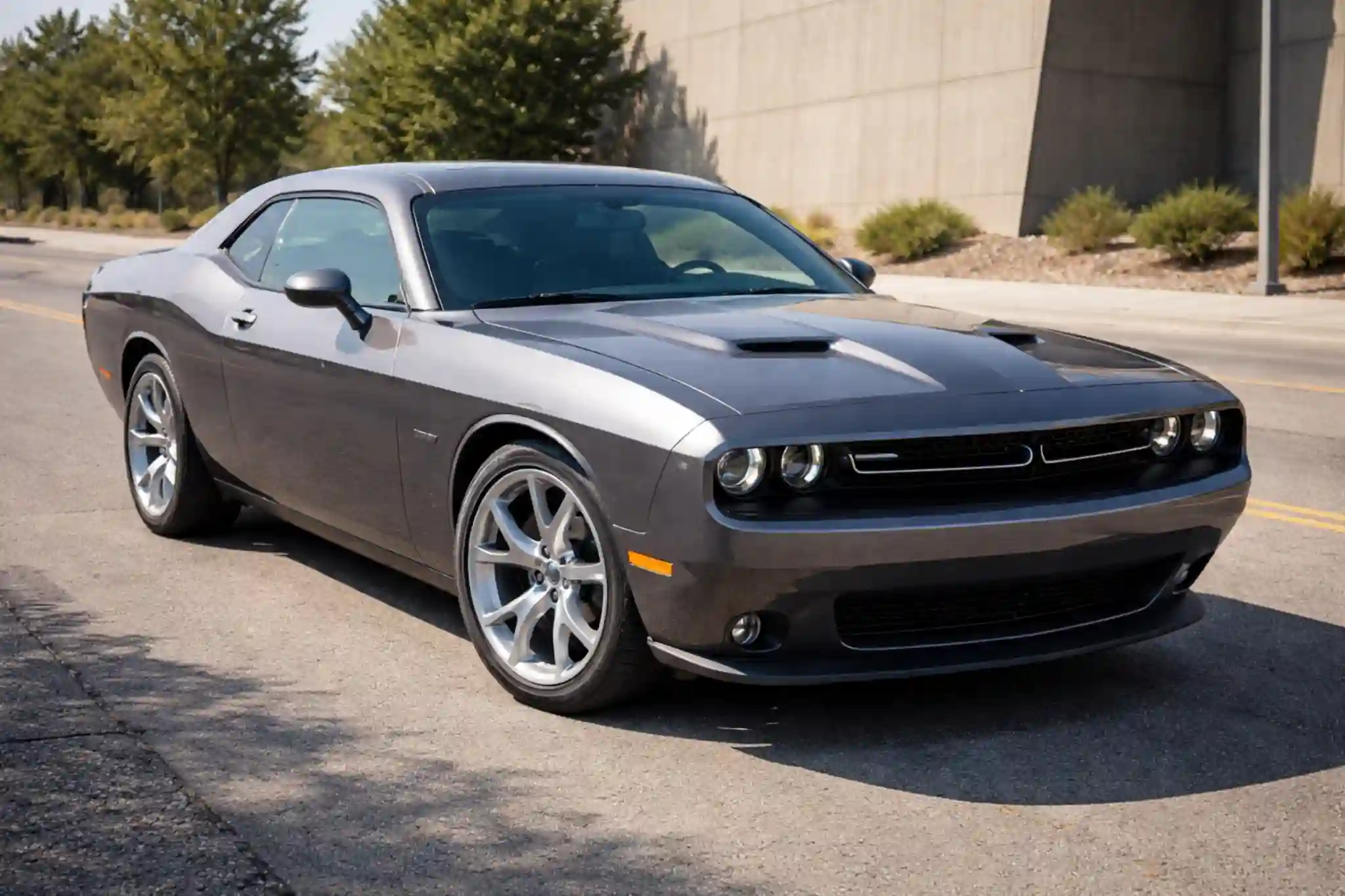
You don’t buy a 2013 Dodge Challenger R/T Plus to be subtle. This muscle car is a two-door, rear-wheel drive pony coupe that shouts its 1970s-inspired heritage from the rooftops. Its retro styling is an instantly recognizable throwback design, a classic silhouette pumped up on modern steroids. It trades nimble for attitude, wearing its aggressive sinister front end and menacing stance like a badge of honor. Under that iconic sheet metal, however, lies the platform and underpinnings shared with the two-ton Chrysler 300 and Dodge Charger. This isn’t a lightweight featherweight; it’s a heavyweight with a distinctive muscle-car personality.
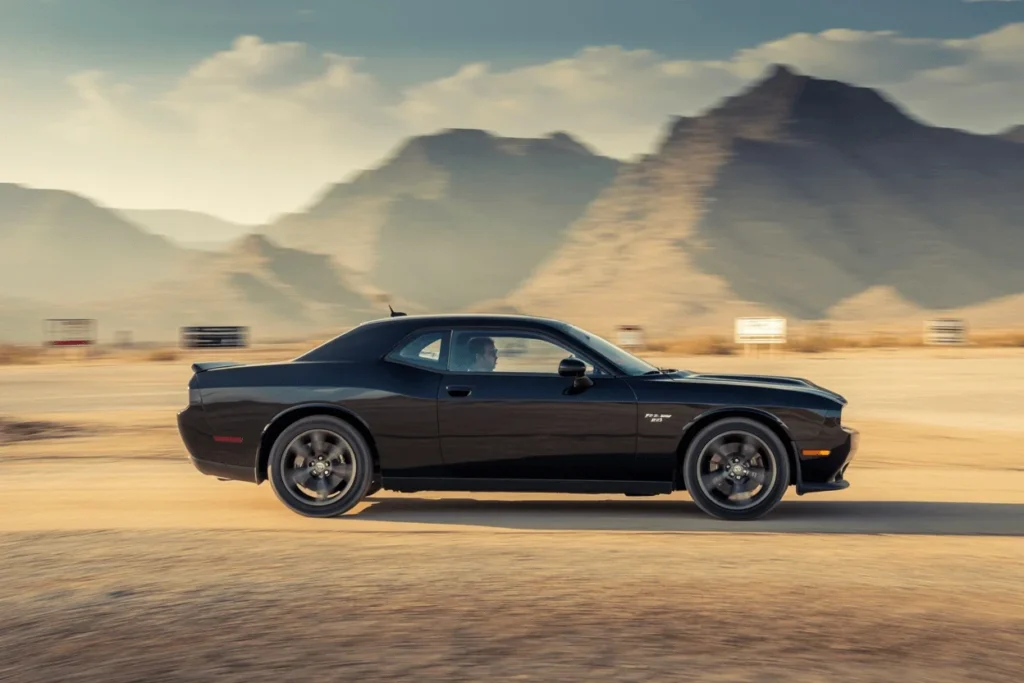
Pop the hood and you’ll find the heart of the matter: a 5.7-liter Hemi V8 engine. It delivers a satisfying 375 horsepower and 410 lb-ft torque. Choose your poison: a 6-speed manual with a pistol-grip shifter for theater, or a 5-speed automatic for ease. Acceleration is its party trick, with straight-line speed hustling it to 0-60 mph in about 5 seconds. Take it to the drag strip for quarter-mile fun and smoky burnout demonstrations. But ask it to handle cornering and the script changes. You’ll confront body roll, predictable understeer, and the steering feels vague. This chassis prioritizes a comfortable ride over being agile. The suspension is compliant and smooth, but the weight and heavy feel are always present.
Where this pony coupe truly fights its competitors like the Ford Mustang GT and Chevrolet Camaro SS is in livability. Forget cramped quarters. The spacious interior offers shocking headroom and legroom. It can seat five in a pinch, and the big trunk boasts 16.2 cubic feet of space. That’s practical for a daily driver. The cabin mixes old-school dashboard elements with enough modern technology and amenities to avoid feeling ancient. It’s a roomy cabin that makes you question the practicality of its rivals. This is a versatile muscle car you could legitimately use for family duties.
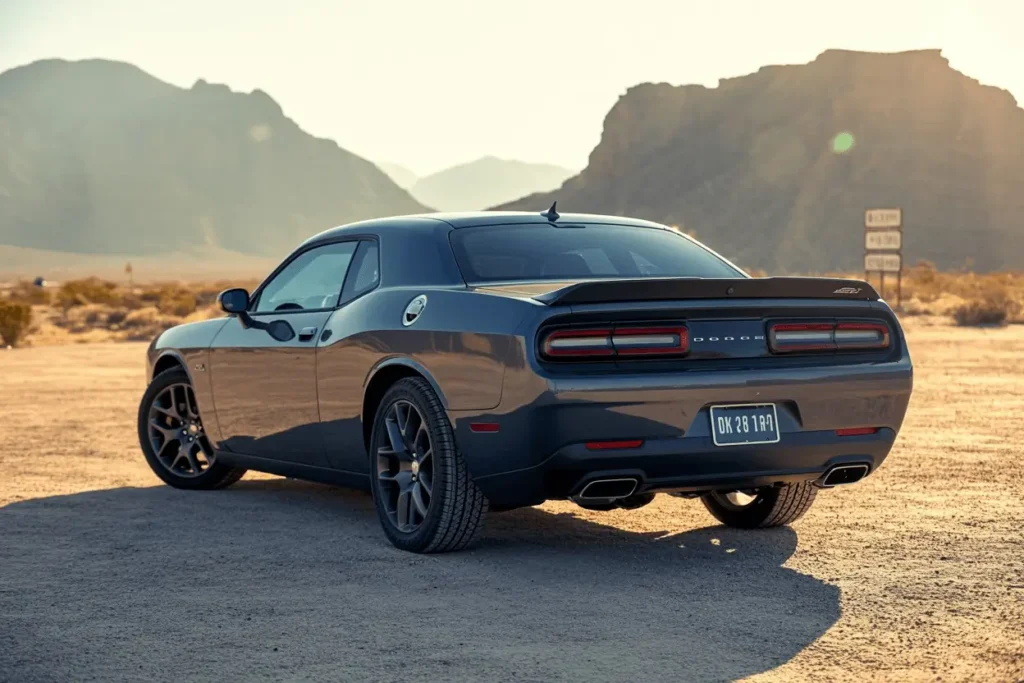
But it’s not all sunshine. Rear visibility? Terrible. Those blind spots are massive. The braking is adequate, but you want the Brembo option for serious stops. While it has the required traction control, antilock brakes, and airbags for safety, it never feels sporty. Compared to the sharper Shelby GT500 or ZL1, or even a Hyundai Genesis coupe, the Challenger feels like a friendly giant. It’s about comfort, not corner-carving. The nostalgia is thick, from optional hood scoops and stripes to that spoiler out back. But you sense the performance ceiling quickly.
So, is it the bang-for-the-buck champion? For straight-line thrills and everyday luxury, maybe. The base 3.6-liter V6 convertible is for poseurs; the 6.4-liter is for monsters. This R/T Plus sits in the sweet spot. It’s a heavy car with a sinister front end and a comfortable ride. It won’t redefine handling, but it offers a unique blend of straight-line speed, spacious interior, and throwback design. It’s a daily driver with a V8 growl, a retro cruiser that wins on space and attitude. That’s its distinctive play in the muscle car game.
What’s New for 2013 Dodge Challenger
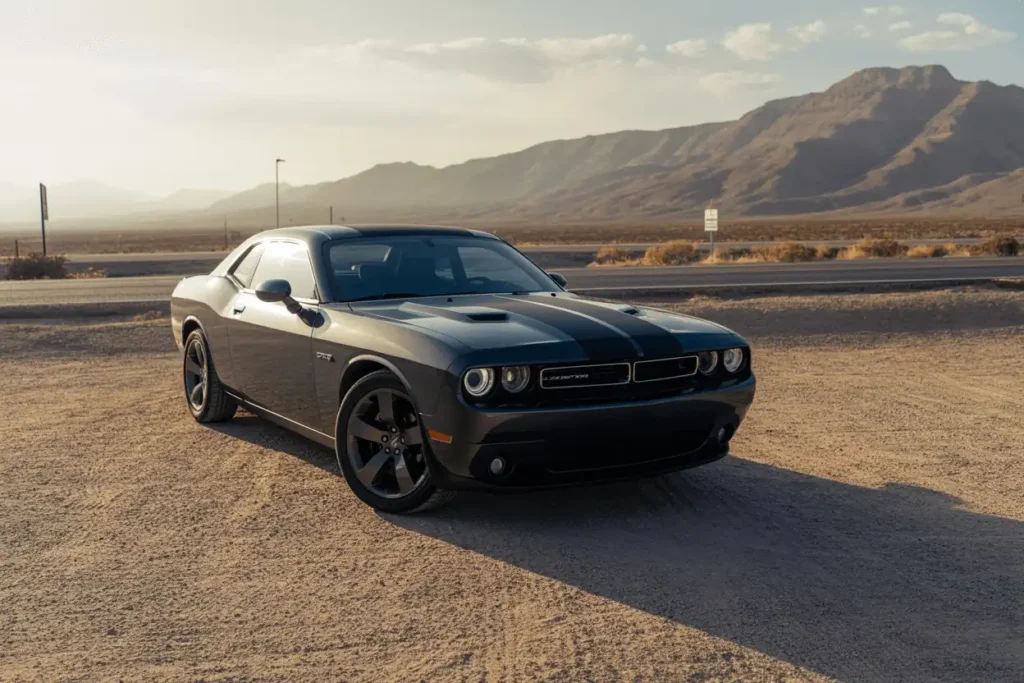
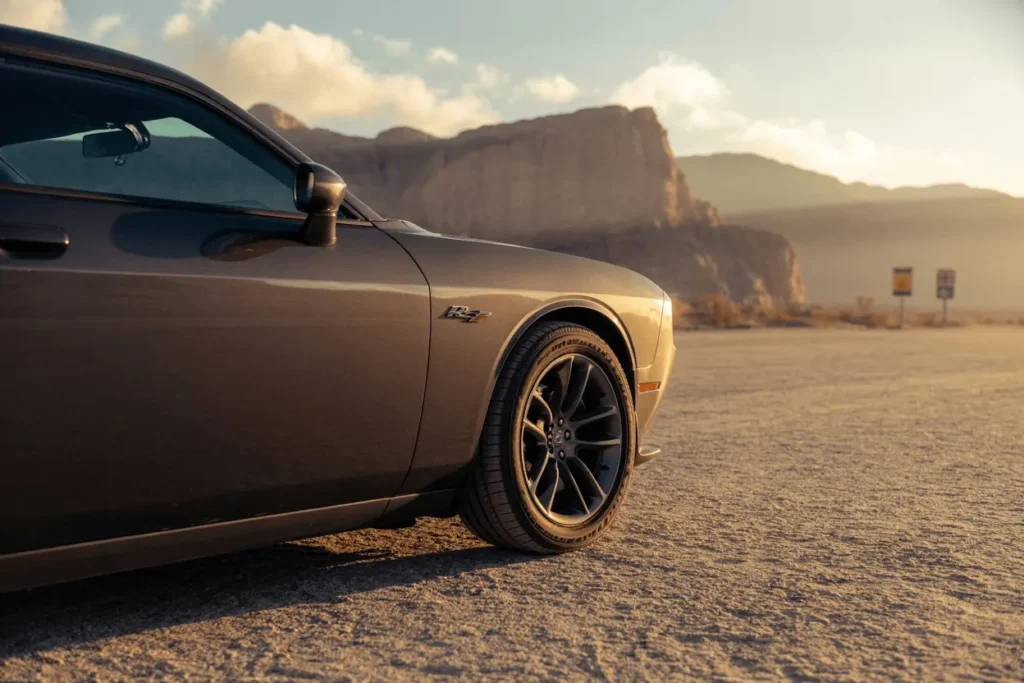
Dodge slapped on a body-length red stripe called the Rallye Redline, a decklid spoiler, and 20-inch black chrome wheels wrapped in performance tires. They also tossed in five new colors; Plum Crazy and Hemi Orange are my favorites, like a muscle car from a cartoon. Inside, you get Nappa leather upholstery and heated front seats, which are a blessing in winter. The Radar interior? That’s part of the new tech, but I’ll get to that.
Under the skin, the suspension and steering got tweaks, plus larger brake discs and a 3.06 rear axle ratio for better off-the-line grunt. There’s adaptive damping with a three-mode selectable setup, and launch control for pretending you’re at a drag strip. The R/T Blacktop Package spices up the model, while the premium 305-hp V6 and SRT8 392 cater to different budgets. Those considering the 2015 Dodge Challenger SXT will find many shared performance DNA elements here. For added safety features, there’s ParkSense Park Assist, Rain Support, Ready Alert Braking, and Knock-back Mitigation. The Garmin navigation system is handy, but the technology feels a bit last-gen. Overall, the appearance is aggressive, but the updates are more about polish than revolution.
Pricing, Trim Levels, and Best Pick
The 2013 Challenger’s trim levels are a full spread, starting with the base model SXT ($27,525). That base price is under $30k and frankly affordable, but it’s the appetizer before the main course. Move up to the SXT Plus ($31,325) or the Rallye Redline ($31,190) for more features. But you’re here for the Hemi V8, right? The proper V8 model kicks off with the R/T ($32,230), its 5.7-liter engine serving decent power. Then you’ve got the R/T Plus ($36,225) and the R/T Classic ($36,190) at nearly identical MSRP, dressed in different flavors. Beyond that, the top-of-the-line options get serious: the SRT8 Core ($41,725) and the SRT8 392 ($48,325) with a 6.4-liter that trades civility for sheer muscle. See what I mean? So many boxes to check.
My best pick for living with this beast? The R/T Plus is the sweet spot. It’s not the cheapest mid-range option, but it shouts best value. You get the 5.7-liter Hemi V8 for authentic performance without the SRT8’s price or stiff ride. Think about bang-for-the-buck; the R/T is close, but the Plus adds usable comforts that make daily drives pleasant. The SXT base model saves cash, but without a V8, where’s the soul? The top-of-the-line SRT8 392 is a riot, but it’s overkill for groceries. For blending street muscle with real-world sanity, the R/T Plus is my best buy. It’s the V8 model that actually likes people.
Powertrain, Transmission, and Driving Dynamics
The 5.7-liter V8 engine is a charming brute. This Hemi serves up 375 hp and 410 lb-ft torque from just 1900 rpm, so pulling power is never in doubt. At a traffic light, your right foot prompts a satisfying shove, moves all full two-plus tons with authority. Dodge claims 6.1 seconds to 60, but hitting that magic sixty feels like eking out every advantage. Truthfully, the Hemi’s torque spread lets you loaf along in 5th on the highway, a steady 80 mph relaxed cruiser with a relaxed demeanor. It’s not hell-bent on records.
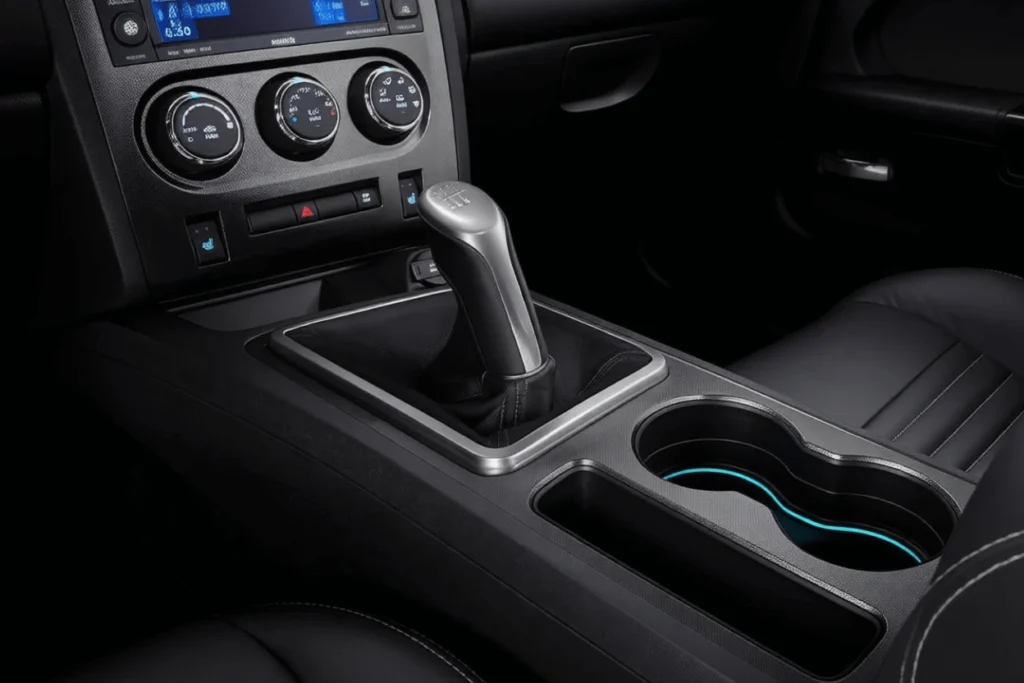
The 6-speed manual transmission has a pistol-grip shifter for drama. The gates are vague, and short first gear spacing hustles you into second gear. Clutch effort is nice and firm, with a predictable take-up that prevents destroying the clutch in daily grind. But in condensed switchbacks, it becomes a time-consuming shift ritual. Next to a lighter Mustang GT or Camaro SS or a Nissan 370Z Nismo, the Challenger’s weight is obvious. You’ll find top gear for wide-open highways, but tackling bends? The R/T’s chassis uses softer springs, so body roll in tight corners is pronounced. It feels less nailed-down than V8 competitors. Those 20” all-season Firestones have tenacity, but they run out of real estate, especially in the wet. Want mid-corner oversteer? Get the hilariously tail-happy SRT8 392. This car shares a serene ride with its 1970 forebear, though modern struts add composure.
On a deserted stretch of road, you see its personality. Push hard and understeer arrives early. The steering is adept for a land yacht, but forget Camaro pony cars agility. If you want that surgically sharp, track-ready feel, a Corvette Stingray Z51 is more your speed. Braking? The slotted rotors front and rear give plentiful stopping power and decent fade resistance. Pedal feel offers a reassuring halt, though it’s not the multi-piston Brembos from the SRT-tuned 398. From highway speed, this 392-cube coupe slows with purpose, but the weight whispers always. At 40 mph, torque makes a downshift unnecessary; try that in a smaller Mustang and you’d be rowing.
So here’s the deal. The Challenger’s vibe encourages you to gaze at the horizon. Is something missing? If you live for razor-edge reflexes, absolutely. But as a daily? It’s easier than you’d think. Would I write home about its dynamics? No. But for that prodigious low-end torque and mile-munching calm, it’s plentifully satisfying.
Dodge Challenger R/T Plus Fuel Economy Test
You don’t slide behind the wheel of a Hemi V8 for stellar miles per gallon. The EPA estimates tell a sobering tale: 15 mpg city, 23 mpg highway, and 18 mpg combined. That’s the official EPA rating. My real-world test yielded an observed 20.4 mpg average mpg, which honestly surprised me. Anyone who has spent time in a Dodge Challenger SRT will expect this same unapologetic thirst at the pump. But don’t get it twisted; this is a gas guzzler. The consumption in traffic feels like watching your wallet evaporate.
Here’s the techy part: cylinder deactivation, or MDS, attempts charity by slipping into four-cylinder mode on cruises. It helps highway mpg, but city mpg is still a punchline. My personal log showed 16 mpg city and 25 mpg highway, for 19 mpg combined. So, there’s a minor fuel efficiency bump, but overall gas mileage remains laughable. For muscle car buyers, this is not a priority. You purchase the soundtrack, not the savings.
Interior, Comfort and Space
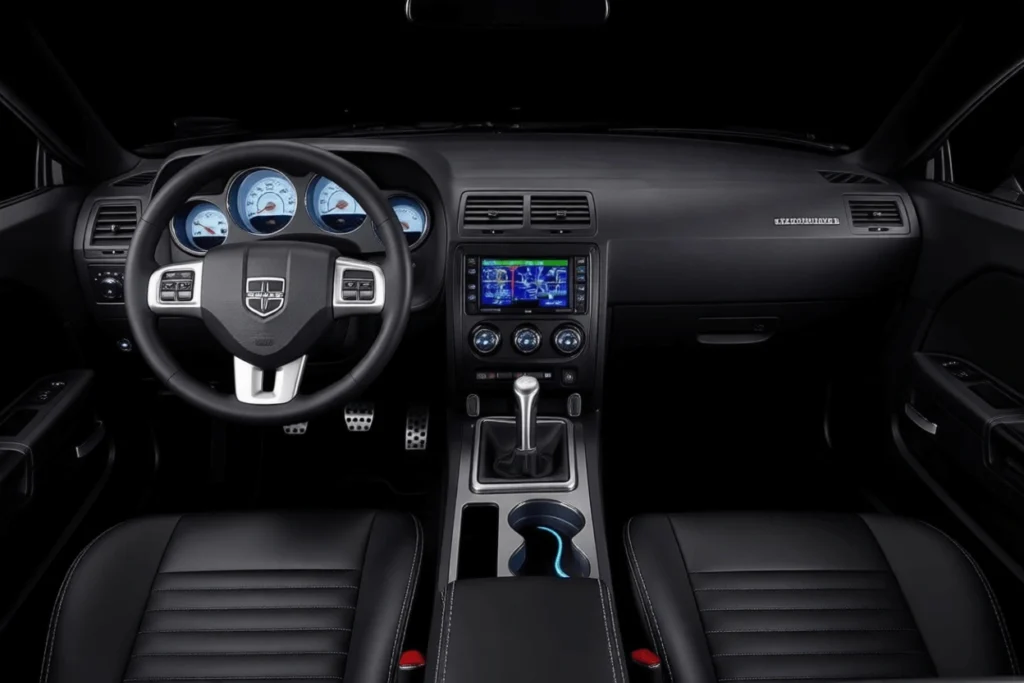
Inside, the Challenger’s interior offers less visual drama than the muscular exterior suggests. My first thought? It’s a plainly styled, functional cabin built as a place to spend lots of highway miles. The Bland interior is dominated by a large beveled dashboard and dark interior tones. You get some cool styling features like distinctive shifter knobs and giant gauges, but also a sea of hard plastics and dull colors. It’s a relatively loud interior on coarse pavement, too. So where’s the R/T flair? Well, the conspicuous absence of the 392 model’s alcantara is a hint.
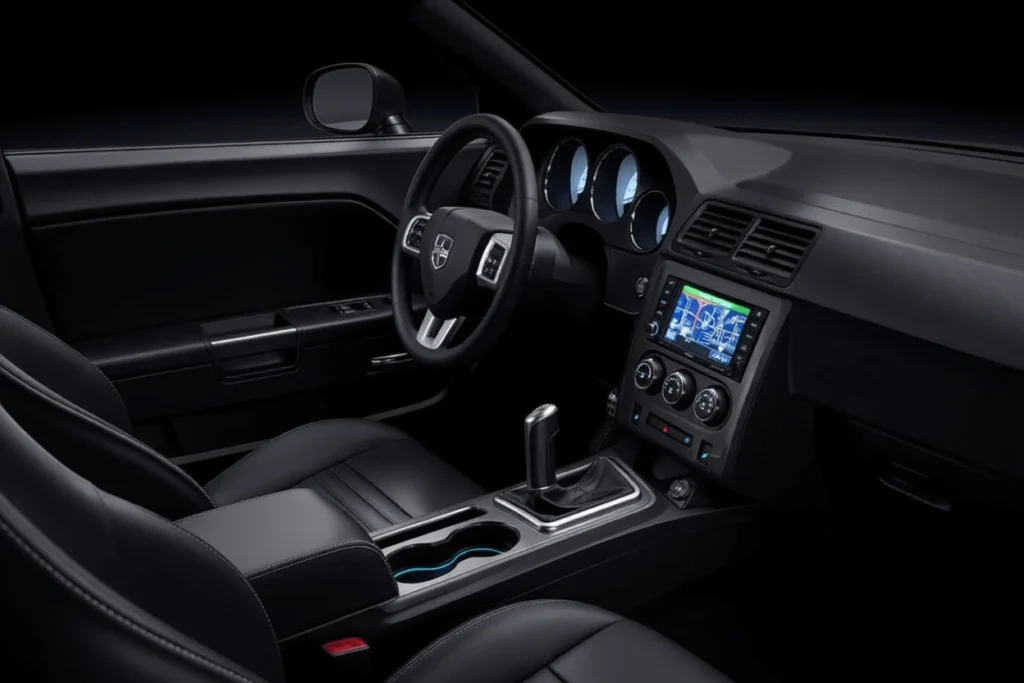
Dodge tried to spice things up. My R/T Plus had soft-touch dashboard and soft-touch door panels, plus textured pillar covers and a cloth headliner. The uniform gloss and grain of the quality materials suggests rock-solid construction, which I appreciate. You also get a thick-rimmed steering wheel (mine was leather-wrapped) with integrated steering wheel controls, and those illuminated cup holders are a fun throwback. But let’s be honest: the conspicuous use of hard plastics on lower surfaces keeps it grounded in its era.
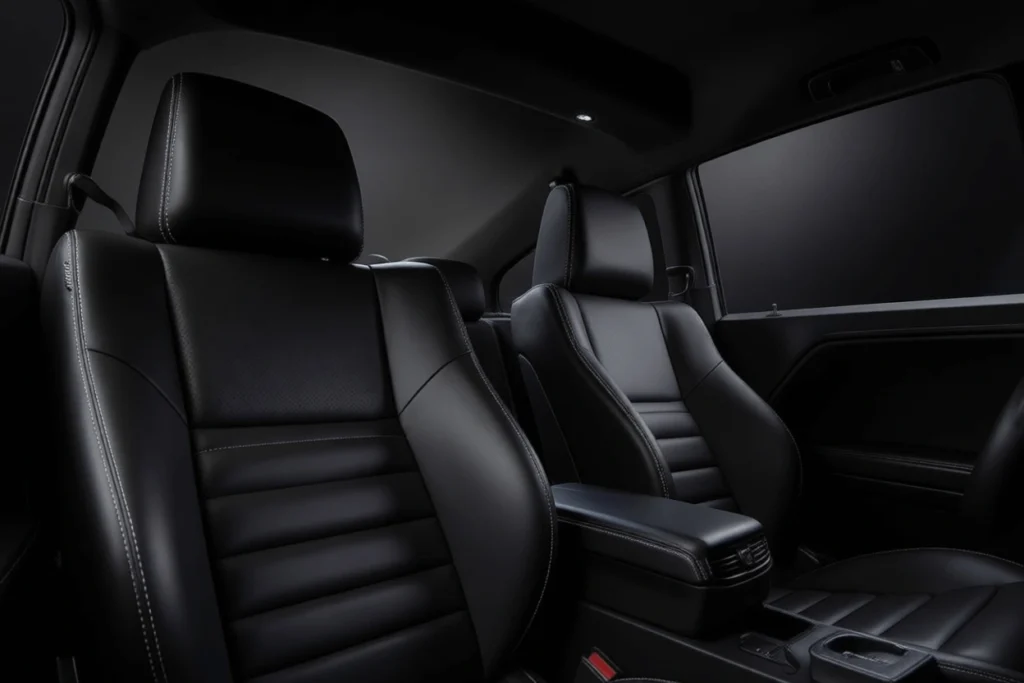
Now, the seats. These wide and firm front seats are heavily bolstered, trimmed in suede-trimmed seats and leather upholstery. If you’ve spent time in a Cadillac CTS, these cushions feel broader and more laid-back than a typical sport sedan chair. The side bolstering is aggressive, but the adjustable lumbar support helps. After four hours on the road, I’m calling these exceptionally comfortable seats. The heated front seats are a bonus. The flat-bottom steering wheel adds a sporty feel and eases entry, which is helpful given the poor rear visibility. Up front, there’s good headroom and space to stretch.
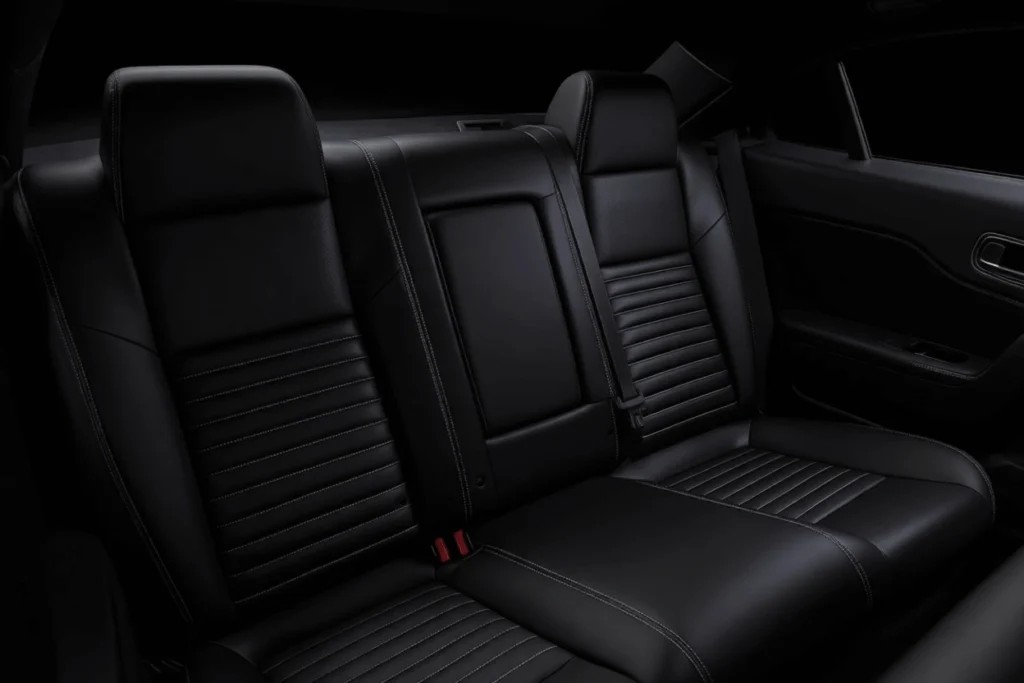
The real win is the smooth and compliant ride that delivers long-distance comfort. This roomy interior continues in the back, with decent legroom and good headroom making for less claustrophobic rear seating than in some rivals. It’s a comfortable, roomy place, period. For all its plainly styled faults, the cabin gets the grand tourer brief right. You trade some sparkle for sheer, usable space. Would I want to daily it? For those lots of highway miles, absolutely.
Cargo Space & Family Practicality
Let’s address the elephant in this large, retro-styled room. Is a 2013 Challenger family-oriented? If you think so, I’ve got questions. Who are you? The trunk capacity is a quoted 16.2-cubic-foot trunk. That cargo volume handles a grocery haul or two suitcases just fine. But that tall liftover height makes loading heavy luggage a workout. For a backpack, it’s accessible. For a stroller? Suddenly, it feels impractical. It’s decent, not enormous.
Inside, there’s an abundance of interior space. The rear seats offer two-adult rear seat capacity, and you can manage three in a pinch, though the middle seat is cramped. The fold-down armrest is a nice touch, and the 60/40 split seat adds versatile cargo space. But those seat belt buckles? They love to hide in the cushions. Now, for the child seat drill. It has the LATCH system with LATCH anchors and ISOFIX ports, but finding those anchor points is a mini game. Installing an infant seat is possible, but it’s no breeze.
So, is it livable? As a daily driver for a small family, it’s usable and surprisingly roomy up front. But the cargo space is merely adequate, not a secret weapon. It’s a muscle car playing at versatile, and for that, I give it a B-minus. You can make it work, but you’ll feel its compromises.
Infotainment, Connectivity & Tech
The heart of it is the Uconnect infotainment system centered on a 6.5-inch touchscreen display. It’s not gigantic, but it functions. You get an AM/FM CD player, satellite radio, and MP3 player compatibility. Connect via the auxiliary audio jack, the iPod/USB audio interface, or a standalone USB port for digital music storage. The standard six-speaker sound system with Boston Acoustics speakers is okay, but please, opt for the 18-speaker Harman/Kardon audio with its 900W amp. It rattles your fillings. Bluetooth streaming audio and Bluetooth connectivity for hands-free phones are included. If you’ve spent time with the system in a Chevrolet SS, this Uconnect setup feels simpler to live with but clearly older in visuals. The voice recognition system? It listens like a distracted parent.
Buried in the R/T’s gauge cluster are playful functions like a 0-60 mph timer. For documenting your impulsiveness. The optional Garmin navigation system exists if you hate your phone. Keyless entry is a trio: remote keyless entry, proximity keyless entry, and remote engine start. Push-button engine start feels cool until you pat your pockets for a phantom key. Comforts? The six-way power driver’s seat with power lumbar adjustment is a savior. Automatic climate control and rear air conditioning outlets work well. Heated side mirrors, an auto-dimming rearview mirror, and illuminated visor mirrors are nice human touches.
Now, the grocery list. Cruise control for lazy drives. Power windows, power door locks, and a remote trunk release. The rear window defroster and fog lamps tackle bad weather. You have auto-off headlights standard; the HID headlights cost extra. There’s an auxiliary power outlet for charging crap and a vehicle anti-theft system for peace of mind. The trip computer just judges your heavy foot.
So what’s the verdict? This tech feels like a comfy old leather jacket. It’s familiar and works without fuss. Nothing here will shock you, but it all serves a purpose. In a world obsessed with screens, that’s a quiet win.
Safety Features & Driver Assistance
Look, I pilot a two-ton muscle car for a living. I want to know it’ll look after me. The 2013 Challenger R/T Plus throws a lot at you. You get the essential trio: Antilock disc brakes (ABS), electronic stability control, and all-speed traction control. They’re the nervous system keeping all that V8 power in line. But the list goes on. Active front head restraints? Standard. Brake assist and a hydraulic brake booster mean this heavy thing can stop with conviction. There’s rain brake support and ready alert braking for those “oh crap” moments. Ever hit a pothole mid-stop? Knock-back mitigation handles that. Even the brake/park interlock is there, so you don’t roll away accidentally. It’s a full toolbox.
Now, the cabin is a padded cell in the best way. Advanced multi-stage front airbags work with a passenger airbag cutoff sensor. Front side airbags and side-curtain airbags (front and rear) have your back. Another passenger airbag sensor watches the seat. You’re tied down by 3-point seat belts, with a front passenger seat belt alert that beeps like a disappointed parent. Child seat upper tether anchors (LATCH) are there, making family duty possible. The tire pressure monitoring system is a lifesaver for lazy folks like me. IIHS and NHTSA scores? Respectable for its era. Four stars from NHTSA, acceptable IIHS marks. But let’s be honest, you bought this for the rumble, not the crash test简报.
For daily driving, the helpers are straightforward. ParkSense rear park assist (parking sensors) beep urgently as you navigate parking lots—blessing, given the long hood. Hill-start assist keeps you from rolling back on inclines. Under the retro skin lies a strong safety cage structure, side guard door beams, and strategic crumple zones. My favorite quirk? The dual-note horns. They have a proper, authoritative blare, not a tinny beep. It’s a robust, physical safety suite. It feels built, not just programmed.
Warranty and Ownership Costs
My 2013 Dodge Challenger R/T Plus arrived with a 3-year/36,000-mile basic warranty and a 5-year/100,000-mile powertrain warranty. That’s your bumper-to-bumper hug, plus a corrosion warranty and roadside assistance for those “I forgot how big this car is” parking moments. But once you’re out of warranty, the free ride ends. You’ll get pitches for an extended warranty from Mopar—scrutinize that deductible and coverage like a detective. A certified pre-owned model might be smarter, honestly.
Now, the reality check. Maintenance is predictable: oil changes are easy, but those wide tires cost a pretty penny. Brake pads and brakes are strong, yet parts and service costs aren’t cheap. The reliability rating? Average. There was a recall for something minor, and common problems include little electrical hiccups. Major repairs? Hope your savings are ready. The average annual repair cost sits around $500, but that’s for basic upkeep. Durability and longevity? It’s a muscle car, not a pottery vase; drive it hard and repair costs will climb.
So, the full picture. Ownership costs add up fast. TCO? Not for the faint-hearted. Depreciation is a fist to the gut—resale value is okay, but trade-in value might hurt. Insurance costs? It’s a V8, so premiums have muscles too. Factor in maintenance costs, occasional repair costs, and maybe extended coverage if you’re nervous. In the end, this car’s a grin-maker, but your wallet needs to flex back.
Final Verdict: Should You Buy the 2013 Dodge Challenger R/T Plus?
Look, this Challenger is an unlikely offspring. Its marriage of leftover Mercedes-Benz chassis parts to a pushrod, large-displacement V8 is a combination that feels like a relic in today’s fuel-economy, emissions-crazed, regulatory environment. Detractors have opined since the outset that in the modern day pony car brawl, its rivals are lighter, faster, better handling. They all pencil the same space as the Camaro and Mustang. But that’s to miss the point. This car occupies a similar market territory only on paper. Dodge is combining the visceral sounds and sights of the muscle era with actual roominess and comfort. That’s something its competitors forget.
The R/T delivers a throwback driving experience. You pay for the looks and the attitude. It’s the burlier, more relaxed brother to the wild SRT8, with less swing in its moves. Among manly coupes, it’s different from every single one sold today. Most are gone, which adds to the charm. This Plus model isn’t the 392, and comparing it to a Chevy SS or Ford GT is silly. It’s a retro-styled machine with retro design and mechanicals that proudly feel old-school. That’s its heritage. That’s the nostalgia attitude. You buy it for character, not cornering.
So, is it a versatile, practical, everyday driver? As a commuter, it’s comfortable. The ride is pure smooth highway cruiser. Long-distance trips are easy thanks to a roomy interior, spacious seats, and a large trunk. Quality materials? Not bad. Solid construction? Yes. It even has a 5-star safety rating from crash-test data. But those wide dimensions and heavy weight crush agility. It’s not nimble. Straight-line performance is the party trick; cornering introduces body roll, understeer, and manageable oversteer. This is no track rat or canyon carver. Refinement is okay. The fun to drive factor is enjoyable and satisfying in a thrilling, straight-line way.
Considering upgrades, the engine is the hero. Hemi horsepower and torque mean brutal acceleration and speed. Braking is fine, steering is loose, and the suspension is soft. Visibility? Meet your new blind spots, especially out the rear. Now, the value. The original price was fair; now it’s affordable. Is it worth buying it for money? I recommend it if you crave character over clip times. Sports enthusiasts and fanatics will hate it. Good. This car isn’t for them.
Weigh the pros: presence, comfort, V8 roar – against the cons: size, thirst, handling. Your decision to buy or purchase comes down to taste.
FAQs about the 2013 Dodge Challenger R/T Plus
Daily DrivingIs the 2013 Dodge Challenger R/T Plus a good daily driver or just a weekend muscle car?
Fuel EconomyHow bad is real-world fuel economy on the 2013 Dodge Challenger R/T Plus Hemi V8?
Best BuyersWho is the 2013 Dodge Challenger R/T Plus best for, and who should probably skip it?
| SPEC | DETAIL |
|---|---|
| Engine Options | 5.7-liter HEMI V8 (375 hp manual / 372 hp automatic) |
| Drivetrain | Rear-wheel drive (RWD) |
| Power / Torque | Manual: 375 hp / 410 lb-ft • Automatic: 372 hp / 400 lb-ft |
| 0–60 mph | ~5.0–5.5 seconds (driver/conditions dependent) |
| Top Speed | ~145–150 mph (electronically limited) |
| EPA Fuel Economy | Manual: 15 city / 23 highway / 18 combined • Automatic (MDS): 16 city / 25 highway / 19 combined |
| Real-World MPG | ~19–20 mpg combined (your test: 16 city / 25 highway / 20.4 observed) |
| Fuel Tank | 19.5 gallons |
| Transmission | 6-speed Tremec manual with pistol-grip shifter • Optional 5-speed automatic with MDS |
| Suspension | Independent front & rear • Comfort-biased tuning • Optional adaptive damping (3-mode) |
| Brakes | 4-wheel disc with ABS, brake assist, traction control • Larger performance brake option available (not Brembo-level like SRT) |
| Wheels / Tires | Standard 18-inch wheels with all-season tires • Optional 20-inch black chrome wheels with performance tires |
| Curb Weight | ~4,040–4,100 lbs (manual vs automatic) |
| Seating Capacity | 5 passengers |
| Cargo Space | 16.2 cu-ft trunk • 60/40 split-fold rear seats |
| Author | Hafiz Sikandar, automotive journalist and senior editor at VyoCar. |
|---|---|
| Expertise | Testing American muscle cars, V8-powered performance coupes, and retro-inspired daily drivers since 2016, with a focus on real-world acceleration behavior, chassis balance, braking performance, long-distance comfort, and ownership practicality across varied U.S. road and climate conditions. |
| Focus Areas | Gas-powered V8 coupes, pony cars, rear-wheel-drive performance models, and value-centered enthusiast cars — with emphasis on straight-line performance, real-world livability, cabin space, ergonomics, and feature usability. |
| Disclosure | The 2013 Dodge Challenger R/T Plus reviewed in this article was independently sourced and evaluated without any involvement from Dodge or its parent company. All performance impressions, fuel economy figures, ride-quality observations, and interior assessments are based on multi-day mixed driving that included highway cruising, suburban commuting, and city cycles. |
This Post Has 8 Comments
Pingback: 2016 Cadillac CTS Review: A Driver's Delight, A Tech Frustration
Pingback: The 2016 Chevrolet SS Feels Like a Secret Handshake - Vyocar : New Car Reviews, Buying Advice and News
Pingback: 2014 Nissan 370Z Nismo Review: Pure Thrills, Harsh Realities
Pingback: 1
Pingback: Review : 2016 Dodge Charger Is a Grown Up's Muscle Toy
Pingback: 2015 Dodge Challenger SXT Review: retro muscle that works
Pingback: 2022 Shelby GT500: A 760-HP Farewell to a Legend
Pingback: 2014 Corvette Z51: The Dry-Sump Confidence