

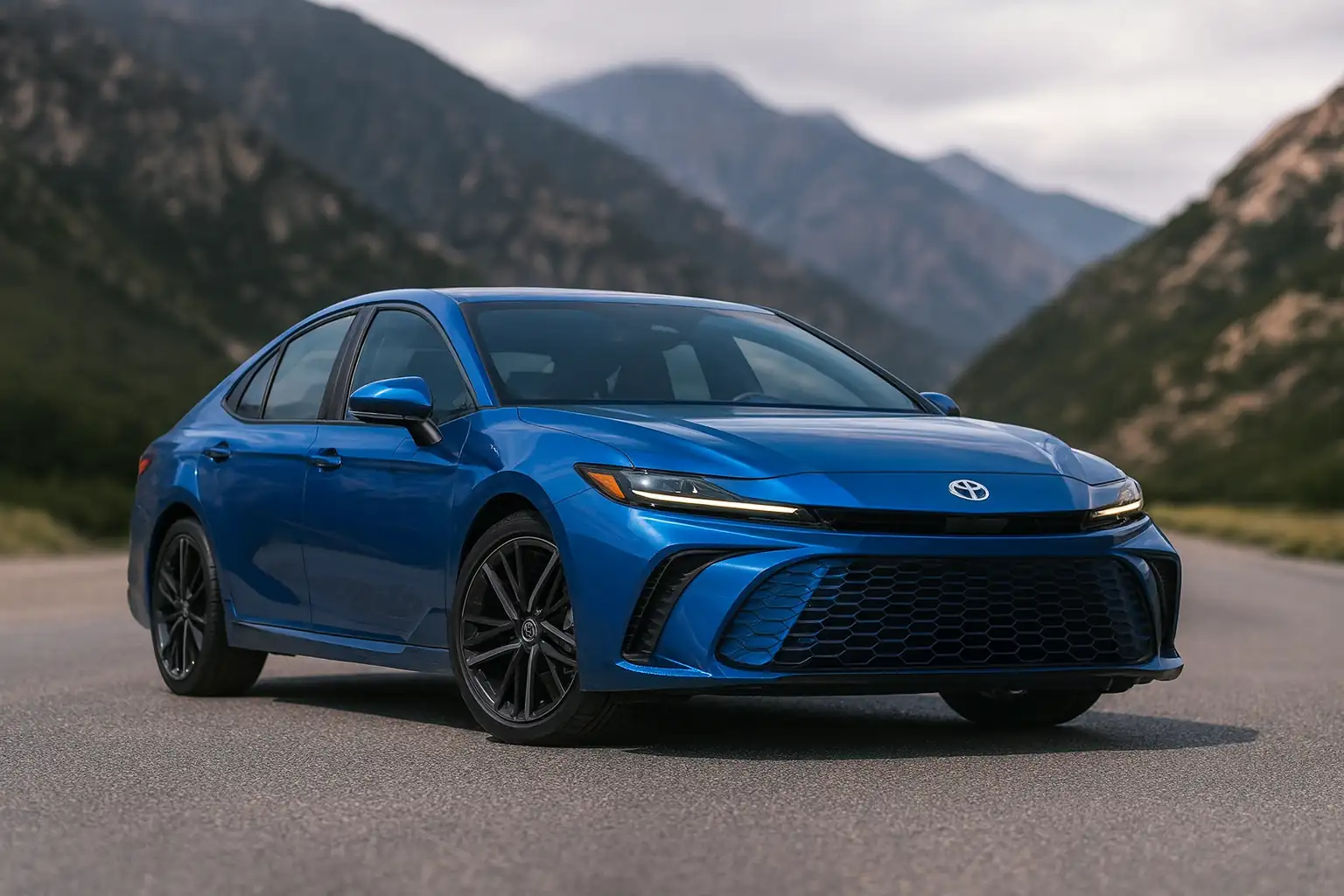
The 2025 Camry’s hybrid setup is so refined and balanced it makes you forget the V6 ever existed.
On my first drive, the handling felt balanced and zippy in real traffic. Drivers around Orange County, California, will get the same pleasant vibe, showing a sporty rhythm without drama. For 2025, this model is hybrid-only, with an advanced redesigned system that switches from traditional V6 powertrains to a 2.5L engine producing 232 horsepower. It is efficient and long-lasting, offering a smooth balance between performance, economy, and overall driving feel that meets the expectations of U.S. drivers. The Eco exterior and well-finished interior fit the midsize sedan brief perfectly.
Inside, the cabin feels like a modern gas-powered car, while its safety, reliability, and comfort set this smart vehicle apart. It isn’t perfect, yet it avoids any major issues in daily use. In real-world driving around Orange County, commutes were easy, errands stayed calm, and the tank sipped fuel in Eco mode. I noticed genuine savings on a budget, with solid range and mileage that required a refill only when truly needed. As a choice from Toyota Camry, the car drives confidently, offers practical options, and remains eco-friendly. The design keeps things clean enough to fly under the radar in a good way.
The Heart of the Camry
I like how the lineup is simplified, a powertrain streamlined approach that respects buyers who want a clear choice with variable options at all levels for real reasons. It isn’t electric Toyota hype; despite the Camry name on the trunk, the focus here is the core engine and hybrid system that actually deliver what drivers need in daily drives and longer trips. The 2.5-liter 4-cylinder (2.5L) gasoline engine stands out when paired with motors and an eCVT. Front-wheel drive (FWD) is standard with two motors for a combined hybrid output of 225 horsepower, while all-wheel drive (AWD) is available with three motors producing up to 232 hp. The whole drivetrain is electronically based and controlled, so the transmission behaves like a practical CVT, keeping fuel burn low and running costs down.
Toyota has clearly shifted worldwide toward cleaner technology, in line with government regulations, stricter fuel standards, and environmental goals. That makes this model a compliance winner on paper and a genuine benefit on the road. With rising fuel prices, every dollar counts, and this setup helps reduce running costs. You still get strong efficiency from a fuel-saving package without compromising response. When I floored it from a slow roll, the hybrid accelerated better than expected. The e-motor torque delivers clean pull, helping with quick merges. The older hybrid version had decent torque but this year’s configuration delivers cleaner pull and quicker recovery.
It is also a friendly, practical mix for enthusiasts who want clarity over marketing: no V6, no stretched “V4” myths, just a single sensible setup that keeps speed in check while combining electric assist with the gas engine. On cool mornings, the electric side kicks in early, getting you away smoothly and keeping you in that sweet spot where the eCVT mapping and battery assist provide the right shove without drama. For cars in this class, the base tune feels new yet familiar. Available trims vary slightly, and the hybrid logic felt further refined on my loop, giving maximum power when requested while keeping revs low during cruising. This refinement leads to calm operation that keeps noise down and speed steady.
The result is a standout paired combo that doesn’t feel strained. The powertrain feels controlled and makes practical sense for 2025, a simplified recipe that should provide long-term benefit without drama.

Performance & Acceleration
In back-to-back runs, I clocked 0 to 60 mph in 7.7 and 6.8 seconds, a surprising result for a midsize sedan that stays quiet at standstill and stop, yet feels quick when you accelerate hard; the engine’s slight drone when pushed is muted by cabin insulation, so you mostly hear the satisfying sound of progress rather than noise from outside. Low-speed pickup is instant, the midrange has real pep and oomph, and high-speed overtaking, passing, and merging are a breeze, which builds confident rhythm on any road, city grid, town streets, highway stretches, or mixed areas. Credit the hybrid layout pairing a four-cylinder I4 2.5L with electric motors; the system feels revamped, boosted, and genuinely strong, with Horsepower figures of 225 and 232 on the specs, while I even noted 163 on a live readout during one pull. Drivers who remember the performance-tuned TRD variant will notice how the hybrid setup trades raw V6 punch for smoother torque delivery and steadier pull that feels more refined in real-world acceleration.
The electronically-controlled Variable CVT stays Controlled and predictable, with simulated shifts that arrive immediately and seamlessly, and the quirky token ECVT sedan pretty much sums up the vibe. Steering feedback is clear, Handling is sporty yet comfortable, and the wheel feels natural in your arms during quick maneuvers, giving an average driver the capability to reach higher pace without waiting or over-correcting the pedal. FWD remains Available, AWD adds traction for buyer peace of mind, and drive modes plus switches make switching from economical cruising to performance bursts seamless; that means you can be highly efficient on gas and fuel while still making time when need and desire require it.
The Camry stays reliable and capable in the interior where cabin calm and tire grip cooperate, filters keep the air tidy, and delivery remains starting linear even when you rev higher; Despite talk of an old V-6, the I4 setup feels like better value for vehicle and vehicles alike, especially considering durations of commuting where longer legs and economical habits truly deliver. Expect competitive results across AWD or FWD, Available to suit the buyer who wants predictable performance without a penalty, and while I rarely miss extra cylinders, the current tune is excellent, using modern control that stays Controlled even at the start of a run or when hard inputs arrive at full pedal; the system simply delivers what it promises and that’s the kind of value I appreciate.
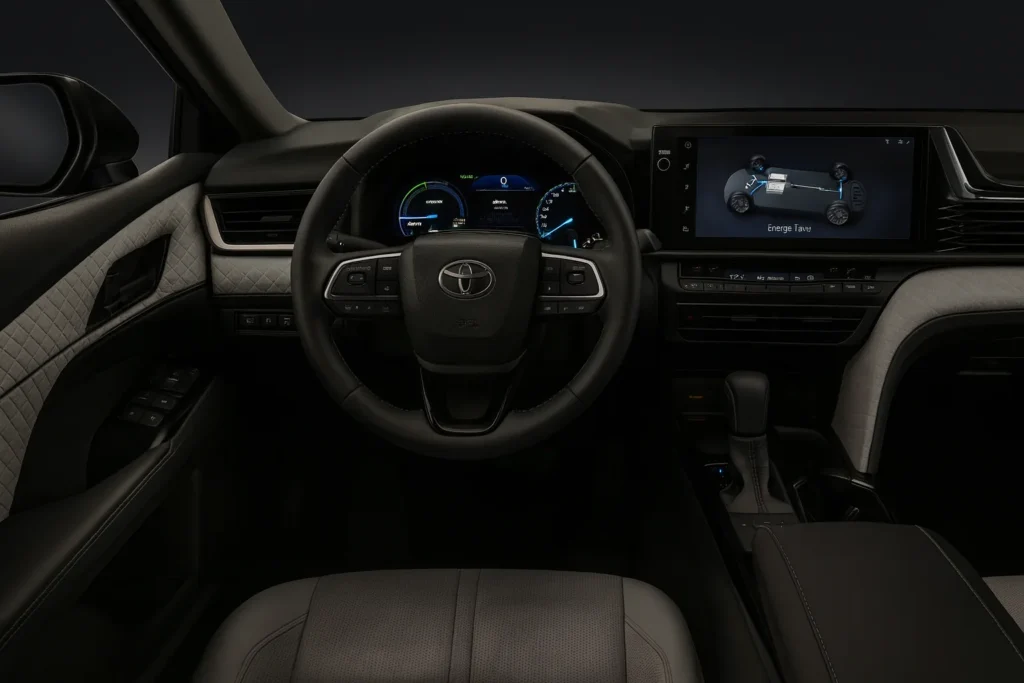
Hybrid System & AWD Explained
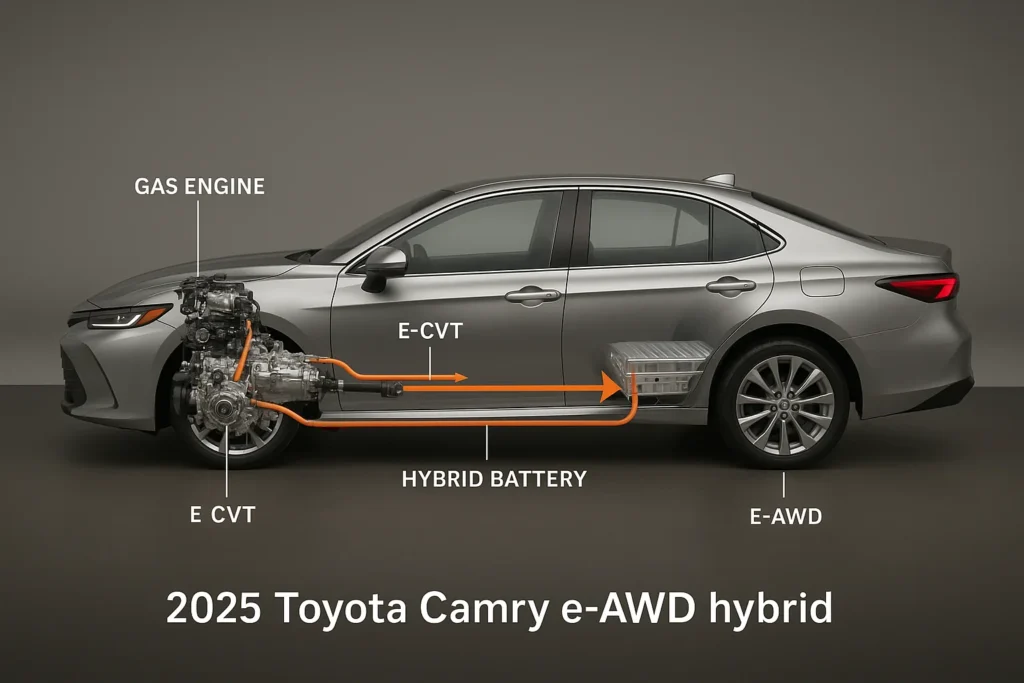
Under the hood, the hybrid setup pairs a 2.5-liter 4-cylinder with Double Overhead Camshaft DOHC, 16 valves, and Timing-Intelligence that is electronically controlled to adjust airflow at the intake for efficient burn; think smart technology doing the work while you just drive. The e-CVT transmission stays continuous in feel, with tidy shifting and the kind of gear logic that suits regular traffic, while front-wheel benefits keep the sedan easy in town and AWD is available with Base stability for slippery runs. In FWD guise, a rear motor can sit out, but in AWD a third unit joins the party for extra traction, and the system communicates through sound and feel just enough to keep you involved. Power is combined from the engines and motors, producing smooth shove without drama, and the drivetrain will quietly produce a boost when you’re bumping the throttle onto the highway.
I noted pulls around 3600 rpm, a stronger sweep near 5200, and a final push close to 6000, which tracks with how Toyota rates these models. Credit the electric assist and battery energy, plus regenerative magic that turns brake heat back into watts; I saw 49 to 51 during light braking on easy city loops, then better economy on long range cruises as the systems blend output. Tuning stays planted, compliant, and not lifeless in tougher spots, with firm conditions only on truly challenging backroads; the steering standard is calm and the ride avoids shake unless you’re in a rougher LE four-cylinder overall trim on truly broken pavement.
The front axle does the heavy lifting in FWD, the rear steps in as needed in AWD, and the whole vehicle feels reliable and advanced without shouting about it. Under the skin, dual phasing and variable timing keep the Camry responsive, the all-wheel intake trick helps airflow, and the calibration felt right across options for every model I sampled, with one last pass to satisfy my mind. For the 2025 lineup, you still won’t find a V6, yet this hybrid model keeps performance honest, keeps gasoline use low, and keeps stability predictable with a base tune that favors confidence; it’s the kind of setup that communicates quietly, stays regular in good ways, and uses the latest technology to make the mechanicals work smarter behind the scenes.
MPG & Efficiency
On my mix of highway and roads across the region, the sedan proved responsive, quieter, and pleasantly lightweight, with the lithium-ion battery and electric motors working with smart management that monitors conditions to reduce load on the system. In the midsize segment, that kind of advanced efficiency shows up as real savings and strong value per gallon, even in stop-and-go traffic where the city figures can swing slightly based on stops and how long you run between short distances.
The EPA estimates line up with my real-world use: LE and FWD front-wheel versions can achieve around 51 MPG combined, with approximately 500 miles per tank in the right conditions, while SE and XSE land near 49–47 MPG and 48–46 MPG combined, depending on trims, features, and level of energy recapture. The AWD versions post between 43 and 50 MPG, depending on speed, distance, and terrain. On front drive, the car feels eager to switch into its most eco-conscious mode, while AWD adds traction with only a slight drop in economy that remains competitive with peers.
Overall, the mileage is outstanding for a midsize sedan, with Toyota nailing the 2025 XLE tuning that keeps fuel use in check over time. Even the small differences between trim options make a strong case for shoppers who want top efficiency, full choice, and manageable cost because when the setup is moving and you’re driving in FWD or AWD, the economy you can actually live with feels, frankly, excellent.
Real-World Impressions
On my daily loop, this sedan stays planted and predictable, with a firm yet compliant suspension that feels progressive over mixed conditions and stop-and-go traffic. The steering is nicely weighted and feels close to the balanced setup in the Mazda 6, offering confident control through quick maneuvers. While on-center can seem dead, it still communicates useful feedback for keeping the car in its lane through a sharp curve or tight maneuvering around a poorly parked truck.
The revamped hybrid tune represents a reworked combination of power and economy that feels responsive when accelerating, merging, or passing on the highway at higher speed, and the brake pedal has confident bite under sudden or emergency stops, yet you can modulate it gently in both light traffic and heavier driving conditions. Road noise is well-managed by cabin insulation and a quiet interior with useful features like adaptive cruise and driver assist that bolster control and support during trips.
Even with heavier loads, the Toyota Camry feels dependable, with efficient fuel use across distance and an average real-world range that should satisfy a buyer who wants a flexible plan for travel with family. Grip from the tire set is resistant to fade during longer drives, the ride stays smooth and relaxed, and while it’s not a sporty pinnacle, the overall performance and capability improve the experience enough that any gripe feels minor.
The new 2025 updates focus improvements where they matter, and once you maintain a steady cruise, keeping speed is easy without worrying about stability or confidence, leaving only small tweaks that could further improve HVAC filter access and cabin space ergonomics.
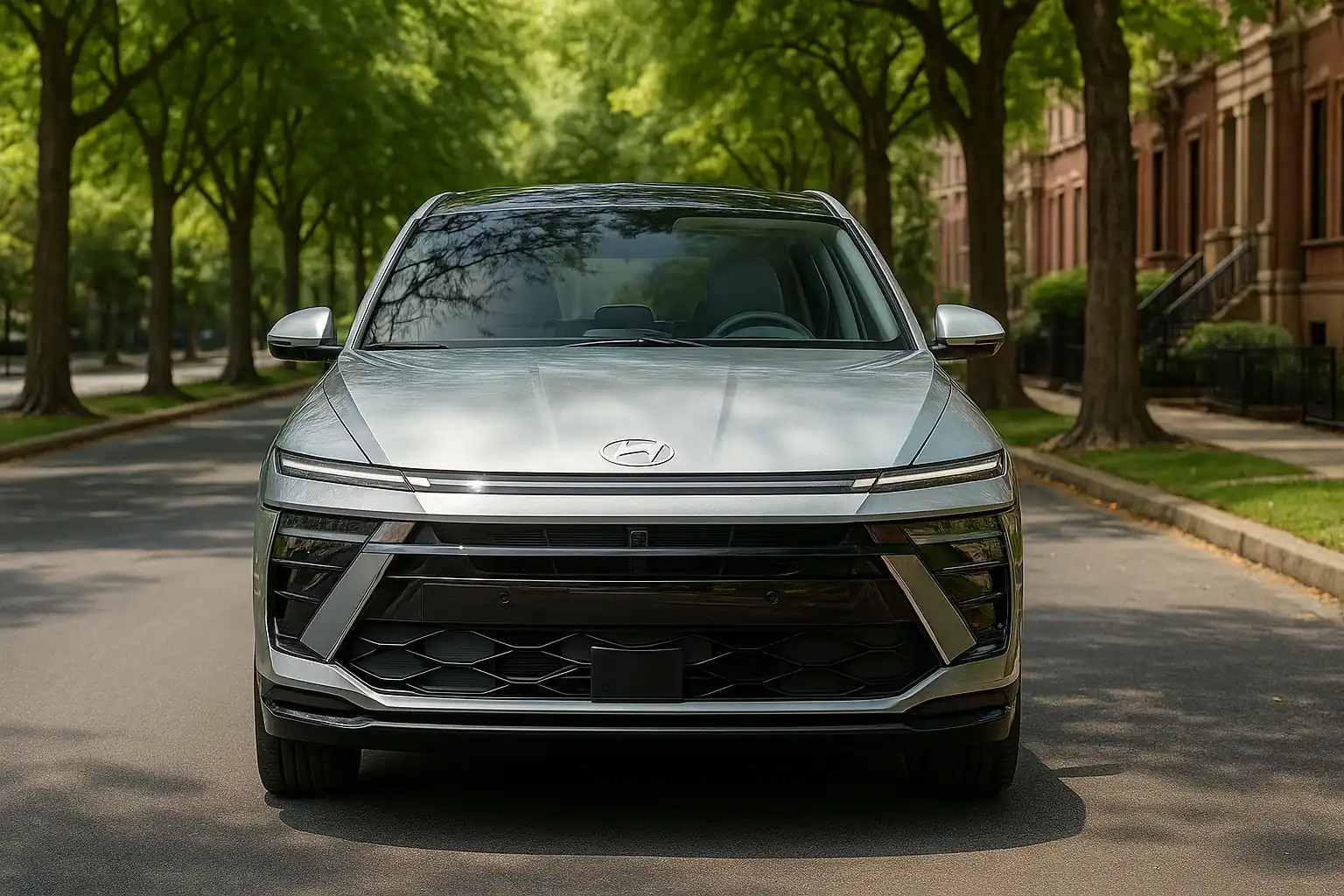
2025 Hyundai Sonata Hybrid Review and Road Test
The 2025 Hyundai Sonata Hybrid delivers a futuristic design, 50 mpg efficiency, and a refined interior that elevates daily driving comfort.
Verdict: Power Meets Practicality
From behind the wheel on a long loop, this midsize sedan still impresses with a balanced ride, zippy response, and an impressive calm that brings real peace over long drives. The hybrid system’s engine and e-motors deliver usable horsepower without drama, the setup stays composed in crosswinds and rough patches, and the cabin remains relaxed while sipping fuel and maintaining strong MPG even when traffic turns challenging, which is where the benefit of its nearly class-leading ratings shows up. That same sense of calm carries into the cabin itself, and our interior review explains how Toyota achieved that quiet, balanced atmosphere.
In modern commuting, the selectable options are the only features worth fussing over, since the tuning, equal parts flexible and surefooted, lets all-wheel drive bring real confidence under mixed conditions. Our team of expert testers found the new calibration from Toyota respectful of daily needs and the Camry’s chassis manners in the ways that matter, giving you room to plan efficient trips and still surge past slower traffic when needed, a small difference that feels top-tier when the road stretches ahead.
From this 2025 lens, the package feels quietly exclusive in how mutually supportive power and economy are. The range proved excellent, real-world driving ease stays high, and the whole thing lands as a stealth winner with thoughtful safety baked in and a tone that says “I’ve got this” rather than “look at me,” exactly the kind of confidence a buyer in this class will respect.
PerformanceIs the 2025 Camry Hybrid actually quick enough for highway merges and passing?
TechnologyHow does the Camry Hybrid’s powertrain work day-to-day, and do I ever need to plug it in?
EfficiencyWhat real-world mpg should I expect, and what variables move the numbers up or down?
| Specification | Detail |
|---|---|
| Engine Type | 2.5-liter 4-cylinder DOHC (Double Overhead Camshaft) with 16 valves |
| Variable Valve Timing | VVT-i and VVT-iE |
| Gas Engine Horsepower | 184 hp @ 6000 rpm |
| Gas Engine Torque | 163 lb-ft @ 3600–5200 rpm |
| Hybrid System Horsepower (FWD) | 225 hp |
| Hybrid System Horsepower (AWD) | 232 hp |
| Electric Motors | Two (FWD) / Three (AWD) |
| Battery Type | Lithium-ion |
| Transmission | Electronically Controlled Continuously Variable Transmission (e-CVT) |
| Drivetrain | Front-Wheel Drive (FWD) standard / All-Wheel Drive (AWD) available |
| EPA MPG (Combined) | 51 (LE FWD) / 47 (Other FWD) / 50 (LE AWD) / 46 (SE & XLE AWD) / 47 (XSE AWD) |
| Fuel Tank Capacity | 13.0 gallons (All trims) |
| Torque (Hybrid System) | 163 lb-ft |
| Available On | All trims |
| Overall System Type | Self-charging hybrid (no plug-in required) |
| Author | Hafiz Sikandar, automotive journalist and editor at Vyocar. |
|---|---|
| Expertise | Covering sedans and hybrid systems since 2016 combining test-track precision with real-world commuter impressions. |
This Post Has One Comment
Pingback: 2025 Toyota Camry Review, Trims, Features & Buying Guide