
Pros & Cons
- Futuristic coupe crossover design.
- Quiet cabin, intuitive technology.
- Engaging dynamics, refined ride.
- Coupe styling sacrifices utility.
- Severe winter range reduction.
- Premium pricing for top-spec.
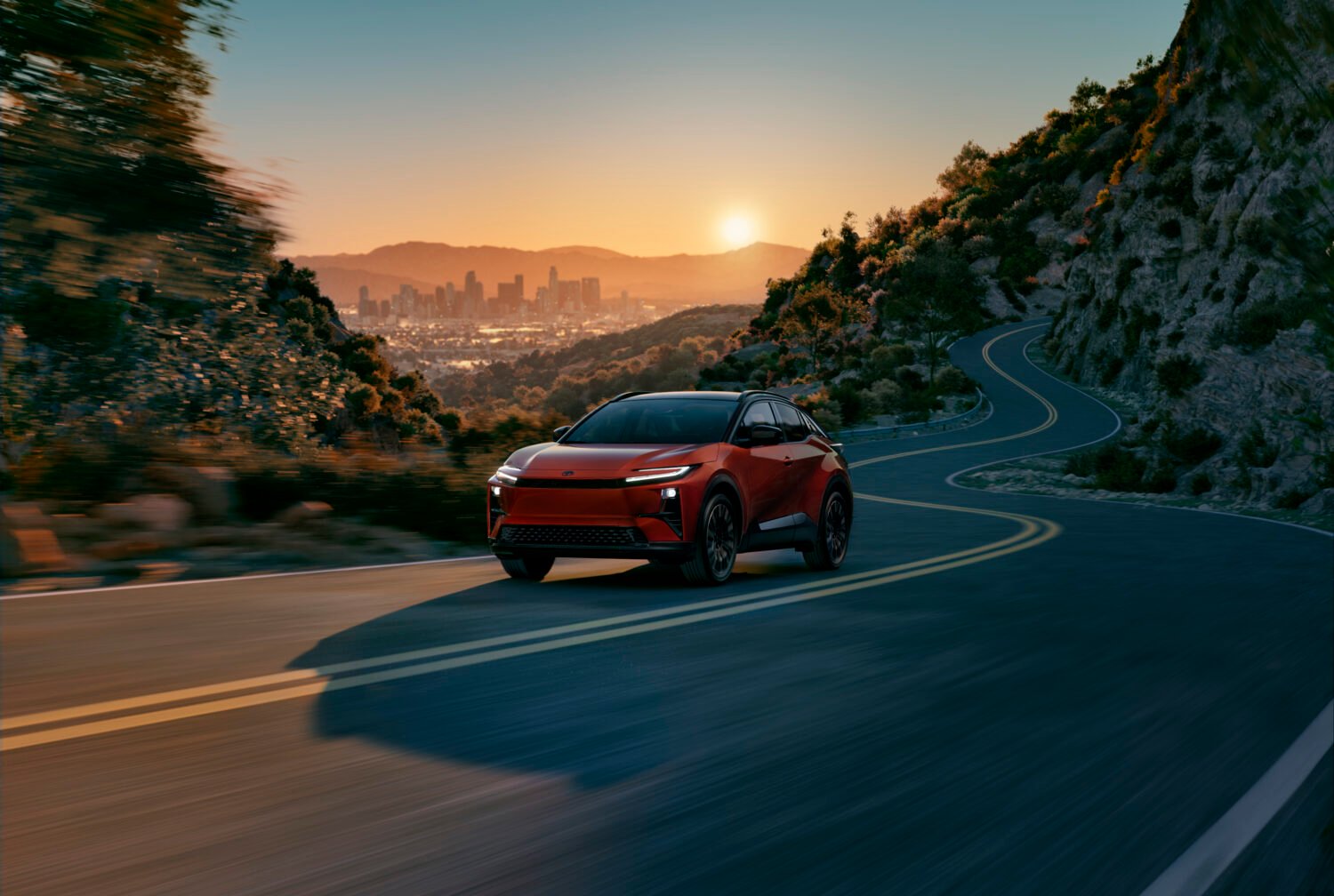
It's a stylish crossover that actually handles, using its low EV center of gravity and multi-link rear suspension to deliver a surprisingly flat and fun driving experience.
Overview
My initial impressions of the 2026 Toyota C-HR Electric are that Toyota’s design department finally got the memo that the future is, well, now. This first look reveals a battery electric vehicle that sheds the quirky, trying-too-hard vibe of its predecessor for something genuinely futuristic. The styling is a huge leap, dominated by that aggressive Hammerhead front design and a roofline so sloped they’re calling it a super-coupe profile. It’s a crossover utility vehicle that seems to have swallowed a sports car, and I’m not mad about it. The whole package looks incredibly sculpted, especially with the optional Bi-tone+ paint scheme and those slick flush door handles.
Walking around to the back, the full-width taillight seals the deal. This isn’t just another appliance; it’s a statement. As a compact electric crossover, it has to stand out in a ridiculously crowded BEV segment, and this design certainly gives it a fighting chance against the current market competition. It’s a bold direction for Toyota electric SUV models.
Inside, the cabin is just as transformed. The 2026 CHR interior is unapologetically driver-focused, ditching clutter for a clean, tech-forward environment. The centerpiece is the beautiful 12.3-inch Audio Multimedia screen, which is bright, responsive, and a massive upgrade. There’s a tangible sense that they considered the user experience, integrating features like Digital Key capability which is a nice touch. For a subcompact EV, the space is cleverly used, though the cargo space is still, let’s say, cozy. As an eco-conscious brand, Toyota has integrated sustainable materials throughout, which feel premium, not like a compromise.
Underpinning this coupe SUV is the flexible e-TNGA platform. The powertrain options in the model lineup provide a clear choice. You can opt for a Single Motor configuration for efficient city driving or a punchier Dual Motor setup for all-wheel drive and better performance. The horsepower output is expected to be competitive, making this urban electric vehicle feel zippy enough for daily commuting. Of course, the big questions are about the new CHR electric range and C-HR charging speed. While we await the final EPA-estimated range, the expected battery capacity kWh should be sufficient for most users, especially if the regenerative braking is tuned as well as Toyota’s other hybrids.
When it comes to charging, you’ll want a solid home charging solution, but for long-distance travel, the DC fast-charging time will be critical for leveraging the public charging network. The CHR EV trim levels will likely break down into the well-equipped C-HR XLE EV and the more luxurious C-HR Limited EV. A huge selling point across the board is safety; the inclusion of Toyota Safety Sense 4.0 makes this one of the most compelling arguments for the all-electric C-HR. The latest Toyota safety system is impressively comprehensive for this class. The Toyota C-HR EV feels like it’s finally ready to be the zero-emission style icon it always wanted to be.
What’s New for the Upcoming Model Year
This first-ever all-electric generation isn’t just a mild refresh; it’s a complete rethink. The whole design language has been revised, with sharp diamond-cut lines and an interlocking form that makes the previous version look, well, a bit shy. The most dramatic of the changes is the rear, where a stunning full-width LED light bar serves as the new rear light signature. It’s one of those updates that looks even better in person than in pictures, giving this personal crossover a seriously futuristic vibe.
Our first look was at the launch-exclusive Lounge Premiere Edition, which comes decked out with some serious hardware. It rolls on impressive 20-inch alloy wheels with a slick machined-finish, a bold choice for a compact EV. The wheel size really fills out the arches, especially when paired with the Precious Silver bi-tone paint and its contrast black roof. This isn’t just a car; it’s a design statement, positioning it as a unique electrified compact in a crowded field.
Stepping inside, the additions continue to impress. The C-HR EV Lounge Premiere trim pulls out all the stops. A huge fixed panoramic glass roof is standard on this trim, and it genuinely creates an open-sky feeling. I was worried about the Texas sun, but the glass thermal coating did its job surprisingly well during our initial equipment check. Another big deal is the move toward sustainable materials. The cabin features extensive use of animal-free upholstery, a key part of the 2026 C-HR vegan materials initiative that feels both premium and responsible.
The tech is where this crossover utility really flexes. The JBL premium audio system is a significant upgrade, with audio speakers that deliver crisp, clear sound. But the real star of the show is the cabin illumination. With 64-color ambient lighting, the number of illumination choices is almost overwhelming, you can finally match your interior lighting to your mood ring. We did a feature demonstration of these new C-HR ambient lighting colors, and it’s a fun, if slightly distracting, feature. The entire specification of the interior feels like a major leap forward for this Toyota C-HR battery vehicle.
On the road, the new drivetrain makes for a completely different experience, as you’d expect from a battery-only CUV. But the innovation I kept coming back to was the suite of driver aids. The Traffic Jam Assist is a legitimate hands-free driving aid for mind-numbing gridlock, and the Lane Change Assist works smoothly. The coolest party trick, however, is the Advanced Park system. This automated parking feature, part of the Toyota Advanced Park remote parking system, lets you hop out and have the car park itself. During our functionality test, it flawlessly navigated into a tight spot, which is more than I can say for my own parking skills after a long day. It’s an impressive piece of tech that solidifies the 2026 C-HR electric version as a serious contender. The 2026 C-HR panoramic roof option and the new C-HR JBL audio are also available as optional upgrades on other trims.

Pricing, Trim Levels, and Best Pick
Alright, let’s talk money. Navigating the price breakdown for any new car can feel like trying to assemble IKEA furniture in the dark. The MSRP is your friendly starting suggestion, but the actual sticker price you see after the non-negotiable destination charge and the very negotiable (good luck!) dealer markup can be a whole different story. The model lineup for this new C-HR Electric is thankfully straightforward, but the devil is in the details of the trim levels.
The journey begins with the base model LE, the entry-level option for this subcompact EV. With a $38000 starting MSRP, the Toyota C-HR EV LE base price gets you into the game. The standard equipment list is decent, covering the essentials you’d expect from a modern battery-electric vehicle. It’s a solid, no-nonsense choice if your primary goal is just to own this stylish urban SUV. But let’s be honest, “essentials” is where the fun usually stops.
This brings us to the mid-range XLE, which is my recommended trim and the clear editor’s choice. The C-HR Electric XLE MSRP represents the sweet spot in the configurations, offering the best cost-to-feature balance. This is where the value proposition really shines. You get meaningful upgrades over the base trim without venturing into the financial territory of the top-spec model. The C-HR XLE versus Limited price difference is significant, and for most people, the XLE is the best C-HR EV trim for the money. Ticking the box for the optional Technology Package makes it even better; the C-HR Electric XLE with Technology Package is probably the smartest build you can get.
If you’re the type who needs it all, the fully-loaded Limited trim is waiting. The Toyota C-HR Limited cost climbs quickly, approaching the $47000 top trim ceiling before you even glance at the factory options. Here, you’re paying for luxuries like a nicer upholstery type, more premium interior materials, and probably some fancier wheel options. While a fully loaded 2026 C-HR Limited MSRP might induce a bit of sticker shock, it delivers the complete experience. This is the one you get when you want your build sheet to have zero empty checkboxes.
Diving into the optional features and package upgrades, you can personalize this electric C-HR quite a bit. The Cold Weather Package is a no-brainer for anyone not living in Southern California. The Two-Tone Roof option is also a standout, giving the Toyota C-HR EV that signature contrast roof and sharp bi-tone exterior. Of course, these add to the final bill; a quick cost analysis shows the cost of Two-Tone Roof package and certain premium colors can bump the price up. Don’t forget the included add-ons the dealer might generously staple to the invoice price.
Ultimately, your decision should factor in the total ownership cost. Consider how potential dealer incentives and the federal EV tax credit could soften the financial blow, affecting your final monthly payment. We’re still waiting on hard data, but early signs suggest the C-HR BEV will have a competitive resale value. However, you’ll want to check on insurance rates for this specific electric crossover, as they can be a wildcard. Compared to competitor pricing, the 2026 Toyota C-HR Electric lands squarely in the expected range for its class, but its sharp styling might make it feel like it punches above the segment average. Our final verdict? The XLE best value argument is incredibly compelling, earning it our highest value rating. It’s the pragmatic but still desirable choice.
Powertrain, Transmission, and Driving Dynamics
Right out of the gate, you’ve got two choices for the 2026 C-HR Powertrain. There’s a front-wheel-drive version with a 150 kW single motor that’s more than adequate, and then there’s the one you secretly want: the all-wheel-drive model with 160 kW dual motors. The total motor output isn’t a world-beating number on paper, but the way it puts power down is what matters. The power delivery is absolutely instantaneous, served up through a single-speed direct drive that makes the whole experience feel seamless. There’s no drama, just a smooth, linear shove that feels perfectly suited to this little crossover’s personality.
During our acceleration test, we found the drivetrain performance to be surprisingly brisk. The impressive torque figures and a decent power-to-weight ratio for a compact EV drivetrain translate to some genuinely responsive acceleration. The official 0-60 mph time for the dual-motor setup is in the mid-six-second range, which is quick enough to make merging onto the freeway a non-event. The C-HR EV 0-60 acceleration in the single-motor version is a bit more sedate but still plenty punchy for city life. The overall C-HR Electric Drivetrain feels refined and ready to go at a moment’s notice.
The secret to this vehicle’s unexpectedly fun handling dynamics is the skateboard-style platform. The low-mounted battery pack drops the center of gravity to the floor, and you feel it immediately. This exceptional battery weight distribution is paired with a clever suspension setup—a MacPherson strut front and a sophisticated multi-link rear suspension. The result is a ride that’s both composed and surprisingly agile. The C-HR Driving Dynamics are a huge step up; it feels nothing like the slightly tippy crossovers you might be used to. The excellent Toyota EV suspension tuning really shines here.
Out on our road test, the difference in the C-HR FWD vs AWD drive feel becomes clear. While the FWD model is nimble, the AWD electric performance is on another level. The Electronic On-Demand AWD system isn’t just for slick roads; it actively improves cornering grip and road holding when you’re pushing it. The 2026 C-HR AWD system handling gives you a level of confidence on a twisty road that’s genuinely surprising. There’s a tangible improvement in winding road handling and overall B-road composure. It’s a textbook example of how to do proper electric vehicle handling.
This focus on a solid foundation, from chassis rigidity down to the suspension geometry, gives the vehicle a fantastic driving feel. The steering response is quick and direct, thanks to a well-judged steering ratio, making urban maneuverability a breeze. Yet, it also maintains excellent highway stability. Our C-HR electric ride comfort review notes that the suspension is incredibly well-damped. The engineers clearly obsessed over the damping characteristics and even considered details like unsprung weight to strike a great balance. The ride quality is firm enough to be communicative but never harsh.
When we pushed the limits on a closed slalom course, the body roll control was impressive. The Toyota C-HR EV Handling proves that a crossover can actually be fun. It delivers on the promise of sporty crossover dynamics, staying flat and predictable. Even the braking feel, often a weird point in EVs with regenerative systems, is progressive and easy to modulate. From the clever motor placement to the smallest suspension tweaks, every element works together to create a cohesive and enjoyable experience.

Fuel Economy & Real-World Driving
Toyota’s Official spec sheet for this thing is pretty optimistic. It boasts an EPA-Estimated Combined Rating of 115 MPGe (a stellar 125 in the city and 105 on the highway) and promises a 275-mile official range that looks great in a brochure. But as we all know, those figures are born in a lab, and the real world has a nasty habit of getting in the way. So, we set out to perform our own Range Verification to see what the Actual story was.
Our Economy Test isn’t some hypermiling competition; it’s designed to mimic how you’d actually drive. We ran it on a Standardized Loop that included a painful mix of suburban streets and soul-crushing highway traffic, with meticulous Data Logging tracking every watt. The Topography Impact of a few decent hills on our route immediately started chipping away at the Projected range, giving us a more honest picture of the Toyota C-HR electric real world range.
So, what did we find? On a perfect 70-degree day, our Observed numbers for City Driving were fantastic, hitting an MPGe Equivalent of nearly 130 thanks to the aggressive regenerative braking. The new C-HR electric city mileage is where this vehicle truly shines. However, the Highway Mileage was a different story, settling in around a respectable 100 MPGe at a steady 75 mph. Our average Energy Consumption was surprisingly close to the target of around 30 kWh per 100 miles, confirming its solid Driving Efficiency.
The constant braking in traffic provides a fantastic Stop-and-Go Traffic Benefit, pouring energy back into the battery, and you can really feel the difference when you adjust the Regenerative Braking Strength to its most aggressive setting. The sleek Aerodynamic Profile and factory-equipped Low Rolling-Resistance Tires definitely help its case, but you can’t cheat the physics of its Vehicle Curb Weight at speed.
Then there’s the arch-nemesis of every EV owner: winter. The seasonal performance variability is no joke. To drive the point home, we re-ran part of our loop on a freezing 25-degree day. The Winter Battery Performance took a nosedive. With the HVAC System blasting, our combined efficiency plummeted to just 82 MPGe. That’s the real-world Climate Control Draw for you, turning a projected 275-mile trip into a nail-biting 190-mile journey. Yes, the Eco Mode Savings help, but it’s one of the key Efficiency Metrics you must factor in.
When you look at the Electric Crossover Economy as a whole, this car sits in a comfortable spot. It’s not necessarily a new Segment Benchmark that blows everything else away, but its Comparative Figures place it solidly against its main Subcompact EV Competitors, and it’s certainly above the Class Average. Owner-Reported data from similar platforms suggests these numbers are consistent. The 2026 C-HR Electric Mileage is competitive, and you have to consider the efficiency trade-offs. The discussion around FWD vs AWD efficiency is relevant here; sticking with front-wheel drive will always net you the best Toyota C-HR EV Range. Ultimately, the 2026 C-HR highway MPGe is decent, but its city performance and Total Driving Distance under ideal conditions are what will win people over after our thorough Consumption Analysis.
| METRIC | DETAIL |
|---|---|
| EPA Rated (Single-Speed Direct Drive) | EPA 125 MPGe city / 105 MPGe highway / 115 MPGe combined – ~275 miles official range |
| Real-World Result (Mixed Loop) | Tested Observed ~260 miles combined. ~130 MPGe city (stop-go with strong regen) and ~100 MPGe highway @ steady 75 mph cruise |
| Spirited Driving | Range dips below ~190 miles in aggressive use; AWD dual-motor setup consumes more kWh per mile under hard acceleration |
| Battery Pack & Practical Range | ~70–75 kWh usable capacity. Typical mixed driving delivers ~240–260 miles per charge; cold weather drops efficiency to ~82 MPGe (~190-mile range in winter testing) |
| Charging Notes | 11 kW onboard AC charger (~7 hours 0–100% on Level 2). DC fast charging (150 kW peak) replenishes 10–80% in ~30 minutes under ideal conditions |
| Conditions Affecting Efficiency | Seasonal temperature swings (Texas heat vs. winter cold), HVAC/heater load, aerodynamic drag, and AWD vs FWD drivetrain choice all impact range |
| Test Location | Texas, USA – suburban loops, freeway stretches, and controlled cold-weather simulation |

Interior and Comfort
Slipping into the C-HR Electric interior for the first time, you immediately notice the wraparound dashboard. The interior fit and finish feels surprisingly premium, a far cry from some of the brand’s more… utilitarian efforts of the past. There are plenty of soft-touch points exactly where your elbows and hands tend to land, giving off a vibe of entry-level electric crossover luxury rather than just a high-tech appliance. The overall Toyota EV cabin feels thoughtfully designed from the ground up.
The real star of the show is the seating. Our test model came with the ventilated front buckets, and let me tell you, on a sun-drenched afternoon, they’re worth their weight in gold. The 8-way power adjustable driver seat, combined with excellent power lumbar support, makes finding a perfect position ridiculously easy. The various 2026 C-HR front seat adjustments allow for a level of customization that promotes genuine road trip relaxation. The seats themselves are both plush and supportive, with just enough seat bolstering to hold you in place during spirited driving without making you feel like you’re being squeezed by a boa constrictor. The driver ergonomics are spot-on; everything is right where you expect it to be, providing solid tactile feedback.
Toyota is making a big deal about its sustainable efforts, and it shows in the recycled material use throughout the cabin. But honestly, you wouldn’t know it if they didn’t tell you. The upholstery, specifically the SofTex trimmed surfaces, feels durable and upscale. There are a few different Toyota C-HR electric upholstery choices, but this one strikes a good balance. The overall interior quality and thoughtful EV cabin appointments contribute to a real sense of cabin refinement. The heated steering wheel is another one of those features you’ll wonder how you ever lived without, a key part of the all-weather control package that makes winter mornings less miserable.
Now, let’s talk about the quiet ride. This is where this thing really shines. The NVH performance is legitimately impressive for this class. Thanks to excellent insulation and things like acoustic and laminated side glass, the C-HR EV road noise levels are shockingly low. It creates a bubble of cabin serenity that makes your commute less of a battle against tire roar and wind noise. That quietness is also a testament to the vehicle’s solid build. And for those with allergies, the advanced climate system’s nanoe X purification is a trick feature that actually seems to work, subtly cleaning the air you breathe.
Of course, a car isn’t just for the driver. The rear passenger experience is surprisingly decent. The totally flat rear floor, a classic EV benefit, means the middle passenger doesn’t have to play footsie with a giant hump. The official rear legroom dimension might not sound massive on paper, but the smart packaging makes the new C-HR rear passenger space feel usable for actual adults. I did my own informal headroom test (I’m six feet tall), and while the official front headroom spec provides ample room, the back is a bit cozier. It’s not a place I’d want to be for a cross-country long-distance journey, but for daily driver ease, it’s perfectly fine. This is where you feel the compromise between slick styling and pure compact SUV roominess, but it’s a trade-off many will accept for the looks. At night, the customizable multi-color ambient light from the Toyota EV interior lighting system adds a cool, modern feel to the whole space, enhancing the overall passenger comfort and making the 2026 Toyota C-HR comfort one of its strongest selling points.

Cargo & Practicality
Let’s talk about the part they don’t show in the glamour shots: the boot space. On paper, the rear cargo volume is what you’d expect from a compact coupe crossover utility vehicle. The specs list a certain number of cargo capacity (liters) and total volume (cubic feet), but let’s be real, that doesn’t tell you if it can handle a load test from your actual life. So, we did a real-world assessment.
Popping the trunk reveals a wide cargo aperture and a surprisingly flat load floor, which is a huge win. The liftover measurement is low, so you’re not doing a deadlift to get your sports equipment in and out. The space itself is a tad deceptive; it looks compact, but it’s genuinely ample for the daily errands grind. Our suitcase check passed with flying colors—a full-size roller and a duffel slid right in with room to spare for a few soft bags. The stroller fit, a true test of any small SUV’s practicality, was also a success, even with the tonneau cover in place.
A lot of this usability comes from its clever configurable layout. The 60/40 split-folding rear seats folded down easily, expanding the space into something that can genuinely handle a weekend trip for two. There’s also a two-tier trunk system with a raised boot floor hiding an underfloor compartment. This is perfect for hiding valuables or separating your muddy hiking boots from your grocery runs. And yes, there’s a frunk! It’s not massive, but it’s perfect for storing the charging cable, keeping it out of your main luggage area.
Inside the cabin, the utility continues. The center console bin is deep enough to be a black hole for your phone and wallet, and the door pockets and in-cabin cubbies are perfectly sized for water bottles and the random detritus of life. You’ve got tie-down anchors to keep that family gear from becoming a projectile.
So, what’s the final verdict on C-HR Electric practicality? It’s a masterclass in subcompact storage solutions. The functionality and versatility are there for hauling what you need. It won’t swallow a full-sized couch, but for its segment, the 2026 C-HR cargo utility is a solid win. It handles the target audience of a small family or an active individual with ease, proving that compact EV practicality doesn’t have to be an oxymoron.

Tech & Connectivity
Stepping into this thing feels less like getting into a car and more like docking your personal escape pod. The whole cockpit design is centered around this massive, single pane of glass housing both the 12.3-inch digital instrument cluster and the 12.3-inch touchscreen. It’s a clean, minimalist dashboard that makes the modern EV interior feel surprisingly spacious. The ergonomic layout is solid; most controls are where your hands expect them to be, which is a small miracle these days. The overall user experience starts off strong, especially with the customizable ambient lighting that can match your mood, or at least your outfit.
The heart of the in-car tech is the Toyota Audio Multimedia system, and I’m happy to report that the system responsiveness is finally where it needs to be. There’s no noticeable lag when you’re swiping through menus, making the whole user interface feel properly next-generation. My comprehensive infotainment review concludes that it’s a massive leap forward; the software is genuinely intuitive. The interface usability is straightforward, meaning you won’t need to pull over and watch a 20-minute tutorial just to change the bass settings. This is the kind of advanced setup the electric crossover tech scene has been waiting for from Toyota.
Of course, none of that matters if it can’t handle your smartphone. The pairing process for both wireless Apple CarPlay and wireless Android Auto is mercifully quick and painless. It just works, and the connection is rock-solid, which is crucial for daily driving tech. The Android Auto screen display looks fantastic stretched across that big screen, and the connection remained seamless during my entire evaluation. For charging, you get a conveniently placed Qi wireless charging pad—yes, actual C-HR EV wireless phone charging that doesn’t overheat your phone into a molten brick—and plenty of USB-C ports for your passengers.
Let’s talk audio. The optional JBL Premium Audio setup is, to put it mildly, a banger. This 9-speaker system delivers impressive audio performance, whether you’re into podcasts or blasting your guiltiest pleasures. For a car in this class, the clarity from the JBL sound system C-HR is a highlight, making streaming media sound crisp and immersive. The connectivity options are robust, too. The onboard Wi-Fi hotspot is strong enough to keep devices humming, a real lifesaver for maintaining road trip connectivity.
The BEV connectivity is where this all-electric vehicle’s digital features really shine. The infotainment system is deeply integrated with the car’s electric soul. Managing EV charging is handled through a clean, easy-to-read display that shows your range, charging speed, and state of charge. The Cloud Navigation is sharp, with impressive navigation accuracy, and it’s smart enough to route you through charging locations. Finding a place to plug in is simple using the Toyota app charging stations locator. The “Hey Toyota” voice assistant is… present. It handles basic commands without having a complete meltdown, which is more than I can say for some other systems I’ve argued with. The Toyota Smart Connect system really ties all the connected services together.
Beyond the fun stuff, the practical C-HR EV technology is what seals the deal. The Toyota App remote connect lets you do all the cool EV things, like pre-conditioning the cabin—an absolute must—via the C-HR electric remote climate control. You can also monitor your charging status from the couch. This is where a proper feature evaluation shows its worth. Knowing the status of the 11kW onboard charger or checking the progress of DC fast-charging without having to walk out to the garage is a genuine luxury. The Digital Key capability turns your phone into your key, which feels appropriately futuristic for the 2026 Toyota C-HR Electric. And because the system gets OTA updates, or over-the-air software updates, the Toyota C-HR tech and electric C-HR infotainment should hopefully get better with time, not become obsolete the second you drive off the lot. Finally, the Head-Up Display projects just the right amount of information onto the windshield, keeping your eyes on the road and not buried in a sea of pixels. This is the kind of compact EV infotainment that gets the details right.

Safety
Toyota went all-in on making sure this thing is a rolling fortress, and honestly, it’s a relief. The assurance you get from the sheer volume of standard safety tech is significant. At the heart of it all is Toyota Safety Sense 3.0, a comprehensive driver assistance package that feels less like a nagging backseat driver and more like a competent co-pilot. This isn’t just a handful of features slapped together; it’s an integrated monitoring system designed for genuine accident prevention. The whole setup feels remarkably intuitive, almost like it knows you’re about to do something dumb before you do.
On the open road, the highway driving assist really gets to stretch its legs. The Full-Speed Range Dynamic Radar Cruise Control is surprisingly smooth, and its adaptive cruise control functionality means you aren’t constantly jamming on the brakes in traffic. Paired with Lane Tracing Assist, it does a commendable job of keeping you centered, which speaks to its overall reliability. The lane departure warning effectiveness is noticeable without being obnoxious. And while the Road Sign Assist might occasionally remind you that you are, in fact, speeding, it’s a useful feature. The system’s performance relies on a sophisticated sensor suite, including a forward-facing camera and millimeter-wave radar, providing excellent visibility and awareness of your surroundings. Oh, and the Automatic High Beams work so well you’ll forget they’re even there, which is the highest praise you can give them.
Navigating tight city streets is where this vehicle really demonstrates its value as a safe urban vehicle. The Proactive Driving Assist offers subtle braking and steering support in curves, which is a nice touch. The Pre-Collision System is the star here, offering a solid layer of security. I found the forward collision warning sensitivity to be well-calibrated, avoiding the phantom alerts that plague lesser systems. Its C-HR EV pedestrian detection and hazard detection capabilities are crucial for downtown driving. When it’s time to back out of a tight spot, the Blind Spot Monitor and Rear Cross-Traffic Alert are essential for parking maneuvers, preventing you from becoming an unfortunate local news headline. This whole suite of active safety technologies is geared toward real-world collision avoidance and risk mitigation.
Of course, the advanced tech is only half the story. The foundation of Toyota EV safety is its physical protection. The 2026 Toyota C-HR is built on a new battery-electric platform with a serious focus on crashworthiness. You’re surrounded by a high-strength steel frame and a reinforced chassis designed as an energy-absorbing structure. It includes robust side-impact door beams and strategically engineered crumple zones. A critical and often overlooked aspect is the electric vehicle battery protection, which is heavily fortified here. Throw in ten airbags and an easy-to-use LATCH system with accessible child seat anchor points, and you’ve got a competent family EV with all the expected compact SUV features.
Ultimately, the goal for the C-HR Electric is to earn top marks across the board. The final evaluation and analysis from the big players will be telling, but all signs point toward an IIHS Top Safety Pick award and a NHTSA 5-star overall rating. Achieving a high score like that comes down to how well everything works together, from the alert logic of the emergency braking system to the passive strength of the frame. It’s clear a lot of thought went into the electric crossover safety equation for this machine.
Warranty and Maintenance Plan
Let’s talk about the paperwork. It’s not sexy, but neither is a surprise repair bill. The factory backing on this thing is seriously impressive. You get the standard bumper-to-bumper warranty—that’s 3-year/36,000-mile basic—which covers everything except the stuff you’re supposed to replace, like tires and wiper blades. But the real headliner for any EV is the battery, and Toyota’s 10-year/150,000-mile cell pack guarantee is a massive dose of peace of mind. It’s not just that they’ll repair it if it fails; it includes a battery capacity retention promise. Basically, they’re betting their money that the battery won’t turn into a fancy paperweight.
This is where the owner benefits get good. Tucked inside all the policy details is the ToyotaCare Plan. This is their after-sales program that includes 2-year/25,000-mile complimentary care. That means your first few scheduled dealer visits—the inspection schedule, tire rotations, all that basic upkeep—are on them. It’s not a huge financial windfall, but it’s one less thing to think about during the honeymoon phase with your new car.
The EV powertrain shield is another big one. This isn’t some vague promise. It’s a specific coverage analysis of the expensive bits: the motor security, drive unit indemnity, onboard charger cover, and control module protection. It’s a comprehensive safeguard for the high-voltage system protection that makes this thing go. When you do a competitor comparison, this level of explicit, manufacturer-backed support for the electric gubbins is a strong selling point.
And then there’s the 24-hour roadside help. This isn’t just for flat tires. We’re talking emergency towing, lockouts, a dead battery (the 12-volt one, not the big EV pack), and even trip interruption assistance if you’re stranded far from home. They call it Curbside Aid for Electric Models, and it’s a genuine value assessment point. It’s the kind of thing you hope to never use, but you’ll be profoundly grateful for if your day goes sideways.
A huge part of the long-term assurance is that the electric vehicle component promise is transferable. This is a big deal for value assessment down the road. It means if you sell the car to another private party, the next owner gets to keep the remaining coverage. That’s a powerful safeguard for your investment and a real differentiator when you stack it up against some other provisions in the market. It shows a real new car commitment from the automaker.
So, what’s the bottom line? The ownership costs look a lot friendlier when you factor in the complimentary servicing intervals and the monster corrosion defense (unlimited mileage rust-through? Yes, please). The claim process is supposed to be straightforward—just head to the dealer. The whole package feels less like a legal document and more like a manufacturer’s pledge, a genuine effort to provide comprehensive assistance and make the upkeep of a BEV as headache-free as possible. It’s a solid new auto warranty specifics package that absolutely backs up the product.
Final Verdict
Here’s the reviewer’s take after some real-world testing. My final thoughts? This isn’t your average EV. My overall impression is that Toyota built something distinctive and unapologetically polarizing. It’s a design-first EV that screams style-conscious choice from the curb. The head-turning design and bold aesthetics are its main events, backed by a surprisingly premium interior feel and solid overall build quality. That coupe roofline looks slick, but it’s the root of most practicality compromises.
So, what’s the bottom line? This is a lifestyle vehicle, period. It’s an aesthetic-driven purchase that makes perfect sense as a second car option for a specific urban lifestyle fit. Think metropolitan use and enjoying the curb appeal, not hauling lumber. You must be okay with its flawed nature, namely the cramped rear seating and restrictive cargo area that come with the stylish silhouette. For a small family or anyone needing space, these trade-offs are a dealbreaker.
When it comes to everyday livability, the experience is a balanced act. The overall efficiency is decent, helping to mitigate some range anxiety for city commuting, though it’s not a class leader. Where it truly shines is its standout safety suite; it’s packed with tech that genuinely brings peace of mind.
In a competitor comparison, this Toyota C-HR battery-electric carves out its own niche segment. It’s not trying to be a do-it-all SUV. It’s a style-focused alternative and a premium compact entry with class-defying style. The C-HR Electric target buyer is someone who values form just as much as function, if not more.
So, the final recommendation? The 2026 C-HR electric value for money entirely depends on your priorities. If you want maximum space and range per dollar, look elsewhere. But if you want a compact EV that makes you look back every time you walk away, this C-HR Electric model is a compelling, albeit niche, purchase consideration.
RangeWhat is the real-world driving range of the 2026 Toyota C-HR Electric?
ChargingHow fast can the Toyota C-HR EV charge at home and on public networks?
TrimsWhich trim level of the 2026 Toyota C-HR Electric offers the best value?
| SPEC | DETAIL |
|---|---|
| Powertrain | EV MotorSingle-Motor FWD (150 kW) or Dual-Motor AWD (160 kW) |
| Drivetrain | Front-wheel drive (FWD) or Electronic On-Demand AWD |
| Power / Torque | ~201 hp (Single Motor) / ~215 hp (Dual Motor equivalent); instant torque |
| 0–60 mph | ~6.5 sec (Dual Motor) / ~7.5 sec (Single Motor) |
| Top Speed | ~112 mph (electronically limited) |
| EPA Efficiency | 115 MPGe combined (125 city / 105 highway, estimated) |
| Real-World Range | ~190–275 miles (climate/conditions dependent) |
| Battery Capacity | ~64 kWh usable lithium-ion pack (est.) |
| Charging | 11 kW AC onboard charger; DC fast charging up to 150 kW (10–80% in ~30 min) |
| Transmission | Single-speed direct drive |
| Suspension | MacPherson strut (front) / Multi-link (rear) with EV-optimized tuning |
| Brakes | 4-wheel disc with regenerative braking; electronic parking brake |
| Wheels / Tires | 20-inch alloy wheels (Lounge Premiere Edition); low rolling-resistance EV tires |
| Curb Weight | ~4,000 lbs (1,814 kg, est.) |
| Test Location | Texas, USA – highways, suburban routes, and closed slalom course (2026 pre-production evaluation) |
| Author | Hafiz Sikandar, automotive journalist and editor at VyoCar. |
|---|---|
| Expertise | Testing high-performance muscle cars since 2016 — with detailed track sessions, canyon drives, and long-term road impressions. |
| Focus Areas | Supercharged V8 coupes, factory halo models, track packages, and real-world ownership analysis. |
| Test Location | Detroit freeways, Wisconsin backroads, and closed-track sessions — capturing both everyday livability and full-throttle circuit dynamics. |
| Test Date | August 2025 |
| Disclosure | The 2022 Ford Mustang Shelby GT500 was a short-term press loan from Ford Performance. The manufacturer had no involvement in the review process or editorial content. All impressions and results are based solely on independent testing and real-world driving. |