
Pros & Cons
- Thrilling V8 performance
- Precision track handling
- Engaging manual gearbox
- Harsh daily comfort
- Limited cargo space
- High option pricing
A $70k track weapon with a soul-stirring Tremec manual and uncorked V-8 bellow, but daily driving it feels like medieval punishment for the privilege.
Overview
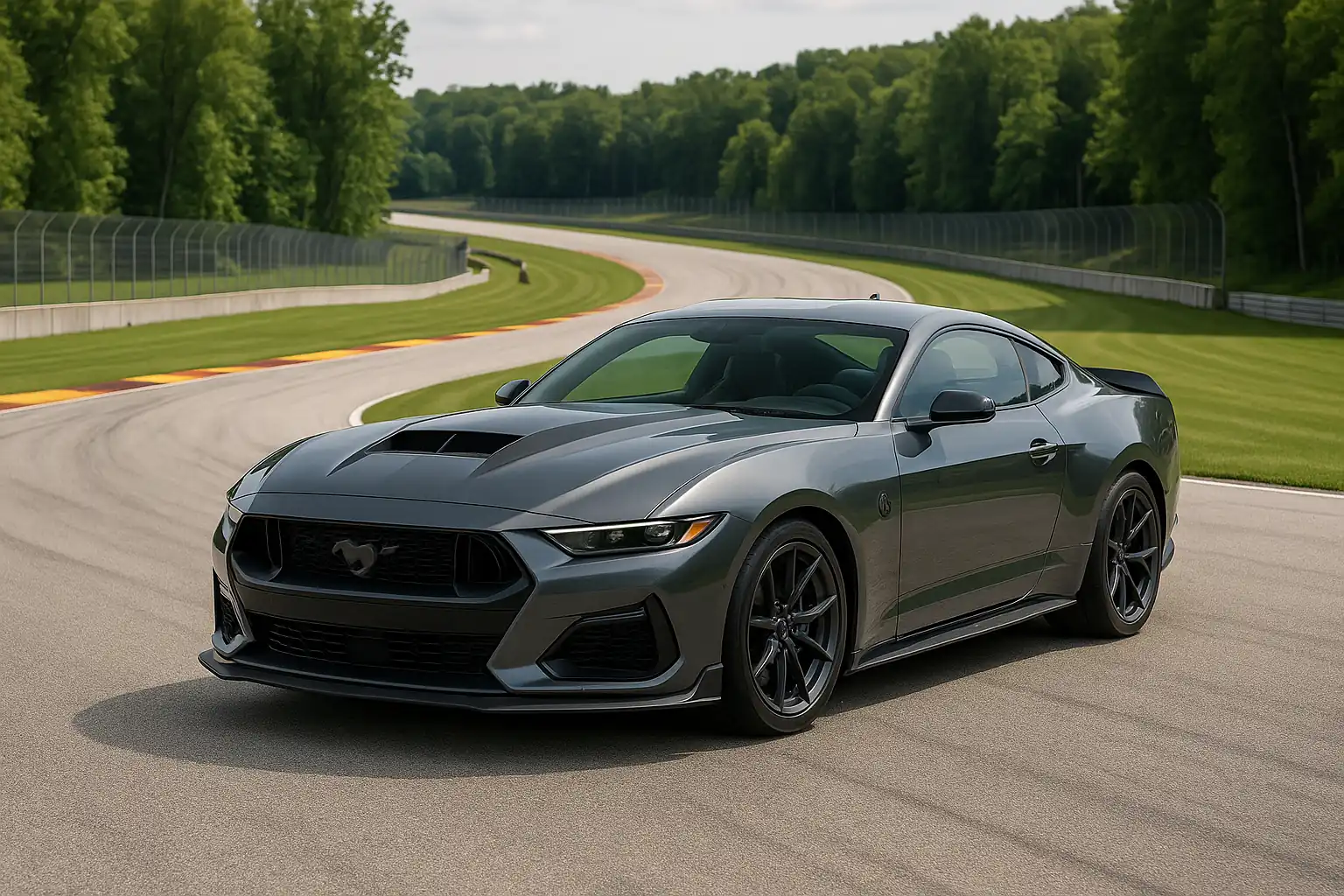
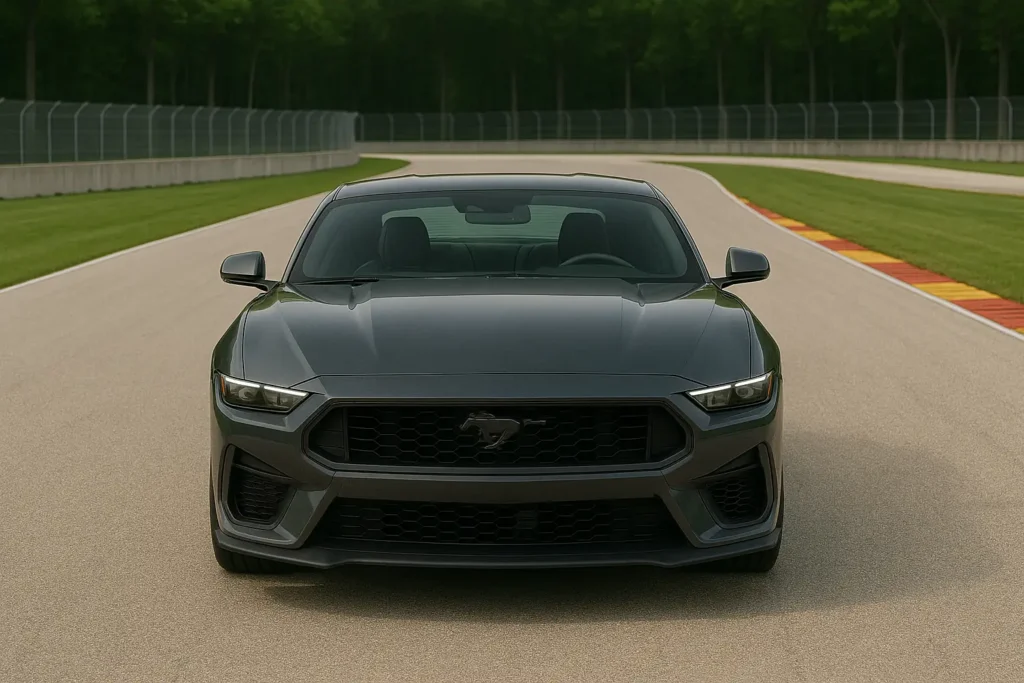
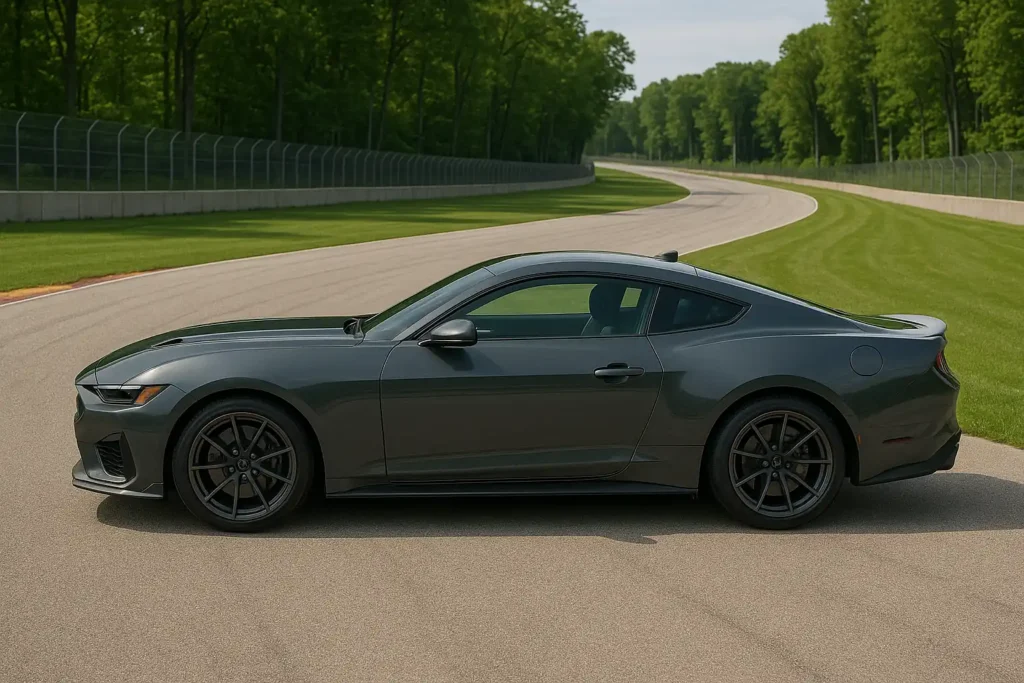
Ford’s latest halo pony car walks a tightrope. The Dark Horse nails the aggressive look with its handsomely evolved shape, black elements, and darker hues like Vapor Blue Metallic – it truly looks the part of the meanest non-shelby Mustang. On Road America’s long straight, hitting 127 mph felt effortless, and pulling 1.58G through Canada Corner proved its track-attacking chassis is seriously capable. Yet, that enhanced V-8’s glorious roar highlights the contrast with the novel interior; the dual-screen dash feels modern but navigating its mid-corner requires patience, much like hustling a Toyota GR86 over Wisconsin’s bumpy pavement.
The daily driving perspective reveals sacrifices. While Ford engineers made the steering precise for sweeping rights at speed, it transmits every crack on Elkhart Lake’s backroads directly to your palms. It’s cramped? Not really, but those bolstered seats demand commitment getting in and out. Is it worth nearly 50-percent price increase over a base GT? For pure performance hardware and exclusivity (it’s limited production), maybe especially when cross-shopping against rivals like the Chevrolet Camaro SS. For commuting? That stings like paying mid-30s for a sandwich. See how it compares on Lightning Lap LL2.
What’s New for 2024
Honestly, calling this a full generational change feels generous. While Ford trumpets the seventh-gen Mustang, the Dark Horse rides the same platform with near-same dimensions and same looks as its predecessor – it’s really a heavily revised sixth-gen. Meaningful updates? A new trim slotting above the GT, packing an enhanced V-8 (still the 5.0-liter Coyote) with lighter con-rods and breathing tweaks netting 500 horsepower and 418 pound-feet of torque. That’s just 14 ponies more than the outgoing Mach 1 – hardly earth-shattering, but the bark from its unique active-exhaust sure is. Road America’s long straight confirmed the shove is real, though merging onto I-43 won’t feel radically different from a tuned GT.
Inside, the novel interior centers on that divisive dual-screen dash – it’s modern but glitchy menus feel like tech for tech’s sake. Standard MagneRide adaptive damping is the star, transforming Elkhart Lake’s frost-heaved backroads from spine-jarring to merely firm. Opt for the Handling Package (smart move) and you get a larger rear sway bar, larger front Brembo brakes, and a 3.73 rear axle. The sublime Tremec TR-3160 six-speed manual is joy itself; the 10-speed automatic remains competent but dull. Is this distinction worth the premium over a GT? For track rats, maybe. For others? See our active-exhaust GT review first.

Pricing, Trim Levels, and Best Pick
Let’s rip the Band-Aid off: the Mustang Dark Horse starts around $59,500. Sounds almost reasonable for a production halo car, right? Wrong. Tick a few option boxes like the essential Track Pack (spoilers, Appearance Pack bits) or the punishingly firm optional Recaro seats, and you’ll kiss $70,000 goodbye faster than traction on Road America’s cold morning dew. That extra spend stings, especially when a loaded Mustang GT feels 90% as potent for daily grinds. Is it competitive? Against a base Porsche Cayman or the dearly departed Chevy Camaro? Oof. Maybe if you really need that individually numbered plaque.
So, who’s the Mustang for? Die-hards waving the flag for the last gas-powered muscle car standing, clearly. The Track Pack is borderline mandatory for its legit cooling and aero, making the car look properly angrier on Sheboygan backroads. Skip the Appearance Pack glitter unless vanity outweighs sanity. Buyers wanting comfort? Stick Recaros, Wisconsin’s frost heaves feel like medieval punishment. Best pick? Honestly, a well-optioned GT saves serious cash unless track days are your religion.
Powertrain, Transmission, and Driving Dynamics
The 5-liter V8 is the special sauce. Pumping out 500 HP naturally aspirated, it’s an intoxicatingly smooth beast that screams to a 7,500 limit – especially glorious with the active exhaust uncorked near Road America’s braking zone. Ford’s tuned version of the Coyote V-8 uses forged connecting rods and dual-throttle-body intakes, feeling brutally eager on the track’s long straight hitting triple-digit speeds. But let’s be real: daily drivers won’t notice much difference from a well-optioned standard GT below 6,000 rpm. Is the power usable? Absolutely, but Wisconsin’s wet morning dew reminds you this rear-drive monster demands respect, much like the precision-focused Hyundai Elantra N in its own class.
Choose the Tremec-sourced TR-3160 six-speed manual. It’s a notchy, sturdy masterpiece with automatic rev-matching, earning plaudits as one of the finest gearboxes in any car under $75,000. The titanium shift knob is pure theater. The 10-speed automatic? Competent for faster lap times, but its shift logic feels dim-witted merging onto I-43 – like it’s guessing which gear you might want. Both feed a 3.73 TORSEN Limited-slip rear diff, launching this 3975-pound coupe to 60-mph in 4.1 seconds. Forget paddles; the manual’s the soul here.
The Dark Horse shines on racing tracks. Ford Performance engineers added additional bracing, bigger wheels (19-inch Pirelli P Zero standard, Trofeo RS optional), and MagneRide adaptive damping. Result? Predictable grip pulling 1.58G through Road America’s sweeping rights, and tenacious composure over Elkhart Lake’s notorious bumpy pavement. The steering feel has added heft and accuracy, making placement easy even at 100 mph. Electronic assists like AdvanceTrac stability-control are brilliantly calibrated – offering enough leash for a power slide in Track mode without letting novice drivers spin into a cornfield. It feels balanced, not terrifying, reminding you of the heritage shared with the Ford Mustang Shelby lineage.
Brembo six-piston front calipers clamping 15.4-inch rotors deliver ferocious stopping force, hauling you down from 70 mph in a claimed 142 feet. They never faded, hammering into Turn 5 after the back straight, though the optional Trofeo RS tires provided the real grip heroics. Is it the ultimate performance machine? Close, but it’s still a heavy muscle car, not a featherweight sports car. See how it stacks up in our Lightning Lap LL2 results.

Fuel Economy & Real-World Driving
Ford’s own paperwork gives the 2024 Mustang Dark Horse an EPA-estimated 14 mpg city, 22 mpg highway, and 17 mpg combined, the kind of numbers that make a Prius owner spit out their kale smoothie. On paper, that’s identical whether you choose the Tremec 6-speed manual or the 10-speed automatic, and in theory, those ratios help balance performance with gas mileage. In reality? Our real-world test loop told a different story.
Over a 116-mile mixed route, half on I-43’s steady 70-mph cruise, half threading through Sheboygan’s stop-and-go traffic with a few spirited blasts on Elkhart Lake backroads, the 500-horsepower Coyote V8 averaged 18.1 mpg on premium gasoline. That’s better than the EPA combined figure, but only because we kept throttle inputs civilized for most of the drive. Push harder, and you’ll see low-teens in no time, especially with the optional Pirelli Trofeo RS performance tires adding rolling resistance.
With a 16-gallon fuel tank, the Dark Horse’s practical range hovers around 250 miles before the low-fuel light pops on, assuming you’re not treating every green light like a launch control demo. The 10-speed auto does a decent job sipping fuel on flat highway stretches, holding revs low, but the manual’s extra involvement didn’t noticeably hurt efficiency on our loop. Cold Wisconsin mornings and ethanol-blended fuel also nudged the numbers down compared to ideal lab conditions.
Bottom line: this isn’t a road-trip MPG champ, it’s a track-bred muscle car with just enough long-legged cruising efficiency to get you from the Elkhart Lake paddock back to Milwaukee without a refuel. If fuel economy tops your priority list, the EcoBoost Mustang’s EPA-rated 22 city / 33 highway will look far more appealing, similar to a Mazda Miata in frugality, but it won’t sound like this.
| METRIC | DETAIL |
|---|---|
| EPA Rated (Both Transmissions) | EPA 14 mpg city / 22 mpg highway / 17 mpg combined |
| Real-World Result (116-mile mixed loop) | Tested 18.1 mpg combined (premium fuel) — ~50% highway @ 70 mph, ~50% city/stop-go with brief spirited runs |
| Spirited Driving | Low-teens mpg possible; optional Pirelli Trofeo RS tires add rolling resistance |
| Fuel Tank & Practical Range | 16-gallon tank ≈ ~250 miles before low-fuel light under normal use |
| Transmission Notes | 10-speed auto sips on flat highway by holding low revs; Tremec 6-speed didn’t hurt efficiency on our loop |
| Conditions Affecting MPG | Cold Wisconsin mornings & ethanol-blended fuel slightly reduced economy vs. ideal lab conditions |
Interior and Comfort
Getting in requires the flexibility of a contortionist, thanks to those deeply bolstered leather-trimmed Recaros. Sure, they offer phenomenal lateral support when attacking Road America’s sweeping lefts, but daily ingress/egress feels like escaping a bear trap. The dark blue contrast stitching and DH badging look sharp, but touch anything – and I mean your knee, a grocery bag, air – and the scratch-prone plastic below the beltline retaliates visibly. Are the base seats better for commuting? Marginally, but they lack the unique flourishes that justify this trim’s ego, much like a Lexus RC in terms of style appeal.
Noise? Oh, it’s a symphony. Road roar on I-43’s concrete slabs drones relentlessly, and the suspension harshness telegraphs every Wisconsin pothole straight to your spine. Adults in the rear seats? Only if they’re legless masochists. That rigid door armrest is a literal bruising point on longer drives. The dual-screen dash is modern and responsive, but its gloss finish reflects Elkhart Lake’s hazy sunlight annoyingly. At least the carbon fiber-like trim won’t blind you. Daily Grind explores whether this track star can handle school runs.

Cargo & Practicality
Let’s not kid ourselves: 13.5 cubic feet of trunk space sounds generous until you wrestle a weekend bag through the oddly shaped opening. Sure, it trounces a Toyota GR Supra (a pathetic 9.1 cubes) and the dearly departed Chevy Camaro, but try fitting actual golf bags without advanced geometry skills. The inside is deep but narrow – fine for two suitcases if you hate wrinkles. Interior storage space? Pathetic. The door bins barely hold drinks, and the center console’s a glorified sunglasses case. Forget phone, keys, and snacks; this ain’t a hatchback.
Daily driver usability? Only if your “errands” involve burning tires, not groceries. See how it stacks up in our sports car cargo comparison.

Tech & Connectivity
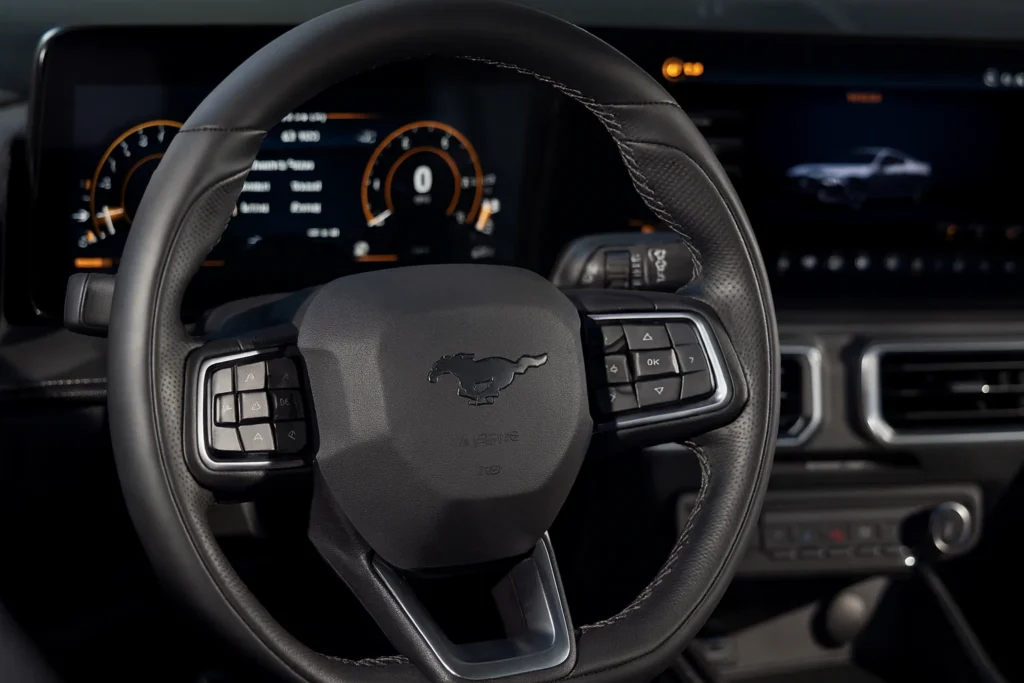
Let’s address the elephant in the cockpit: Ford’s two large digital screens running on Epic’s Unreal Engine look slick at startup, with a sleek graphical sheen and a unique walk-up welcome sequence for Dark Horse owners. The instrument cluster offers deep adjustability, showing g-force or lap times for track driving. That level of data-focused driver engagement feels closer to what you’d expect from a Dodge Charger R/T performance sedan, emphasizing control and precision. But that digital wow factor fades fast when you’re menu-jumping through nested settings on Highway 57 instead of focusing on the road. Want to adjust climate controls? Good luck finding them in the laggy touch maze while dodging Wisconsin deer.
The new setup is easy to learn? Debatable. While helpful shortcuts exist (swipe down for audio, swipe up for vents), the absence of physical knobs feels like punishment. At least the less bunkered feel versus the old Mustang improves visibility, and Apple CarPlay integrates smoothly. But compared to the Fox Body format? Give me tactile buttons over this glossy fingerprint magnet any rainy Elkhart Lake day. See how it stacks up in our Mustang tech deep dive.
Safety
Expecting a safety net in this track weapon? Good luck. The rear parking sensors yelp like a startled chihuahua when you’re reversing near Elkhart Lake’s tight paddock fences, but that’s about it. Lane keeping assistance? It fights you like a toddler refusing bedtime if you dare brush a lane marker on Highway 67 – mildly helpful for drowsy drives, but mostly just annoying. At least you can disable it before attacking Road America’s sweeping rights.
The Safe exit warning theoretically prevents opening your door into cyclists, but in rural Wisconsin, it’s as useful as a parachute in a submarine. The NHTSA Overall Rating of 5 out of 5 stars is reassuring (thanks, National Highway Transportation Safety Administration), but let’s be real: this isn’t a Volvo. Your primary safety feature remains the driver’s right foot and common sense. See the full independent analysis in our crash-test deep dive. The overall package makes more sense once you accept its priorities.
Warranty and Maintenance Plan
Ford’s bumper-to-bumper warranty lasts three years or 36,000 miles, whichever comes first – so basically until your first set of Trofeo RS tires evaporates. The powertrain coverage stretches to five years or 60,000 miles, which is decent but hardly groundbreaking in this segment. You do get roadside assistance for three years, though calling it “complimentary” is like calling a tax refund a gift. Missing? Any complimentary maintenance – because apparently, $70K doesn’t buy an oil change.
It’s covered? Barely. See how it stacks against rivals in our sports car ownership cost breakdown. The real fun begins when the factory warranties expire.
Final Verdict
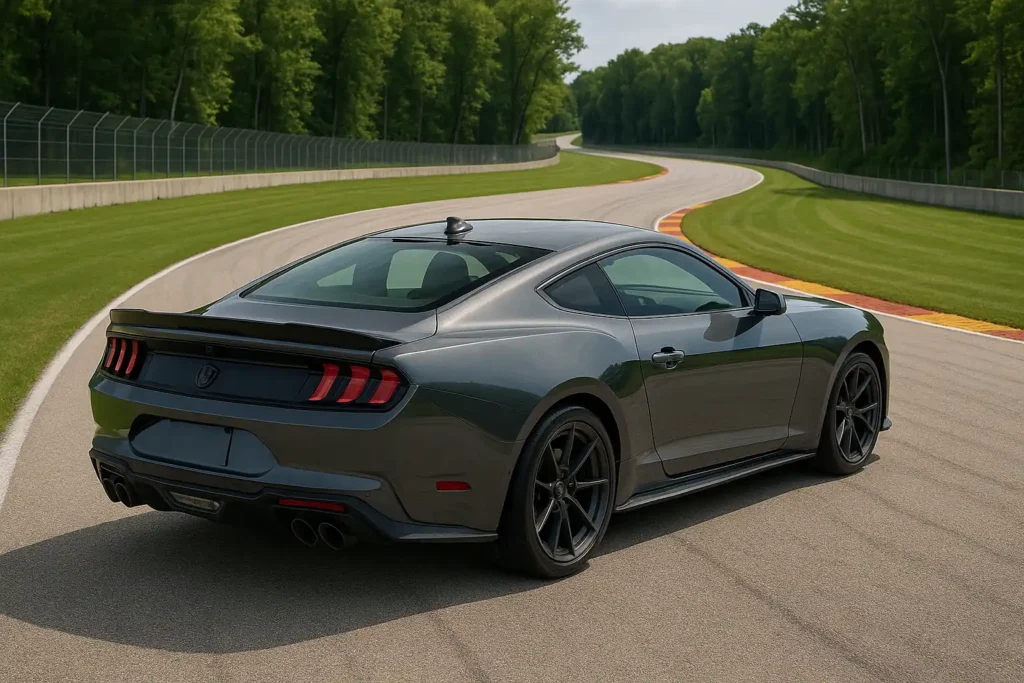
Let’s cut through the exhaust fumes: this is a $70,000 emotional purchase that laughs at logic. When you’re chasing apexes at Road America, the Dark Horse feels worth every penny – that Tremec manual slicing gears while the Coyote V-8 bellows to 7,500 rpm is pure, uncut muscle car theater. It’s shockingly capable, devouring sweeping rights and hauling down from 127 mph with tenacious Brembo confidence. But the moment you hit Wisconsin’s bumpy pavement? The Recaros become torture racks, the dual-screen dash feels like a beta test, and you’ll wonder why a car this loud has less storage than a gym locker.
Is it the last great V-8? Absolutely. Is it a sensible daily? Don’t kid yourself. Buy it to dominate track days and collect envious stares in the Elkhart Lake paddock. For school runs? Hell no. At this price, you’re paying for bragging rights, not practicality. The GT remains the smarter play for mortals – but if your heart overrules your wallet, this is the pony car send-off worth the pain.
PerformanceHow fast is the 2024 Ford Mustang Dark Horse?
ComfortIs the Mustang Dark Horse comfortable for daily driving?
Fuel EconomyWhat fuel economy can I expect from the 2024 Mustang Dark Horse?
More Images about 2024 Ford Mustang Dark Horse


| SPEC | DETAIL |
|---|---|
| Engine | NA V85.0L Coyote, naturally aspirated |
| Drivetrain | Rear-wheel drive (RWD) |
| Power / Torque | 500 hp / 418 lb-ft |
| 0–60 mph | 4.1 sec (tested) |
| Top Speed | 127 mph (observed at Road America) |
| EPA Fuel Economy | 14 city / 22 hwy / 17 combined mpg |
| Real-World MPG | 18.1 mpg on 116-mile mixed loop |
| Fuel Tank | 16.0 gallons |
| Transmission | Tremec TR-3160 6-speed manual (10-speed automatic optional) |
| Differential | 3.73 TORSEN limited-slip |
| Suspension | MagneRide adaptive damping |
| Brakes | Brembo 6-piston front calipers, 15.4-inch rotors |
| Wheels / Tires | 19-inch Pirelli P Zero (Trofeo RS optional) |
| Curb Weight | 3,975 lbs (1,803 kg) |
| Author | Hafiz Sikandar — Automotive journalist & editor at VyoCar. |
|---|---|
| Expertise | Muscle car testing since 2016 — delivering in-depth, data-backed performance reviews with real-world track and street evaluations. |
| Focus Areas | American performance cars, V8-powered sports coupes, track-day handling analysis, and long-term ownership insights. |
| Test Location | Elkhart Lake & Road America, Wisconsin, USA |
| Test Date | August 2025 |
| Disclosure | The Mustang Dark Horse was a short-term press loan from Ford Performance. The manufacturer had no involvement in the review process or editorial content. All findings are based on our independent testing and real-world observations. |
This Post Has 2 Comments
Pingback: 2016 Dodge Charger R/T Is a Grown Up's Muscle Toy
Pingback: 2015 Chevrolet Camaro SS 1LE Review: raw muscle learns to turn