

Pros & Cons
- Genuinely useful, family-focused packaging.
- Effortless, low-drama daily commuting.
- Fuel economy mirrors EPA.
- Acceleration lags sportier rivals.
- Cabin design feels conservative.
- Steering feel lacks precision.
It's the automotive equivalent of beige wallpaper, utterly competent and wholly forgettable.
Overview
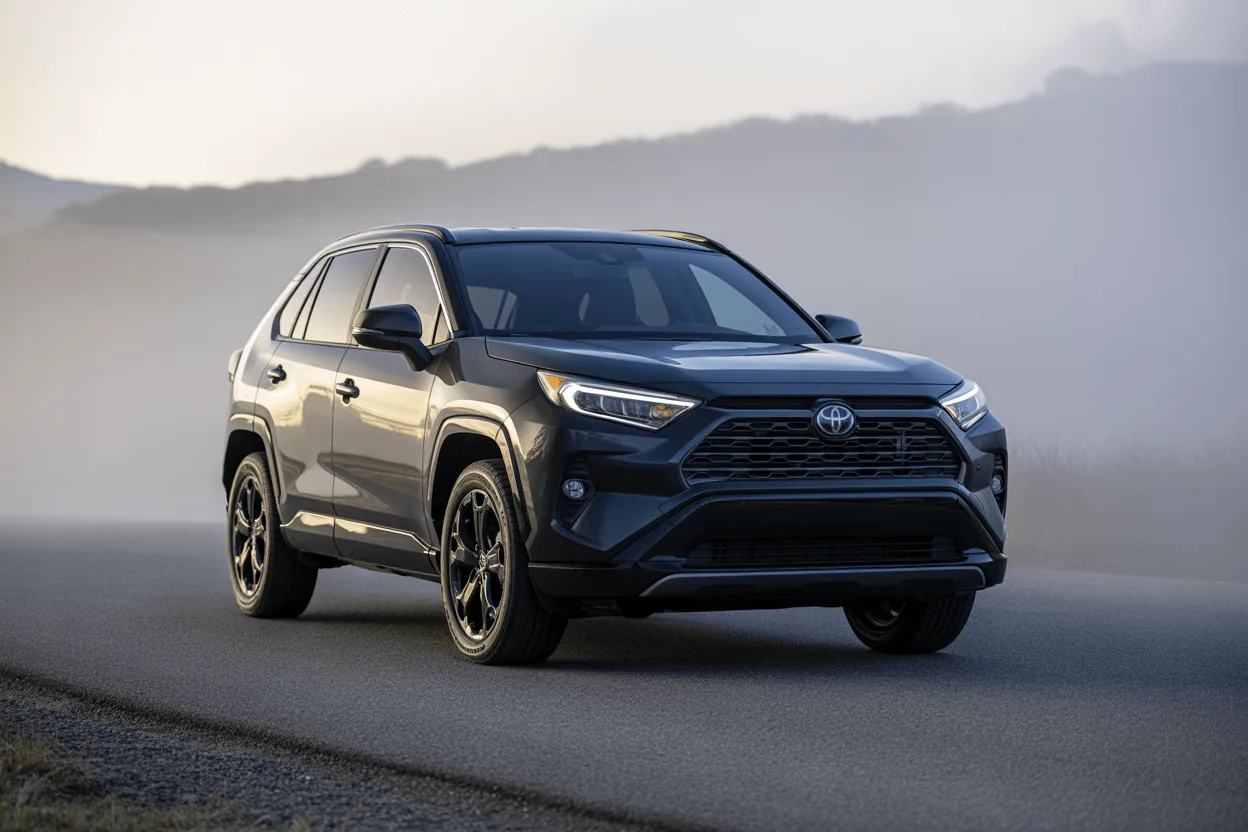
I have tested this compact SUV enough to know it is not trying to be the wild child of the segment, and that is actually good. The appearance is a little understated, sure, but the new design incorporates just enough rugged attitude to keep it from feeling boring. Under the hood you get a 2.5-liter four-cylinder engine with 203-hp, plus hybrid systems and a plug-in-hybrid model if you are considering better efficiency and more range between stops for fuel. The Toyota RAV4 stays frugal next to many nonhybrid competitors, and the power output is fine for real life, even if the acceleration never feels wild. Some versions add torque-vectoring and all-wheel-drive, so on-road grip and light trail adventure feel pleasant rather than stressful. It will not out-thrill a Ford Bronco Sport or Mazda CX-5, and a Honda CR-V still fits well with a lot of people, but the mix of tech, driver aids, and trims keeps this thing firmly in best-seller status.
Day to day, this is an easy car to pilot, with plenty of room and space for cargo, and enough comfort to actually live in it on long drives. The vibe is understated again, but it feels capable, sporty enough for a school run, and genuinely easygoing when you just need a simple commute, not a personality test. I like how it incorporates smart driver aids and practical tech without screaming about it, and the ride stays calm even on the TRD Off-Road flavor that pretends it is ready for more adventure than most owners will ever afford. With an all-new 2026 version reportedly on its way, this current one still feels worth a look, especially if you are keeping an eye on sale prices and just want something that will return your investment in low drama and low fill ups. If you can wait, the next one might change things significantly, but right now this remains a solid, improved, real world compact SUV that just quietly does the job.
What’s New for 2025
For 2025, the changes feel more like quiet housecleaning than a full makeover, which still matters if you like your crossovers on the spicy side. The big news is on the trim ladder: Toyota has officially dropped the TRD Off-Road and Adventure models from the lineup. If you still see those badges on a RAV4 at a dealership or mentioned elsewhere in this review, that is because my testing included one of those outgoing versions, and a few leftover examples will likely linger on lots for a while. Otherwise, the fifth-generation RAV4 carries on essentially unchanged, with the same advanced all-wheel-drive system on select models, still happy to shuffle power when you peel off the beaten path and go play in the dirt. The 2025 update feels less like a reboot and more like a light edit from an overcaffeinated product planner, trimming the dress-up rugged stuff while leaving the core recipe intact.
Pricing, Trim Levels, and Best Pick
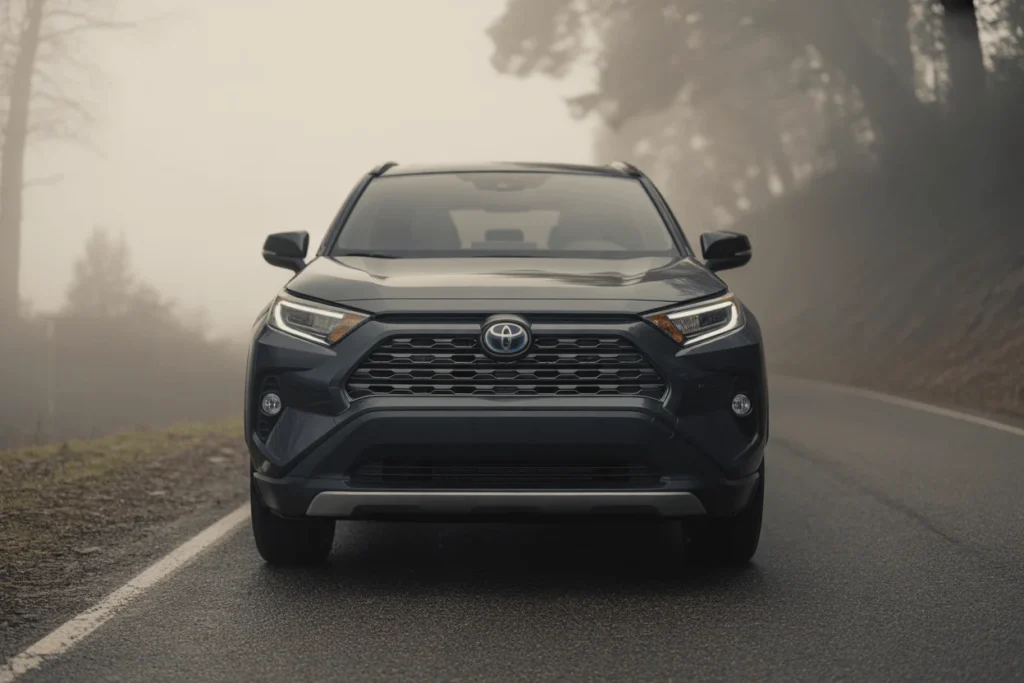
2025 Toyota RAV4 flexes in a low-key way, with the LE kicking off the lineup at around $28,850, which provides solid standard equipment and just enough options if you need basic comfort and a little style in your life. Spend a smidge more and the XLE Premium trim is the sweet spot in this mid-range world, because it adds a power liftgate, moonroof, dual-zone automatic climate control, faux-leather upholstery, fog lights, 19-inch wheels, and a leather-wrapped steering shift knob that makes every commute feel slightly more grown up. Go higher and things get pricier as the top models climb toward $37,155, but they offer extra treats like ventilated seats, a suite of smarter driver-assistance features, and even a hands-free 360-degree camera, so parking in a crowded mall lot becomes less “guess and pray” and more “tap and glide.” The price walk does demand a bit of restraint and practice when you choose your spec, but there is plenty of value baked in if you stop right where the XLE Premium quietly waves and says, “I am the best pick, trust me.
Powertrain, Transmission, and Driving Dynamics
Out on the road, the engine is more blue collar than rock star, a 2.5-liter four cylinder with 203 horsepower and 184 pound feet feeding an automatic transmission with eight-speed gears. It feels willing enough in town and on the highway, with passing attempts and merging mostly drama free unless you are in a huge rush. My test vehicle did the 0 to 60 mph run in about 9.2 seconds, which lands right around the class average for this small SUV and compact crossover crowd, especially if you are coming from something punchier like the Ford Escape Titanium. There is genuine power here, but the delivery is a bit workaday, with most of the torque happening up front and the rest arriving with a slightly gruff note when it downshifts for more shove. If you misjudge a gap and ask for more again, the response is still pretty modest and can stumble a little as the box hunts for the right ratio. It is slower than some competitors, but it ultimately gets the job done and will cover your commute without drama, you just learn its feel and move on.
On rough pavement it rides impressively well, with just enough heft and ground clearance that this small SUV feels ready for a dusty trail without pretending to have serious off-road ability. Front wheel drive models stay lighter on their feet, but the all-wheel drive system that is available as an all-wheel option on certain RAV4 trims feels solid when the weather turns and the road gets slick. Go for a Limited spec and you can add a touch of rear axle vectoring plus hill descent control, which is overkill for most commutes but fun to brag about at school drop off. It is no Mazda CX 50 on a twisty section, but handling is competent and stable, the body is pitched more toward comfort than thrills, and the whole thing stays composed at higher speeds. My main gripe is the steering, which can feel a bit vague right around the center point, so you add a little extra of input on long curves before you really notice the front end bite, but once you settle in it is easy to place and you stop thinking about it. Where it fights back against the fun crowd is with driver assistance tech, where standard and upgraded assist features like adaptive cruise, lane keeping, and emergency braking all work well, and this Hyundai Tucson comparison shows how similar systems deliver that same quietly pleasant confidence on longer drives.

Fuel Economy & Real-World Driving
On paper the EPA estimates look class-competitive for the segment. In my own test I got to see how close they were. A Front-wheel-drive example earns an estimated 35 mpg on the highway, with about 33 combined in the books, and on our 75-mph route the trip computer returned 34 miles per gallon, almost exactly matching the official fuel-economy information for this class. The result is a range that feels good enough that you stop obsessing over every throttle squeeze.
Things stay fairly frugal when you move to all-wheel-drive or the chunkier TRD Off-Road setup. You can expect around 32 in real use if you let the system do its thing and just drive. In my mix of city slog and freeway cruise it delivered numbers that had outdone what I logged in a Volkswagen Tiguan on the same loop, and the available readouts make it simpler to track every mile per gallon the car can manage or even improve with a lighter right foot. The official EPA sheet and real-world estimates mostly line up, so whether you baby it or hustle it, the models I drove still returned respectable figures, and the everyday efficiency makes even the RAV4 badge feel a little more justified.

Interior and Comfort
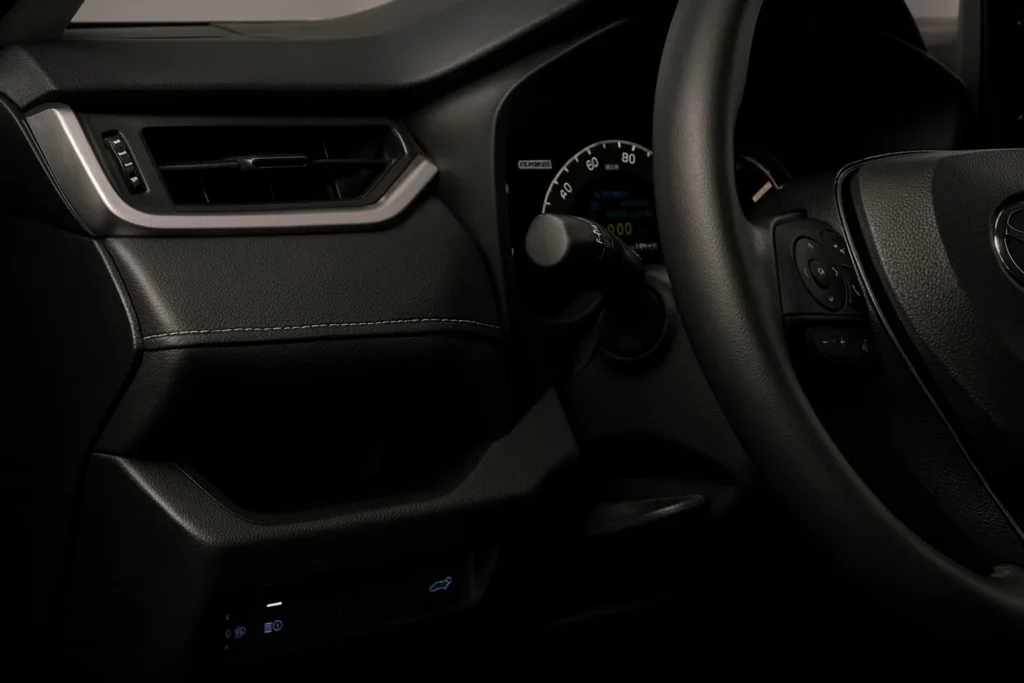
Slide into the cabin and the first thing that hits you is how much appeal this interior has for the money; it looks simple, feels pleasant, and lands in that nice middle ground between rugged and rental spec. The base LE trim still keeps the price down with cloth upholstery, leather-free steering wheel, and black plastics throughout, but it still prioritizes real world comfort and space over fake luxury. Step up to XLE and Premium models and the cabin tries a little harder, adding two-tone surfaces, faux-leather accents, and a stitched-and-padded armrest that makes long drives feel more grown up than the spec sheet suggests. The whole thing comes together with a clean layout, low glare dashboard, and features that feel matched to what real buyers actually use rather than what looks good in a commercial, so the job feels basically done before you even start nitpicking compromises.
From behind the steering wheel, the driving position is easy to dial in, though with the front passenger set so high it can feel like they are riding lookout. The seat offers a little extra adjustability, and once it’s set, most drivers will find enough range and thigh support for long trips with enough thigh support that it rarely cuts circulation on a long slog. The seats themselves are shaped for everyday life, not track days, and that suits the mission just fine; there is almost no truly uncomfortable spot for any main occupant. Even so, if you are very tall and shove the seat too far away, you might wish for one extra click of reach on the wheel, but most people will simply scoot a notch and call it good. Overall, the RAV4’s packaging nails the key metric for a family runabout, which is how relaxed the occupant feels after a full day of errands and driving roominess instead of how flashy the brochure photos look.
Storage and controls are where this cabin quietly shows off. There is a big rubberized tray running along the dashboard, small storage islands and an upper shelf that make fitting a car full of daily junk weirdly satisfying, plus a center-console cubby deep enough to swallow snacks, cables, and everything else you forget you own. The main touchscreen sits high and is easy to glance at, with physical buttons and knob controls so you do not have to dig for anything while actually driving; the audio system and climate stack live just below with easy-to-read labeling, which feels refreshingly intuitive and easy to locate by feel. Even the basic single-zone setup blows plenty of hot or cold air, and the manual control layout means you can tweak temps without thinking. The shifter has a short, confident shift action that feels natural in traffic, and the leather-wrapped wheel on nicer trims adds a subtle upgrade you notice every time you set off. Higher trims let you spec more toys, but even the simpler setup is hard to beat for pure usability.
Practicality in back is very much the point here. The rear doors open wide, so getting in and out is painless for adults and kids, and the seat height makes it simple to attach a rear-facing infant seat without turning your spine into modern art. LATCH positioning is smart, lower anchors are easy to see and reach, and there is still room for forward-facing boosters once the kids graduate, which makes this thing feel purpose built for family duty. In cargo mode, the opening is large and wide, the floor is nearly flat, and the seats fold and stay folded neatly, so you can stow suitcases, strollers, and carry-on bags behind the second row without it turning into Tetris. Think pretend test with 10 and then 22 suitcases; the cargo area still has space left over for everything else, and the low load floor means the whole process has real ease to it rather than a workout. Line it up against rivals like Subaru and Nissan and the story holds. A Forester might feel a touch airier, and a Rogue might offer a flashier cabin, but the way this one prioritizes smart storage and honest features makes it easy to live with every day. When you shop the class, you will find glitzier cabins, yet the straightforward mix of center-console bins, door pockets, and rear cargo versatility still feels finely matched to everyday chores. If you obsess over every option and brochure angle, you might find softer plastics or brighter colors elsewhere, but as a place for your eye and your body to relax, this interior has the sort of low drama appeal that quietly keeps it in the running long after the test drive is done.

Cargo & Practicality
Second on my checklist is how well this thing actually lives with you, and here the cargo area quietly shows off, with a genuinely class-leading 37.5 cubic feet behind the rear seats and 69.8 when they’re stowed, so on paper it looks strong and in my real-world testing it feels anything but average. The boxy tailgate makes it easy to load groceries, strollers, or full road-trip chaos, and a low floor means you’re not powerlifting every bag like it’s leg day. Up front, the cabin gives you numerous shelves and deep bins that can handle all the assorted tech junk and travel paraphernalia we pretend we don’t hoard, while the whole setup is ready if you’re planning on towing something light, with the ability to pull around 1,500 pounds without breaking a sweat. Fold everything up and it swallows more than most in the class, even if the numbers don’t scream for attention, and if that sounds underwhelming, trust me, after a week of family-lugging duty in a supposed RAV4 rival, you start to appreciate how well this one just gets out of your way and does the boring stuff right.

Tech & Connectivity
Tech and screens are where this cabin finally relaxes and flexes a little. Like most modern Toyotas, the main infotainment system feels easy-to-use, with an 8-inch touchscreen standard and a 10.5-inch unit waiting on the top-level Limited trim if you want the bigger look. Both setups run the same shared interface, so jumping to the higher spec does not mean relearning menus or hunting for settings. The graphics stay clear, the layout is easy, and the screen stays responsive even when you are firing quick taps like you are bored in traffic.
Smartphone life is fully baked in, with Android Auto and Apple CarPlay both available and wireless, so your device comes to life the second you hop in, no cable fishing required. The built in navigation system is optional on lower models, but once you have it, inputting a destination by digital keyboard feels natural and the maps stay easy to read. I like how voice commands actually find where you want to go, and how the controls, radio, and access to key settings never feel buried. There is plenty of charging for everyone, so even on a long haul the cabin full of screens can keep RAV4 passengers quietly entertained.

Safety
The lineup boasts an array of standard features that actually feel built to assist the real driver rather than just pad a brochure. Even the base model gets a standard bundle of safety tech, with plenty of smart assists watching your back. You get Blind-spot monitoring, rear-cross-traffic alert, and lane-departure warning that chime in before you do anything dumb. On higher trims, adaptive cruise control and gentle lane-keeping nudges take the edge off long commutes. Some of that does cost extra on the entry base car, which feels a bit stingy, but the Key stuff like automated emergency braking with pedestrian detection is there when you need it most.
If you are the type who reads information sheets before buying sneakers, the crash test results will be your happy place. The National Highway Traffic Safety Administration and the Insurance Institute for Highway Safety post all the numbers on their websites, and seeing how this model holds up in a hit does more for my trust than any ad spot. Those NHTSA and IIHS scores turn nerdy lab work into real world confidence, so when I toss it into traffic I know the safety gear is not just buzzwords.
Warranty and Maintenance Plan
In the compact SUV segment, the industry norm is that Toyota’s warranties politely toe the line instead of flexing. You get Limited coverage that quietly covers real life, with bumper-to-bumper warranty for three years or 36,000 miles, pretty much what most models in this class offer. The real perk is maintenance, because All RAV4 models come with complimentary care and complimentary scheduled service for the first two years or about 25,000 miles, a genuine rarity in this price band. That combo of low hassle and predictable bills slides neatly into the everyday-commuter sweet spot.
Rivals like Kia, Hyundai, and Mitsubishi roll out more competitive powertrain warranties that run longer, but here the powertrain is still covered for five years or 60,000 miles, which is plenty for how most people actually drive. Sure, some brochures shout about extra years and extra miles, yet in practice this mix of warranty, baked-in maintenance, and solid coverage feels well judged for shoppers who care more about a calm ownership experience than spec-sheet one-upmanship.
Final Verdict
In the end, the 2025 Toyota RAV4 is the compact SUV you buy when you care more about real-world usefulness than winning the neighborhood personality contest, and that’s not a knock. It’s a low-drama, blue-collar commuter that quietly gets the job done with strong fuel economy, easy everyday comfort, and a cabin that’s purpose-built for family duty, cargo chaos, and all the random gear life throws at you. The XLE Premium trim in particular hits a sweet spot, layering in just enough toys and polish without blowing the budget, while the safety and driver-assistance tech add welcome peace of mind without feeling bossy. No, it won’t hustle like a Mazda CX-5 or CX-50, and its interior won’t wow the way a CR-V, Rogue, or even a Forester might, but the RAV4’s blend of efficiency, space, and calm ownership still keeps it near the top of the compact crossover pile. With an all-new 2026 model on the horizon, you wait if you love shiny “latest and greatest,” but if you’re chasing a proven, low-stress daily driver and can snag a good deal, this one still makes a lot of quiet sense.
Family UseIs the 2025 Toyota RAV4 a good compact SUV for families and daily commuting?
Fuel EfficiencyHow efficient is the 2025 RAV4 in real driving, and should you choose hybrid or plug-in hybrid?
Best TrimWhich 2025 Toyota RAV4 trim is the best value, and what changed for 2025?
| SPEC | DETAIL |
|---|---|
| Engine | 2.5-liter DOHC 16-valve inline-4 (naturally aspirated) |
| Hybrid Options | 2.5-liter Atkinson-cycle 4-cyl + electric motors (Hybrid) / Plug-in Hybrid (Prime) |
| Drivetrain | Front-wheel drive (FWD) standard; available all-wheel drive (AWD) |
| Power / Torque | 203 hp / 184 lb-ft (gas) • 219 hp (Hybrid) • 302 hp (Plug-in Hybrid) |
| 0–60 mph | ~9.2 seconds (gas model, tested) |
| Top Speed | ~114 mph (gas model; limited) |
| EPA Fuel Economy | Gas FWD: 27 city / 35 highway / 30–33 combined mpg |
| Real-World MPG | 32–34 mpg combined (tested average, depending on trim/drivetrain) |
| Fuel Tank | 14.5 gallons (gas) • 14.8 gallons (Hybrid) |
| Transmission | 8-speed automatic (gas) • e-CVT (Hybrid & PHEV) |
| Suspension | Independent MacPherson strut front / Multi-link rear |
| Brakes | 4-wheel disc brakes with ABS, EBD, and Brake Assist |
| Wheels / Tires | 17–19 inch alloy wheels depending on trim (all-season tires) |
| Curb Weight | 3,370–3,655 lbs (varies by trim and drivetrain) |
| Cargo Capacity | 37.5 cu ft behind 2nd row • 69.8 cu ft with seats folded |
| Towing Capacity | Up to 1,500 lbs (gas & Hybrid) |
| Infotainment | 8-inch touchscreen standard; 10.5-inch available • Wireless Apple CarPlay & Android Auto |
| Safety | Toyota Safety Sense 2.5+, adaptive cruise, lane-keeping, emergency braking, blind-spot monitor available |
| Drive Modes | Eco, Normal, Sport (gas) • EV/Hybrid modes (Hybrid / Prime) |



| Author | Hafiz Sikandar, automotive journalist and editor at VyoCar. |
|---|---|
| Expertise | Testing compact SUVs, crossovers, and everyday family vehicles since 2016, with a focus on real-world comfort, long-term usability, and fuel-economy performance across mixed driving conditions. |
| Focus Areas | Gas-powered, hybrid, and AWD family SUVs; daily drivability assessments; tech and safety usability; and value-focused reviews centered on practicality, efficiency, and owner experience. |
| Disclosure | The 2025 Toyota RAV4 tested for this review was a short-term press loan provided by Toyota. The manufacturer had no involvement in the review process, content decisions, or final evaluation. All impressions, testing notes, and fuel-economy results are based on independent evaluation conducted over a full week of city, highway, and light-trail driving. |
This Post Has 2 Comments
Pingback: 2025 Hyundai Tucson Review and Road Test
Pingback: 2025 Honda CR-V Review and Road Test