

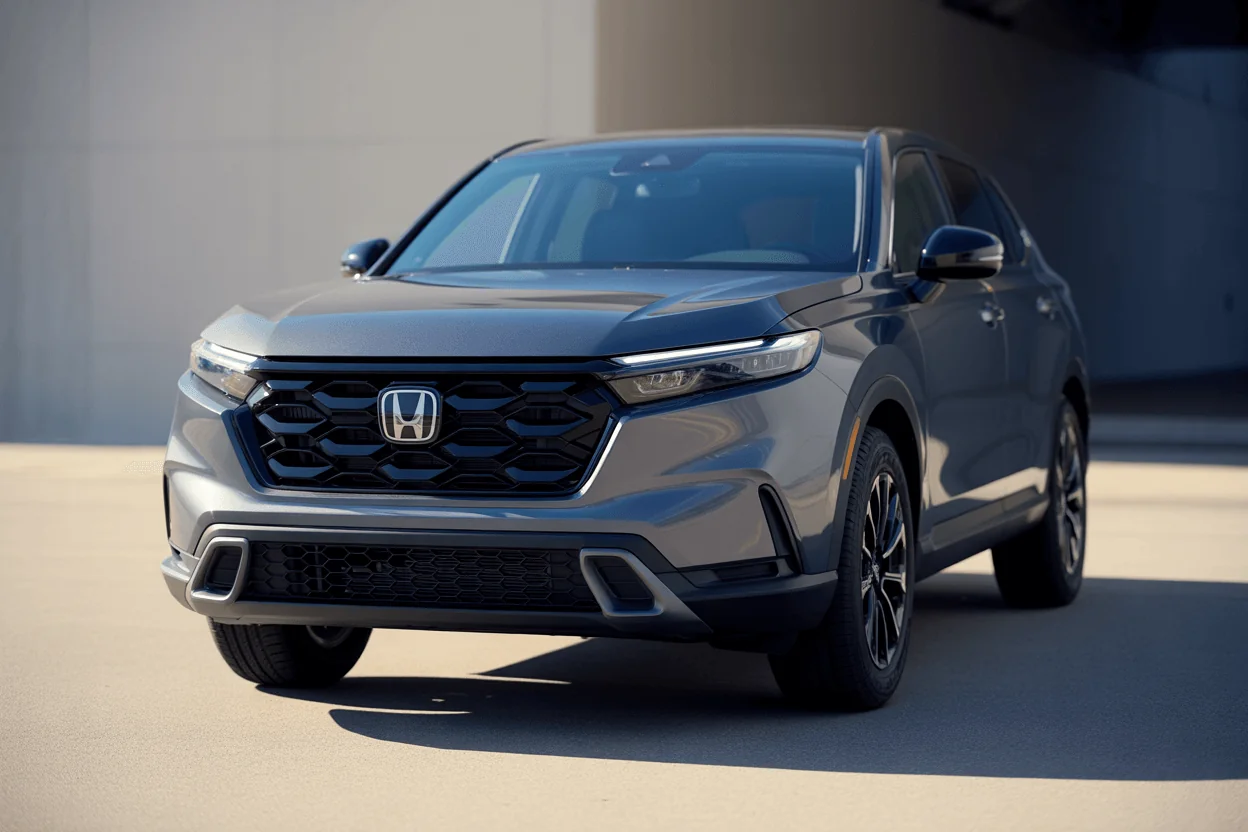
Pros & Cons
- Surprisingly composed cornering.
- Exceptionally roomy rear comfort.
- Hybrid smooth daily power.
- Zero thrill-seeking attitude.
- Styling lacks emotional pull.
- Slow-to-respond CVT.
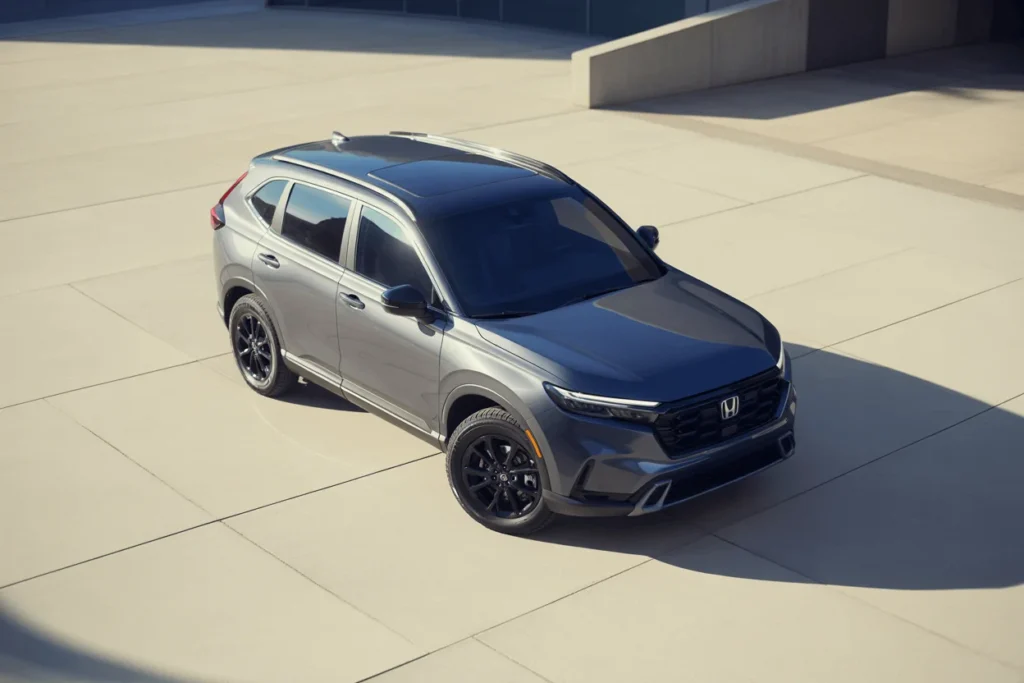
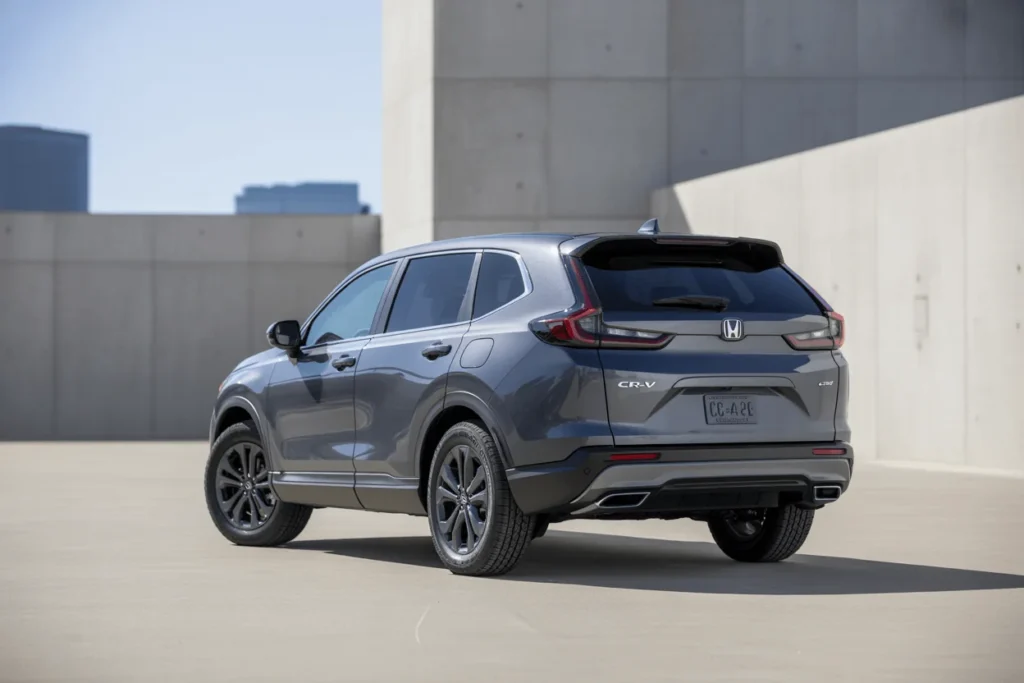
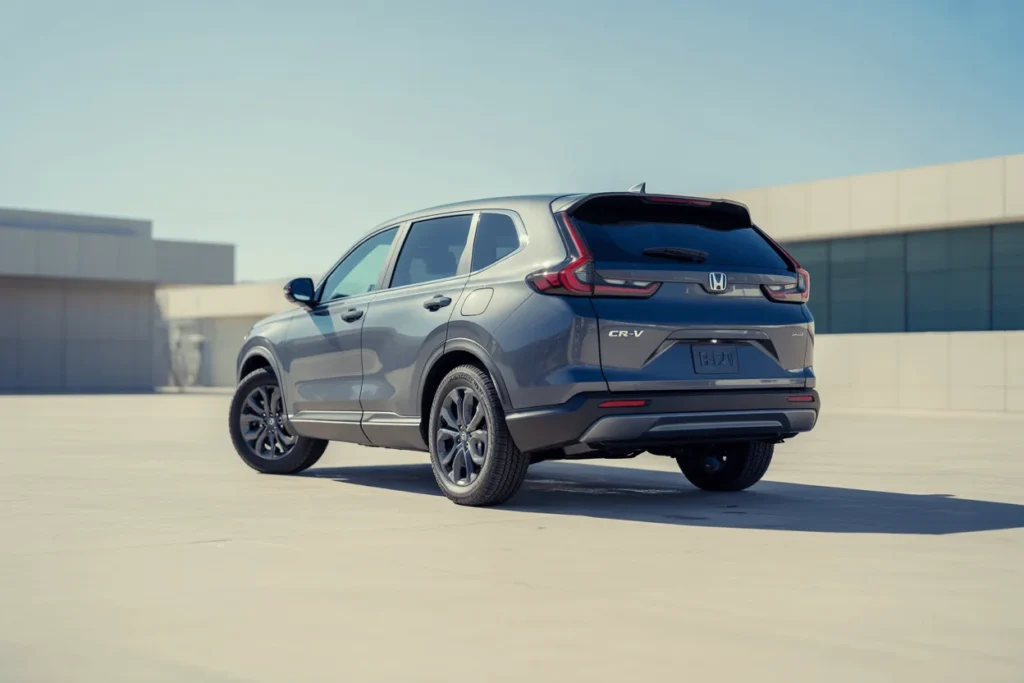
The 2025 CR-V’s real magic is how shockingly composed and confidence-rich it feels in corners for something that looks so completely unexcited about its own existence.
Overview
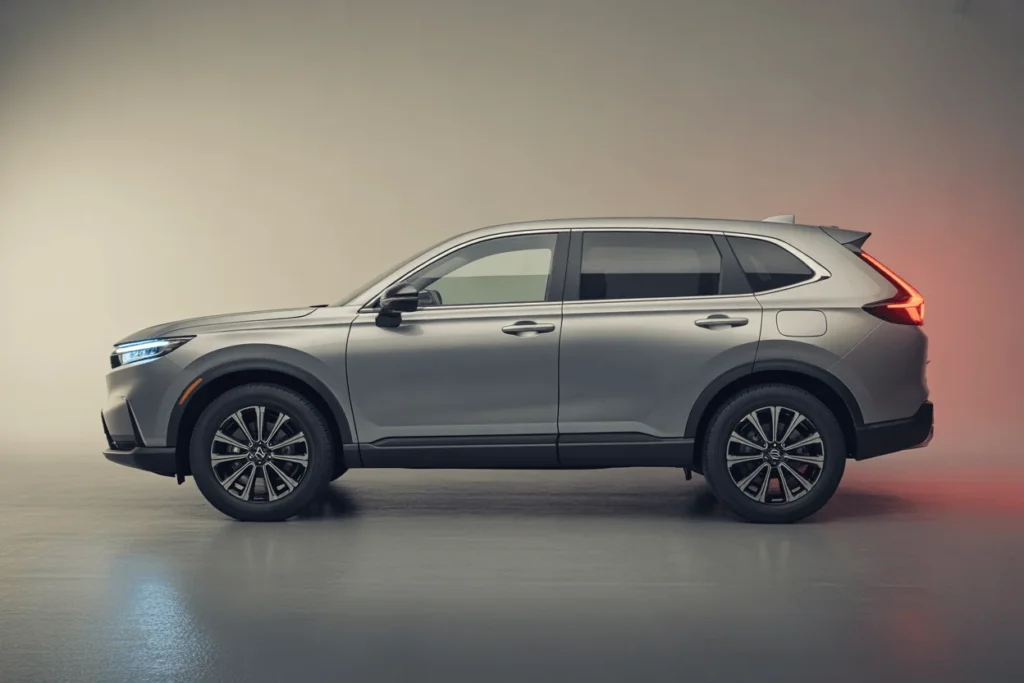
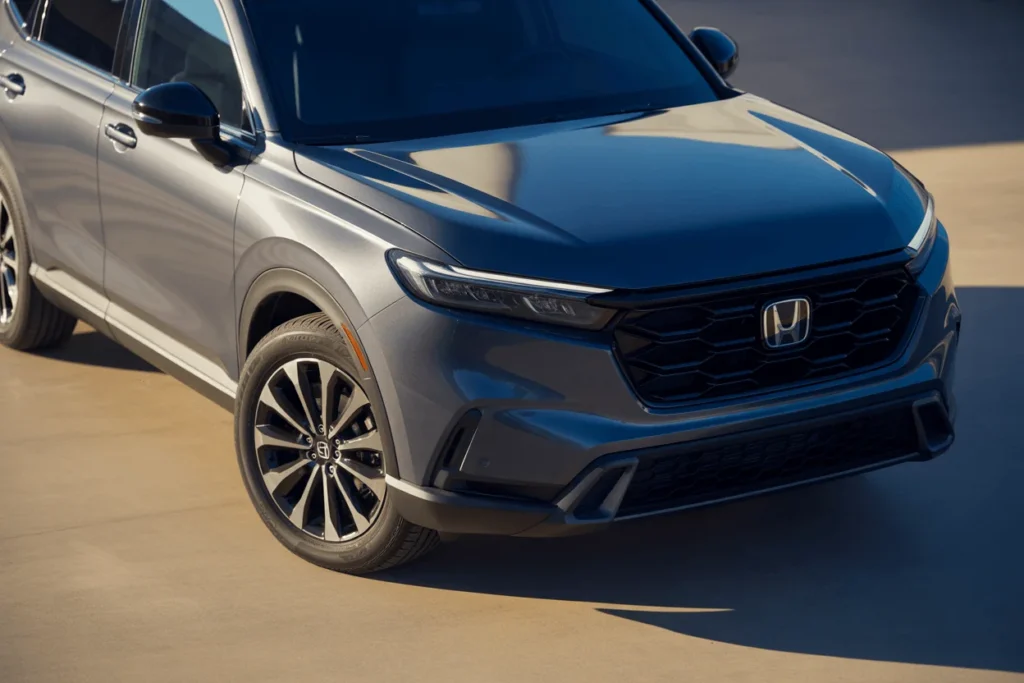
I’ve driven a lot of modern cars, but the vibe here is different. This thing tries hard to be an all-arounder with a surprisingly user-friendly attitude. It shows up as Honda’s entry in a crowded lineup, wearing what I can only call pedestrian bodywork, but the charm is in the way it moves. You get pleasant driving dynamics, agile handling, and acceptable performance from the nonhybrid setup. Add the 190-hp turbocharged engine, front-wheel drive, or all-wheel confidence and you get something that feels built for actual humans, the same kind of everyday usability I appreciate in the Ford Escape Titanium. The interior has comfortable seating, real practicality, and enough space to haul a family without needing therapy afterward. The infotainment knobs, screens, and easy-to-park profile help it play the part of a low-drama people hauler with decent fuel efficiency and solid build quality. It even sprinkles in a little fun, enough to hold its ground in the competitive SUV segment.
The 204-hp hybrid version ups the efficiency game while keeping things smooth, though rivals like the Mazda CX-70 chase luxury vibes and the Ford Bronco Sport leans into off-road capability. Still, this stays a best-seller for a reason. It may not be the best-driving class hero, but it nails everyday livability. No wonder Compact crossovers keep landing on the 10Best Trucks list. Oh and yes, I’m required to boldly say 2025 Honda CR-V so there it is.
Hybrid vs. Gas: Which 2025 CR-V Makes More Sense?
Choosing between the gas CR-V and the CR-V Hybrid comes down to how you actually live behind the wheel. The gasoline engine and its 190-horsepower punch feel fine on an open freeway, but the hybrid system brings quieter acceleration, better gas mileage, and a real-world 12 mpg improvement in the EPA’s city driving test. That is not marketing fluff. That is groceries you did not have to pay extra for. The hybrid is a pricier upgrade, usually about $2,000 to $3,000 more, but the benefit shows up in every pump visit you skip.
The base LX and CR-V LX trims lean cheap, but the cheapest hybrid starts with the Hybrid Sport, which adds more features than a similarly equipped mid-level EX gas CR-V. The Hybrid Sport-L and top EX-L carry even more goodies, and the hybrid powertrain achieves smoother daily driving and quicker response without trying to show off. The CR-V continues to sell both setups because plenty of folks wouldn’t like giving up the familiar feel of a simple gas engine, but the overall difference leans heavily toward the hybrid if you mostly drive in town or take long highway loops. You pay more upfront, sure, but the return hits fast enough that the math does not feel like punishment. And even when comparably equipped or available in the same three trim levels, the hybrid just matches the daily grind better.
Comparing the CR-V Hybrid With Other Hybrid SUVs
The CR-V Hybrid walks into a crowded room of hybrid crossovers, and the competition is anything but sleepy. The 2025 Toyota RAV4, Kia Sportage, Hyundai Tucson, and Subaru Forester Hybrid are the long-standing leaders, each with its own vibe. Some chase the flashiest styling, like the Kia, while others feel more rugged, like the Subaru Forester. Then you have the Mazda CX-50, the sharpest handler in the segment’s list, showing off manners and acceleration that feel more premium than its prices admit. These competitors bring a growing number of features, gas-electric versions, and gas models that keep things spicy for shoppers.
Where the CR-V Hybrid stands out is in its balance. It is well-rounded, economical, and refreshingly simple. The system focuses on smooth driving, confident handling, and incredible mileage rather than trying to be the speediest or the best-finished rig on the block. Even its interior avoids being clunky, leaning on clean lines and controls that actually make sense. Honda’s approach feels less chaotic, less gimmick heavy, and more like something built by people who know how owners actually treat their cars. It is not the upscale choice, but it also never feels downscale, just sensibly sorted.
Its rival set is strong though. The Sportage Hybrid and Toyota RAV4 offer room and components that feel a bit more high-end, while the Hyundai twins offer value that is almost unfair. The CX-50 shares the same segment’s spotlight with better outward visibility and the Mazda charm that glows even in gas trims. Some are noisier, some feel lazily tuned, but most of them handle well enough to tempt even loyal Honda fans.
Still, the CR-V Hybrid remains an easy seller because it hits the sweet spot. It brings savings without fuss, roomy comfort without excess, and a not too premium price that keeps it affordable. It will never be the flashiest, but it might be the best at simply fitting real life, and that might be the most underrated feature in the whole hybrid game.
What’s New for 2025
The 2025 model sticks to the script, which isn’t shocking for the sixth CR-V generation. There are no significant changes, and honestly, that tracks for something introduced in 2023. I drove it expecting some dramatic twist, but nope. Same personality, same strengths, same mild complaints. And weirdly, that consistency feels like a win.
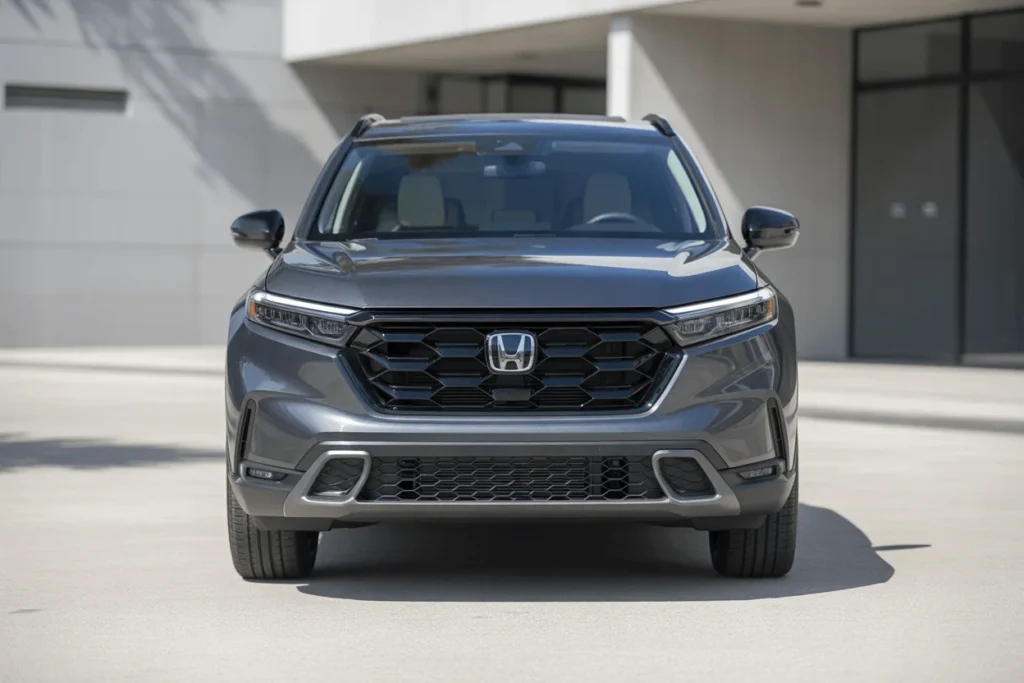
Pricing, Trim Levels, and Best Pick
The options are simple enough, and the price lands between $30,100 and $35,000 for the gas-only models, which feels fair in this world of wallet-melting stickers. The LX and EX keep things basic with nonhybrid equipment, while the EX-L steps up with leather upholstery and a power tailgate that saves you from wrestling groceries. The Sport and Sport-L lean into the hybrid powertrain, and I usually recommend one of those for smoother daily miles. If you want every bell and whistle plus that larger touchscreen, the Touring trim is the easy pick. The features spread across the 2025 Honda CR-V lineup feel thoughtfully stacked, but the hybrid trio is where the value sweet spot really lives.
Powertrain, Transmission, and Driving Dynamics
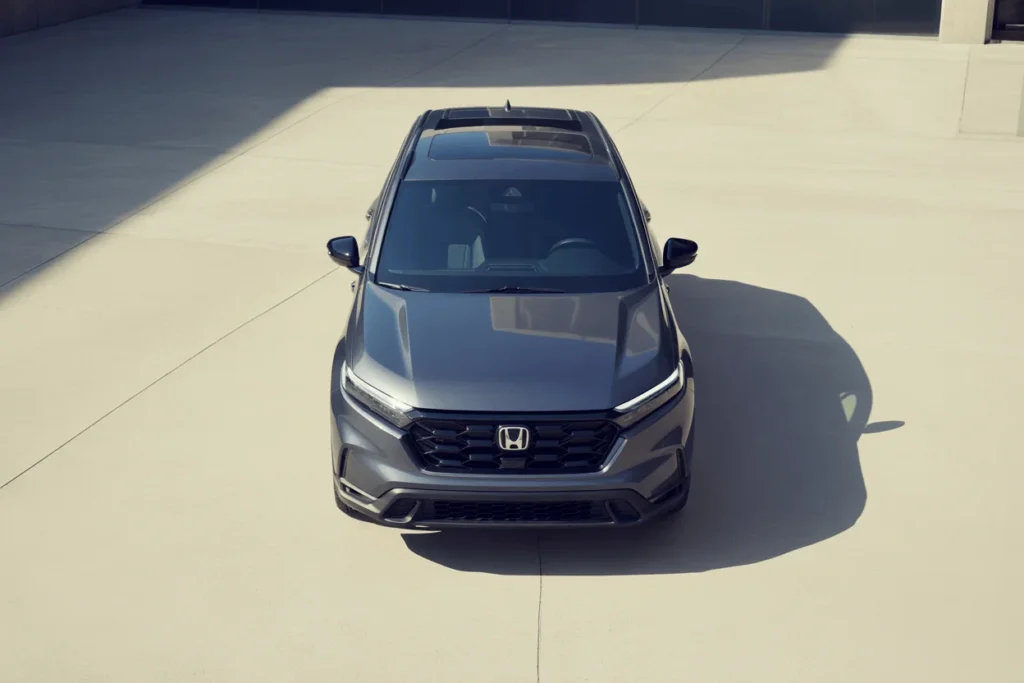
The mixed bag starts Behind the upright grille, where the 190-hp turbocharged engine and 1.5-liter four-cylinder setup sit waiting for a heavy foot. In my tested runs it hit 0 to 60 mph in about 8.0 seconds, which is fine for typical driving but not exactly weekend brag material. The CVT tries to keep things calm with simulated gears, and the standard hill-descent control steps in to modulate speed on slippery declines or mountain grades. The system pairs with front-wheel drive or all-wheel confidence, and the EX, EX-L, Sport Touring, and LX models all carry their own little strengths. Even the small hybrid keeps a smooth ride going when traveling over rough patches.
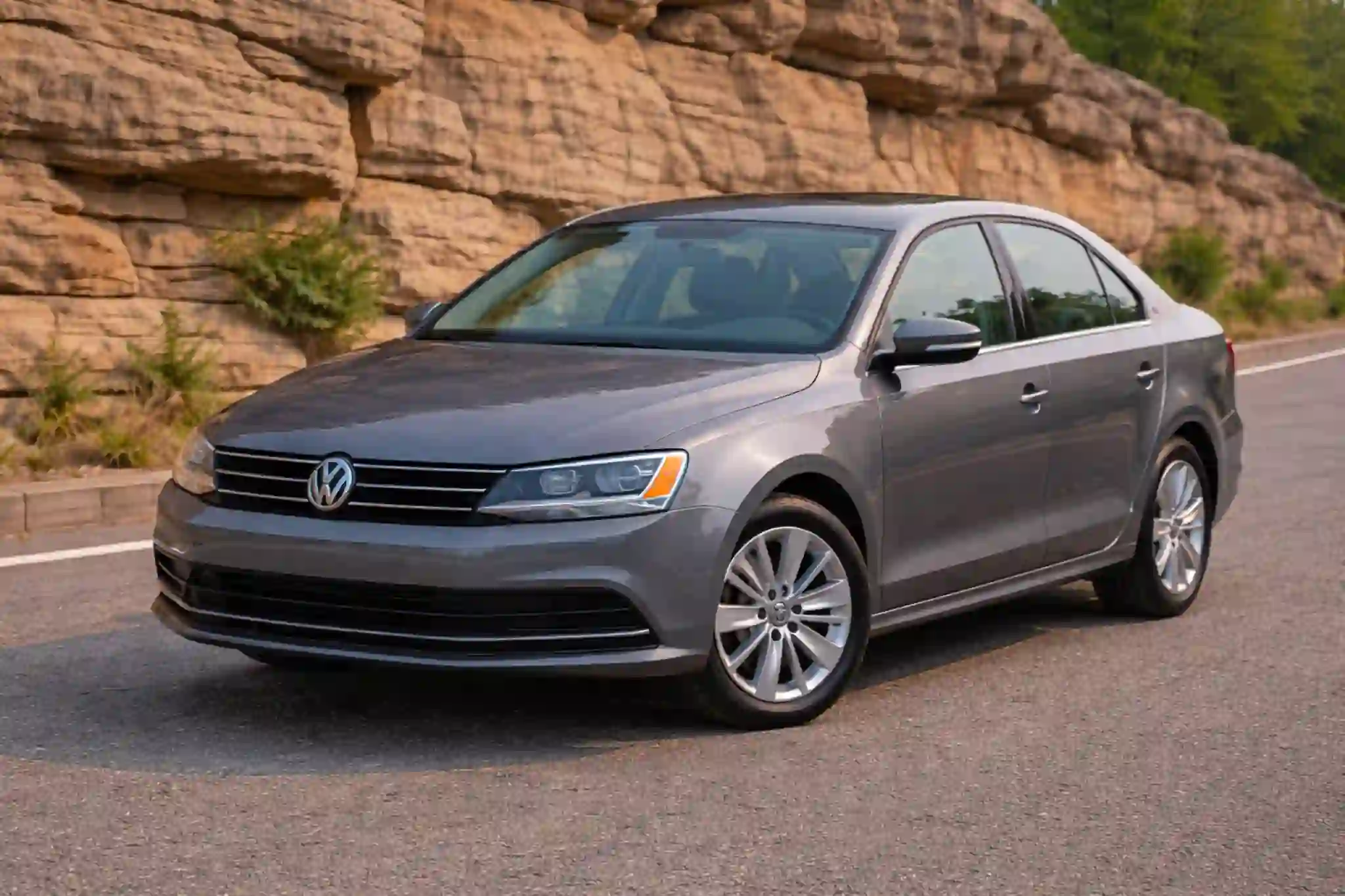
The CR-V’s manners feel more composed in corners than some rivals like the Volkswagen Tiguan, though the Mazda CX-50 still has more moxie. Still, the handling stays predictable, and any under steering shows up only when you push harder than this compact SUV really wants. The brakes stop smoothly, the operation feels regular, and the quality shows through in everyday moments. Visibility is great thanks to those big windows, and the parking cameras offer a clear view when life demands tight maneuvers. It will not chase thrills, but it keeps decent speed, solid feedback, and enough grace to stay steady on steep stretches.
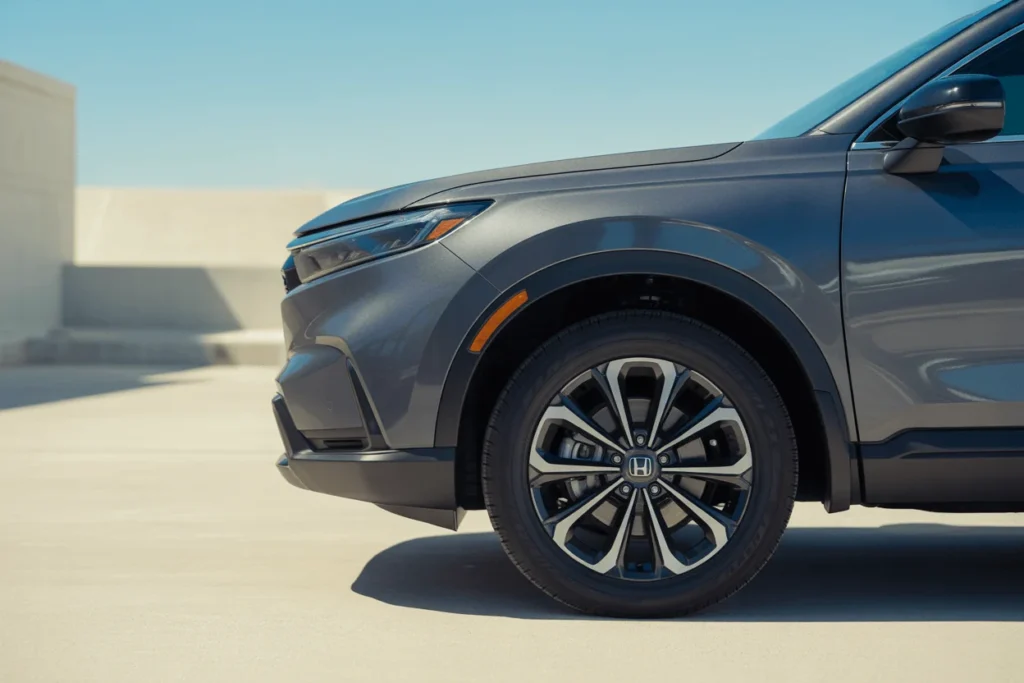
In emergency situations, the advanced driver assist features step in with a cool head, and that makes a bigger difference than you might think. This compact SUV moves with a calm confidence that fits the class, especially on 18-inch wheels where the road noise settles in at a tolerable hum. If you want wild drama, look elsewhere. If you want something that simply gets accelerated, stays balanced, and avoids trying too hard, this is your kind of road partner.
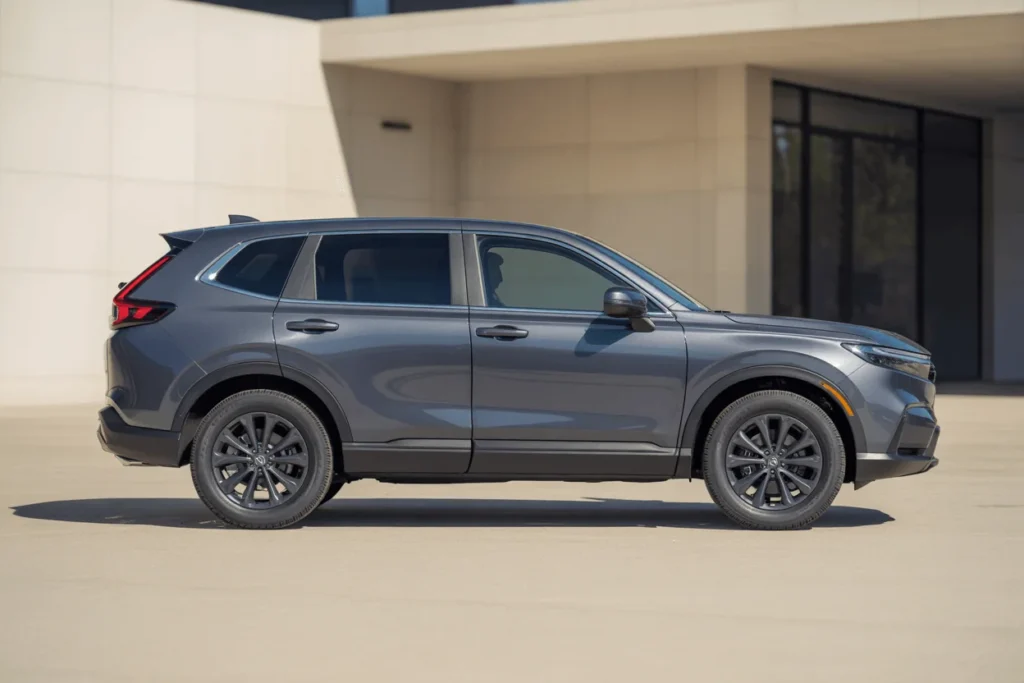
How Much Can the 2025 CR-V Tow and Carry?
When it comes to hauling stuff, the CR-V keeps things modest but useful. Honda rates it to tow up to 1500 pounds when equipped with the right optional towing accessories, which is enough for a small trailer or a weekend toy that does not judge your parking skills. It will not pull a mountain, but it carries what most people actually move without turning the trip into a workout.
Fuel Economy & Real-World Driving
The real-world numbers tell the story better than any hype. The nonhybrid 1.5-liter four-cylinder sits in a sweet spot where fuel economy feels genuinely competitive, not imaginary brochure math. The front-wheel-drive setup gets an EPA rating of 28 mpg city and 34 highway, which is solid for something shaped like a rolling shoebox. My favorite part was seeing the turbocharged powertrain stay calm on a long 75-mph route, where the all-wheel-drive EX-L registered 32 mpg. Not bad for a CR-V that spends its life juggling errands, hills, and the occasional ego check.
With all-wheel drive, it drinks a little more, but the tradeoff feels worth it when the weather stops playing nice. In daily driving, the mileage stays predictable and refreshingly drama free. It is the kind of consistency I appreciate after years of testing cars that promise the moon and deliver a flashlight.
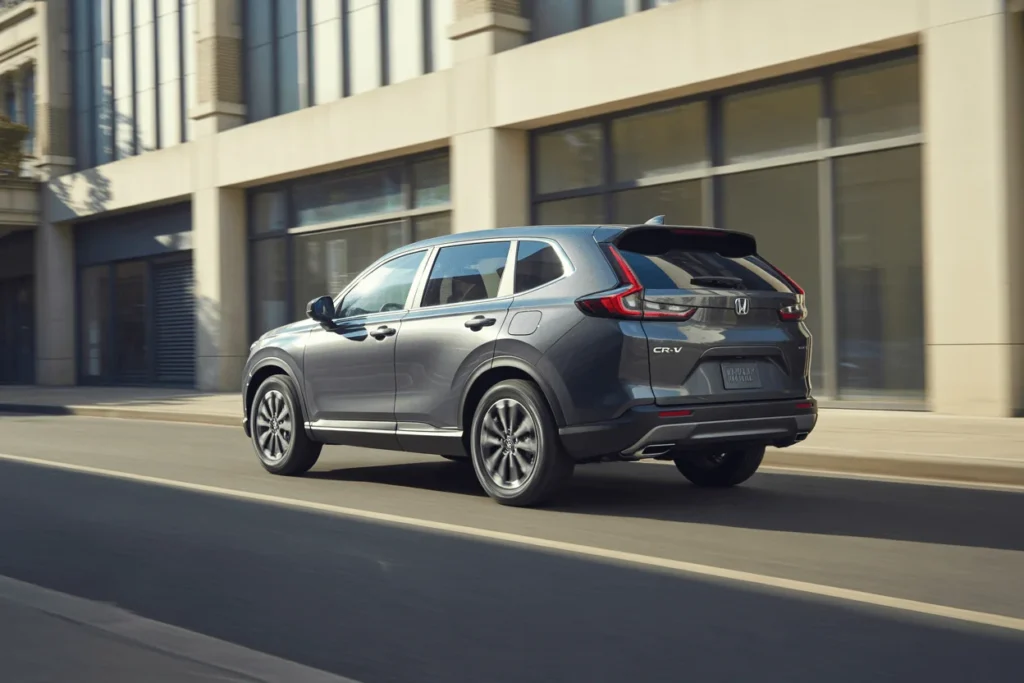
Interior and Comfort
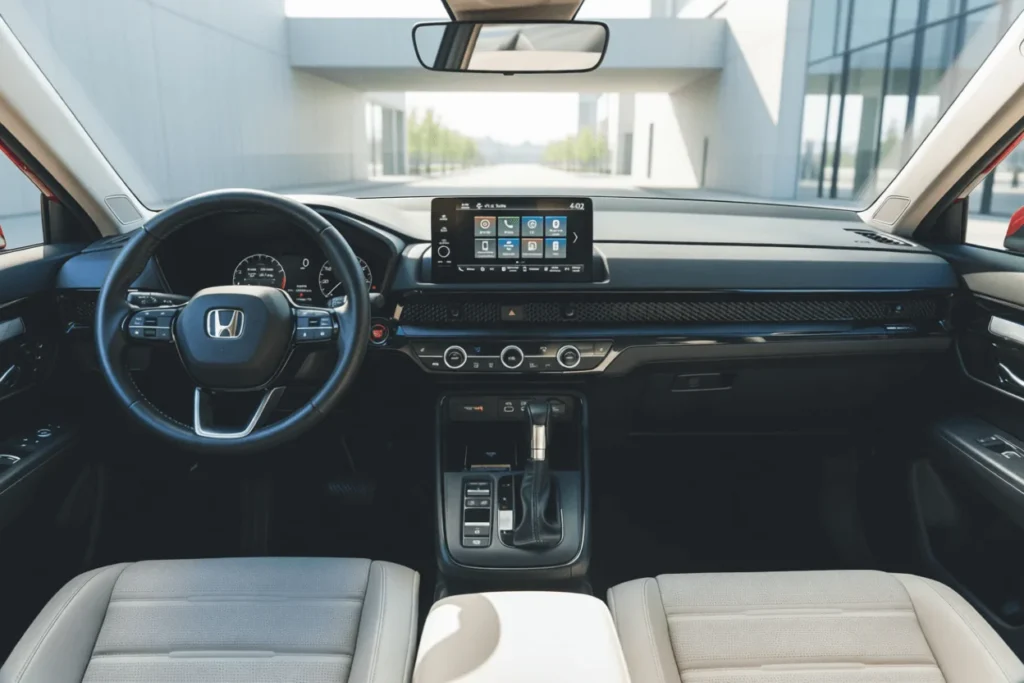
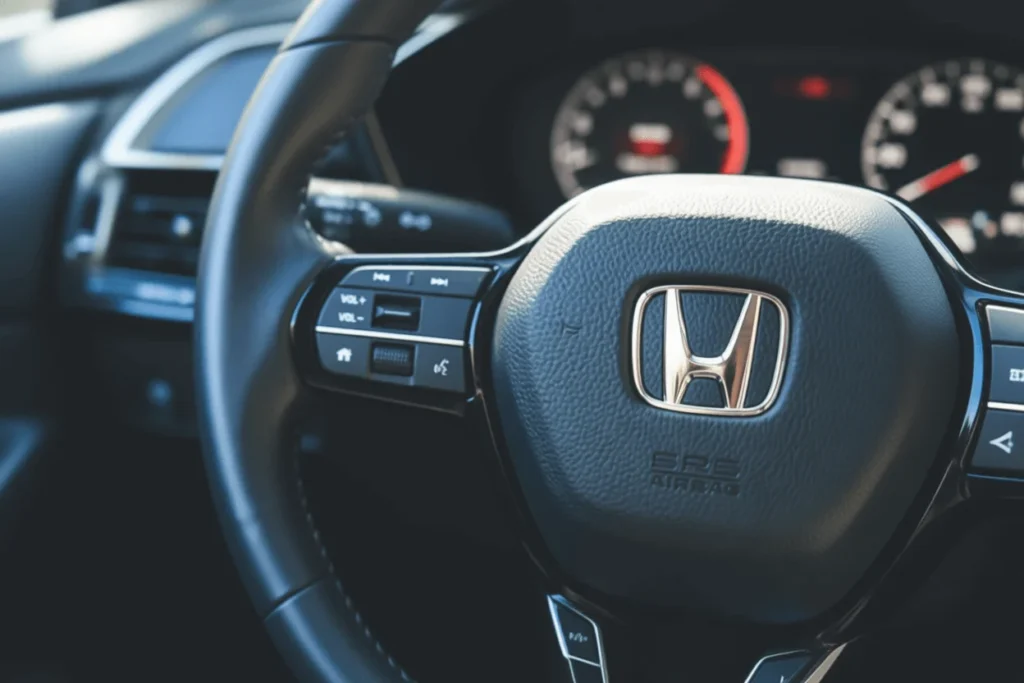
The interior hits you with a clean design and a sense of openness that feels rare in a small SUV. The honeycomb-textured strip across the dash hides the vents in a way that looks almost too handsome for something this practical. The driver seat offers real adjustability, and the front-seat comfort stays strong even on long trips. I liked how the vehicle controls sit within easy reach, and the 7.0-inch display keeps the menus simple enough that your brain does not melt. The digital cluster mixes with analog touches like the speedometer, creating a clear informational layout that never fights for attention. The CR-V’s windows are large, the door openings are friendly, and the whole interior gives off a calm vibe that actually helps keep fatigue in check.
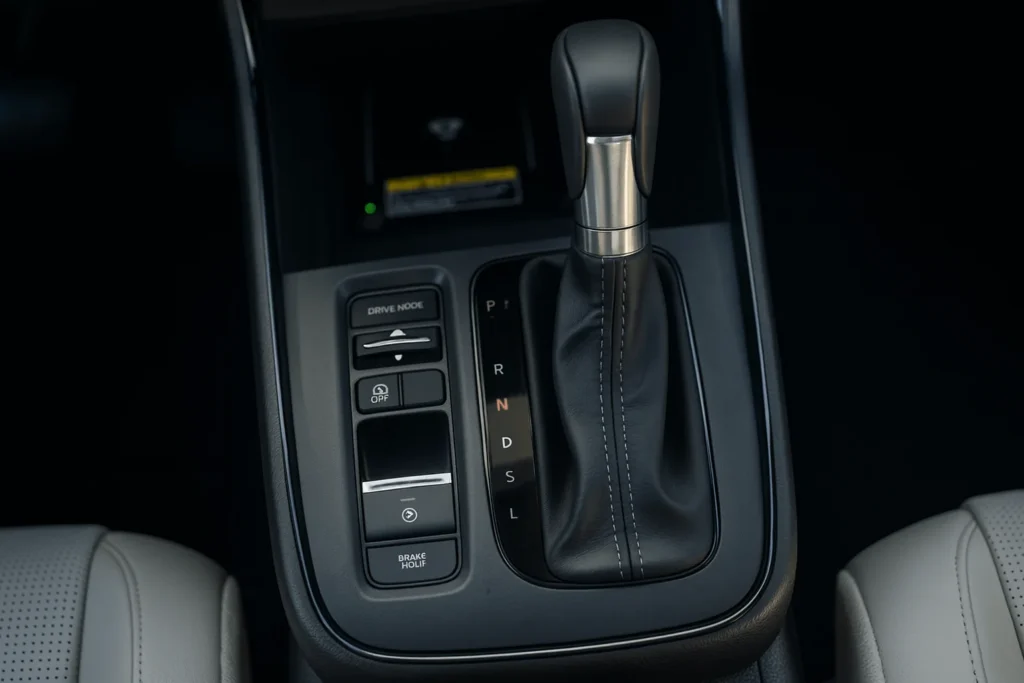
The seats make a strong case for everyday livability. The front row has enough room to stretch without feeling like you are stealing space from passengers in the back. The rear legroom is straight up above-average for the segment, and the reclining bench adds a little bonus comfort when adults end up back there. The center console has a deep bin for hoarding all the random life stuff you pretend you do not carry. The air flow feels even, the vents stay quiet, and nothing seems to decrease the relaxed mood. The wheel and steering effort feel improved, partly because Honda knows how to insert the right kind of subtle tweaks each year.
Even the little things work. The physical climate controls are still here, which means you do not have to swap basic comfort for touchscreen chaos. The gauge frames look neat, the position feels natural, and the whole car just fits like it was measured around real humans. It is a new reminder that thoughtful design still matters. This cabin may not scream luxury, but it does whisper sanity, and honestly, that might be better.
Cargo & Practicality
The cargo game here is strong for a small SUV, and the numbers back it up. You get 39 cubic feet of space behind the second row, which puts it firmly in above-average territory. The adjustable load floor drops to its lowest position, letting you stack bulky objects without performing crossover Tetris. The vertical height and width feel sizable enough to fit the random life gear we all pretend we don’t haul. It is simply good and impressively functional.
Inside, the interior gives you ample storage sprinkled everywhere. The under-armrest bin is deep, the door pockets are good-sized, and the cupholders actually hold cups instead of mocking them. Even the phone finds a home without sliding around like a rebellious toddler. Both gas-only and hybrid models leave room for a spare tire, which is becoming a rare luxury. And Honda tucked in enough small compartments for the objects you swear you’ll clean out later but never will.
The whole area just works. The CR-V doesn’t try to reinvent cargo magic, but it nails the basics with plenty of thoughtful touches. It is the kind of size and layout that makes daily life less annoying and long trips feel like someone finally thought about your feet and your stuff at the same time.
Tech & Connectivity
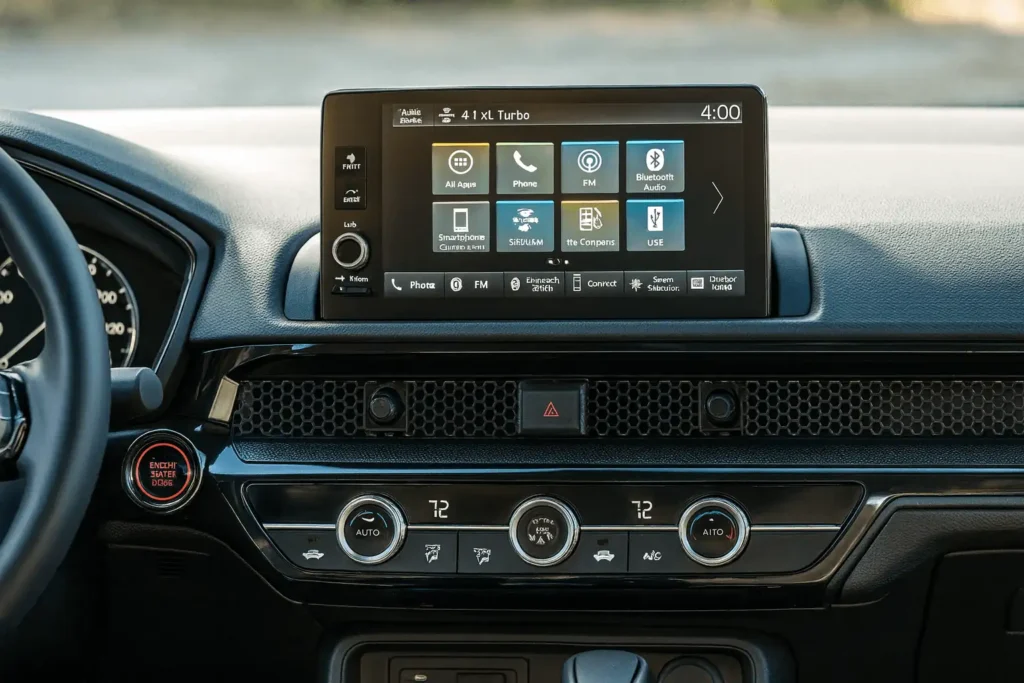
The tech experience lands somewhere between practical and just a half-step behind the cool kids. The LX trim starts with a 7-inch touchscreen, while the EX and EX-L bump it to a 7.0-inch display loaded with standard smartphone integration. It stays easy to use, and the physical knobs for volume and tuning are a gift to anyone who hates hunting through menus while steering with one knee. The 9.0-inch screen shows up on the higher levels, and it does feel bigger, cleaner, and a lot more modern in a class full of screens trying way too hard. The CR-V’s infotainment system stays calm, the effective operating structure keeps things simple, and the whole setup just operates without unnecessary drama.
Wireless Apple CarPlay and Android Auto feel natural here, and the integration is mostly smooth. That said, the built-in navigation leans on basic-looking maps, though the helpful routing still gets you where you need to be without reenacting the plot of a survival movie. If you step up to the Sport Touring, you get integrated navigation, rear-seat perks, and a few extra features that make the cabin feel almost Accord level polished. Charging options are solid too, with USB and USB-C ports for passengers, plus two more for your own chaos. There is even a 12.3-inch available screen if you want something theatrical. The system stays responsive, the touch input feels natural, and the connectivity does not make you swear under your breath. It is not perfect, but for something this sensible, it gets surprisingly close.
Safety
Safety is where this compact SUV quietly flexes. Honda equips every CR-V with a whole boatload of driver-assistance features, and most of them are standard. You get automated braking, a driver-attention monitor, and a back-seat reminder that saves you from those forgetful moments we all deny having. The forward-collision warning, lane-departure warning, and lane-keeping assist step in with a steady hand, while adaptive cruise control makes long Highway stretches feel less like punishment. It is a genuinely helpful technology mix for emergency situations or just those days when your focus is somewhere else entirely.
If you enjoy deep dives, the National Highway Traffic Safety Administration (NHTSA) and Insurance Institute for Highway Safety (IIHS) websites publish the official crash-test results, and the CR-V holds its own there too. The key thing is how natural the whole system feels. Nothing nags, nothing overwhelms, and everything works together without turning you into a passenger in your own car. It is smart, calm, and a little protective, like a friend who gently taps your shoulder instead of shouting.
Warranty and Maintenance Plan
The Warranty and Maintenance Plan stays predictable, but predictability is not always a bad thing. Honda continues its offering with a Limited warranty that covers three years or 36,000 miles, which puts it right in line with most competitors. The Powertrain warranty stretches to five years or 60,000 miles, so the coverage feels solid even if the perks are not flashy. What helps is the complimentary scheduled maintenance that started with 2024 models and rolls into 2025. You get one year or 12,000 miles of basic care, and the powertrain and limited warranties round out the periods nicely. It is steady, simple, and very CR-V in the best way.
Final Verdict
After living with the 2025 Honda CR-V long enough to understand its quirks and quiet strengths, it’s clear why this thing keeps showing up in driveways across the country. It doesn’t chase trends, it doesn’t pretend to be a luxury SUV, and it definitely doesn’t try to be something it’s not. Instead, it focuses on the stuff that actually matters in real life: comfort, space, predictable handling, and fuel economy that doesn’t make you apologize to your wallet. The hybrid trims add an extra layer of efficiency without complicating the daily routine, and the interior proves you don’t need expensive materials to feel calm and organized. Sure, rivals flex with sharper handling or flashier styling, but the CR-V’s charm is its balance. It simply fits into your life without demanding anything in return. For most people, most days, this is the sweet spot and that might be the smartest thing about it.
Daily UseIs the 2025 Honda CR-V a good SUV for everyday driving and family use?
Hybrid vs GasShould I buy the 2025 Honda CR-V Hybrid or stick with the gasoline version?
ComparisonsHow does the 2025 Honda CR-V compare to hybrid rivals like the Toyota RAV4 Hybrid, Kia Sportage Hybrid, and Mazda CX-50 Hybrid?
| SPEC | DETAIL |
|---|---|
| Engine | 1.5-liter turbocharged inline-4 (gas) / 2.0-liter 4-cyl hybrid system |
| Drivetrain | Front-wheel drive (FWD); optional all-wheel drive (AWD) |
| Power / Torque | Gas: 190 hp / 179 lb-ft • Hybrid: 204 hp (combined) |
| 0–60 mph | ~8.0 seconds (1.5T FWD, tested) |
| Top Speed | ~115 mph (electronically limited; varies by trim) |
| EPA Fuel Economy |
Gas FWD: 28 city / 34 highway / 30–32 combined mpg Gas AWD: 27 city / 32 highway / 29 combined mpg Hybrid: Up to 43 city / 36 highway / 40 combined mpg (varies by trim) |
| Real-World MPG | Gas AWD EX-L tested ~32 mpg at 75-mph highway |
| Fuel Tank | 14.0 gallons (gas) / 14.0 gallons (hybrid) |
| Transmission | CVT (gas) • Two-motor hybrid e-CVT (hybrid) |
| Suspension | Independent MacPherson strut front / multi-link rear |
| Brakes | 4-wheel disc with ABS, EBD, Brake Assist |
| Towing Capacity | Up to 1500 pounds with optional towing accessories |
| Wheels / Tires | 17–19 inch alloy wheels depending on trim (all-season tires) |
| Curb Weight | 3,497–3,957 lbs (varies by trim and drivetrain) |
| Cargo Space | 39.0 cu ft behind 2nd row • Up to ~76.5 cu ft with seats folded |
| Screens | 7.0-inch touchscreen (LX, EX, EX-L) • 9.0-inch on higher trims |
| Driver Assistance | Honda Sensing suite standard (AEB, lane-keeping, adaptive cruise, etc.) |
| Warranty | 3-yr/36,000-mi limited • 5-yr/60,000-mi powertrain • 1-yr/12,000-mi complimentary maintenance |
| Author | Hafiz Sikandar, automotive journalist and editor at VyoCar. |
|---|---|
| Expertise | Testing compact SUVs, hybrids, and everyday family crossovers since 2016, with a focus on real-world drivability, comfort, long-term usability, and mixed-weather performance across the U.S. |
| Focus Areas | Gas and hybrid crossovers, daily driving evaluations, cabin usability testing, practicality analysis, and value-focused performance reviews. |
| Disclosure | The 2025 Honda CR-V used for this review was a short-term press loan provided by Honda. The manufacturer had no involvement in the review process, content decisions, or final verdict. All impressions and test results are based on independent evaluation conducted over a full week of mixed city, suburban, and highway driving. |
This Post Has 2 Comments
Pingback: 2025 Toyota RAV4 Review and Road Test
Pingback: 2025 Hyundai Tucson Review and Road Test