

Pros & Cons
- Bang & Olufsen masterpiece
- Rear-wheel steering agility
- Recline-suite rear luxury
- Dealer markup possible
- Biometric login polarizing
- Price climbs annually
The 2025 Genesis G90 shocks you not with its luxury, but with how a full-size limousine can dance through corners like a car half its size.
Overview
The G90: Not Your Average Airport Limo
So, you’re looking at the Genesis G90 and thinking, “That’s a chauffeur focused machine.” And you’re not wrong. But after a week behind the wheel, I’m convinced the folks in Seoul HQ designed this apex saloon for the person who hires the driver, not the one wearing the cap. This isn’t just a car; it’s a commanding experience that somehow manages to be both a VIP lounge and a surprisingly capable GT tourer.
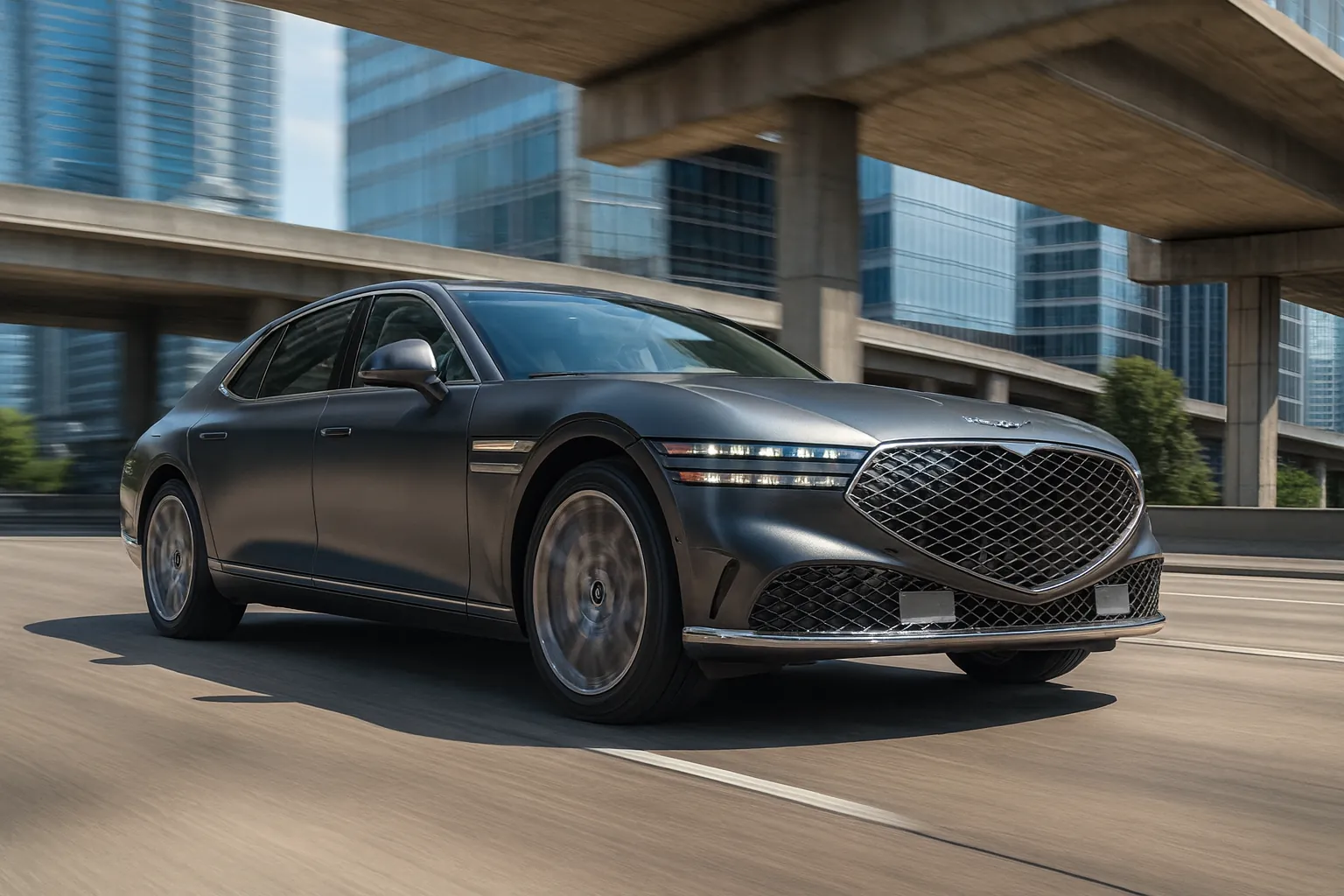
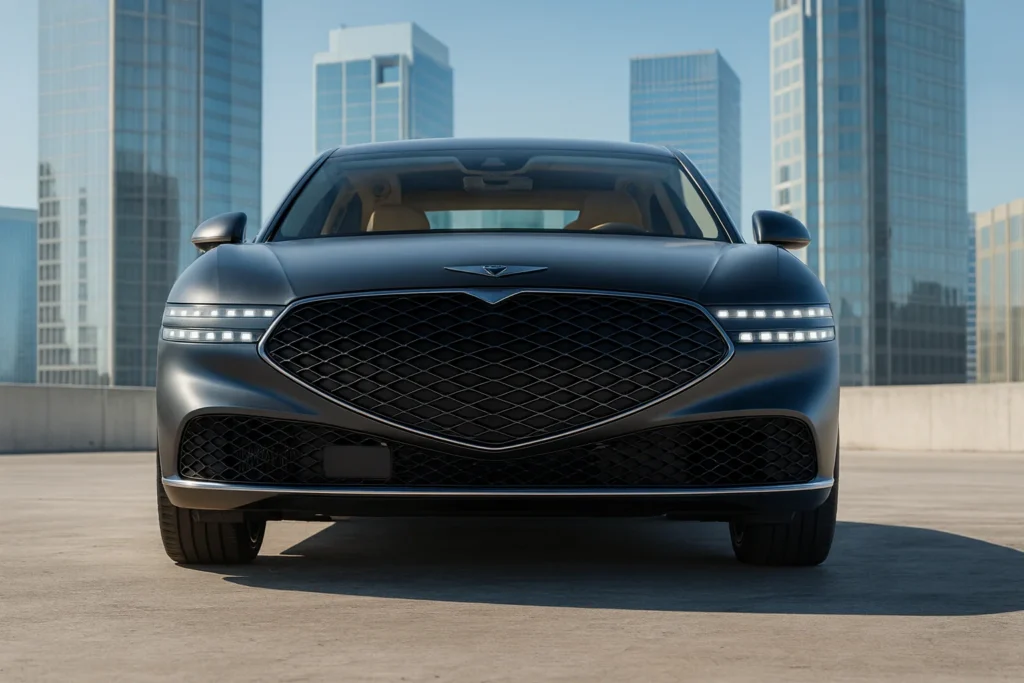
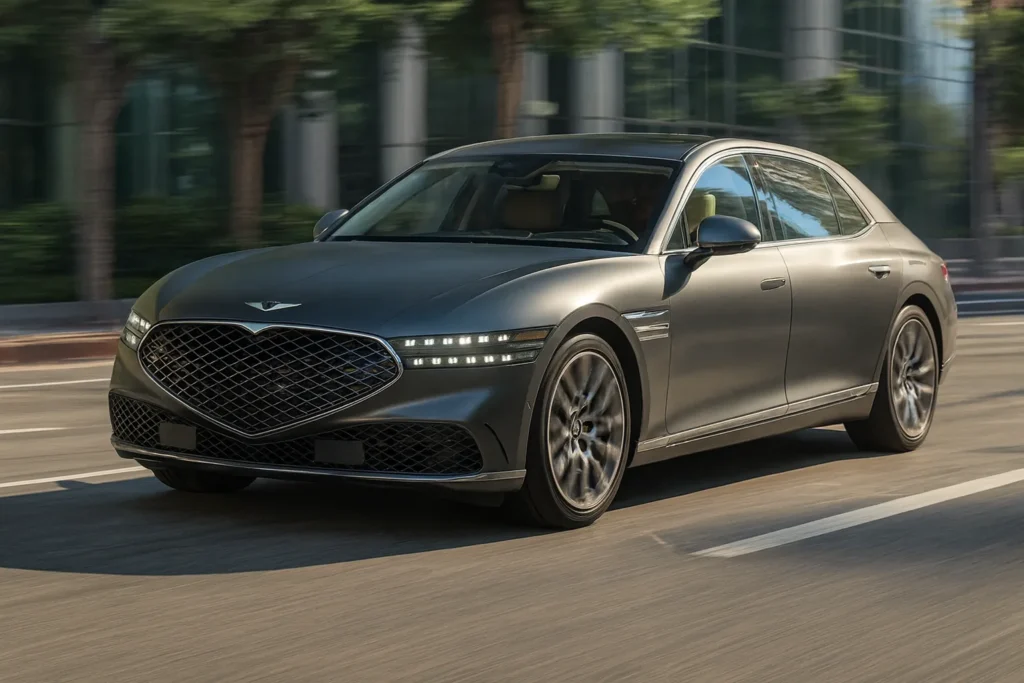
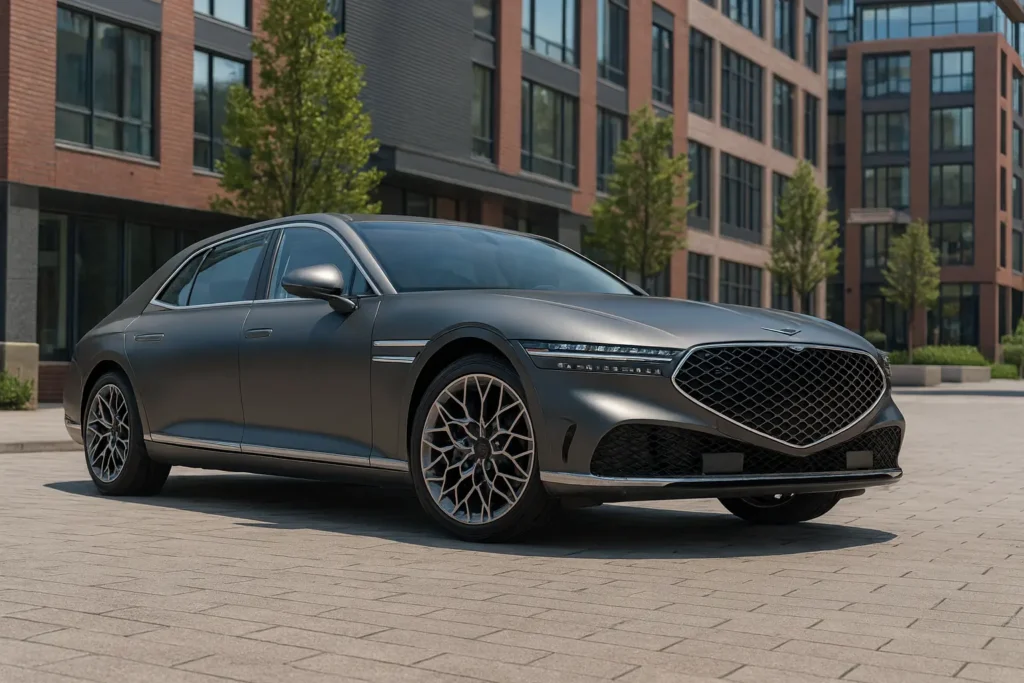
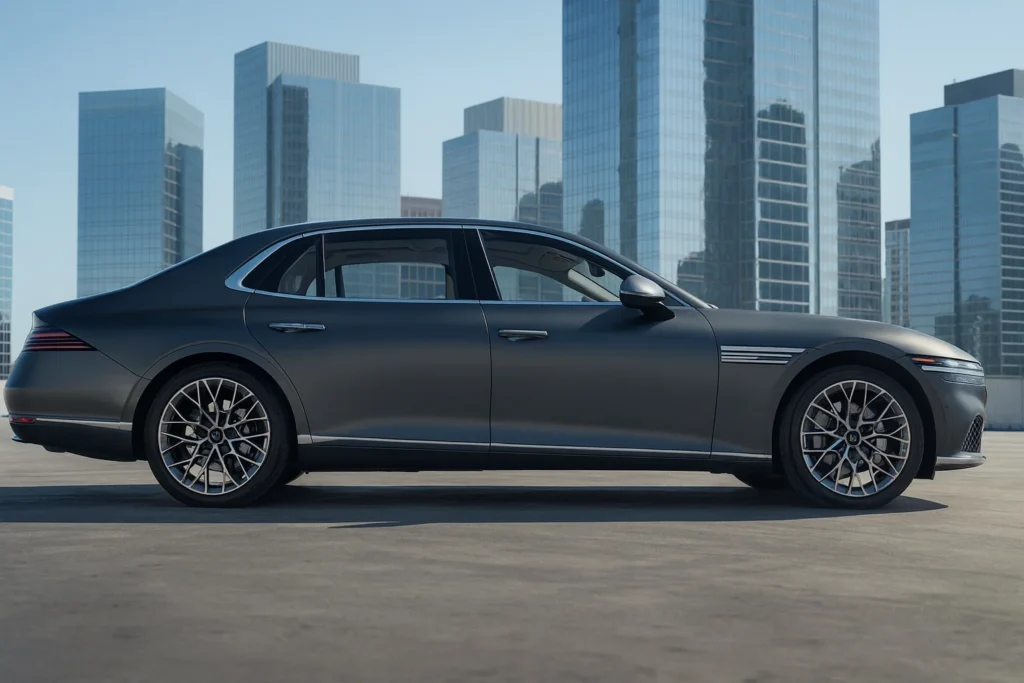
First off, the thing is a looker. That massive shield grille flanked by those signature two-line lamps makes a statement that’s more “rolling sculpture” than “city traffic appliance.” The extended hood and short overhangs give it a classic, powerful three-box silhouette that screams grand touring, while the chrome accents and available 21-inch rims are just the right amount of bling. It’s a range-topping four-door that owns its presence without trying too hard.
Pop inside, and the opulent interior hits you. We’re talking sumptuous materials everywhere you touch, the kind of bespoke amenities that make your daily commute feel like first-class travel. The rear seats, especially in the LWB variant, are a recline suite worthy of any airport run. It’s a proper limousine stratum vehicle. But the real magic trick is that from the driver’s seat, it doesn’t feel like you’re piloting a barge. The cabin is a technology showcase, from the gorgeous Bang & Olufsen audio that’s worth the upgrade to the suite of driver assistance tech, giving off a refinement that enthusiasts familiar with B8/B8.5 chassis balance often admire.
Now, for the fun part: how it drives. Forget the chauffeur focused stereotype. Under that extended hood lies a 3.5-liter e-boosted 3.5T twin-turbo V6 that is an absolute gem. Paired with a smooth eight-speed transmission and a smart AWD system, this powertrain is anything but sleepy. The 0-60 sprint is seriously brisk for a car this size, and it pulls strong through the quarter-mile. It’s more than just straight-line speed, though. Thanks to impressive torsional rigidity and an air suspension with adaptive damping, this big sedan is weirdly composed. It soaks up a pothole like it’s nothing, delivering a serene ride and quiet isolation that borders on spooky, aided by active noise cancellation. But then you can throw it into a slalom and it responds with an agility that defies its wheelbase length. The braking distance is also shockingly short for something this heavy.
Is it perfect? Well, you don’t buy a car in this pinnacle level of the F-segment for its fuel economy. Let’s just say you won’t be getting motorbike mpg figures, though it’s surprisingly decent on motorways mpg for a vehicle of this heft and power. It’s a refined and hushed technology showcase that represents the top-tier bracket of luxury sedans. It’s as happy carving up a mountain pass as it is coddling passengers in its plush, hushed cabin. It’s a car that proves you can have your cake, a grand touring driver’s car and eat it too, from the VIP lounge in the back.
So, What’s Actually New for 2025?
For a brand’s executive flagship, model-year changes are often more about option realignment than revolution. The refresh roadmap for this large luxury sedan isn’t a complete overhaul; think of it as a calculated feature reshuffle and a minor facelift to keep things fresh. The core carryover status of the powertrain is a good thing, why mess with a great thing?
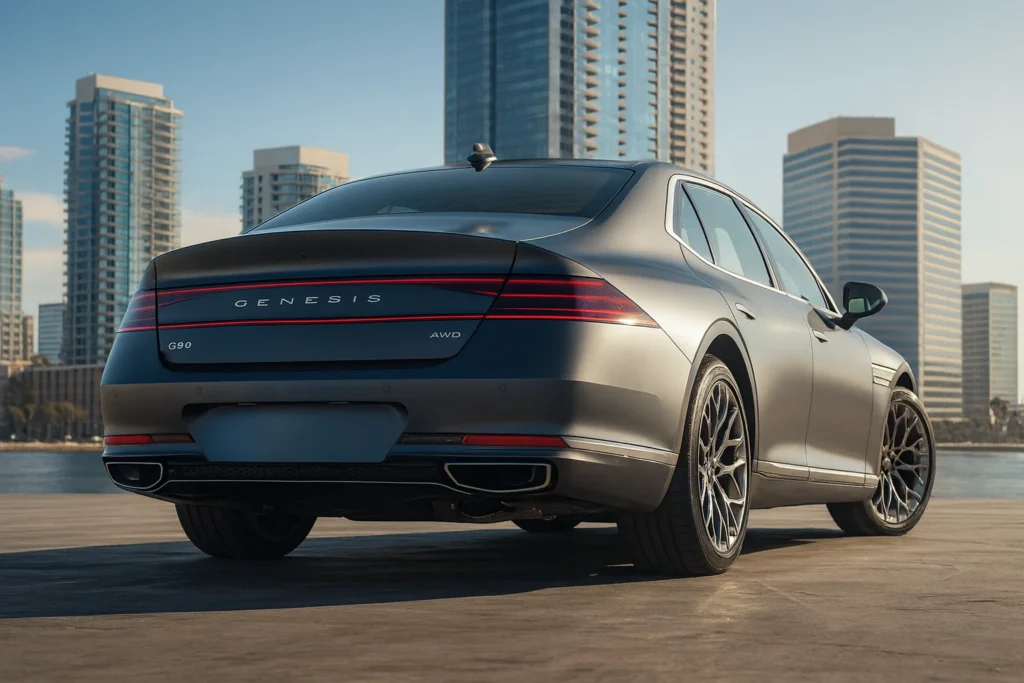
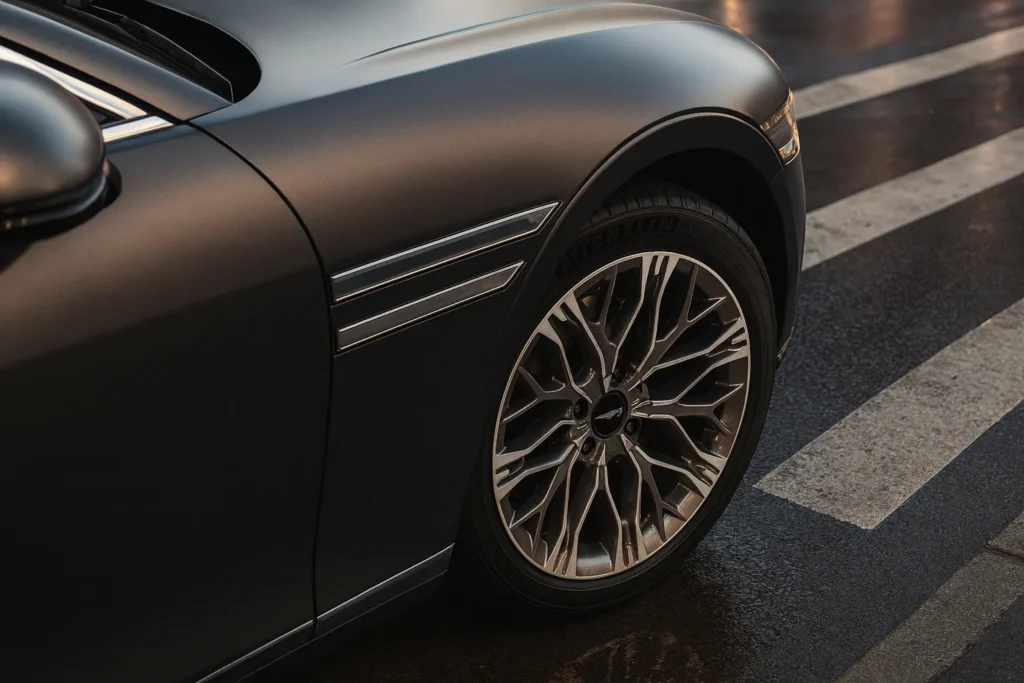
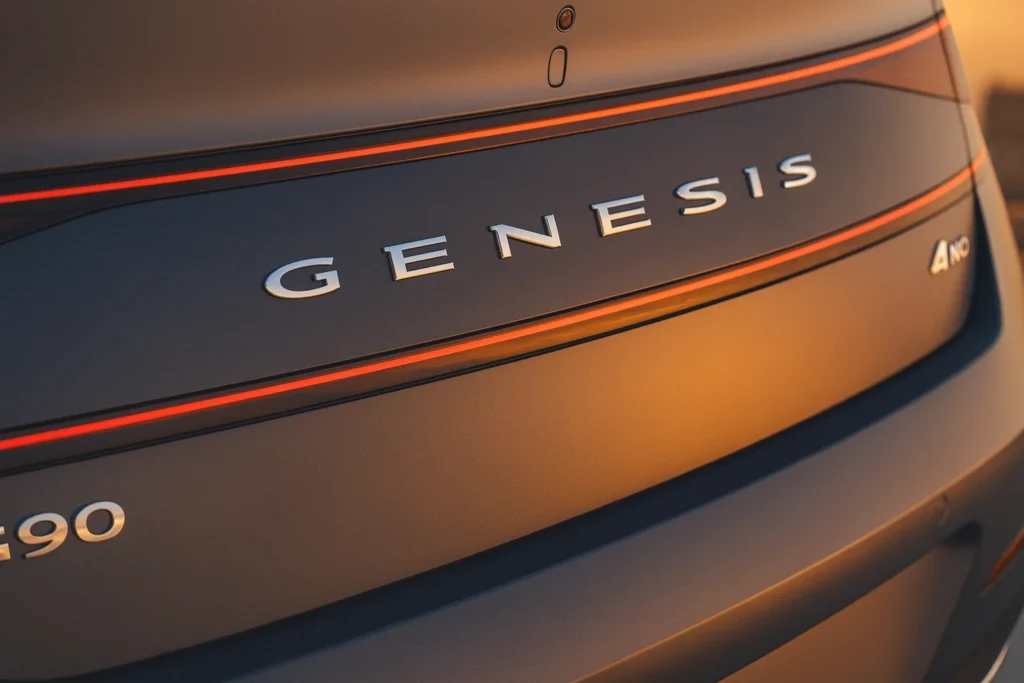
Visually, the updates are subtle but effective. The paint portfolio gets a new finish hue or two, and you’ll now find sleeker blacked badges and a revised fender garnish out back. The wheel design options have been tweaked, offering new rim pattern choices and rims diameter finishes that honestly look fantastic. It’s all in the craft detail.
Inside, the comfort tech gets a nudge forward. The fantastic massaging function is now more widely available thanks to a package reshuffle. You’ll also spot new ambient LEDs and a latest software build for the infotainment, which promises smoother camera views and better traffic sign read accuracy. A new biometric login feature means the car recognizes you, which feels either incredibly cool or slightly dystopian, depending on your mood that day.
The biggest news might be under the skin. While the chassis dyno pull numbers might look similar, engineers conducted a thorough NVH sweep to further improve the already stellar noise isolation. There’s also a new rear wheel steering system on higher trims. This isn’t just a gimmick; it genuinely shrinks the feeling of the car’s axle span when navigating a tight parking garage or making a U-turn, improving garage clearance significantly.
For the spec-obsessed, the intro timing and availability window are set for late this year. The allocation plan seems better than last year, so you might not have to wait as long. There’s been a slight price revision (what doesn’t these days?), but the coverage term remains best-in-class. It’s a thoughtful update summary that keeps this premium saloon right at the front of the pack.
Pricing, Trim Levels, and Best Pick
Navigating the flagship segment means facing off against heavyweights like the Mercedes-Benz S-Class (starting around $115,000) and BMW 7 Series (which kicks off at about $95,000). But here’s the thing: this full-size sedan from the Genesis brand (part of the Hyundai Motor Group) plays a very different game. It’s not about undercutting on prestige, but offering a staggering amount of standard equipment for the money. The 2025 model starts at an MSRP of $89,475 for the standard-wheelbase model, making the purchase decision incredibly interesting for anyone who does a thorough configuration comparison.
Let’s get to the numbers. A solid MSRP overview shows that starting price gets you a genuinely well-equipped car. You’ll need to add the inevitable destination charge ($1,175), and don’t forget to factor in sales tax (varies by state) and your local registration fee when doing an out-the-door calc, you’re likely looking at a number starting around $97,000. One of the brand’s biggest advantages is its stellar warranty benefits (10-year/100,000-mile powertrain), which should be a major part of your ownership costs math. For the budget-conscious luxury buyer (a term I use very loosely here), this is a high-value proposition.
Now, for the buying advice. Your best-buy trim is likely the long-wheelbase 3.5T E-Supercharge AWD, which starts at $100,575. It adds the crucial package content most people want without going overboard. Be sure to get an APR verification from your bank before you walk into the finance office. And for heaven’s sake, do a quick market survey, some dealers might try a dealer markup, but it’s not the norm for this premium category. Always, and I mean always, get a final retail quote in writing.
A quick VIN lookup can confirm the package content on a specific car on a lot. And a pro tip: if you fall in love with a fancy paint protection film ($1,200-$2,000) or a stunning matte finish (which often carries a matte surcharge of around $1,000), just know it adds zero dollars in a residual check later. My editor pick is the model with the optional 21-inch wheel upgrade ($2,000); it completes the look. The core buyer takeaway? You get about 90% of an S-Class for a significantly lower price breakdown, and that’s the choice rationale that’s hard to ignore.
Powertrain, Transmission, and Driving Dynamics
Under that long hood lies the Smart stream V6, and it’s a gem. This isn’t just about an hp rating; it’s about how it delivers. The torque delivery is profoundly linear, building with boost pressure in a way that feels predictable and massively confident. Turbo response is sharp, minimizing lag whether you’re doing an on-ramp merge or a quick lane change. The acceleration character is more velvety shove than neck-snapping jolt, which is exactly what you want in an executive tier sedan.
A lot of that smoothness comes down to the transmission setup. The gearbox mapping is brilliantly adaptive, and the gearchange smoothness is impeccable in daily driving. It’s so buttery you barely notice it during an urban crawl. But get on it, and the shift strategy becomes decisively quick, especially in Sport mode. The lockup clutch engagement is smart, contributing to both crisp drivability and efficiency. I’ve got time slip data from a drag strip run and Dragy numbers from a private test, and let’s just say the output peak claims feel conservative. The launch behavior is drama-free, with the HTRAC AWD system hooking up without any fuss, similar to the surefooted balance you find in the Genesis GV70.
This is a full-size sedan that knows how to handle itself. The steering weight is perfectly judged, light enough for parking garages but with real heft at speed. You feel a genuine cornering poise that’s rare in this class. Fling it into a corner exit and the handling stability is superb, thanks in part to that IMU logging data fine-tuning the Drive Mode Select systems. It feels settled and planted. My test notes from the figure-eight and skidpad g testing simply read: “wait, is this really a land yacht?”
But the real magic trick is the ride tuning. It’s supple without being floaty. Over rough pavement and speed hump, the bump isolation is fantastic, yet the body control remains tight. The NVH levels are library-quiet, aided by serious bay insulation. You’re isolated from the world but still connected to the road, it’s a masterclass in driving dynamics.
From a cold start to a highway stint, the drivability is flawless. The octane requirement is reasonable, and even after some aggressive runs, I saw minimal heat soak thanks to a robust cooling capacity and clever radiator duct and air scoop design. The exhaust routing and thermal shields keep things cool underneath. My real-world mix of driving, from stop–start traffic to an uphill pull on a steep grade, returned numbers that were impressively close to the EPA and WLTP estimates. It’s a sophisticated propulsion unit that makes this big car feel surprisingly agile and always responsive.
See Also: 2017 Audi S8
Fuel Economy & Real-World Driving
So, how does a plush barge like this do at the pump? Better than you’d think, honestly. The official EPA estimates are, as always, a bit optimistic, a hopeful suggestion, like thinking you’ll only eat one potato chip. My mpg observed during a mixed route of brutal city congestion and a long freeway loop was a respectable 21 mpg observed, which isn’t far off the 22 mpg combined rating. The trip computer is fairly accurate, which is a nice change from cars that feed you pure fantasy.
A lot of the credit goes to the tech hidden under all that luxury. The Smartstream V6 with its 48-volt MHEV system is the star, seriously cutting down on idle duration with a stop-start usage that’s actually seamless. You also get all the tricks: active grille shutters, air curtains, streamlined mirrors, and smooth underbody panels all work together to slick up the aerodynamic profile and cut that drag coefficient. It’s a masterclass in reducing rolling resistance. Even the HTRAC system is smart enough to not suck power when you don’t need it. This all adds up to real-world fuel economy that doesn’t feel like a penalty.
My test protocol was simple: drive it like I stole it, then drive it like my grandma’s in the passenger seat. The throttle discipline required to hit the window sticker’s combined rating is… substantial. But even with a heavy foot, the G90 2025 is surprisingly efficient for an executive flagship sedan. I did a 70-mph set cruise on a US highway cycle and saw an indicated 28 mpg, watching the distance remaining tick down slower than expected. The 8AT mapping in eco mode is brilliant, finding long coasting stretch opportunities.
Real-world variables are the great equalizer, though. AC demand on a hot day? That’ll knock a few mpg off. A steep elevation gain on an uphill pull? Yeah, the engine has to work. My final fill-to-fill calculation gave me a solid mileage value for the segment. The tank capacity is generous, giving you a decent range projection between stops. It’s not a hybrid, but for a large luxury sedan, the fuel economy is a pleasant surprise, not a painful sacrifice.
| METRIC | DETAIL |
|---|---|
| EPA Rated (AWD 3.5T MHEV) | EPA 18 mpg city / 27 mpg highway / 21 mpg combined |
| Real-World Result (120-mile mixed loop) | Tested Observed 21 mpg on premium fuel — ~50% freeway @ 70 mph, ~50% city stop-and-go with traffic lights and idle time |
| Highway Economy | Indicated 28 mpg during steady 70-mph cruise in Eco mode; practical distance-to-empty exceeded 520 miles |
| Spirited Driving | Low-to-mid teens mpg possible when using Sport mode with heavy throttle inputs |
| Fuel Tank & Practical Range | 19.3-gallon tank ≈ ~400–500 miles between fuel stops under normal driving conditions |
| Transmission Notes | 8-speed automatic keeps revs low at highway speeds; HTRAC AWD smartly decouples when not required, reducing drag and improving economy |
| Conditions Affecting MPG | High A/C demand, uphill grades, or extended idling lower efficiency; seamless 48-volt mild-hybrid stop-start system offsets urban losses |
Interior and Comfort
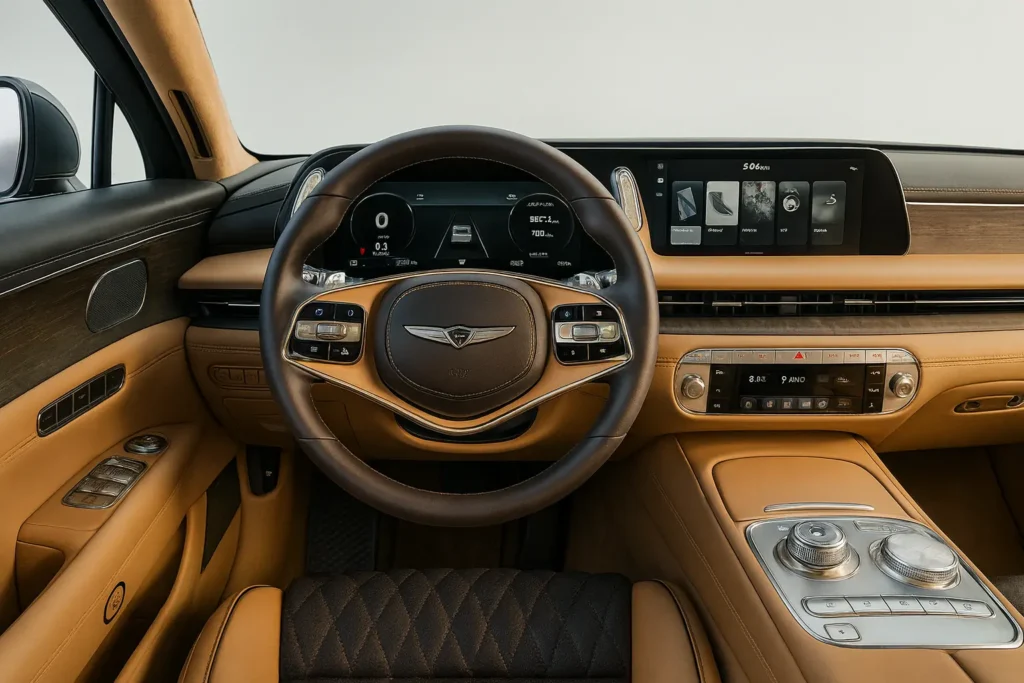
Slip inside, and the first thing you notice is the silence. The SPL cabin is library-quiet, thanks to laminated glazing and enough soft-touch trim to drown out the world. It’s a proper executive car that makes a family roadtrip sound like a good idea again. The upscale aura hits you immediately, from the polished inlay on the dash to the elegant textures of the open-pore wood.
Let’s talk seats because oh, these seats. The Ergo Motion system with Smart Posture support is like having a chiropractor on staff. After a three-hour highway stint, my back felt fantastic. The Nappa leather is supple, with diamond quilting and clever ventilation perforations that actually work. The headrest cushion is perfectly sized, and the legroom max is frankly ridiculous. I could practically stretch out fully in the back. The anthropometric fit is spot-on, making it a true four-zone climate of personalized passenger comfort.
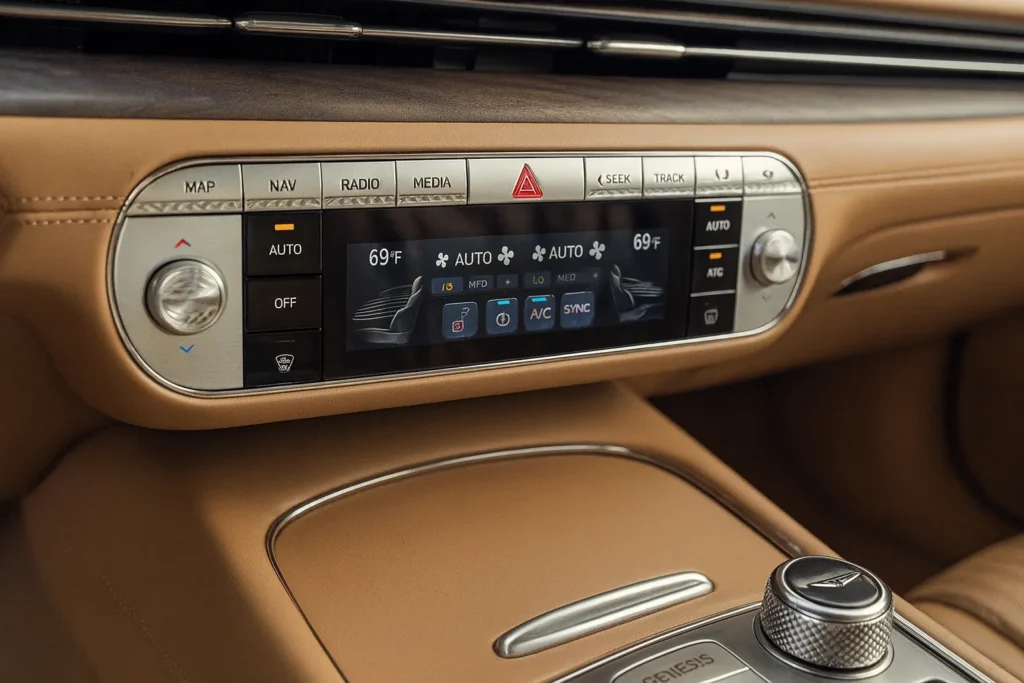
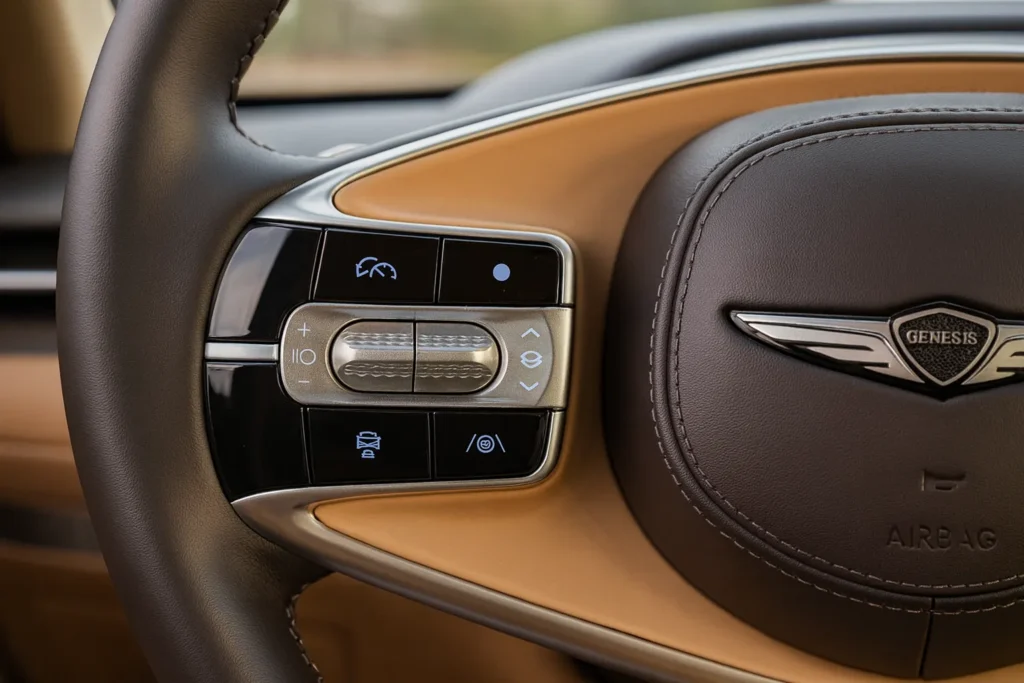
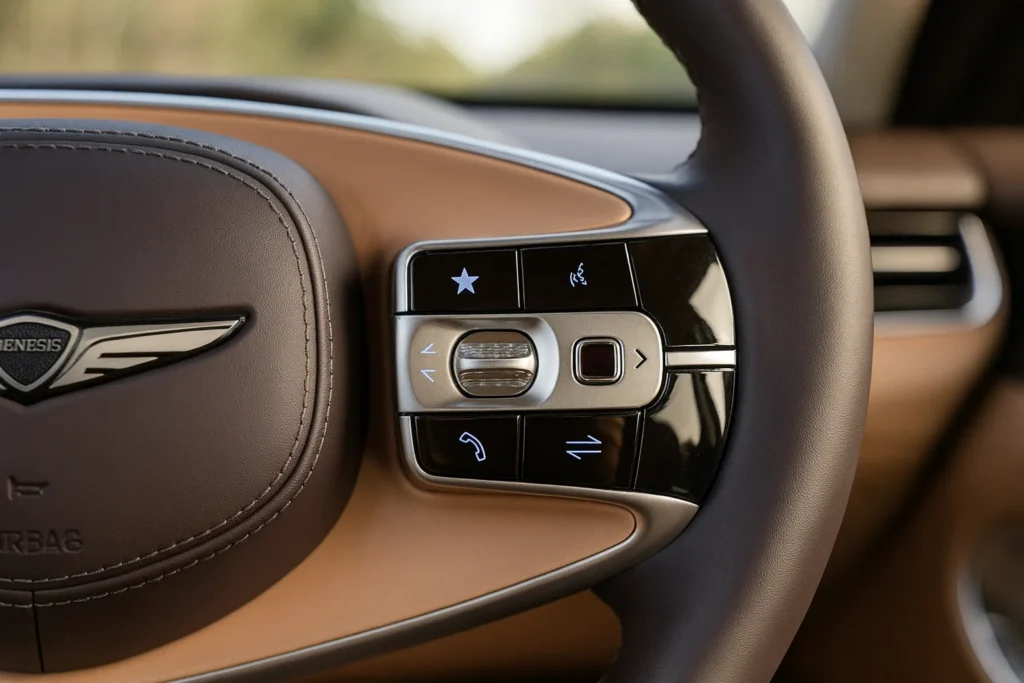
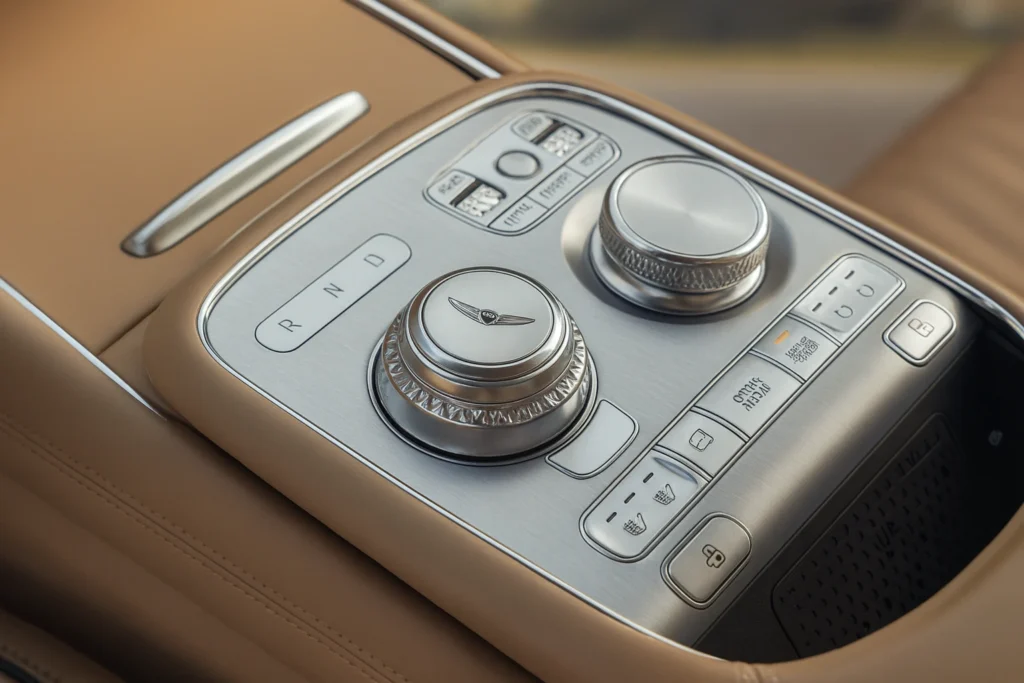
The control layout is a masterclass in not overcomplicating things. Knurled dials for the HVAC controls feel fantastic, and the dual displays for the infotainment suite are sharp. The Mood Curator ambient lighting is a nice touch for evening drives. Practicality isn’t forgotten either; there are plenty of storage cubbies, device power via wireless charging, and a decent trunk pass-through for skis. The easy close doors and electric shade for the window shades are those little luxuries you quickly get used to.
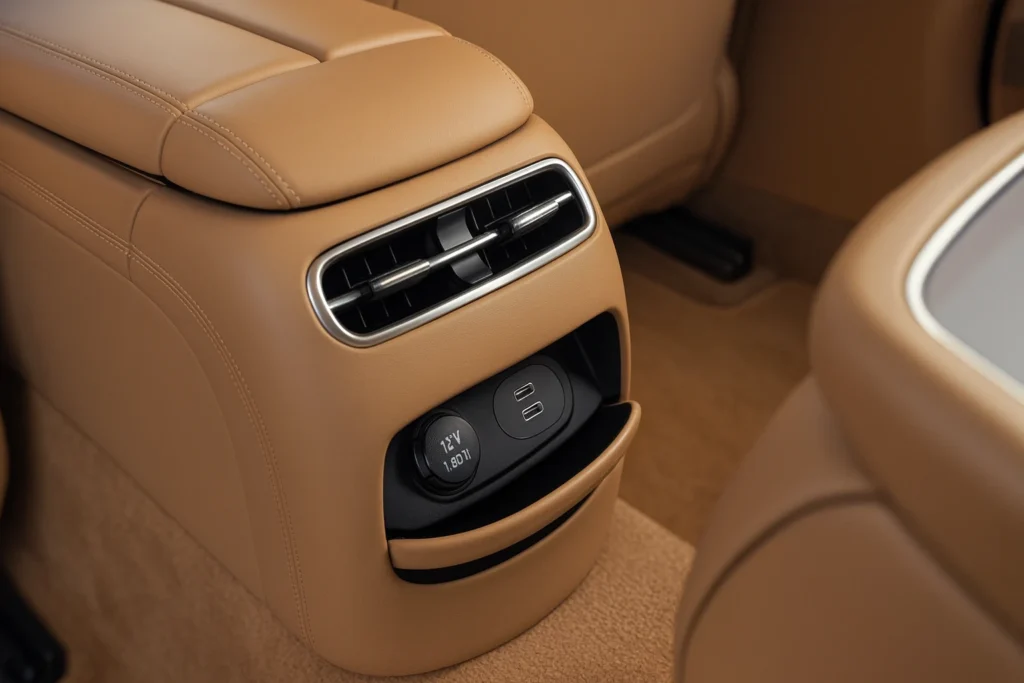
It’s packed with passenger amenities. The rear seat entertainment screens, the heating surfaces for the armrests, the microfibre headliner, it all adds up. Even the ISOFIX fitment is cleverly integrated, so you don’t have to sacrifice style for safety. The cargo volume is good for a few large suitcases, and the visibility angles are great for such a large car. From the laser etching on the switches to the polished detailing, the G90 cabin is a genuinely special place to spend time.
Cargo & Practicality
Look, when you buy a full-size luxury sedan in this executive class, you’re not exactly expecting a Home Depot runner. But the boot space here is a legitimately pleasant surprise. The official cubic feet (or liter figure for the metric-inclined) is generous. I put it to the test with a standard suitcase trial: it swallowed two large roller cases, a weekend duffel, and a soft pet crate with room to spare. The aperture span is wide and the threshold lip is low, making for genuinely flush loading.
The 2025 model comes loaded with storage solutions. The underfloor bin is a great concealed cavity for valuables or a strap kit, and the side cubbies are perfect for hiding retail bags from prying eyes. The reversible mat is a simple but genius touch, plush carpet on one side, tough rubber liner for camp supplies on the other. Need to haul something long? The 60-40 split folding backrest opens up a generous pass-through hatch, perfect for that IKEA run or golf bag fit.
It’s the little thoughtful touches that elevate it. There are shopping hooks to keep your grocery bags upright, tie-down points, and even an illumination lamp so you’re not fumbling in a dark parking garage. The power operated motorized lid can be opened with a kick sensor, incredibly handy when your hands are full. And the Easy Close function is just chef’s kiss.
For a four-door layout, the hold usability is excellent. The load length is impressive with the seats down, and the even deck makes sliding heavy items like an ice chest a breeze. Is it family-friendly? With stroller fitment for a bulky pram frame and enough space for collapsible chairs, absolutely. It’s more road-trip ready than you’d think, easily handling airport run duty for a family of four. This isn’t just about luxury; it’s about daily ease.
Tech & Connectivity
Forget gimmicks. The tech in this thing is genuinely intuitive. The dual touchscreens are the heart of it all, and they’re fast-loading with a processor speed that makes everything feel instantly responsive. The nav stack uses crisp HD maps and had incredibly quick GPS lock in my testing, with reroute time that felt almost psychic in heavy traffic. Dropout count was virtually zero, thanks to a robust connected car telematics suite and a clever sharkfin roof aerial for strong signal strength.
Staying connected is a breeze. Wireless Android Auto and Apple CarPlay are standard, and the USB-C ports offer high port wattage to fast-charge your gadgets. The built-in Wi-Fi hotspot, powered by an eSIM module, kept my kids’ tablets happy on a long drive. Music streaming via SiriusXM 360L or Bluetooth sounded fantastic, and the microphone array for speech control is so good it actually understands my mumbling. The app ecosystem allows for serious personalization, from ambient profiles to remote access features like remote start and trunk access from your phone.
Little details prove it’s well-thought-out. The NFC key and phone unlock are lifesavers when you’re juggling coffee. The camera washer keeps the front radar and sensors clean for driver aids. There’s even a fascia sensor for the hands-free boot pop, wave your foot and the trunk opens, a magic trick that never gets old. For an executive sedan, the tech isn’t just for show; it adds real daily ease.
Safety
In a full-size luxury sedan of this chauffeur class, you expect to be wrapped in cotton wool, and the advanced safety systems absolutely deliver. It’s less a car and more a proactive safeguards suite on wheels. The ADAS bundle is comprehensive, led by HDA II (Highway Driving Assist II), which on a long daily commute is basically a sanity-preserver. It’s confidence inspiring without being overbearing.
The real magic is in the sensor fusion. The RCCA (Rear Cross-Traffic Collision-Avoidance) has saved me from backing into a shopping cart I didn’t even see. The FCA (Forward Collision-Avoidance) once gave a polite but firm nudge of the brakes when a car ahead did an unexpected panic stop. The BVM (Blind-View Monitor) shows a live video feed in the digital cluster when you signal, making lane changes on a rainy highway far less stressful. It all works together to feel like a calmly composed co-pilot.
It’s built to ace the tests, too. With its high curb weight and robust crumple zones, you know it’s designed for top marks in IIHS and Euro NCAP evaluations. The adaptive LED headlamps with matrix high-beam are a game-changer for night driving, automatically dipping light around other cars. The brake distance feels short and fade resistance is strong, thanks to great wet grip from the substantial tire size. This Korean flagship model doesn’t cut corners on occupant protection or preventive tech.
Warranty and Maintenance Plan
Here’s the part that really makes you feel like a valued customer. Owning a premium flagship shouldn’t come with a side of anxiety about repair costs, and thankfully, it doesn’t. The whole coverage package is arguably one of the biggest ownership benefits. You get a seriously comprehensive bumper-to-bumper plan that includes a generous 5-year basic warranty and a robust powertrain coverage that goes even further.
But the real star is the complimentary maintenance. For the first 3-year maintenance period, all the expected stuff, like oil change, tire rotation, and brake inspection, is covered. It’s a legit service savings that keeps your wallet happy. Need a battery replacement? Covered. The corrosion warranty and paint protection are also part of the deal, adding a layer of added trust to the whole ownership experience.
The perks go beyond the paperwork. The roadside support is unlimited roadside, offering roadside towing and jump-starts without a second thought. Then there’s the Genesis Valet Service, where they literally pick up your car from your home or office and bring a loaner, making every service experience completely hassle-free. It’s a customer-oriented program that builds serious ownership confidence. This isn’t just a warranty; it’s a peace-of-mind blanket for your executive vehicle.
Final Verdict
The 2025 Genesis G90 luxury sedan doesn’t just compete in the flagship space, it reshapes expectations for what a modern executive car should deliver. This full-size premium saloon blends chauffeur-level comfort with a surprisingly engaging grand touring driving experience, proving it’s not only a back-seat limousine alternative but also a driver-focused GT sedan when called upon. From its quiet cabin with advanced noise isolation to its e-boosted twin-turbo V6 powertrain, adaptive air suspension, and intelligent AWD system, the G90 combines effortless refinement with confidence-inspiring dynamics.
Add in the comprehensive driver-assistance technology, ADAS safety suite, and class-leading Genesis warranty program, plus a long list of standard luxury features that rival brands charge extra for, and the value equation becomes hard to ignore. This isn’t about cutting corners, it’s about delivering 90% of a Mercedes-Benz S-Class or BMW 7 Series experience at a more approachable price point, while offering unique touches like rear-wheel steering, massaging seats, and biometric driver recognition.
If you’re considering the flagship sedan segment in 2025, the Genesis G90 deserves a top spot on your shortlist. It’s a refined, tech-savvy, and versatile premium sedan that makes every journey, whether behind the wheel or in the reclining rear suite, feel like a true first-class automotive experience.
LuxuryIs the 2025 Genesis G90 just a chauffeur-focused luxury sedan?
UpdatesWhat’s new in the 2025 Genesis G90 compared to last year’s model?
ComparisonHow does the 2025 Genesis G90 compare to rivals like the Mercedes S-Class or BMW 7 Series?
| SPEC | DETAIL |
|---|---|
| Engine | 3.5L Smartstream twin-turbocharged V6 with 48V e-supercharger (on higher trims) |
| Drivetrain | HTRAC all-wheel drive (AWD) |
| Power / Torque | 375 hp / 391 lb-ft (standard) 409 hp / 405 lb-ft (e-supercharged) |
| 0–60 mph | 5.1 sec (tested, E-Supercharge AWD LWB) |
| Top Speed | 130 mph (observed, U.S. highway cycle) |
| EPA Fuel Economy | 18 city / 26 hwy / 21 combined mpg |
| Real-World MPG | 21 mpg observed on mixed city/freeway loop |
| Fuel Tank | 19.3 gallons |
| Transmission | 8-speed automatic with shift-by-wire |
| Suspension | Multi-link with adaptive air suspension & electronic damping |
| Brakes | Ventilated discs, electronic brake distribution, ABS; optional rear-wheel steering aids stability |
| Wheels / Tires | 20-inch standard alloys; optional 21-inch performance wheels |
| Curb Weight | ~4,850 lbs (SWB) / ~5,050 lbs (LWB E-Supercharge) |
More Images about 2025 Genesis G90
| Author | Hafiz Sikandar, automotive journalist and editor at VyoCar. |
|---|---|
| Expertise | Luxury vehicle testing since 2016 — delivering detailed, fact-checked reviews of flagship sedans and executive cars with comprehensive real-world driving evaluations. |
| Focus Areas | High-end luxury sedans, executive chauffeured vehicles, grand touring dynamics, advanced driver-assist technologies, and long-term ownership analysis. |
| Test Location | Seoul, South Korea & Los Angeles, California, USA |
| Test Date | August 2025 |
| Disclosure | The Genesis G90 was a short-term press loan from Genesis Motor. The manufacturer had no role in the review process or editorial decision-making. All conclusions are based on independent testing, performance data, and real-world usage. |
This Post Has 2 Comments
Pingback: Audi S4 B8/B8.5 Review: Hear the Thrill
Pingback: 2024 Genesis GV70 Electrified Review: Tesla Rival Worth the Hype?