Pros & Cons
- Seamless hybrid torque blending
- Quiet, cushy long-haul composure
- Proven 250k-mile longevity odds
- 12-volt battery weak link
- Brake actuator repairs costly
- Power tailgate intermittently fails
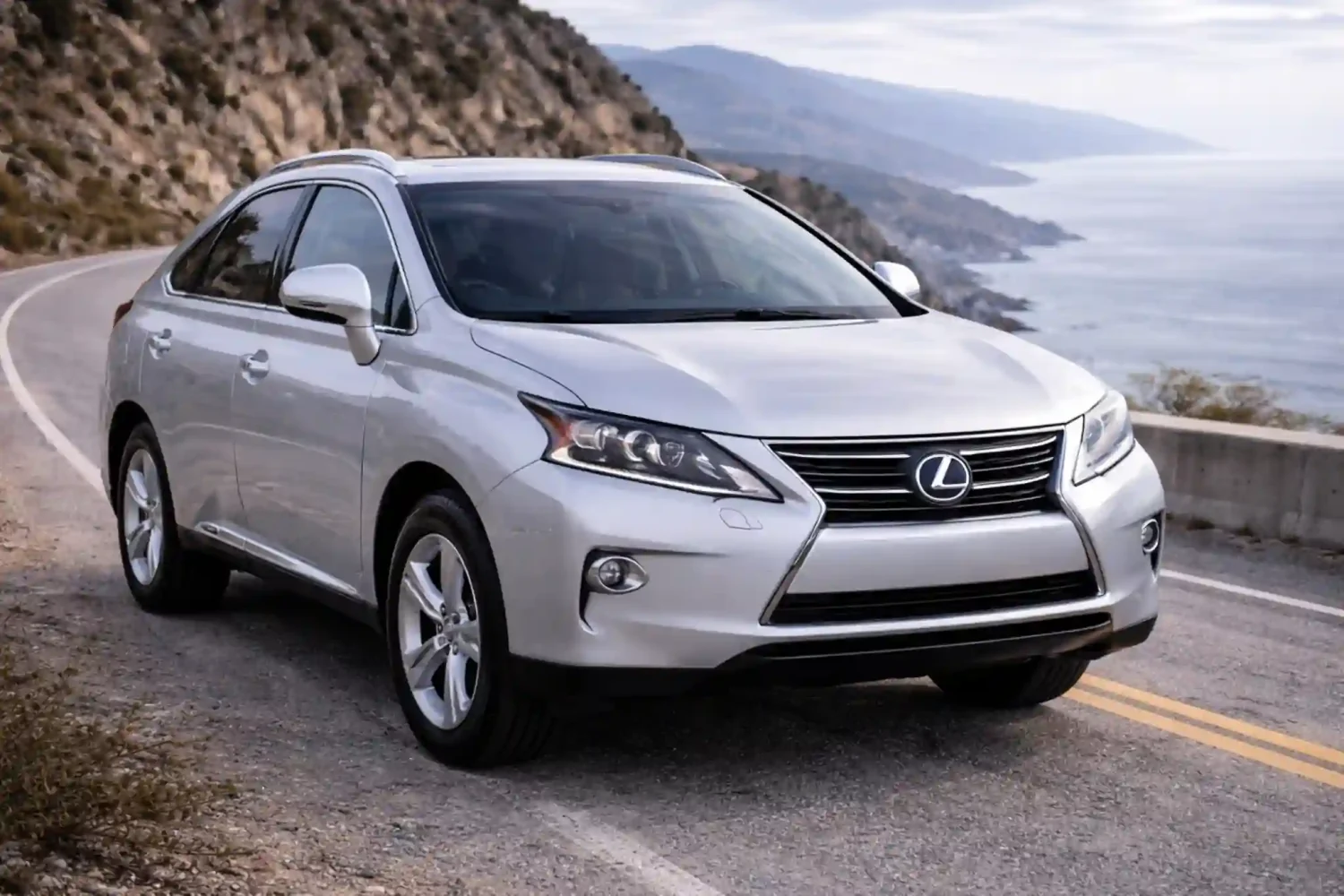
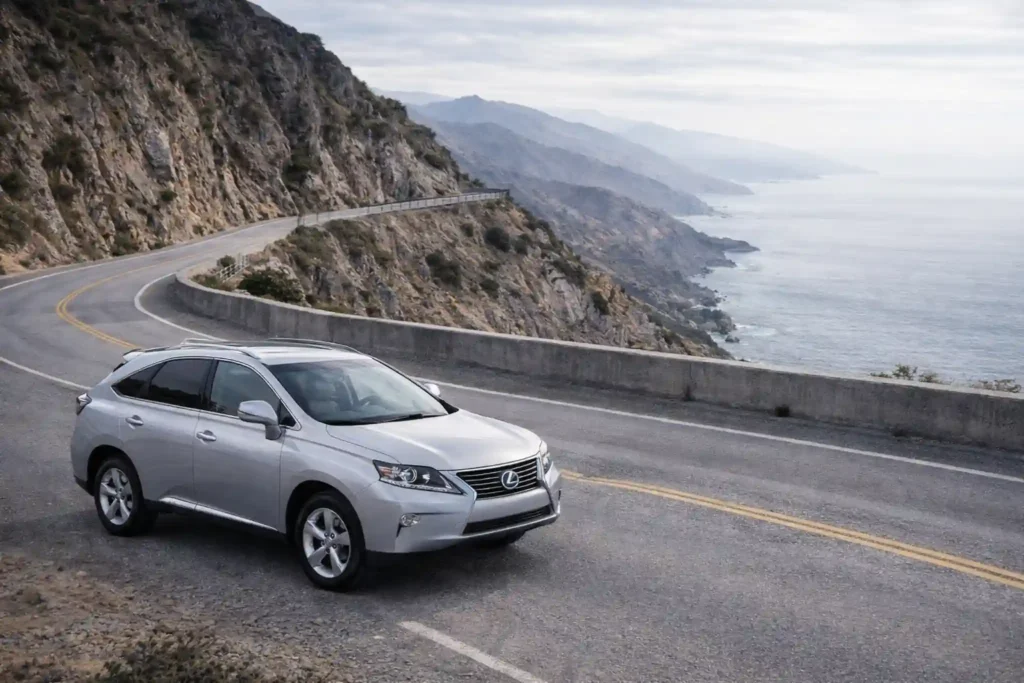
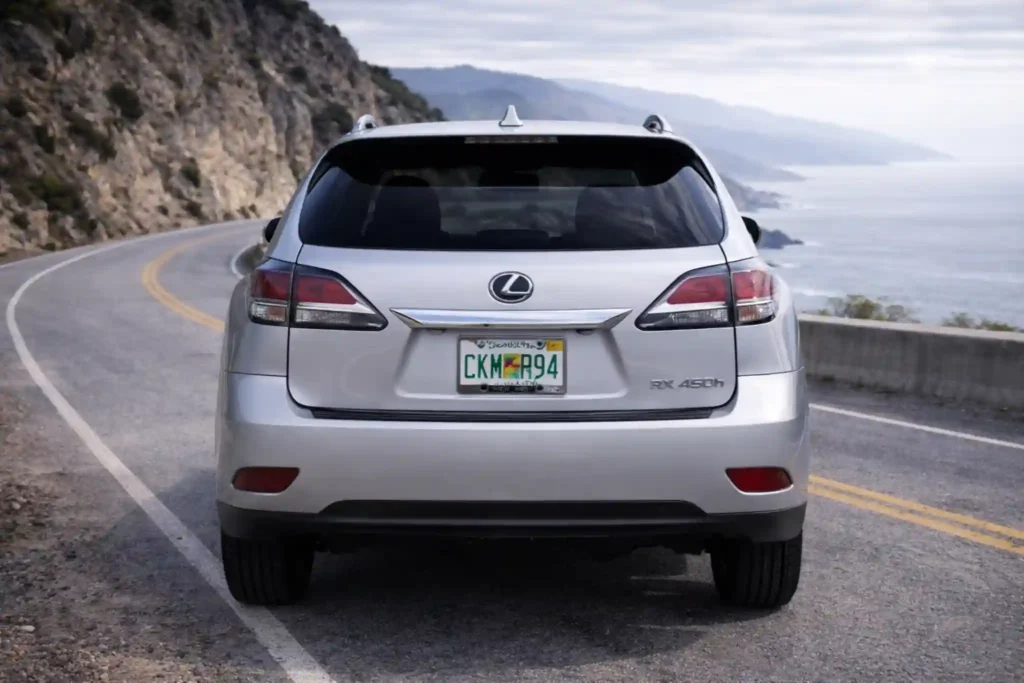
2014 Lexus RX 450h Review with Vyocar
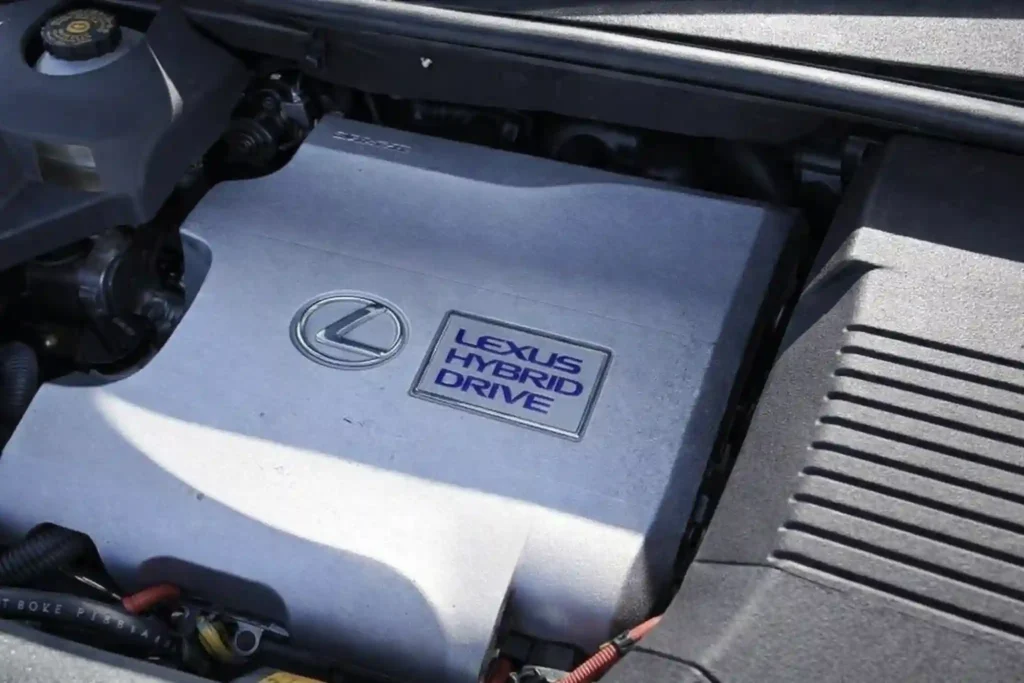
It’s essentially Toyota’s mature planetary power-split V6 hybrid wearing a Lexus suit, so seamless and drama-free you forget it’s a hybrid, and that’s exactly why these things just keep clocking miles.
How the 2014 RX 450h Holds Up Over Time
The 2014 RX 450h is one of those vehicles that doesn’t “age” so much as it just keeps showing up to work. It’s not exciting, and it doesn’t pretend to be. But if you’re shopping a 10+ year old luxury crossover, boring is a compliment.
This generation’s strength is that Lexus didn’t build a delicate science project. It’s a 3.5-liter Atkinson-cycle V6 paired with Hybrid Synergy Drive, routed through a planetary-type CVT, with a nickel-metal hydride battery pack. It’s a mature hybrid layout, not a first attempt, and it feels that way behind the wheel: smooth torque, no gear-hunting, no drama when you roll on power. Lexus rated the system at 295 hp and positioned it as a long-haul, efficiency-first family hauler, not a tech demo.
Where time does show is in normal “luxury SUV aging” stuff: suspension compliance gets a little looser, interior touchpoints get shinier, and the occasional electronic annoyance pops up. But the core experience that made people buy an RX in the first place, quiet, cushy, easy, tends to stay intact longer than most rivals from the same era.
What “high-mileage reliable” looks like on this Lexus hybrid
High-mileage reliable in an RX 450h isn’t “nothing ever breaks.” It’s this: the powertrain still feels consistent.
A good high-mileage RX 450h (think well past 100,000 miles) still pulls away cleanly on electric assist, transitions to the gas engine without a shudder, and cruises like a heavy, well-insulated appliance. The hybrid system in this model can run EV-only at low speeds under certain conditions, and in normal driving it blends gas and electric power so smoothly that most owners stop thinking about it entirely.
The reason that matters is psychological as much as mechanical. With some older luxury hybrids, you’re constantly listening for “the new noise.” In a healthy RX 450h, there usually isn’t one. What you will notice, if anything, is ordinary wear: a little more road thump over sharp edges, a slightly less tied-down feel in the front end, brakes that don’t feel as crisp if they’ve been neglected, and the usual age-related squeaks that come with a tall, heavy crossover.
If you want a data-backed gut check on the RX’s long-term reputation, iSeeCars’ 2025 longevity study is telling: it lists the Lexus RX (hybrid) among SUVs with an above-average predicted chance of reaching 250,000 miles (17.0% vs 4.8% industry average in their analysis). That doesn’t guarantee any specific used RX will do it, but it matches what you see in the real world when these are serviced and not abused.
The realistic lifespan you can expect with proper maintenance
Here’s the blunt truth: a 2014 RX 450h that’s been maintained like a Lexus, not like a disposable appliance, can absolutely be a 200,000-mile vehicle. And if you’re buying one today, that’s the mental model you should use. Not “Will it last forever?” but “How close is this specific one to the point where age-based repairs start stacking up?”
The ceiling is higher than most shoppers assume. Again, zooming out to model-level data, iSeeCars’ study puts the RX hybrid in the conversation for 250,000 miles in meaningful numbers, which is rare for a luxury-branded SUV.
What separates the long runners from the money pits is boring stuff:
- consistent service history (not just oil changes, but cooling system care, fluids, brakes, and suspension attention when it starts to loosen up)
- avoiding long-term overheating events
- fixing small leaks or worn components before they turn into secondary damage
Also worth knowing: Lexus’ hybrid warranty framework (in general) covers key hybrid components for 8 years or 100,000 miles. By 2025, every 2014 is long past that window, which is exactly why service history and current-condition checks matter more than any brochure promise ever did.
If your goal is a quiet, comfortable used SUV that can rack up miles without constant drama, the 2014 RX 450h is still one of the safer bets in the segment. It won’t feel modern in infotainment or driving excitement, but as a long-term ownership tool, it tends to age with more dignity than most.
The Most Common Issues Owners Report
Here’s the honest read on the 2014 RX 450h: it doesn’t have a “big scary list” of chronic failures, and that’s a big reason these hold their value. Even recall history looks clean on paper, with RepairPal listing 0 safety recalls for the 2014 RX450h.
But owners do still report patterns. Some are genuinely hybrid-adjacent, meaning they happen because this is a computer-heavy, high-voltage vehicle that depends on a healthy 12-volt system. Others are the same old SUV aging stuff: latches, pumps, motors, suspension rubber, and little electrical annoyances.
Hybrid-system related complaints vs normal wear-and-tear repairs
True hybrid-system failures are not what most owners are dealing with day to day. The more common “hybrid” complaints tend to be warning messages, weird behavior, or brake feel noises that are tied to electronics, diagnostics, or the brake-by-wire setup, not necessarily a dead hybrid battery or a failed motor generator.
A perfect example is the classic “check hybrid system” moment that sends people into panic mode. In owner discussions, you’ll see cases where a basic OBD2 reader shows nothing, because it can’t read the deeper Toyota/Lexus hybrid codes, even though the car is clearly unhappy. That’s not a Lexus-only problem, it’s a modern-car problem, but hybrids amplify it because there’s more going on behind the scenes.
Then there’s braking. The RX 450h uses an electrically controlled brake system, and Lexus has issued service guidance for specific symptoms. One Lexus bulletin covering 2010–2015 RX450h notes a squawk or knocking noise from the engine compartment when releasing the brake pedal, with the repair path starting with bleeding and escalating to brake actuator replacement if needed. That doesn’t mean every RX 450h is going to eat an actuator. It does mean the braking system is sophisticated, and when it acts up, diagnosis and parts can be expensive compared to a basic RX 350 setup.
Now, the non-hybrid stuff is where most real ownership complaints live:
- 12-volt auxiliary battery sensitivity. Owners regularly mention the RX 450h doesn’t like sitting unused, with the 12V battery more likely to go flat if the car isn’t driven in READY mode often enough.
- Water pump replacement showing up in the 70–80k-mile range in real-world owner talk.
- Power tailgate drama. This one comes up a lot in owner communities: intermittent power tailgate operation, slow movement, or full failure that sometimes overlaps with low 12V battery health, and sometimes points to the power latch or “rear power pack” type components.
- Small motorized components like mirror motors and latches. One owner specifically calls out a mirror motor failure and the kind of bill that can follow.
If you zoom out, even complaint aggregators show the 2014 RX 450h isn’t flooded with widespread defects, with categories showing small counts and a relatively low total complaint volume for the model year. The takeaway is simple: most reported issues are annoying and sometimes pricey, but not “this platform is fundamentally flawed.”
Problems that show up more often as the vehicle ages
Once these cross the 10-year mark, the RX 450h tends to shift from “Lexus dependable” to “Lexus dependable, but it’s still a machine with aging parts.” The problems that show up more often are usually the ones that don’t care whether your drivetrain is hybrid or not.
The first age amplifier is time parked. This generation’s RX 450h is loaded with modules, sensors, and standby systems. Owners repeatedly point out the 12V battery can become the weak link if the car sits, and when that happens you can get odd behavior that feels bigger than it is.
The second age amplifier is powered hardware. Power tailgates are convenient when new and a headache when they start acting like a moody garage door. In real owner reports you’ll see the pattern: slower closing, intermittent operation, then a day where it just refuses to cooperate.
The third is cooling and rubber. Water pump replacement is one of those “welcome to aging V6 life” moments that owners keep mentioning around mid-to-higher mileage. Add in typical SUV aging, suspension bushings and mounts gradually lose their crispness, and you start hearing more knocks and feeling more looseness over bumps. People often blame “the hybrid” for that, but most of the time it’s just a decade of roads finally showing up.
And finally, you get the occasional early-life annoyance that doesn’t necessarily age into a bigger issue, but it’s worth noting because it shows the type of nitpicks owners log. One example that pops up in complaint tracking is mirror vibration as a reported issue.
That’s the reality: on a 2014 RX 450h, the most common owner-reported problems aren’t usually catastrophic hybrid failures. They’re the layered, expensive-to-diagnose “modern Lexus” things, plus the normal mechanical aging you’d expect from any 10+ year old luxury SUV.
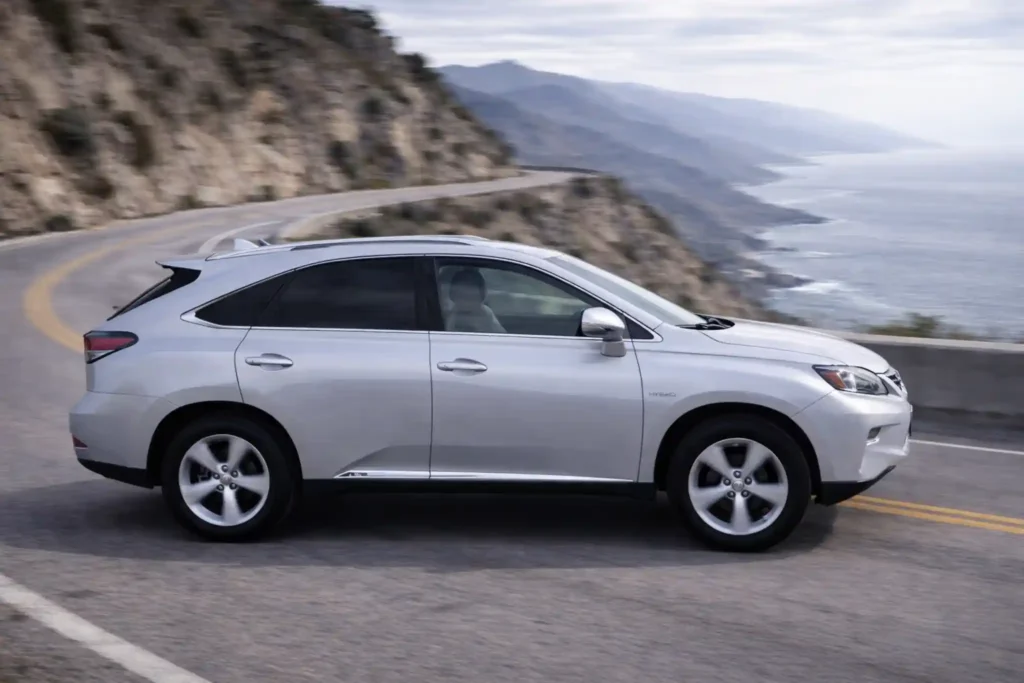
Hybrid Battery Longevity and Aging After 10+ Years
The 2014 RX 450h lives and dies by how calmly Lexus runs its hybrid system. This is not a plug in. It’s a full hybrid built around a 288V nickel metal hydride battery pack, motor generators, and a control strategy that’s designed to keep the battery working in the middle of its comfort zone, not at the edges.
That matters at 10+ years old, because most of the scary stories you hear about hybrid batteries come from people imagining the pack is constantly being charged to 100% and drained to empty. The Lexus system does the opposite. It cycles the battery repeatedly but in a controlled band, with cooling and monitoring always in the background.
Typical battery lifespan and what influences it (mileage, heat, driving style)
Realistic expectation first: Toyota itself says the average hybrid battery lifespan is about 8 to 10 years, roughly 160,000 to 240,000 km, and it also acknowledges many last longer with proper care. That statement doesn’t mean your 2014 RX 450h battery automatically expires at year 9. It means once you’re shopping these at 10, 11, 12 years old, you should treat battery condition as a variable, not a guarantee.
What pushes that variable in the wrong direction usually comes down to three things.
Mileage matters, but not in the way people think. It’s not just the odometer, it’s the number of charge and discharge events. The hybrid pack is constantly cycling because MG2 draws from it when you accelerate and it gets refilled during regenerative braking and engine charging. Toyota technical training describes this as repetitive charge and discharge while driving, with the system trying to maintain a steady state of charge around a target. A highway commuter that glides at steady speed can be easier on the pack than a stop start city car that’s constantly asking for assist and regen.
Heat is the silent killer, especially in hot climates or for vehicles that sit outside. This is basic battery physics, not Lexus drama. A BASF Ovonic technical paper flat out says prolonged exposure to elevated temperature shortens battery life, and it discusses how temperature affects nickel metal hydride batteries specifically. In real ownership terms, the RX that lived its life in heavy traffic, high ambient temps, and a dusty cabin that feeds warmer air into the battery cooling path is the one I’d inspect harder.
Driving style matters more than people admit, not because spirited driving instantly kills the battery, but because it raises temperatures and swings demand. A calm driver who uses smooth throttle and lets the system do its blending keeps the pack in a happier rhythm. The person who hammers it off every light, then rides the brakes down every ramp, is constantly spiking the system’s heat load and cycling demand.
What battery degradation feels like in daily driving
Battery aging on an RX 450h is usually not a sudden cliff. It’s a slow change in personality.
The first thing most owners notice is the hybrid stops feeling effortless. You’ll get more moments where the gas engine wakes up earlier and stays on longer because the battery can’t contribute as much or because the system is protecting it. That aligns with how Toyota describes hybrid battery management: the control system monitors temperature, voltage, and current, and if it detects a problem it can restrict or even stop charging and discharging to protect the battery. When that protection logic starts stepping in more often, you feel it as less electric assist.
Second, the state of charge behavior can look less stable. Instead of hovering calmly in the middle, you may see bigger swings, quicker drops under acceleration, and faster recoveries that feel more frantic. Toyota’s training material gives you a window into what the system is trying to do here: it targets a central SOC level and treats a large deviation as a sign it can’t maintain the battery within its acceptable range. You don’t need to stare at the display all day to notice it, you’ll just sense the system working harder.
Third, you often see it in fuel economy before you see it in outright failure. The RX 450h can run in electric only under certain conditions, and it uses the motors to smooth out low speed work where engines are least efficient. As the battery gets weaker, the engine has to cover more of those moments, and your real world MPG tends to sag in city driving first.
And one more tell that owners miss: cooling behavior. When a pack runs warmer, the cooling fan works harder. You may hear more fan noise from the rear area or notice it running when you used to never hear it. The system is actively managing heat for a reason, because heat and battery life are tied together.
What happens if the hybrid battery fails and whether the car can still move
Two different scenarios get lumped into the same fear, so let’s separate them.
If the battery is degraded but still functional, the RX 450h will often keep moving. It just won’t feel like the same hybrid. EV only moments shrink, the engine runs more, and the system may limit how much electric assist you get. That’s the slow decline version.
If the high voltage battery fails in a way the system can’t work around, you’re not dealing with a normal gas SUV anymore. The hybrid system is integrated. MG1 serves as a starter motor to start the engine in Toyota’s hybrid architecture, which means the system depends on high voltage functionality to behave like a complete vehicle. Lexus also describes the RX 450h as a power split hybrid where the engine and electric motor generators are blended through a planetary type CVT with power managed through the high voltage battery pack.
So can it still move? Sometimes you can limp it to a safer spot if the battery is on the edge rather than totally offline. But you should not buy one of these thinking you can just drive it on gas alone if the traction battery gives up. In the failure scenario, the car may refuse to go READY, or it may shut down and not restart, and at that point it’s a tow, not a “drive it home carefully” situation.
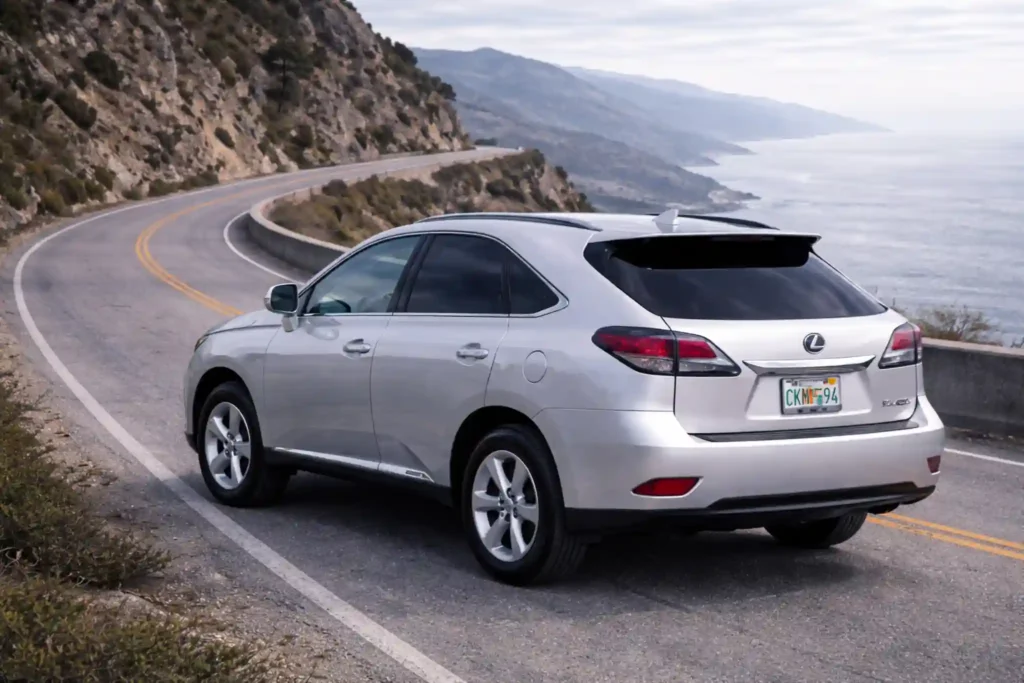
How to Tell When the Hybrid Battery Is Going Bad
Warning lights, performance changes, and MPG drops to watch for
On an aging 2014 RX 450h, the tricky part is that the car rarely gives you one neat, obvious symptom. It tends to speak in combinations.
First, understand what the warning is actually saying. On Toyota and Lexus hybrids, the message you’ll see on the dash is often some version of “Check Hybrid System,” and it is basically the hybrid side’s equivalent of a check-engine warning. It can show up for a high-voltage battery problem, an inverter issue, a fuse, or even a weak 12-volt battery throwing the computers into confusion.
Here’s what I take seriously on the RX 450h, especially when it repeats:
If you get “CHECK HYBRID SYSTEM” along with the master warning light, treat it as a real fault, not a “reset it and pray” moment. Toyota’s own RX 450h hybrid documentation describes that the system can trigger “CHECK HYBRID SYSTEM” when it detects a high-voltage safety related malfunction (for example, leakage detected by a ground-fault monitor), and it will light the master warning at the same time.
If the hybrid brake system warning shows up, do not keep driving like nothing happened. The RX uses regenerative braking and electronically controlled braking logic, and that warning is tied to those systems. Lexus service guidance commonly describes it as a malfunction in the regenerative brake system or the electronically controlled brake system and says to have the vehicle inspected immediately.
Then there are the “ownership feel” clues that don’t require any scan tool:
A noticeable MPG drop without a clear explanation is a classic early sign. When the battery is tired, the car leans harder on the V6, and it starts feeling like you are driving a heavier RX 350 with extra complexity. The engine runs more often, stays on longer at stoplights, and jumps in sooner on mild hills.
Acceleration feels less “electric assist” and more “engine doing all the work.” The RX 450h is supposed to feel smooth and quietly confident. When the pack is fading, the transitions get busier: you hear the engine flare more, and the car feels less relaxed in normal traffic.
State of charge behavior gets weird. The battery gauge starts swinging faster than you remember. It climbs quickly on braking, then drops quickly when you roll back onto the throttle. That fast up and down cycling is often what owners describe right before codes start appearing.
And yes, limp mode is on the table. If the car decides it cannot trust part of the hybrid system, you may still be able to move, but performance and efficiency can fall off a cliff.
Quick checks to do before paying for a diagnostic
I’m not a fan of guessing with hybrid problems. But there are a few smart checks that can save you from paying someone to tell you something basic.
Start with the 12-volt battery, because it can mimic bigger problems. The RX 450h has a separate 12-volt auxiliary battery that powers normal vehicle electronics, and Toyota’s hybrid documentation is very clear that this is separate from the high-voltage hybrid pack. If that 12-volt battery is weak, you can get strange warnings that look like expensive hybrid failure. Even mainstream service guidance flags a bad 12-volt battery as a known trigger for hybrid system warnings.
Practical move: check resting voltage, check how it behaves under load (headlights and rear defroster on), and if it’s old, budget to replace it anyway. Old hybrids hate weak 12-volt batteries.
Do a code read with the right scanner. A generic OBD reader that only pulls basic engine codes can leave you blind. You want a scanner that can read hybrid control and battery related codes. If you see a code like P0A80, that is the famous one for battery deterioration, essentially the car saying battery block voltage differences have gone out of spec.
Also note: the factory process for confirming certain HV battery codes references Techstream and a specific confirmation drive pattern. That is why a quick “clear codes and see” is not a real diagnosis.
Check traction battery cooling airflow basics. Heat is a battery killer, and cooling issues can exaggerate weakness. Many Toyota family hybrids have maintenance guidance to keep traction battery air intake vents clean and to remove dust and clogs carefully, often with a vacuum.
On the RX line, the intake is typically in the rear cabin area. So look for blocked vents, pet hair, or a life of family duty that slowly choked the airflow. If the battery cooling fan starts roaring more than usual in mild weather, that is not a “fun Lexus quirk,” it is a clue.
Finally, do one honest test drive check: watch whether the battery gauge drops rapidly and whether the engine stays on constantly in situations where it used to cycle on and off calmly. If the car feels like it has lost the hybrid advantage, it usually has.
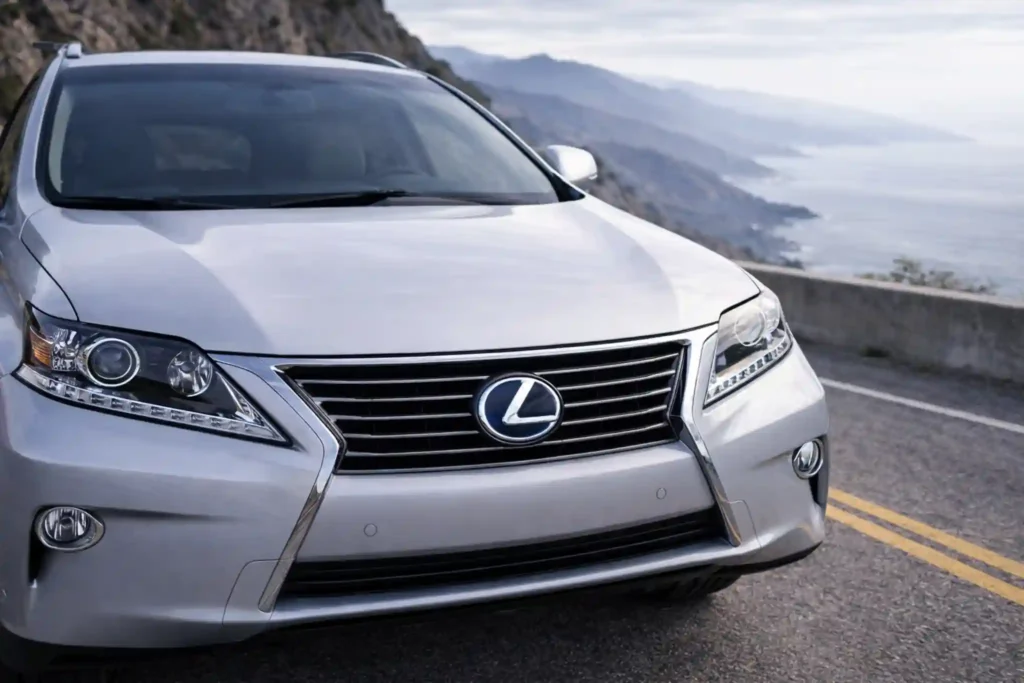
Hybrid Battery Replacement Costs and Options
New vs remanufactured vs used packs: pros, cons, and risk
If you’re shopping a 2014 RX 450h, this is the fork in the road that decides whether the hybrid story ends as a smart buy or an expensive lesson.
A new OEM pack is the cleanest answer. It is built to Lexus spec, it behaves predictably, and it is the closest thing to resetting the clock on the high voltage system. Parts pricing alone can still be serious money. For example, an OEM “HV Supply Battery Assembly” listed under part number G9510-48050 is shown at $4,222.52 with an MSRP of $4,993.06, and it also lists a $1,350 core charge if you do not return your old pack. That core charge is not trivia, it can swing your bill hard.
A remanufactured or reconditioned pack is the middle ground most owners actually take, especially once the vehicle is beyond its original hybrid system warranty window. You will see companies selling packs for this generation in the roughly mid $2,000s to mid $3,000s range with varying warranty terms. As real-world examples, Greentec lists a “new generation cells” option at $3,599 and a remanufactured option at $2,799 for 2010 to 2015 RX 450h fitment. The Hybrid Geek advertises a reconditioned replacement for the same 2010 to 2015 range at $2,599 with a stated 1-year warranty. The upside is obvious: lower entry price. The downside is also real: you are buying someone’s rebuild standards, cell-matching quality, and warranty enforcement, not Lexus.
A used pack from a salvage yard is the tempting cheap button. It is also the riskiest. You rarely get meaningful proof of the donor car’s history, how long it sat, whether it lived in heat, or whether it was already limping toward the same failure you are trying to escape. Sometimes it works and sometimes it buys you six months of calm and then puts you right back where you started, except now you have paid twice for labor.
What the total bill usually includes (labor, modules, testing)
Most people fixate on the pack price and forget that the invoice is a stack of smaller realities.
First is diagnosis. A proper shop does not just read a code and throw a battery at it. They look at battery block voltages, temperature sensor behavior, state-of-charge swings, and the pattern of imbalance under load. The goal is to make sure you are not paying for a battery when the real villain is a weak 12-volt auxiliary battery, corroded connections, or a cooling issue.
Then there is the physical job. The RX 450h traction battery is not a light, friendly component. It is handled with high voltage safety procedures, removed, installed, and verified. On top of that you often see add-ons that are not scammy, they are practical: cleaning the battery cooling path, servicing the fan if it is dirty, and making sure nothing is obstructing airflow. Heat is how these packs age faster than they should.
You also have core handling and hazardous shipping or recycling logistics, depending on the supplier and your location. That is why core charges exist in the first place. The OEM example above spells it out clearly: a $1,350 core charge is attached to the part listing if the old pack is not returned.
Finally, there is the uncomfortable truth that hybrid battery replacement costs have a wide spread. Kelley Blue Book puts the general expectation for replacing a failed hybrid battery at about $2,000 to $8,000, depending on make and model. The RX 450h tends to land in the zone where the pack, labor, and core policies matter more than any single headline number.
When replacing the battery makes financial sense (and when it doesn’t)
Replacing the traction battery makes sense when the rest of the vehicle is still worth owning.
If the RX is structurally clean, well-maintained, rides tight, and you plan to keep it long enough to actually benefit from the fix, a battery replacement can be a rational investment. This is especially true if you can document the work. A 2014 RX 450h with a verified, recent traction battery replacement becomes a much easier used car to trust, which can protect resale and make the vehicle feel younger overnight in daily driving.
It makes less sense when you are using a battery replacement to “save” an RX that is already a pile of other deferred costs. If suspension wear, braking system work, oil leaks, or accident history are stacking up, dropping thousands into the hybrid battery can be throwing good money after a vehicle that is aging on multiple fronts. The hybrid system is only one part of the ownership equation.
Also, do not forget the calendar. The 2014 warranty guide lists hybrid system components as covered under the Hybrid System Warranty for eight years or 100,000 miles. In 2025, every 2014 is well beyond eight years, so you should be budgeting like an adult: assume you are paying out of pocket and choose the replacement path that matches how long you intend to keep the car.
When I’m advising a friend, the simplest filter is this: if you would happily keep the RX for another 2 to 4 years after the repair, and the rest of the vehicle is solid, a quality battery solution is usually money better spent than rolling the dice on another unknown used SUV. If you are already halfway out the door, it is often smarter to sell it transparently and move on.
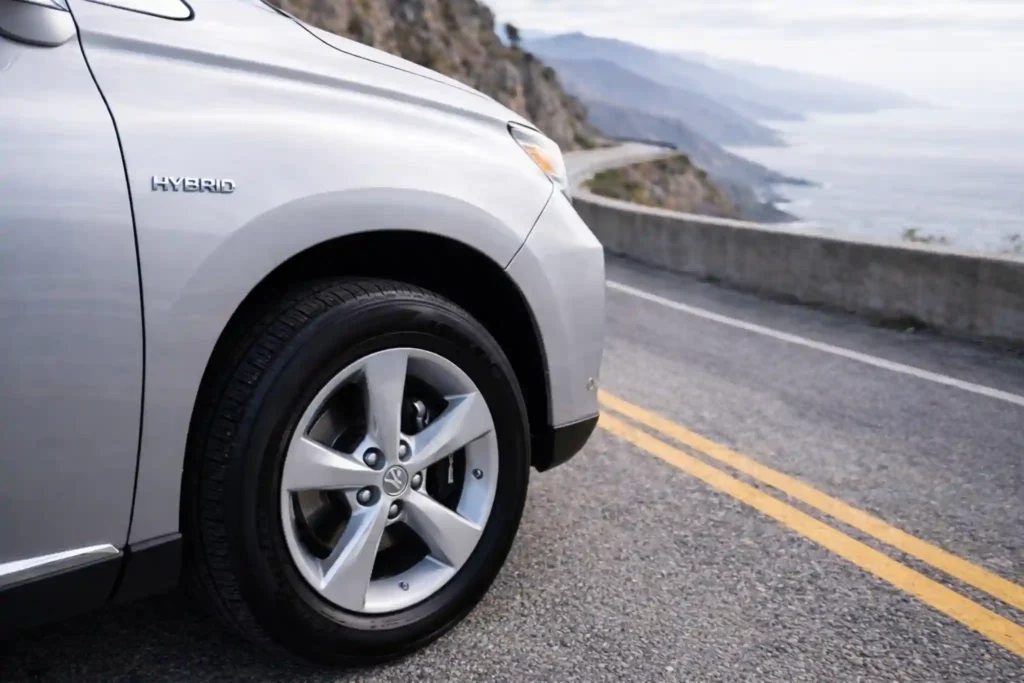
Maintenance Basics That Matter for Buyers
Timing chain vs timing belt: what this engine uses and why it matters
The 2014 RX 450h does not have the classic timing-belt countdown hanging over your head. This hybrid uses Toyota’s GR-series 3.5-liter V6 family, which is chain-driven. In plain English, it’s a timing chain setup, not a belt you replace on a schedule.
That changes the ownership math in two ways.
First, it removes one of the most expensive, most time-sensitive services that scares used buyers. If you’re coming from older Lexus and Toyota engines where a belt job was a rite of passage, this RX won’t punish you with a “do it now or risk it all” timing-belt moment.
Second, it doesn’t mean you can ignore it forever. Timing chains are designed to last, but they still depend on clean oil and sane service intervals. Stretch and guide wear are usually a long-game problem, and when they show up, they tend to show up as cold-start rattles, rough running, or persistent timing-related codes. On a high-mileage RX 450h, the smartest move isn’t hunting for a timing-belt receipt. It’s looking for consistent oil changes and an engine that sounds tight when it’s stone cold.
If the seller can’t show a pattern of oil services and the engine has that dry, rattly startup that makes you wince, I treat it as a warning. This drivetrain is forgiving, but it is not magic.
Hybrid-specific maintenance items many shoppers overlook
Most used-car mistakes on the RX 450h happen when people maintain it like an RX 350 and act surprised when the hybrid side asks for attention later.
The first overlooked item is cooling. A hybrid RX doesn’t just have engine cooling, it also has inverter cooling. Lexus literally calls out “Engine Coolant/Inverter Coolant” as a scheduled service item, with guidance to drain and flush the cooling system when scheduled and refill with the correct ethylene-glycol type coolant. If you’re evaluating a 2014 today, what matters is whether the cooling system has been cared for and whether the car runs stable temperatures without odd hybrid warnings under load. Neglected coolant is one of those slow burns that can turn into expensive electrical heat stress later.
Second is the boring little 12-volt battery and basic battery service. The RX 450h still relies on a conventional battery for computers, boot-up, and stability of the electronics. Lexus includes battery service and cleaning terminals in its maintenance explanations. A weak 12-volt can create glitchy behavior that looks like deeper hybrid trouble. If I’m buying one, I want to see evidence it’s been replaced at least once in its life, and I want the car to start cleanly after sitting.
Third is drive-belt reality. People forget there are still belts under the hood, and Lexus lists drive belts as an inspection item for cracks, wear, and contamination. It’s not a hybrid-only part, but on a used RX it’s a perfect “does this owner maintain anything?” tell. If the belts look ancient, other maintenance is usually ancient too.
Finally, I pay attention to the stuff that shows you how the car was treated, not just what was replaced. Lexus emphasizes that scheduled services are “now more important” and that maintenance records should be transferred to subsequent owners. In real buyer terms, a clean paper trail matters more on a hybrid because the expensive components don’t fail randomly as often as they fail after years of heat, neglect, and ignored warning signs.
If you want one simple buyer mindset for this RX 450h, it’s this: you’re not shopping for the lowest mileage, you’re shopping for the most believable maintenance story.
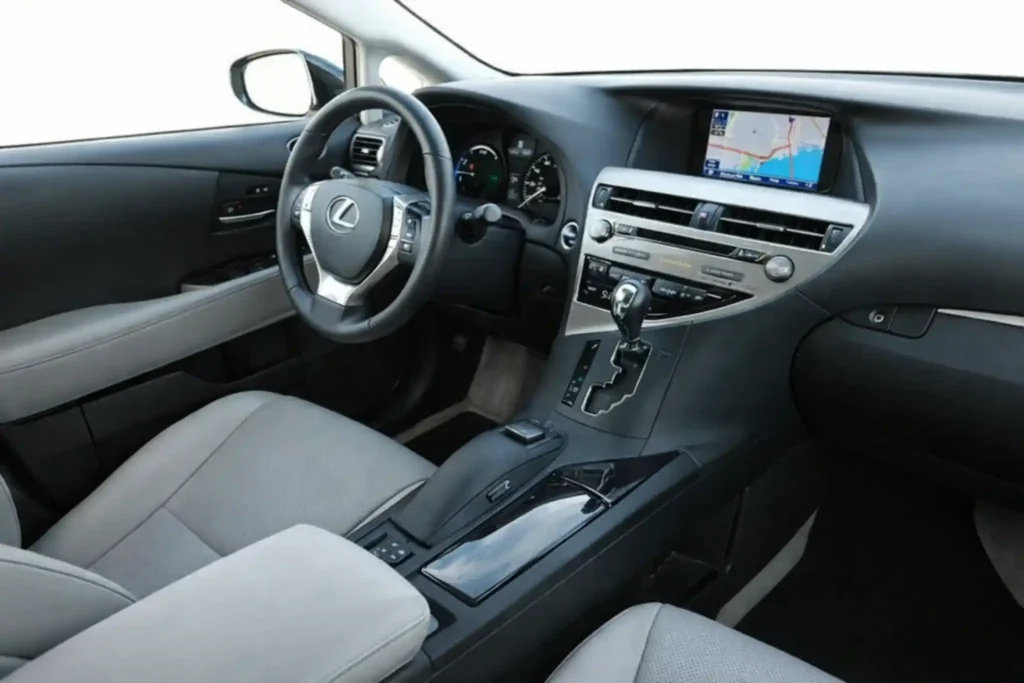
Fuel Requirements and Real-World Efficiency
The 2014 RX 450h is one of those hybrids that can lull you into thinking it is low-maintenance in every way because it drives so smoothly. But fuel choice and mileage expectations are where a lot of owners get annoyed, usually because they expected Prius logic in a 4,600-ish pound luxury crossover.
This Lexus Hybrid Drive setup is built around a 3.5-liter Atkinson-cycle V6 and an electrically assisted eCVT-style transaxle. Around town, it can feel like it is cheating physics. On the highway, physics collects its debt.
Choosing the right gas grade without wasting money
Here’s the clean answer: the RX 450h is designed to run on premium fuel for best performance. The owner’s manual specifies premium unleaded, with guidance that if premium is not available you can temporarily use lower-octane fuel, but it may cause knocking or the vehicle reducing output under load, and you should refill with premium as soon as possible.
A couple of practical points from living with this powertrain mindset:
Premium is not about “luxury branding,” it is about calibration. When octane is lower than what the engine expects, the ECU protects the engine by pulling timing. That protection can feel like a slightly lazier throttle and, in some conditions, worse mileage because the engine is no longer operating at its sweet spot. The manual’s warning about reduced output under heavy load is real life: hot day, long grade, full passengers, and you will feel it.
If you are trying to save money, do the math honestly. The RX 450h’s fuel economy advantage is already doing the heavy lifting. If premium costs more where you live, you are not automatically “wasting money” by buying it, you are buying the fuel the engine was tuned around. If premium is hard to find in your area and you end up using lower octane regularly, it does not mean the car instantly self-destructs, but it does mean you should pay attention for knock and recognize you may be trading away some smoothness and efficiency.
Also note that FuelEconomy.gov lists the 2014 RX 450h under “Premium Gasoline.” That is not a suggestion, it is part of how the vehicle is categorized for its official EPA fuel economy listing.
What MPG to expect from the 2014 RX 450h in mixed, city, and highway driving
Start with the official numbers so you know what “good” looks like. Lexus published EPA estimates for the RX 450h at 32 city / 28 highway / 30 combined for front-wheel drive, and 30 city / 28 highway / 29 combined for all-wheel drive.
FuelEconomy.gov’s listing shows premium fuel and 31 city / 28 highway / 29 combined for the 2014 RX 450h entry it displays (small SUV 2WD, front-wheel drive).
Now the ownership reality, the part buyers actually care about:
In mixed driving, most normal humans land in the mid-to-high 20s, not in the low 30s all the time. A long real-world road test on a closely related RX 450h returned 26.8 mpg over 750 miles, with the write-up specifically noting that results can come in notably below EPA depending on conditions.
In city driving, the RX 450h is in its element. Low-speed cruising, stop-and-go, and lots of braking events mean the hybrid system can actually do what it was designed to do: recapture energy and reduce how often the V6 has to work hard. That same Green Car Reports testing and commentary also points out the pattern you feel from the driver’s seat: these hybrid crossovers tend to look better in urban driving than they do on long highway slogs.
On the highway, especially at higher American interstate speeds, don’t expect miracles. The engine is on more often, aero drag ramps up fast, and the RX’s comfort-first setup is not optimized for hypermiling. In the real world, if you cruise closer to 65 mph and keep tires properly inflated, high-20s highway is realistic. If you live at 75 to 80 mph with a roof rack and a heavy right foot, mid-20s is a more honest expectation, even if the window sticker made you dream bigger.
If you want a simple expectation that rarely disappoints: plan for around 26 to 29 mpg combined depending on drivetrain, climate, speed habits, and tire choice, and treat anything starting with a “3” as a best-case day, not a promise.
Resale Value and What Impacts It Most
The 2014 RX 450h usually holds value better than most aging luxury SUVs because it has two reputations working for it at once: Lexus reliability and hybrid efficiency. In the U.S. market, Kelley Blue Book’s depreciation view for a 2014 RX 450h Sport Utility 4D shows a current resale value around $13,417 and trade-in around $10,030, with only about 13% depreciation over the last three years in their tracking.
That said, this is not a car you price off a single number. Edmunds puts the used value range broad, roughly $6,862 to $13,751, and repeatedly flags that mileage, condition, options, and even ZIP code swing the valuation.
How mileage, battery history, and service records affect market price
Mileage is the loudest signal, even when it shouldn’t be. Two RX 450h SUVs can drive almost the same, but the one with 85,000 miles sells faster than the one with 145,000 miles because buyers shop the odometer first and the maintenance story second. Pricing guides basically confirm that the big levers are mileage and condition, then options and location.
Hybrid battery history is the quiet lever that becomes a loud one once the buyer is educated. At 10+ years old, buyers don’t need proof that the RX is “reliable.” They want proof that this specific RX has been cared for in a way that keeps the expensive systems healthy.
If you have documented battery work, even if it’s just a reputable hybrid specialist’s battery health report, it changes the conversation. It turns the hybrid battery from a spooky unknown into a known quantity. The same goes for cooling-system maintenance and consistent service intervals. In valuation terms, the paperwork doesn’t just help you get a higher number, it helps you get a serious buyer who doesn’t ghost after the test drive.
Service records matter more on this Lexus than on most crossovers because the car is so good at hiding neglect. A tired example will still feel smooth, still feel quiet, and still feel “Lexus,” right up until it throws a warning message that sends the next owner into a diagnostic rabbit hole. Buyers who know what they’re doing pay for the one that has a believable service timeline.
What buyers pay extra for and what hurts value fast
Buyers pay extra for clean, simple stories. One-owner or low-owner history, a clean title, consistent service records, and a vehicle that behaves normally on a cold start and a long test drive. When pricing guides talk about value being shaped by condition and mileage, this is what that looks like in real life.
What hurts value fast is anything that suggests hidden costs or future downtime. A hybrid warning message, a messy dash full of lights, a power liftgate that acts up, mismatched tires, or suspension clunks over sharp bumps. Accident history can also drag prices quickly because buyers looking at an RX are usually paying for peace of mind, not taking on a project.
The other thing buyers forget is that used values move with the market. KBB’s own depreciation page shows that the “Now” resale number can shift, and it notes that market factors and local conditions affect what actually happens. That’s why the smart play is to price your specific RX based on condition and documentation first, then adjust for mileage and your local market second.

Best Years, Smart Picks, and Years to Be Cautious About
How to identify the strongest RX 450h model years using reliability patterns
When you’re shopping a 2014 Lexus RX 450h, you’re already doing one smart thing without realizing it: you’re looking at the late part of the 2010–2015 generation, after most first-year weirdness has had time to surface and get dealt with in the real world.
Here’s the pattern I trust most on used hybrids: look for where complaints cluster, then identify what kind of complaints they are. On this RX 450h generation, the “cautious” year isn’t a mystery. Complaint aggregations consistently flag 2010 as the worst model year for the RX 450h, and the headline issue is braking related, specifically ABS actuator problems.
That matters because brake actuator and ABS actuator work is not a cheap learning experience. The same data set pegs ABS actuator repair cost around the mid-$2k range on average, typically showing up around the 90k-mile neighborhood, which is exactly where many of these SUVs live when they hit the second or third owner.
Now look at what happens after that early spike. In the same RX 450h model-year comparison, complaint volume drops hard in the later years, with 2012 showing zero complaints in their dataset, and 2014–2015 sitting extremely low. That does not mean “perfect,” but it does mean the big trend line is pointing the right way.
There’s one more reality check I always layer on top: technical service bulletins. Lexus issued a bulletin covering 2010–2015 RX 450h models for a squawk or knocking noise when releasing the brake pedal. It’s framed as a noise condition and outlines a diagnostic and repair path (including bleeding the brakes, and in some cases replacing the actuator). This tells you two things: (1) you should not be shocked if you hear a brake groan or squawk on a test drive, and (2) Lexus has seen it often enough to publish a defined fix.
So the “strongest year” pattern, based on real-world trend logic, looks like this: avoid being the person who buys the problem year to “save money,” and instead buy the mature year with proof it was cared for. In the RX 450h world, that usually means you favor the later half of the 2010–2015 run, and you treat 2014 like a sweet spot because it’s late enough to benefit from a settled platform without being so new that pricing gets silly.
A practical way to research which RX 350 years to avoid when cross-shopping
If you’re cross-shopping the RX 350, don’t guess. Use a repeatable process, because the RX 350 spans multiple generations and “good” depends heavily on which generation and which year you’re actually looking at.
Start by pulling model-year complaint distribution to see where the spikes live. One widely used complaints aggregator labels 2008 as the RX 350’s worst model year, and notes that 2007 carries the most overall complaints. That tells you right away where the caution zone starts if you’re shopping older RX 350s.
Then click into a problem-heavy year and check two things: volume and category. For example, the 2008 RX 350 page shows hundreds of complaints plus a large number of technical service bulletins, and it breaks issues out by systems (engine, steering, brakes, electrical, and more). You’re not looking for drama, you’re looking for patterns and big-ticket categories.
Next, scan for expensive failure modes, not cosmetic annoyances. In the same RX 350 overview, you’ll see examples where a single category carries high repair costs (like reported engine failure costs). Even if you never see that exact failure, this is how you spot years that can punish you financially.
Finally, verify the individual vehicle, not just the year. Before you buy any RX 350 you’re considering as an alternative, run the VIN through NHTSA’s recall lookup and the manufacturer lookup. These tools won’t tell you everything, but they’ll keep you from missing the obvious stuff that should have been handled.
When you do this the right way, you stop arguing about “best years” on the internet and start shopping like an owner: avoid the spike years, prioritize the boring years, and only buy the specific vehicle that can prove it’s been maintained.
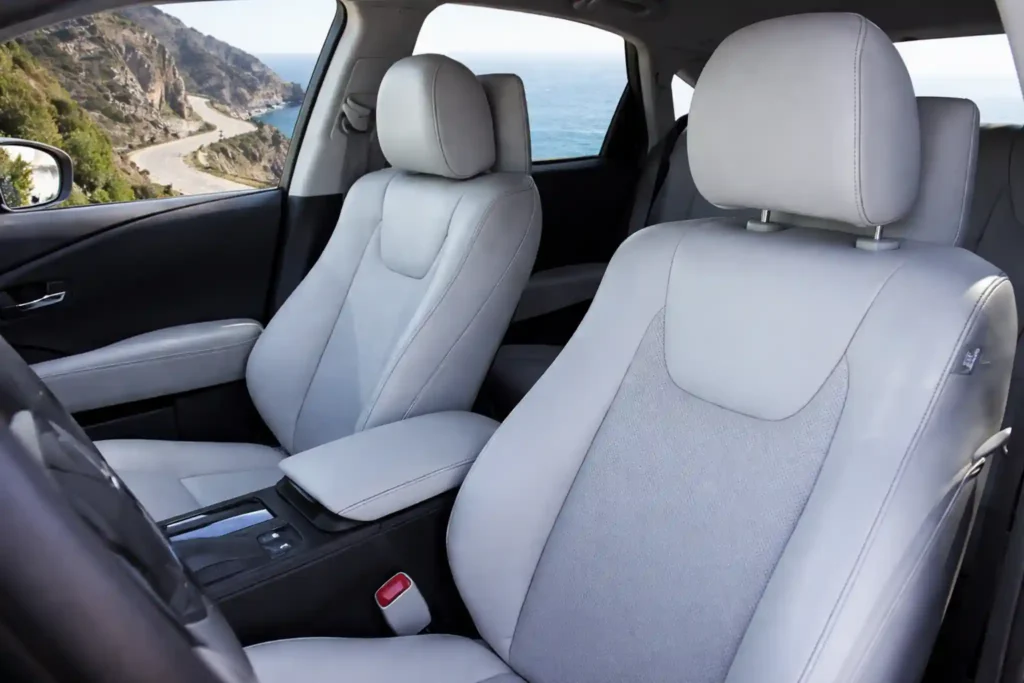
RX 350 vs RX 450h: Which One Is the Better Buy for You?
This is the decision point where people stop shopping “a Lexus RX” and start shopping a lifestyle.
The RX 350 is the simpler play: regular gasoline, conventional drivetrain, fewer hybrid-specific variables. The RX 450h is the calmer, more efficient play in the right use case, with one big asterisk: you’re signing up for hybrid hardware that’s excellent when healthy and expensive when it’s not.
Cost-to-own comparison: fuel savings vs hybrid complexity
On paper, the fuel economy gap is real. The 2014 RX 350 is rated at 21 mpg combined (18 city / 25 highway) on regular gasoline. The 2014 RX 450h is rated at 29 mpg combined (31 city / 28 highway) on premium gasoline.
Do the boring math with those EPA numbers at a typical 12,000 miles a year and you get something that actually matters: the hybrid uses roughly 158 fewer gallons per year (about 571 gallons vs about 414). That’s not internet trivia. That’s where the hybrid earns its keep, especially if your driving is heavy on city miles where hybrids usually perform closer to their advantage.
Now the counterweight: hybrid complexity is not about “it always breaks.” It’s about the ceiling on worst-case repairs. A hybrid battery replacement, for example, is a real four-figure event if you end up there, and Lexus parts listings show just how serious OEM pricing can be, including core charges. The RX 350 doesn’t have that specific bill waiting in the background.
Here’s the twist that surprises people: typical annual repair cost averages are not wildly different between the two models in aggregated data. RepairPal lists the RX 350 at about $550 per year and the RX 450h at about $540 per year on average. That doesn’t mean they cost the same to own in real life. It means routine ownership, on average, is fairly similar. The difference is that the hybrid has a few failure modes that can land harder when they happen, while the RX 350 tends to nick you with more normal SUV aging costs.
So the cost-to-own truth is simple: if your miles are high and your driving is mixed or city-heavy, the RX 450h has more room to pay you back. If your driving is mostly highway at higher speeds, the mpg gap shrinks in the real world and the RX 350’s simplicity starts looking smarter.
Who should choose the hybrid and who should stick with the non-hybrid
Choose the RX 450h if you’re the kind of owner who:
- racks up steady miles and actually benefits from the mpg advantage (especially city and suburban traffic)
- keeps cars long enough that efficiency and smoothness matter more than the newest tech
- is willing to buy based on condition and service history, not just price and mileage
- wants the quieter, more effortless low-speed feel hybrids do best
Stick with the RX 350 if you’re the kind of owner who:
- wants maximum mechanical simplicity in a 10+ year old luxury SUV
- doesn’t drive enough miles for the hybrid’s mpg advantage to matter
- lives in a place where premium fuel is a hassle or you simply hate the idea of being locked into it
- prefers the “I can take this to any competent shop” ownership vibe without hybrid-specific diagnostics
If you’re cross-shopping competitors, this is where the RX splits from the pack. An Acura MDX can feel sportier, a BMW X5 can feel sharper, and an older Mercedes ML can feel more Germanic, but they usually don’t match the RX’s combination of long-term ease and calm. The RX 350 is the safest bet for people who want a luxury SUV that behaves like a dependable appliance. The RX 450h is the safer bet for people who want that same appliance, just with a lower fuel habit, and they’re willing to respect the hybrid side.
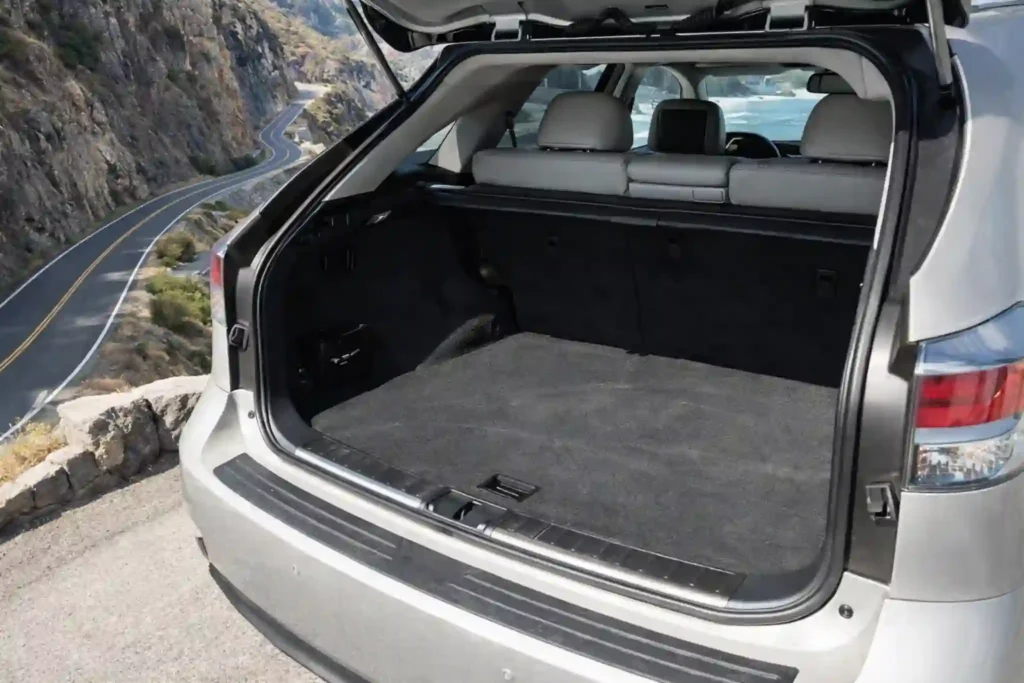
A Used-Buyer Checklist for the 2014 RX 450h
Buying a 2014 RX 450h isn’t hard. Buying a good one is where people get burned, because this Lexus will happily feel “fine” even when it’s been neglected. The trick is to treat it like two vehicles in one: a 3.5-liter V6 crossover plus a high-voltage hybrid system. If either half has a messy history, you want to know before you fall in love with the quiet test drive.
What to verify in the service history before you commit
Start with the boring stuff, because boring records usually mean a boring owner, and boring owners keep hybrids alive.
First, look for consistent routine service. Lexus service schedules for the RX line revolve around frequent inspections, tire rotations every 5,000 miles, and oil changes at 10,000-mile intervals when the oil service is due. If the history is random, skipped for years, or full of “quick lube” entries with no detail, assume you’re inheriting deferred maintenance.
Then check for the milestone items that separate a cared-for RX from one that’s just been “driven.” You want to see brake fluid service on a real schedule (commonly called out around the 30,000-mile interval on dealer maintenance charts) and spark plugs at the big interval where Lexus expects them done. Those two matter because they’re the kind of work cheap owners avoid, and they correlate strongly with everything else being ignored.
Now the hybrid-specific tell that most buyers miss: the traction battery cooling path. Lexus has issued guidance for its hybrids noting that dust, lint, and debris can build up in the HV battery cooling fan system and reduce cooling efficiency. What’s especially relevant for your 2014 RX 450h is this detail: Lexus’s own applicability table shows the RX 400h and RX 450h from 2006 to 2015 are listed without an intake filter in that guideline. In plain English, there’s less “catch the fuzz before it hits the fan” protection than on later models with filters. So in the service history, I’m looking for anything that suggests the car lived a pet-hair life (multiple cabin filters, interior detailing notes, musty odor complaints) and I’m budgeting time to inspect the battery cooling intake area myself.
Also verify open recalls the grown-up way: by VIN. NHTSA’s recall guidance is clear that a VIN search tells you whether a specific vehicle has unrepaired recalls, while year make model results are general. I don’t care what the seller “thinks” was done. I care what the VIN says today.
Finally, don’t ignore the 12-volt battery story. On Toyota and Lexus hybrids, a weak 12V can create weird warning messages and odd behavior that looks expensive until you diagnose it properly. If the seller can’t tell you when it was last replaced, assume it’s old and use that as leverage, because you’ll be buying one soon anyway.
Test-drive signs that hint at battery, drivetrain, or suspension issues
Here’s the part where people misread the RX 450h, because hybrids make noises that sound suspicious if you’ve never lived with one.
Some sounds and sensations are normal. Lexus manuals for their hybrid vehicles explicitly note things like regenerative braking noises, transmission sounds as the engine starts and stops, and even a vibration when the gasoline engine cycles on or off. There’s also the famous “what is my car doing under there” moment: an official Lexus owner’s manual excerpt notes you may hear sound from under the vehicle for several minutes hours after shutting it off, which is normal system operation, not a breakdown.
So what actually worries me on a drive?
A battery or hybrid-control problem usually shows up as behavior that doesn’t match the conditions. If the state-of-charge swings wildly on gentle driving, if the engine runs far more than expected even when you’re just loafing through traffic, or if the car feels like it’s constantly fighting itself, that’s when I start thinking traction battery health, inverter cooling, or a sensor issue, not “this is how hybrids are.”
Warning lights matter more than vibes. Lexus’s own warning-light resource spells out that a hybrid brake system warning indicates a malfunction in the regenerative brake system. If you see hybrid, brake, ABS, or stability warnings stacked together, don’t let anyone hand-wave it as “just a battery reset.” That’s a diagnosis moment, not a negotiation about floor mats.
For drivetrain feel, the RX 450h’s hybrid transaxle should be smooth. A mild eCVT drone under load is normal. What isn’t normal is a pronounced shudder on takeoff, a harsh clunk when transitioning from regen to friction braking, or a repeated thump as you come to a stop. One subtle trick: do several medium stops from 40 to 10 mph. If the pedal feel changes dramatically mid-stop, that can point to braking system issues that are more than “hybrid weirdness.”
Suspension and chassis issues are easier. This generation RX rides soft, but it shouldn’t feel loose. Over broken pavement, listen for front-end knocking, pay attention to steering that feels vague off-center, and watch for a steering wheel that isn’t straight on a flat road. On the highway, a healthy one tracks cleanly. A floaty, corrective, always-adjusting feel usually means tired dampers, worn bushings, or alignment problems.
If I had to reduce the whole test drive to one sentence: I’m fine with normal hybrid sounds, I’m not fine with warning lights, inconsistent brake feel, or a body that can’t settle.
FAQs about the 2014 Lexus RX 450h
Hybrid Battery
How long does the 2014 Lexus RX 450h hybrid battery last, and what are early warning signs?
Reliability
What are the most common reliability issues on a high-mileage 2014 Lexus RX 450h?
Fuel Economy
What MPG should you expect from a 2014 Lexus RX 450h, and does it require premium fuel?
| SPEC | DETAIL |
|---|---|
| Powertrain | 3.5-liter Atkinson-cycle V6 + electric motor (full hybrid system) |
| Total System Output | 295 hp (combined gasoline + electric) |
| Drivetrain | Front-wheel drive (FWD) or All-wheel drive (AWD) |
| Transmission | Electronically controlled CVT (planetary-type eCVT) |
| 0–60 mph | ~7.5 seconds |
| Top Speed | ~112 mph (electronically limited) |
| Hybrid Battery Type | Nickel-metal hydride (NiMH) |
| Battery Voltage | 288 volts |
| Electric-Only Driving | Short low-speed EV operation under light load |
| EPA Fuel Economy (FWD) | 32 city / 28 highway / 30 combined mpg |
| EPA Fuel Economy (AWD) | 30 city / 28 highway / 29 combined mpg |
| Real-World MPG | ~26–29 mpg combined (owner & road-test averages) |
| Fuel Type | Premium unleaded gasoline (recommended) |
| Fuel Tank Capacity | 17.2 gallons |
| Suspension | MacPherson strut front • Double-wishbone rear |
| Brakes | 4-wheel disc with ABS, regenerative braking system |
| Wheels / Tires | 18-inch alloy wheels (standard) |
| Curb Weight | ~4,575–4,740 lbs (depending on drivetrain) |
| Towing Capacity | 3,500 lbs |
| Ground Clearance | ~7.3 inches |
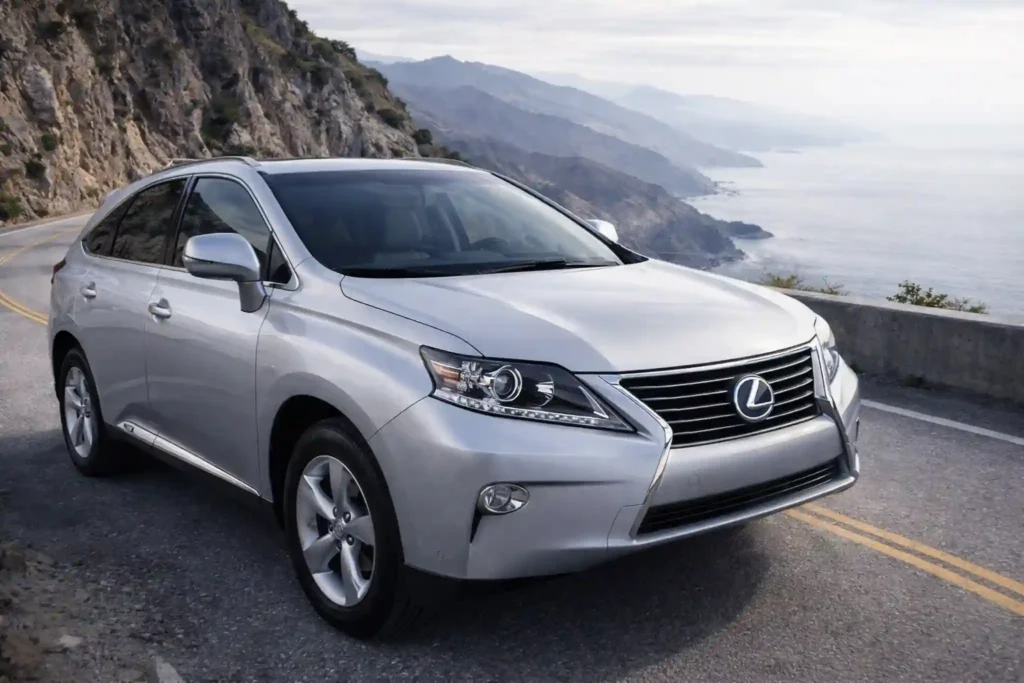


| Author | Hafiz Sikandar, automotive journalist and senior editor at VyoCar. |
|---|---|
| Expertise | Automotive testing and reviews since 2016 Road-testing and reviewing a wide spectrum of vehicles, from performance-focused sedans to practical daily drivers, with an emphasis on real-world drivability, ride comfort, chassis behavior, interior usability, and long-term ownership impressions across varied driving conditions. |
| Focus Areas | Gas-powered and electrified vehicles, sport-oriented sedans, crossovers, and value-driven premium models, analyzed through the lens of everyday livability, handling balance, cabin refinement, technology integration, and overall ownership value. |
| Disclosure | All vehicles reviewed are evaluated independently. Manufacturers have no influence over testing methods, editorial direction, scoring, or final verdicts. Performance figures, fuel economy observations, and driving impressions are based on hands-on testing conducted over mixed city, highway, and suburban use. |